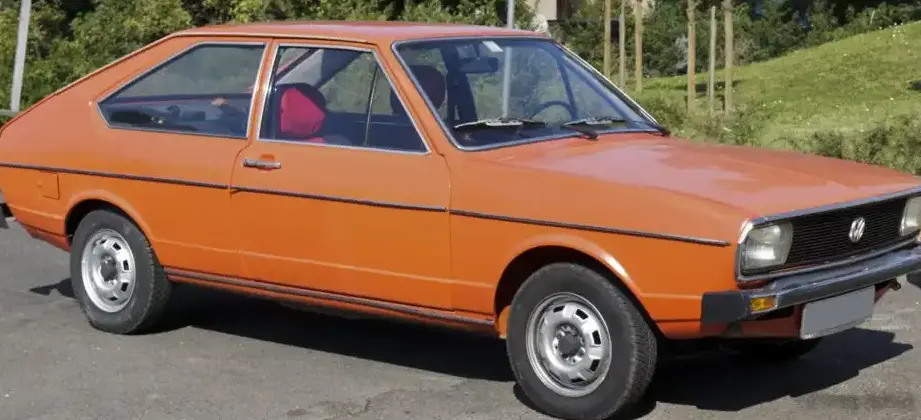
The Volkswagen Passat B1 1.5, producing 86 horsepower, represents an early iteration of Volkswagen’s mid-size offering, manufactured between 1973 and 1975. This variant was a crucial part of the initial Passat (Type 32) lineup, designed to replace the aging Type 4 (411/412) and provide a more modern, practical, and affordable family car. Positioned as the entry-level engine option, the 1.5-liter model aimed to deliver reasonable fuel economy and adequate performance for everyday driving, appealing to a broader customer base than the more expensive, larger-displacement models. It was a key component in establishing the Passat’s reputation as a sensible and reliable vehicle in the European market.
Technical Specifications
| Brand | Volkswagen |
| Model | Passat |
| Generation | Passat (B1) / Type 32 |
| Type (Engine) | 1.5 (86 Hp) |
| Start of production | 1973 |
| End of production | 1975 |
| Powertrain Architecture | Internal Combustion Engine |
| Body type | Sedan, Estate (Variant) |
| Seats | 5 |
| Doors | 2-4 |
| Fuel Type | Petrol (Gasoline) |
| Power | 86 Hp |
| Engine Model/Code | ZC |
| Engine aspiration | Naturally Aspirated |
| Displacement | 1493 cc (91.0 cu in) |
| Bore x Stroke | 76.5 mm x 81.1 mm (3.01 in x 3.19 in) |
| Compression Ratio | 8.5:1 |
| Fuel System | Solex 35 PHH Carburetor |
| Valve Configuration | OHV (Overhead Valve), 2 valves per cylinder |
| Transmission | 4-speed Manual, 3-speed Automatic |
| Weight (approx.) | 980 – 1050 kg (2160 – 2315 lbs) |
| Top Speed (approx.) | 160 km/h (99 mph) |
| 0-100 km/h (0-62 mph) | 13.5 – 15 seconds (depending on transmission) |
Powertrain & Engine Architecture
The Passat B1 1.5 utilized the ZC engine code, a 1493cc inline-four cylinder engine. This engine was a relatively simple design, employing an overhead valve (OHV) configuration with two valves per cylinder. It featured a cast iron block and an aluminum cylinder head. Fuel delivery was managed by a single Solex 35 PHH carburetor, a common setup for European vehicles of the era. The engine’s 86 horsepower output at 5800 rpm and 118 Nm (87 lb-ft) of torque at 3500 rpm were considered adequate for the vehicle’s weight and intended purpose.
The 1.5-liter engine was offered with both a four-speed manual transmission and a three-speed automatic transmission. The automatic transmission, while providing convenience, noticeably impacted acceleration and fuel economy. The manual transmission allowed for better control and efficiency, making it the preferred choice for drivers prioritizing performance. The engine’s design prioritized reliability and ease of maintenance over outright power, reflecting Volkswagen’s engineering philosophy at the time.
Driving Characteristics
The driving experience in a Passat B1 1.5 was characterized by its practicality and comfort rather than sporty performance. The 86 horsepower engine provided sufficient power for cruising on highways and navigating city streets, but acceleration was modest, particularly with the three-speed automatic transmission. The automatic transmission’s gear ratios were spaced to prioritize fuel economy and smooth operation, resulting in a somewhat sluggish response during overtaking maneuvers. The manual transmission offered a more engaging driving experience, allowing drivers to better utilize the engine’s available power.
Handling was generally predictable and stable, thanks to the Passat’s independent front suspension and rigid rear axle. However, the car’s relatively soft suspension setup and modest tire sizes resulted in noticeable body roll during cornering. The steering was light and easy to use, making it well-suited for everyday driving. Overall, the Passat B1 1.5 offered a comfortable and undemanding driving experience, prioritizing practicality and ease of use over outright performance.
Equipment & Trim Levels
The Passat B1 1.5, as the entry-level model, typically came with a relatively basic level of equipment. Standard features included cloth upholstery, vinyl floor covering, and basic instrumentation consisting of a speedometer, fuel gauge, and temperature gauge. The dashboard was functional and straightforward in its design.
Optional extras included upgraded cloth upholstery, a radio, and a sunroof. Higher trim levels, such as the Passat L and GL, offered more luxurious features, including upgraded interior trim, additional instrumentation, and more powerful engine options. The 1.5-liter model was often seen as a blank canvas for buyers who wanted a practical and affordable family car that could be customized to their individual needs and preferences.
Chassis & Braking
The Passat B1 featured a MacPherson strut independent suspension at the front and a rigid axle with leaf springs at the rear. This suspension setup provided a comfortable ride, but it wasn’t particularly sophisticated. The braking system consisted of disc brakes at the front and drum brakes at the rear. The brakes were adequate for the vehicle’s weight and performance, but they lacked the stopping power of more modern braking systems.
Stabilizer bars were often optional on the base 1.5-liter model, and their absence contributed to increased body roll during cornering. The chassis was relatively lightweight, which helped to offset the engine’s modest power output. The overall design prioritized durability and ease of maintenance over outright handling performance.
Market Reception & Comparison
The Passat B1 1.5 was generally well-received by critics and consumers alike. It was praised for its practicality, reliability, and affordability. However, some critics noted that the engine’s performance was somewhat underwhelming, particularly when paired with the three-speed automatic transmission. Compared to its siblings, such as the 1.6-liter and 1.7-liter models, the 1.5-liter engine offered lower performance but better fuel economy. The 1.5 was also significantly more affordable than the larger-displacement models, making it an attractive option for budget-conscious buyers.
Compared to competitors like the Ford Cortina and Opel Ascona, the Passat B1 1.5 offered a more modern and refined driving experience. Its front-wheel-drive layout and independent front suspension provided better handling and ride comfort than many of its rear-wheel-drive rivals. Fuel economy was also competitive, making it a practical choice for everyday driving.
Legacy
The Volkswagen Passat B1 1.5, while not the most powerful or exciting variant in the lineup, played a significant role in establishing the Passat’s reputation as a reliable and practical family car. The ZC engine proved to be durable and relatively easy to maintain, and many examples are still on the road today. In the used car market, the 1.5-liter model is often sought after by enthusiasts looking for a classic Volkswagen that is affordable and easy to restore.
The Passat B1’s success paved the way for subsequent generations of the Passat, which have become some of the best-selling mid-size cars in Europe. The 1.5-liter engine, while no longer in production, remains a testament to Volkswagen’s commitment to building durable and reliable vehicles. Its simplicity and robust design continue to appeal to enthusiasts and collectors alike.