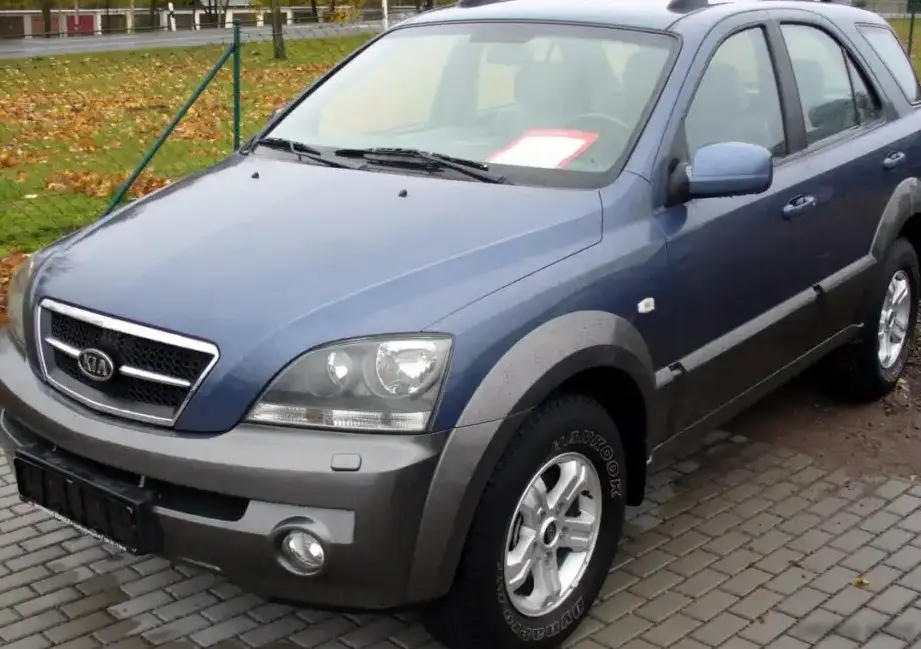
The Kia Sorento III (facelift, introduced in 2018) represents a significant mid-cycle refresh of Kia’s popular three-row SUV. This iteration, produced through 2020, aimed to enhance the Sorento’s appeal with updated styling, improved technology, and refined powertrains. Among the engine options available, the 3.3 GDI V6, producing 290 horsepower and paired with an eight-speed automatic transmission and all-wheel drive (AWD), occupied the top-tier performance position within the lineup. This variant was positioned as the premium offering, catering to buyers prioritizing power, capability, and a more luxurious experience. It built upon the foundation of the UM platform (internally designated as the 1HX0), shared with the Hyundai Santa Fe.
Technical Specifications
| Brand | Kia |
| Model | Sorento |
| Generation | Sorento III (facelift 2018) |
| Type (Engine) | 3.3 GDI V6 (290 Hp) AWD Automatic |
| Start of production | 2018 |
| End of production | 2020 |
| Powertrain Architecture | Internal Combustion engine |
| Body type | SUV |
| Seats | 7 |
| Doors | 5 |
| Fuel consumption (economy) – urban (EPA) | 12.4 l/100 km (19 US mpg, 22.8 UK mpg, 8.1 km/l) |
| Fuel consumption (economy) – extra urban (EPA) | 9.8 l/100 km (24 US mpg, 28.8 UK mpg, 10.2 km/l) |
| Fuel consumption (economy) – combined (EPA) | 11.2 l/100 km (21 US mpg, 25.2 UK mpg, 8.9 km/l) |
| Fuel Type | Petrol (Gasoline) |
| Emission standard | Euro 6 |
| Weight-to-power ratio | 6.4 kg/Hp, 155.9 Hp/tonne |
| Weight-to-torque ratio | 5.4 kg/Nm, 183.9 Nm/tonne |
| Power | 290 Hp @ 6400 rpm |
| Power per litre | 86.8 Hp/l |
| Torque | 342 Nm @ 5200 rpm (252.25 lb.-ft. @ 5200 rpm) |
| Engine layout | Front, Transverse |
| Engine Model/Code | Lambda II / G6DH |
| Engine displacement | 3342 cm3 (203.94 cu. in.) |
| Number of cylinders | 6 |
| Engine configuration | V-engine |
| Cylinder Bore | 92 mm (3.62 in.) |
| Piston Stroke | 83.8 mm (3.3 in.) |
| Compression ratio | 11.5:1 |
| Number of valves per cylinder | 4 |
| Fuel injection system | Direct injection |
| Engine aspiration | Naturally aspirated engine |
| Valvetrain | DOHC, CVVT |
| Engine oil capacity | 5.7 l (6.02 US qt | 5.02 UK qt) |
| Coolant | 9.3 l (9.83 US qt | 8.18 UK qt) |
| Kerb Weight | 1860-1970 kg (4100.6 – 4343.11 lbs.) |
| Max. weight | 2550 kg (5621.79 lbs.) |
| Max load | 580-690 kg (1278.68 – 1521.19 lbs.) |
| Trunk (boot) space – minimum | 320 l (11.3 cu. ft.) |
| Trunk (boot) space – maximum | 2067 l (73 cu. ft.) |
| Fuel tank capacity | 71 l (18.76 US gal | 15.62 UK gal) |
| Permitted trailer load with brakes (12%) | 2268 kg (5000.08 lbs.) |
| Length | 4801 mm (189.02 in.) |
| Width | 1890 mm (74.41 in.) |
| Height | 1689 mm (66.5 in.) |
| Wheelbase | 2779 mm (109.41 in.) |
| Front track | 1633 mm (64.29 in.) |
| Rear (Back) track | 1643 mm (64.69 in.) |
| Ride height (ground clearance) | 185 mm (7.28 in.) |
| Minimum turning circle (turning diameter) | 11.4 m (37.4 ft.) |
| Approach angle | 16.9° |
| Departure angle | 21° |
| Drivetrain Architecture | The Internal combustion engine (ICE) drives the front wheels permanently, and the rear wheels are driven through an electrically or mechanically operated clutch if necessary. |
| Drive wheel | All wheel drive (4×4) |
| Number of gears and type of gearbox | 8 gears, automatic transmission Sportmatic |
| Front suspension | Independent, type McPherson with coil spring and anti-roll bar |
| Rear suspension | Independent multi-link spring suspension with stabilizer |
| Front brakes | Ventilated discs, 320 mm |
| Rear brakes | Disc, 305 mm |
| Assisting systems | ABS (Anti-lock braking system) |
| Steering type | Steering rack and pinion |
| Power steering | Electric Steering |
| Tires size | 235/65 R17; 235/60 R18; 235/55 R19 |
| Wheel rims size | 7J x 17; 7.5J x 18; 7.5J x 19 |
Powertrain & Engine Architecture
At the heart of this Sorento variant lies the Lambda II 3.3-liter GDI (Gasoline Direct Injection) V6 engine, designated as the G6DH. This engine is a naturally aspirated 60-degree V6, utilizing direct injection to enhance fuel efficiency and power output. The GDI system injects fuel directly into the combustion chamber, allowing for more precise fuel control and higher compression ratios. The engine features a dual overhead camshaft (DOHC) valvetrain with continuously variable valve timing (CVVT) on both intake and exhaust valves, optimizing engine performance across the rev range. The eight-speed automatic transmission, developed in-house by Hyundai/Kia, provides smooth and efficient gear changes. This transmission features a wide gear ratio spread, contributing to both acceleration and fuel economy. The AWD system operates primarily as front-wheel drive, engaging the rear wheels automatically when traction is lost.
Driving Characteristics
The 3.3 GDI V6 with the eight-speed automatic delivers a noticeably more responsive driving experience compared to the lower-displacement engine options. While not a sports car, the Sorento offers ample power for highway merging, overtaking, and carrying a full load of passengers and cargo. The eight-speed transmission keeps the engine in its optimal power band, minimizing the need for downshifts. Compared to the manual transmission versions (available with the 2.0L turbo), the automatic prioritizes comfort and ease of use. The AWD system provides enhanced stability and traction in inclement weather conditions. However, the added weight of the V6 and AWD system does slightly impact fuel economy compared to the front-wheel-drive, four-cylinder models.
Equipment & Trim Levels
The 3.3 GDI V6 AWD typically came in the highest trim levels of the Sorento, such as the SX or Limited. Standard features included leather upholstery, heated and ventilated front seats, a panoramic sunroof, a premium audio system (often Harman Kardon), and a suite of advanced driver-assistance systems (ADAS) like adaptive cruise control, lane departure warning, and blind-spot monitoring. Optional extras could include a rear-seat entertainment system, upgraded navigation, and premium paint colors. Interior materials and finishes were generally of a higher quality compared to lower trims.
Chassis & Braking
The Sorento’s chassis features an independent McPherson strut suspension in the front and an independent multi-link suspension in the rear. Stabilizer bars are fitted to both axles to reduce body roll during cornering. The braking system consists of ventilated discs at the front and solid discs at the rear. ABS (Anti-lock Braking System) is standard, along with electronic brake-force distribution (EBD) and brake assist. The suspension tuning is geared towards comfort and ride quality, prioritizing a smooth and controlled driving experience over sporty handling.
Market Reception & Comparison
Critics generally praised the 3.3 GDI V6 Sorento for its powerful engine, comfortable ride, and spacious interior. However, some noted that the fuel economy was not class-leading. Compared to the 2.0L turbocharged engine, the V6 offered more refined power delivery but at the expense of fuel efficiency. The V6 also provided a significant performance advantage over the 2.4L naturally aspirated four-cylinder engine. Reliability reports have been generally positive, although some owners have reported minor issues with the GDI system requiring fuel injector cleaning.
Legacy
The 3.3 GDI V6 engine proved to be a relatively reliable powertrain when properly maintained. The eight-speed automatic transmission has also demonstrated good durability. On the used car market, these Sorento variants tend to command a higher price due to their performance and features. Regular maintenance, including oil changes and fuel system cleaning, is crucial to ensure the long-term health of the GDI engine. The 2018-2020 Sorento 3.3 GDI V6 AWD remains a popular choice for families seeking a capable and well-equipped three-row SUV.