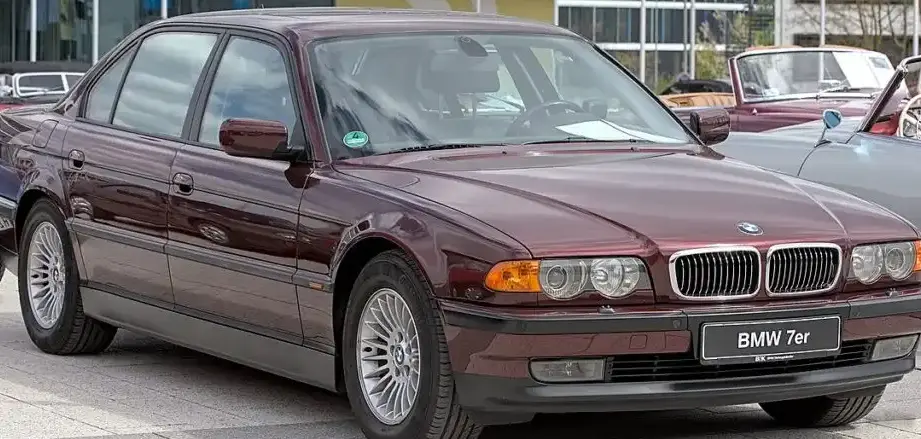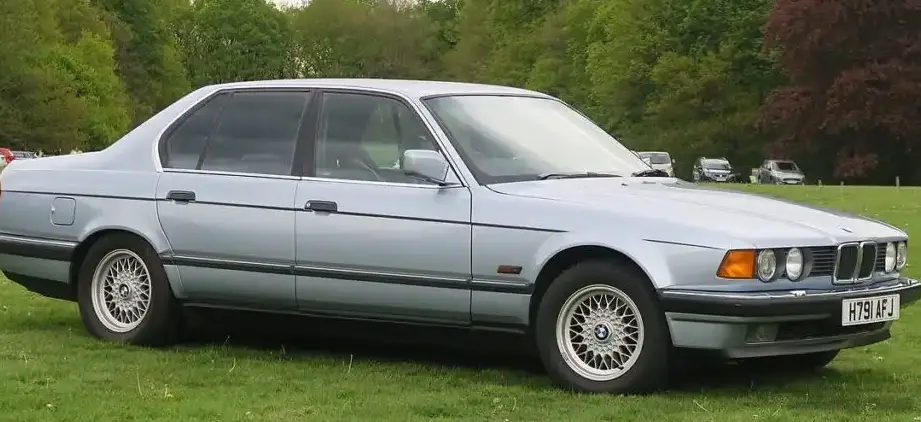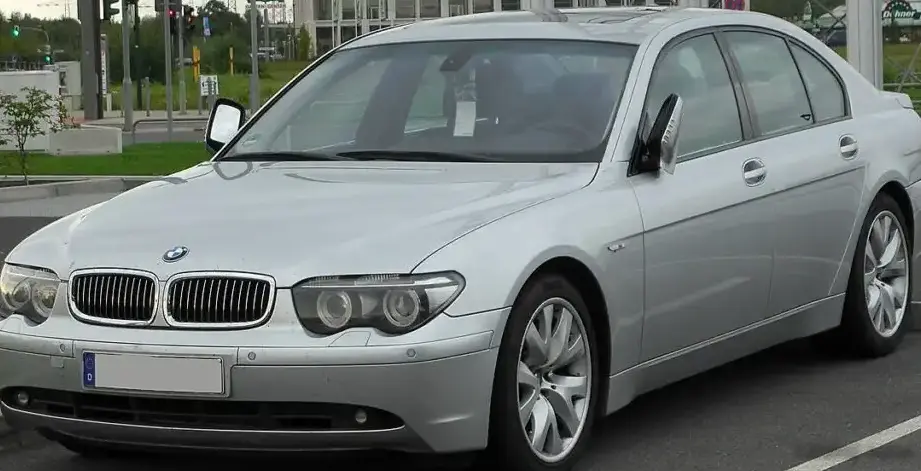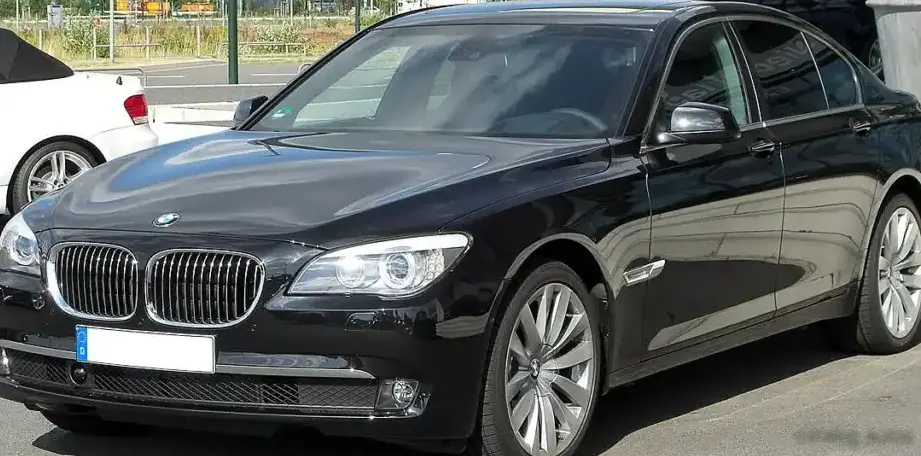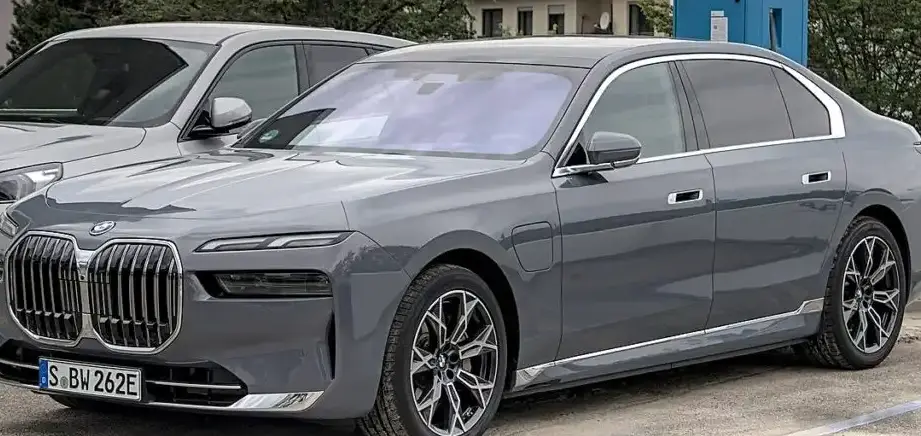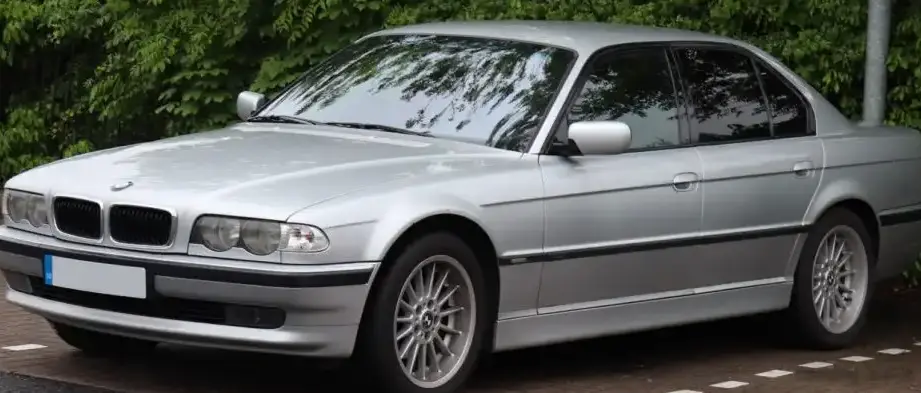
The BMW 750i, part of the E38 7 Series facelift produced from 1998 to 2001, represented the pinnacle of BMW’s luxury sedan offerings. Positioned as the flagship model, it boasted a powerful V12 engine and advanced technology for its time. The E38 generation, launched in 1994, was a significant departure from its predecessor, the E32, offering increased size, improved refinement, and a host of new features. The 1998 facelift brought subtle styling updates and further enhancements to the already sophisticated package. The 750i, with its Steptronic automatic transmission, catered to buyers seeking a blend of effortless performance and luxurious comfort.
Technical Specifications
| Brand | BMW |
| Model | 7 Series |
| Generation | 7 Series (E38, facelift 1998) |
| Type (Engine) | 750i (326 Hp) Steptronic |
| Start of production | 1998 |
| End of production | 2001 |
| Powertrain Architecture | Internal Combustion engine |
| Body type | Sedan |
| Seats | 5 |
| Doors | 4 |
| Fuel consumption (economy) – urban | 19.6 l/100 km (12 US mpg, 14.4 UK mpg, 5.1 km/l) |
| Fuel consumption (economy) – extra urban | 10.1 l/100 km (23.3 US mpg, 28 UK mpg, 9.9 km/l) |
| Fuel consumption (economy) – combined | 13.6 l/100 km (17.3 US mpg, 20.8 UK mpg, 7.4 km/l) |
| Fuel Type | Petrol (Gasoline) |
| Acceleration 0 – 100 km/h | 6.6 sec |
| Acceleration 0 – 62 mph | 6.6 sec |
| Acceleration 0 – 60 mph | 6.3 sec |
| Maximum speed | 250 km/h (155.34 mph) |
| Weight-to-power ratio | 6 kg/Hp, 166.3 Hp/tonne |
| Weight-to-torque ratio | 4 kg/Nm, 250 Nm/tonne |
| Power | 326 Hp @ 5000 rpm |
| Power per litre | 60.6 Hp/l |
| Torque | 490 Nm @ 3900 rpm (361.41 lb.-ft. @ 3900 rpm) |
| Engine layout | Front, Longitudinal |
| Engine Model/Code | M73B54 |
| Engine displacement | 5379 cm3 (328.25 cu. in.) |
| Number of cylinders | 12 |
| Engine configuration | V-engine |
| Cylinder Bore | 85 mm (3.35 in.) |
| Piston Stroke | 79 mm (3.11 in.) |
| Compression ratio | 10:1 |
| Number of valves per cylinder | 4 |
| Fuel injection system | Multi-port manifold injection |
| Engine aspiration | Naturally aspirated engine |
| Valvetrain | SOHC |
| Engine oil capacity | 8 l (8.45 US qt | 7.04 UK qt) |
| Coolant | 13 l (13.74 US qt | 11.44 UK qt) |
| Kerb Weight | 1960 kg (4321.06 lbs.) |
| Max. weight | 2495 kg (5500.53 lbs.) |
| Max load | 535 kg (1179.47 lbs.) |
| Trunk (boot) space – minimum | 500 l (17.66 cu. ft.) |
| Fuel tank capacity | 95 l (25.1 US gal | 20.9 UK gal) |
| Length | 4984 mm (196.22 in.) |
| Width | 1862 mm (73.31 in.) |
| Height | 1425 mm (56.1 in.) |
| Wheelbase | 2930 mm (115.35 in.) |
| Front track | 1552 mm (61.1 in.) |
| Rear (Back) track | 1568 mm (61.73 in.) |
| Drag coefficient (Cd) | 0.32 |
| Minimum turning circle | 11.6 m (38.06 ft.) |
| Drivetrain Architecture | Rear wheel drive |
| Number of gears and type of gearbox | 5 gears, automatic transmission Steptronic |
| Front suspension | Wishbone |
| Rear suspension | Inclined Lever |
| Front brakes | Ventilated discs |
| Rear brakes | Disc |
| Assisting systems | ABS (Anti-lock braking system) |
| Steering type | Steering rack and pinion |
| Power steering | Hydraulic Steering |
| Tires size | 235/60 R16 |
| Wheel rims size | 16 |
Powertrain & Engine Architecture
The heart of the 750i was the M73B54, a 5.4-liter V12 engine. This engine was a naturally aspirated powerplant featuring a single overhead camshaft (SOHC) design per cylinder bank. It utilized multi-port fuel injection to deliver fuel directly into the intake ports, optimizing combustion. The M73 engine family was known for its smoothness and refinement, characteristics inherent in V12 designs. The 750i’s version produced 326 horsepower at 5000 rpm and a substantial 490 Nm (361 lb-ft) of torque at 3900 rpm. Paired with this engine was a 5-speed Steptronic automatic transmission, BMW’s branded automatic with manual shift capabilities. This transmission offered smooth gear changes and allowed drivers to have some control over the gear selection, enhancing the driving experience. The Steptronic system was a relatively new technology at the time, providing a more engaging automatic experience than traditional torque-converter automatics.
Driving Characteristics
The 750i’s driving experience was defined by its effortless power delivery and smooth ride. The V12 engine provided ample torque throughout the rev range, making overtaking and highway cruising a breeze. While not a sports car, the 750i offered surprisingly capable handling for its size, thanks to its well-tuned suspension. The Steptronic transmission, while not as quick as a manual gearbox, provided seamless shifts and allowed drivers to select gears manually when desired. Compared to the 740i (with its inline-six engine) or the 730i (with its V8), the 750i offered a significantly more powerful and refined driving experience. The 750i’s acceleration of 0-60 mph in around 6.3 seconds was respectable for a large luxury sedan of that era. However, the increased weight of the V12 engine and automatic transmission did result in slightly less nimble handling compared to its lighter siblings.
Equipment & Trim Levels
The 750i came standard with a comprehensive list of luxury features, befitting its flagship status. These included leather upholstery, power-adjustable heated front seats with memory function, a premium sound system, automatic climate control, and a sunroof. Wood trim adorned the interior, adding to the sense of luxury. Optional extras included rear seat entertainment, upgraded leather options, and a navigation system. The 750i was often specified with the Sport Package, which added a sport suspension, unique alloy wheels, and sport seats. The exterior was typically finished in metallic paint, and chrome accents were used throughout to enhance the car’s elegant appearance.
Chassis & Braking
The E38 7 Series featured an independent suspension system all around, with wishbone front suspension and an inclined lever rear suspension. This setup provided a comfortable ride while maintaining good handling characteristics. The 750i was equipped with ventilated disc brakes at the front and solid disc brakes at the rear. Anti-lock braking system (ABS) was standard, enhancing safety. The steering was a rack-and-pinion system with hydraulic power assistance, providing precise and responsive steering feel. The 750i rode on 16-inch alloy wheels with 235/60 R16 tires.
Market Reception & Comparison
The 750i was generally well-received by automotive critics, who praised its powerful engine, luxurious interior, and refined driving experience. However, its high price tag and relatively poor fuel economy were often cited as drawbacks. Compared to its competitors, such as the Mercedes-Benz S-Class and the Lexus LS400, the 750i offered a more driver-focused experience. Fuel economy was a significant concern, with combined fuel consumption averaging around 13.6 l/100 km (17.3 US mpg). Reliability was generally good, although the complex V12 engine and advanced technology could lead to higher maintenance costs.
Legacy
The E38 750i remains a sought-after classic among BMW enthusiasts. Its combination of luxury, performance, and technology has ensured its enduring appeal. While maintenance can be expensive due to the complexity of the V12 engine, well-maintained examples command premium prices in the used car market. The M73B54 engine, while not known for being particularly fuel-efficient, is considered a robust and reliable powerplant when properly cared for. The E38 750i represents a high point in BMW’s engineering and design, and it continues to be admired for its timeless elegance and effortless performance.