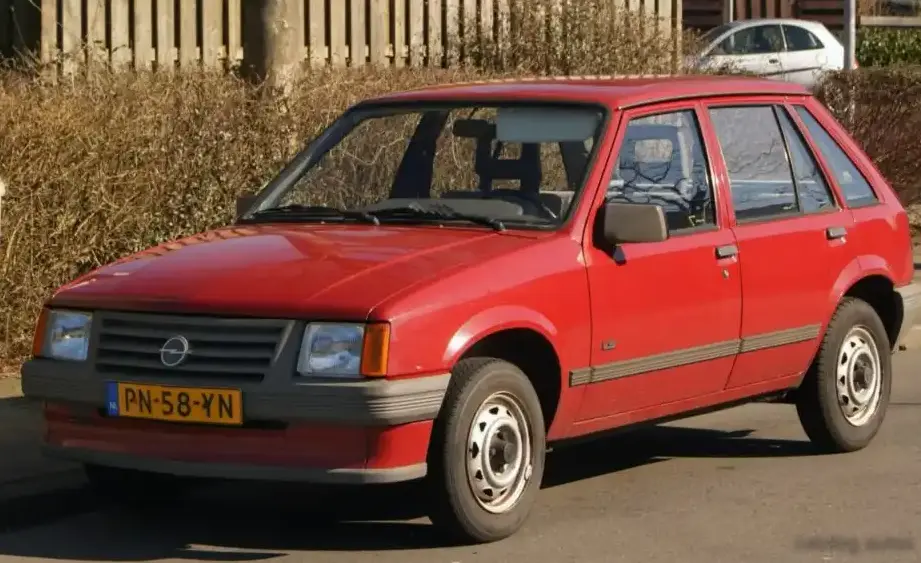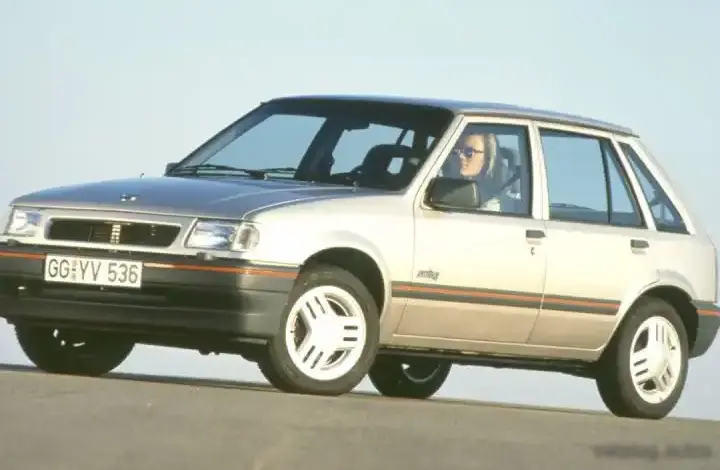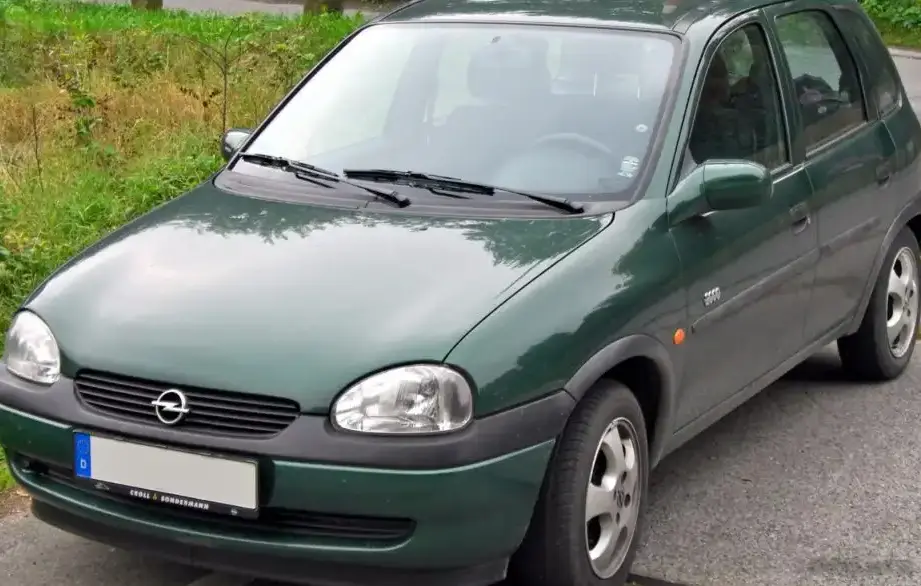
The Opel Corsa B 1.7 D, produced from March 1997 to July 2000, represented an entry-level diesel offering within the facelifted second generation of Opel’s popular supermini. Positioned as the most economical variant of the Corsa B range, it catered to buyers prioritizing fuel efficiency and low running costs over outright performance. This model, powered by a naturally aspirated 1.7-liter diesel engine producing 60 horsepower, was primarily sold in European markets, offering a practical and affordable transportation solution. The facelift, introduced in 1997, brought subtle styling revisions and improvements to interior trim compared to the earlier Corsa B models.
Technical Specifications
| Brand | Opel |
| Model | Corsa |
| Generation | Corsa B (facelift 1997) |
| Type (Engine) | 1.7 D (60 Hp) |
| Start of production | March, 1997 |
| End of production | July, 2000 |
| Powertrain Architecture | Internal Combustion engine |
| Body type | Hatchback |
| Seats | 5 |
| Doors | 3-5 |
| Fuel consumption (urban) | 6.9 l/100 km (34.1 US mpg, 40.9 UK mpg, 14.5 km/l) |
| Fuel consumption (extra urban) | 4.2 l/100 km (56 US mpg, 67.3 UK mpg, 23.8 km/l) |
| Fuel consumption (combined) | 5.2 l/100 km (45.2 US mpg, 54.3 UK mpg, 19.2 km/l) |
| Fuel Type | Diesel |
| Acceleration 0 – 100 km/h | 16.5 sec |
| Acceleration 0 – 62 mph | 16.5 sec |
| Acceleration 0 – 60 mph | 15.7 sec |
| Maximum speed | 155 km/h (96.31 mph) |
| Weight-to-power ratio | 15.5 kg/Hp |
| Weight-to-torque ratio | 8.3 kg/Nm |
| Power | 60 Hp @ 4400 rpm |
| Power per litre | 35.6 Hp/l |
| Torque | 112 Nm @ 2650 rpm (82.61 lb.-ft. @ 2650 rpm) |
| Engine layout | Front, Transverse |
| Engine Model/Code | X17D |
| Engine displacement | 1686 cm3 (102.89 cu. in.) |
| Number of cylinders | 4 |
| Engine configuration | Inline |
| Cylinder Bore | 79 mm (3.11 in.) |
| Piston Stroke | 86 mm (3.39 in.) |
| Compression ratio | 22:1 |
| Number of valves per cylinder | 2 |
| Fuel injection system | Precombustion chamber injection |
| Engine aspiration | Naturally aspirated |
| Engine oil capacity | 3.75 l (3.96 US qt | 3.3 UK qt) |
| Coolant capacity | 6 l (6.34 US qt | 5.28 UK qt) |
| Kerb Weight | 927 kg (2043.69 lbs.) |
| Max. weight | 1455 kg (3207.73 lbs.) |
| Max load | 528 kg (1164.04 lbs.) |
| Trunk (boot) space – minimum | 260 l (9.18 cu. ft.) |
| Trunk (boot) space – maximum | 1050 l (37.08 cu. ft.) |
| Fuel tank capacity | 46 l (12.15 US gal | 10.12 UK gal) |
| Length | 3740 mm (147.24 in.) |
| Width | 1610 mm (63.39 in.) |
| Height | 1420 mm (55.91 in.) |
| Wheelbase | 2445 mm (96.26 in.) |
| Front track | 1385 mm (54.53 in.) |
| Rear track | 1390 mm (54.72 in.) |
| Ride height (ground clearance) | 140 mm (5.51 in.) |
| Drag coefficient (Cd) | 0.35 |
| Minimum turning circle | 10.5 m (34.45 ft.) |
| Drivetrain Architecture | Front wheel drive |
| Number of gears | 5 |
| Gearbox type | Manual transmission |
| Front suspension | Independent, McPherson with coil spring and anti-roll bar |
| Rear suspension | Semi-independent, longitudinal arms with transverse torsion shafts |
| Front brakes | Ventilated discs |
| Rear brakes | Drum |
| Assisting systems | ABS (Anti-lock braking system) |
| Steering type | Steering rack and pinion |
| Power steering | Hydraulic |
| Tires size | 165/70 R13 |
| Wheel rims size | 5J x 13 |
Powertrain & Engine Architecture
The Corsa B 1.7 D utilized the Opel X17D engine, a 1.7-liter inline-four cylinder diesel. This engine employed precombustion chamber injection, a system common in diesel engines of the era. This system involved injecting fuel into a precombustion chamber connected to the main cylinder, promoting more complete combustion and reducing noise. The engine featured a two-valve per cylinder configuration (SOHC) and a relatively low compression ratio of 22:1. The five-speed manual transmission was the only gearbox option available with this engine, prioritizing fuel economy over rapid acceleration. The engine’s design focused on durability and simplicity, rather than high performance.
Driving Characteristics
The 1.7 D Corsa B offered modest performance, with a 0-60 mph time of around 15.7 seconds and a top speed of 155 km/h (96 mph). The engine’s torque peak of 112 Nm (82.6 lb-ft) at 2650 rpm provided adequate pulling power for everyday driving, but acceleration was noticeably slower than the gasoline-powered variants, such as the 1.6-liter models. The five-speed manual transmission was geared for economy, with relatively long gear ratios. This resulted in a relaxed driving experience at cruising speeds, but required frequent downshifts when overtaking or climbing hills. Compared to the more powerful Corsa B models, the 1.7 D prioritized fuel efficiency and low-speed drivability.
Equipment & Trim Levels
The 1.7 D trim level was typically the base model in the Corsa B range. Standard equipment included basic cloth upholstery, a simple dashboard layout, and manual windows and door locks. Power steering was usually standard, but air conditioning, central locking, and alloy wheels were typically optional extras. The interior was functional and durable, designed for practicality rather than luxury. The facelifted models (1997 onwards) featured minor improvements to the interior trim and dashboard design compared to the earlier Corsa B models.
Chassis & Braking
The Corsa B 1.7 D featured a MacPherson strut front suspension and a semi-independent torsion beam rear suspension. This setup provided a comfortable ride quality, although handling was not as sharp as some of its competitors. The front brakes were ventilated discs, while the rear brakes were drums. ABS (Anti-lock Braking System) was often included as standard equipment, enhancing safety. The relatively lightweight nature of the Corsa B helped to compensate for the engine’s modest power output, providing reasonable braking performance.
Market Reception & Comparison
The Corsa B 1.7 D was well-received in markets where fuel economy and low running costs were paramount. Critics praised its affordability and practicality, but noted its lack of performance compared to other Corsa B variants. Compared to the 1.6-liter gasoline models, the 1.7 D offered significantly better fuel economy but considerably slower acceleration. The 1.7 D also proved to be more reliable than some of the more complex gasoline engines in the range, making it a popular choice for budget-conscious buyers.
Legacy
The Opel Corsa B 1.7 D remains a relatively common sight on European roads today, testament to its durability and affordability. The X17D engine is known for its robustness and relatively simple maintenance requirements. While not a performance icon, the 1.7 D Corsa B holds a place as a practical and economical supermini that provided affordable transportation for a wide range of drivers. In the used car market, these models are typically valued for their low running costs and simple mechanical design, making them a popular choice for first-time car owners or those seeking a reliable and inexpensive vehicle.