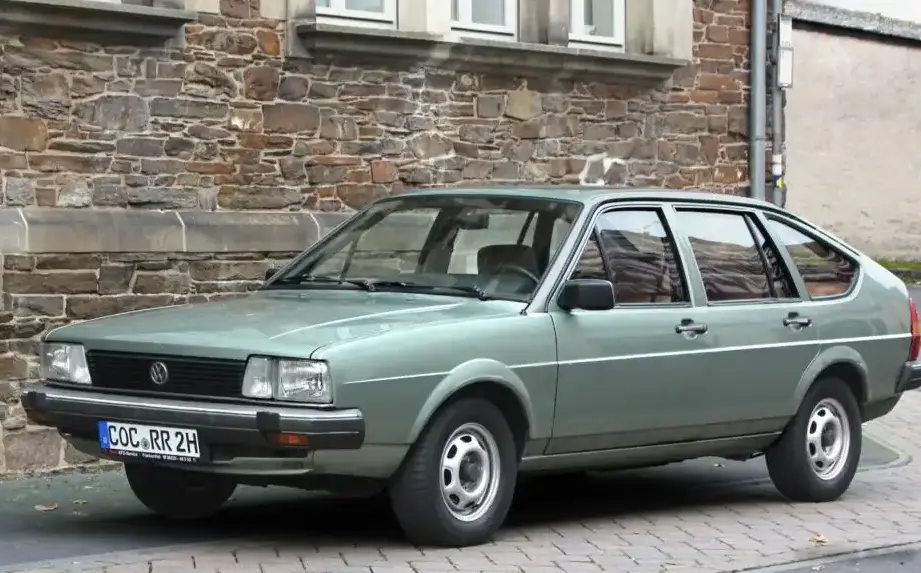
The Volkswagen Passat B2, manufactured between 1980 and 1988, marked a substantial advancement in Volkswagen’s mid-size vehicle lineup. The 1.3-liter (60 hp) variant, available throughout a significant portion of the B2’s production run, served as the entry-level option, particularly within European markets. Positioned as an economical and practical family car, it balanced affordability with the Passat’s inherent qualities of spaciousness and build quality. This model was a core component of the 1HX0/A3 platform family, sharing numerous components with the Audi 80 and other vehicles within the Volkswagen Group. It was designed as a replacement for the aging Passat B1, offering a more contemporary design and enhanced interior space.
Technical Specifications
| Brand | Volkswagen |
| Model | Passat |
| Generation | Passat (B2) |
| Type (Engine) | 1.3 (60 Hp) |
| Start of production | 1980 |
| End of production | 1986 |
| Powertrain Architecture | Internal Combustion engine |
| Body type | Hatchback |
| Seats | 5 |
| Doors | 5 |
| Fuel consumption (urban) | 8.9 l/100 km (26.4 US mpg, 31.7 UK mpg, 11.2 km/l) |
| Fuel consumption (extra urban) | 5.7 l/100 km (41.3 US mpg, 49.6 UK mpg, 17.5 km/l) |
| Fuel consumption (combined) | 7.7 l/100 km (30.5 US mpg, 36.7 UK mpg, 13 km/l) |
| Fuel Type | Petrol (Gasoline) |
| Acceleration 0 – 100 km/h | 10.4 sec |
| Acceleration 0 – 62 mph | 10.4 sec |
| Acceleration 0 – 60 mph | 9.9 sec |
| Maximum speed | 152 km/h (94.45 mph) |
| Weight-to-power ratio | 15.1 kg/Hp, 66.3 Hp/tonne |
| Weight-to-torque ratio | 9.1 kg/Nm, 110.5 Nm/tonne |
| Power | 60 Hp @ 5600 rpm |
| Power per litre | 46.3 Hp/l |
| Torque | 100 Nm @ 3500 rpm (73.76 lb.-ft. @ 3500 rpm) |
| Engine layout | Front, Longitudinal |
| Engine Model/Code | EP |
| Engine displacement | 1296 cm3 (79.09 cu. in.) |
| Number of cylinders | 4 |
| Engine configuration | Inline |
| Cylinder Bore | 75 mm (2.95 in.) |
| Piston Stroke | 73.5 mm (2.89 in.) |
| Compression ratio | 9:1 |
| Number of valves per cylinder | 2 |
| Fuel injection system | Carburettor |
| Engine aspiration | Naturally aspirated engine |
| Valvetrain | OHC |
| Engine oil capacity | 3 l (3.17 US qt | 2.64 UK qt) |
| Coolant capacity | 6 l (6.34 US qt | 5.28 UK qt) |
| Kerb Weight | 905 kg (1995.18 lbs.) |
| Max. weight | 1305 kg (2877.03 lbs.) |
| Max load | 400 kg (881.85 lbs.) |
| Trunk (boot) space – minimum | 480 l (16.95 cu. ft.) |
| Trunk (boot) space – maximum | 1542 l (54.46 cu. ft.) |
| Fuel tank capacity | 70 l (18.49 US gal | 15.4 UK gal) |
| Length | 4435 mm (174.61 in.) |
| Width | 1685 mm (66.34 in.) |
| Height | 1385 mm (54.53 in.) |
| Wheelbase | 2550 mm (100.39 in.) |
| Front track | 1400 mm (55.12 in.) |
| Rear (Back) track | 1408 mm (55.43 in.) |
| Drivetrain Architecture | The Internal combustion engine (ICE) drives the front wheels of the vehicle. |
| Drive wheel | Front wheel drive |
| Number of gears and type of gearbox | 4 gears, manual transmission |
| Front suspension | Independent type McPherson |
| Rear suspension | Coil spring |
| Front brakes | Disc |
| Rear brakes | Drum |
| Steering type | Steering rack and pinion |
| Tires size | 175/70 R13 |
| Wheel rims size | 13 |
Powertrain & Engine Architecture
The 1.3-liter Passat B2 was powered by the Volkswagen EP engine, an inline-four cylinder petrol engine. Producing 60 horsepower at 5600 rpm and 100 Nm (74 lb-ft) of torque at 3500 rpm, this engine was a relatively uncomplicated design. It featured a single overhead camshaft (OHC) valvetrain with two valves per cylinder. Fuel delivery was handled by a carburetor, a common feature for engines of this era, rather than fuel injection. The engine was mounted longitudinally in the front of the vehicle, powering the front wheels. A four-speed manual transmission was standard, providing a direct connection between the engine and the wheels. The engine’s compression ratio of 9:1 was typical for the time, allowing it to operate reliably on the lower octane fuel commonly available.
Driving Characteristics
The 1.3-liter Passat B2 delivered modest performance. Acceleration from 0 to 60 mph took around 9.9 seconds, with a top speed of approximately 94 mph. While not a performance-oriented vehicle, the 1.3L engine provided sufficient power for everyday driving, especially in urban and suburban settings. The four-speed manual transmission offered a reasonable gear spread, but the engine lacked the low-end torque of larger displacement engines, necessitating frequent downshifts when climbing hills or overtaking. Compared to the 1.6-liter or 1.8-liter versions, or the diesel options, the 1.3 felt noticeably slower. However, its lighter weight contributed to improved fuel economy and more agile handling.
Equipment & Trim Levels
The 1.3-liter Passat typically represented the base trim level. Standard features included cloth upholstery, basic instrumentation, and manual windows and door locks. Options such as a radio, upgraded interior trim, and a sunroof were frequently available. The interior design was functional and straightforward, prioritizing practicality over luxury. The dashboard layout was characteristic of German cars of the period, with clearly marked gauges and logically arranged controls. The emphasis was on providing a comfortable and durable interior for daily use.
Chassis & Braking
The Passat B2 utilized an independent McPherson strut front suspension and a coil spring rear suspension. This configuration provided a comfortable ride and reasonable handling. Front brakes were discs, offering good stopping power, while the rear brakes were drums, a cost-saving measure common in entry-level models. The steering was rack and pinion, delivering precise and responsive steering feel. The 175/70 R13 tires struck a balance between grip and ride comfort. Stabilizer bars were often omitted on the base 1.3-liter model to further reduce costs.
Market Reception & Comparison
The 1.3-liter Passat B2 was generally well-received as an affordable and practical family car. Reviewers praised its spacious interior, comfortable ride, and solid construction. However, the engine’s limited power output was often noted, particularly when compared to larger displacement alternatives. Fuel economy was a significant advantage, making it an appealing choice for budget-conscious buyers. Compared to the 1.6-liter or 1.8-liter versions, the 1.3 offered lower running costs but sacrificed performance. The diesel models provided even better fuel economy but typically came with a higher purchase price.
Legacy
The 1.3-liter Passat B2, while not the most powerful or sought-after variant, remains a relatively reliable and affordable classic car. The EP engine is known for its durability, and parts availability is generally good. Today, these cars are often appreciated by enthusiasts seeking a classic Volkswagen experience. While rust can be a concern, well-maintained examples can provide years of dependable service. The 1.3-liter Passat B2 represents a significant chapter in Volkswagen’s history, offering a blend of practicality, affordability, and German engineering.