
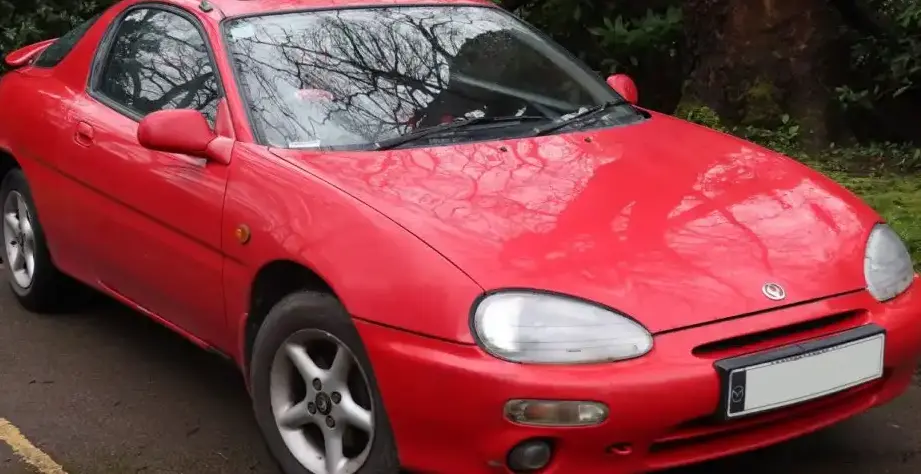
The Mazda MX-3 (EC) 1.6i, producing 107 horsepower, was a front-wheel-drive coupe manufactured by Mazda between 1994 and 2000. Positioned as a sporty and affordable option, it occupied a unique space in Mazda’s lineup, bridging the gap between the more mainstream 323/Protegé and the iconic MX-5 Miata roadster. The MX-3, built on Mazda’s EC platform, was primarily marketed towards younger buyers seeking a stylish and relatively economical coupe. This variant, the 1.6i, represented the entry-level engine option for the MX-3 in many markets, offering a balance between performance and fuel efficiency.
Technical Specifications
| Brand | Mazda |
| Model | MX-3 |
| Generation | MX-3 (EC) |
| Type (Engine) | 1.6i (107 Hp) |
| Start of production | 1994 |
| End of production | 2000 |
| Powertrain Architecture | Internal Combustion engine |
| Body type | Coupe |
| Seats | 4 |
| Doors | 2 |
| Fuel consumption (urban) | 10.1 l/100 km (23.3 US mpg) |
| Fuel consumption (extra urban) | 6.2 l/100 km (37.9 US mpg) |
| Fuel Type | Petrol (Gasoline) |
| Acceleration 0 – 100 km/h | 10.5 sec |
| Acceleration 0 – 62 mph | 10.5 sec |
| Acceleration 0 – 60 mph | 10 sec |
| Maximum speed | 197 km/h (122.41 mph) |
| Weight-to-power ratio | 9.3 kg/Hp |
| Weight-to-torque ratio | 7.4 kg/Nm |
| Power | 107 Hp @ 6200 rpm |
| Power per litre | 67 Hp/l |
| Torque | 134 Nm @ 3600 rpm (98.83 lb.-ft. @ 3600 rpm) |
| Engine layout | Front, Transverse |
| Engine displacement | 1598 cm3 (97.52 cu. in.) |
| Number of cylinders | 4 |
| Engine configuration | Inline |
| Cylinder Bore | 78 mm (3.07 in.) |
| Piston Stroke | 83.6 mm (3.29 in.) |
| Compression ratio | 9.4:1 |
| Number of valves per cylinder | 4 |
| Fuel injection system | Multi-port manifold injection |
| Engine aspiration | Naturally aspirated engine |
| Valvetrain | OHC |
| Kerb Weight | 990 kg (2182.58 lbs.) |
| Max. weight | 1230 kg (2711.69 lbs.) |
| Max load | 240 kg (529.11 lbs.) |
| Trunk (boot) space – minimum | 135 l (4.77 cu. ft.) |
| Fuel tank capacity | 48 l (12.68 US gal | 10.56 UK gal) |
| Length | 3975 mm (156.5 in.) |
| Width | 1675 mm (65.94 in.) |
| Height | 1230 mm (48.43 in.) |
| Wheelbase | 2265 mm (89.17 in.) |
| Front track | 1410 mm (55.51 in.) |
| Rear (Back) track | 1430 mm (56.3 in.) |
| Drivetrain Architecture | Front wheel drive |
| Number of gears and type of gearbox | 5 gears, manual transmission |
| Front suspension | Wishbone |
| Rear suspension | Spring Strut |
| Front brakes | Ventilated discs |
| Rear brakes | Disc |
| Assisting systems | ABS (Anti-lock braking system) |
| Steering type | Steering rack and pinion |
| Power steering | Hydraulic Steering |
| Tires size | 185/60 R14 |
| Wheel rims size | 14 |
Powertrain & Engine Architecture
The heart of the MX-3 1.6i was the Mazda B6 engine, a 1.6-liter inline-four cylinder powerplant. This engine, internally designated as part of the B6 family, utilized a single overhead camshaft (SOHC) valvetrain and multi-port fuel injection. The engine’s 9.4:1 compression ratio contributed to its modest power output of 107 horsepower at 6200 rpm and 134 Nm (98.83 lb-ft) of torque at 3600 rpm. The engine’s design prioritized reliability and fuel efficiency over outright performance. The MX-3 1.6i was exclusively offered with a five-speed manual transmission, providing drivers with direct control over the engine’s power delivery. The transmission was known for its smooth shifting action and relatively durable construction.
Driving Characteristics
The MX-3 1.6i offered a reasonably engaging driving experience, particularly for its price point. While not a performance car by any means, the 1.6-liter engine provided adequate power for everyday driving. Acceleration from 0 to 60 mph took around 10 seconds, and the top speed was approximately 122 mph. The five-speed manual transmission allowed drivers to keep the engine in its optimal power band, making the most of the available horsepower. Compared to the more powerful MX-3 1.8i, the 1.6i felt noticeably slower, especially during overtaking maneuvers. However, the 1.6i’s lighter weight and more balanced handling made it a more nimble and enjoyable car to drive on winding roads. The gear ratios were well-matched to the engine’s characteristics, providing good acceleration in each gear.
Equipment & Trim Levels
The MX-3 1.6i typically came equipped with a basic but functional set of features. Standard equipment included power steering, a basic audio system, and cloth upholstery. Air conditioning was often an optional extra, as were power windows and door locks. Interior trim levels were relatively simple, with a focus on durability rather than luxury. The dashboard layout was straightforward and easy to use, with clearly labeled controls. Optional extras included alloy wheels, a sunroof, and upgraded audio systems. The MX-3 1.6i was generally considered to be a well-equipped car for its price, offering a good balance of features and affordability.
Chassis & Braking
The MX-3 featured a front-wheel-drive chassis with independent wishbone suspension at the front and a spring strut rear suspension. This suspension setup provided a comfortable ride quality while still offering decent handling characteristics. The front brakes were ventilated discs, while the rear brakes were solid discs. Anti-lock braking system (ABS) was standard equipment, enhancing safety and control during emergency braking situations. The MX-3’s chassis was relatively lightweight, contributing to its nimble handling. The steering was a rack-and-pinion system with hydraulic power assistance, providing precise and responsive steering feel.
Market Reception & Comparison
The Mazda MX-3 1.6i was generally well-received by automotive critics, who praised its stylish design, affordable price, and engaging driving experience. However, some critics noted that the 1.6-liter engine was underpowered, especially when compared to the more powerful 1.8-liter version. Fuel economy was considered to be good, with the MX-3 1.6i achieving around 38 mpg on the highway. In terms of reliability, the MX-3 was generally considered to be a reliable car, although some owners reported issues with the engine’s cooling system. Compared to other coupes in its class, such as the Honda Civic Coupe and the Toyota Celica, the MX-3 offered a unique combination of style, affordability, and driving enjoyment.
Legacy
The Mazda MX-3, while not a sales blockbuster, has gained a cult following among enthusiasts. The 1.6i variant, in particular, is appreciated for its simplicity, reliability, and affordability. Today, well-maintained examples of the MX-3 1.6i are becoming increasingly collectible. The B6 engine is known for its durability, and with proper maintenance, it can provide many years of reliable service. The MX-3’s unique styling and engaging driving experience continue to appeal to enthusiasts who are looking for a fun and affordable coupe. While parts availability can be a challenge, the MX-3 remains a popular choice for those who appreciate a classic Mazda.
