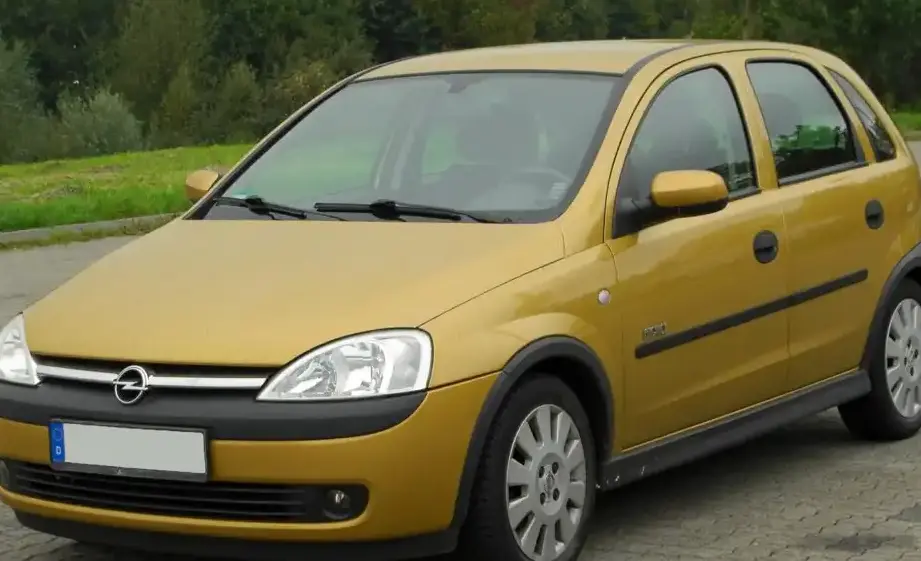
The Opel Corsa C 1.7 DI 16V, produced from October 2000 to June 2003, represented an entry-level diesel offering within the broader Corsa C range (1999-2006). Positioned as a fuel-efficient and economical option, it catered to buyers prioritizing practicality over outright performance. This variant utilized Opel’s 1.7-liter direct injection diesel engine, paired with a five-speed manual transmission. It was primarily sold in European markets, where diesel engines held a significant market share due to favorable taxation and fuel costs. The Corsa C itself was a significant model for Opel, building upon the success of its predecessor and offering a more refined and modern package.
Technical Specifications
| Brand | Opel |
| Model | Corsa |
| Generation | Corsa C |
| Type (Engine) | 1.7 DI 16V (65 Hp) |
| Start of production | October, 2000 |
| End of production | June, 2003 |
| Powertrain Architecture | Internal Combustion engine |
| Body type | Hatchback |
| Seats | 5 |
| Doors | 3-5 |
| Fuel consumption (urban) | 5.8 l/100 km (40.6 US mpg, 48.7 UK mpg, 17.2 km/l) |
| Fuel consumption (extra urban) | 4.1 l/100 km (57.4 US mpg, 68.9 UK mpg, 24.4 km/l) |
| Fuel consumption (combined) | 4.7 l/100 km (50 US mpg, 60.1 UK mpg, 21.3 km/l) |
| CO2 emissions | 127 g/km |
| Fuel Type | Diesel |
| Acceleration 0 – 100 km/h | 14.5 sec |
| Acceleration 0 – 62 mph | 14.5 sec |
| Acceleration 0 – 60 mph | 13.8 sec |
| Maximum speed | 162 km/h (100.66 mph) |
| Weight-to-power ratio | 15.7 kg/Hp, 63.7 Hp/tonne |
| Weight-to-torque ratio | 7.8 kg/Nm, 127.5 Nm/tonne |
| Power | 65 Hp @ 4400 rpm |
| Power per litre | 38.6 Hp/l |
| Torque | 130 Nm @ 3000 rpm (95.88 lb.-ft. @ 3000 rpm) |
| Engine layout | Front, Transverse |
| Engine Model/Code | Y17DTL |
| Engine displacement | 1686 cm3 (102.89 cu. in.) |
| Number of cylinders | 4 |
| Engine configuration | Inline |
| Cylinder Bore | 79 mm (3.11 in.) |
| Piston Stroke | 86 mm (3.39 in.) |
| Compression ratio | 18.4:1 |
| Number of valves per cylinder | 4 |
| Fuel injection system | Diesel Commonrail |
| Engine aspiration | Turbocharger |
| Valvetrain | DOHC |
| Engine oil capacity | 4.5 l (4.76 US qt | 3.96 UK qt) |
| Coolant | 7.1 l (7.5 US qt | 6.25 UK qt) |
| Kerb Weight | 1020 kg (2248.72 lbs.) |
| Max. weight | 1505 kg (3317.96 lbs.) |
| Max load | 485 kg (1069.24 lbs.) |
| Trunk (boot) space – minimum | 260 l (9.18 cu. ft.) |
| Trunk (boot) space – maximum | 1060 l (37.43 cu. ft.) |
| Fuel tank capacity | 44 l (11.62 US gal | 9.68 UK gal) |
| Length | 3817 mm (150.28 in.) |
| Width | 1646 mm (64.8 in.) |
| Height | 1440 mm (56.69 in.) |
| Wheelbase | 2491 mm (98.07 in.) |
| Front track | 1415 mm (55.71 in.) |
| Rear (Back) track | 1410 mm (55.51 in.) |
| Ride height (ground clearance) | 140 mm (5.51 in.) |
| Drivetrain Architecture | The Internal combustion engine (ICE) drives the front wheels of the vehicle. |
| Drive wheel | Front wheel drive |
| Number of gears and type of gearbox | 5 gears, manual transmission |
| Front suspension | Coil spring |
| Rear suspension | Coil spring |
| Front brakes | Disc |
| Rear brakes | Drum |
| Steering type | Steering rack and pinion |
| Tires size | 175/65 R14 |
| Wheel rims size | 14 |
Powertrain & Engine Architecture
The heart of the Corsa C 1.7 DI 16V is the Y17DTL engine, a 1.7-liter inline-four cylinder diesel. This engine belongs to Opel/Isuzu’s family of diesel engines, known for their durability and relatively simple construction. The “DI” designation stands for Direct Injection, utilizing a common rail diesel injection system. This system, a relatively new technology at the time, allowed for precise control of fuel delivery, resulting in improved fuel economy and reduced emissions compared to older indirect injection systems. The 16V designation indicates the engine features four valves per cylinder, enhancing breathing and contributing to a broader torque curve. The engine’s turbocharger, a variable geometry turbo (VGT), further boosted power and torque. The five-speed manual transmission was a standard offering, providing a relatively conventional gear ratio spread optimized for fuel efficiency.
Driving Characteristics
The 1.7 DI 16V Corsa C offered modest performance. With 65 horsepower and 130 Nm (96 lb-ft) of torque, acceleration was not a strong point, taking around 14.5 seconds to reach 62 mph. However, the engine’s torque delivery, peaking at 3000 rpm, provided adequate pulling power for everyday driving situations. The manual transmission allowed drivers to make the most of the available power, but it wasn’t a particularly sporty experience. Compared to the more powerful 1.8-liter gasoline versions, the diesel lacked outright speed, but it excelled in fuel economy. The gear ratios were geared towards maximizing fuel efficiency rather than providing quick acceleration. The driving experience was generally considered comfortable, with the Corsa C offering a compliant ride, but it wasn’t known for its dynamic handling.
Equipment & Trim Levels
The 1.7 DI 16V typically came with a basic level of equipment, reflecting its position as an entry-level model. Standard features generally included power steering, central locking, and an adjustable steering column. Interior upholstery was typically cloth, and the dashboard featured a functional, if somewhat basic, design. Optional extras included air conditioning, electric windows, and an upgraded audio system. Trim levels varied slightly depending on the market, but the focus remained on providing a practical and affordable vehicle. Safety features were relatively basic for the time, typically including driver and passenger airbags and ABS brakes on some models.
Chassis & Braking
The Corsa C 1.7 DI 16V utilized a relatively simple chassis design. Front suspension consisted of coil springs and MacPherson struts, while the rear employed a torsion beam setup. This configuration provided a comfortable ride but didn’t offer particularly engaging handling. Braking was typically comprised of front disc brakes and rear drum brakes, adequate for the vehicle’s weight and performance. Stabilizer bars were fitted to improve body roll, but the overall handling characteristics were geared towards comfort and practicality rather than sporty driving. The relatively light weight of the vehicle (around 1020 kg or 2249 lbs) helped to offset the modest power output.
Market Reception & Comparison
The Corsa C 1.7 DI 16V was generally well-received as an economical and practical city car. Critics praised its fuel efficiency and low running costs, but noted its lack of performance. Compared to the gasoline-powered versions, the diesel offered significantly better fuel economy but lacked the responsiveness and refinement of the petrol engines. Against competitors like the Ford Fiesta and Renault Clio, the Corsa C 1.7 DI 16V offered a competitive package in terms of price and fuel economy. Reliability was generally good, although the diesel injection system could require maintenance over time.
Legacy
The Opel Corsa C 1.7 DI 16V remains a relatively common sight on European roads today, testament to its durability and affordability. The Y17DTL engine, while not known for being particularly powerful, is generally considered reliable if properly maintained. In the used car market, these Corsas are valued for their low running costs and practicality. However, potential buyers should be aware of the age-related issues common to older diesel engines, such as potential problems with the turbocharger and fuel injection system. The Corsa C 1.7 DI 16V represents a significant step in the development of small diesel cars, offering a compelling combination of fuel efficiency and practicality for budget-conscious buyers.