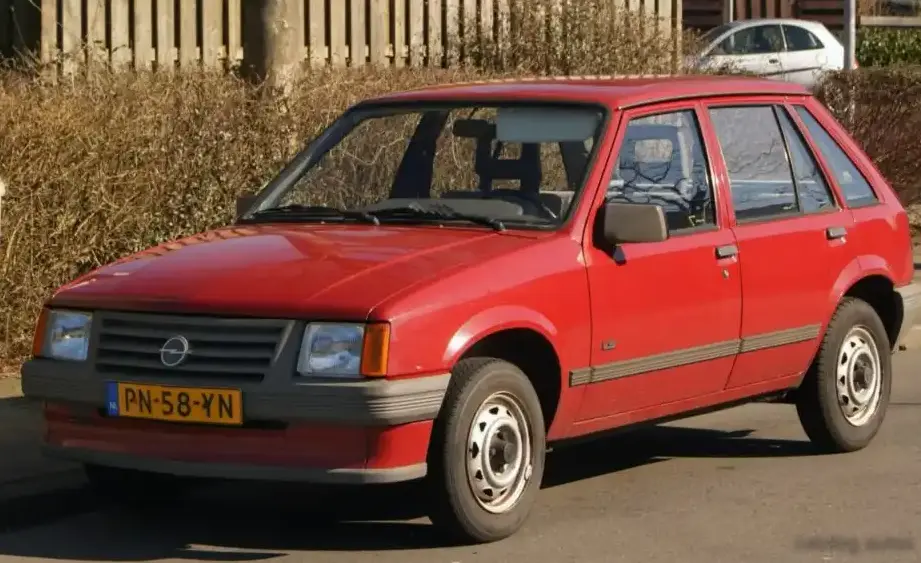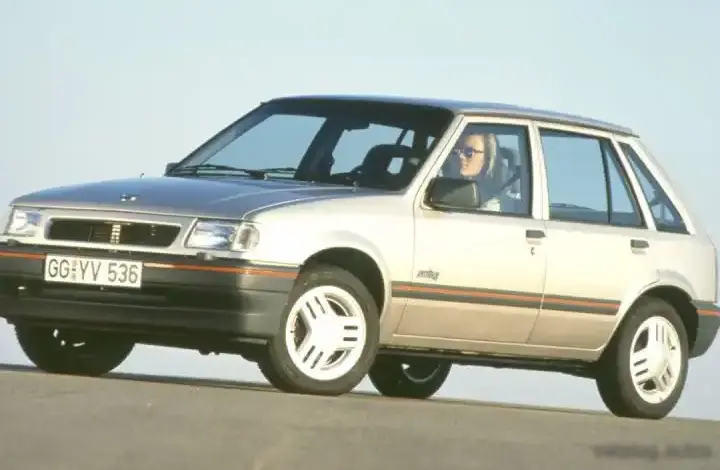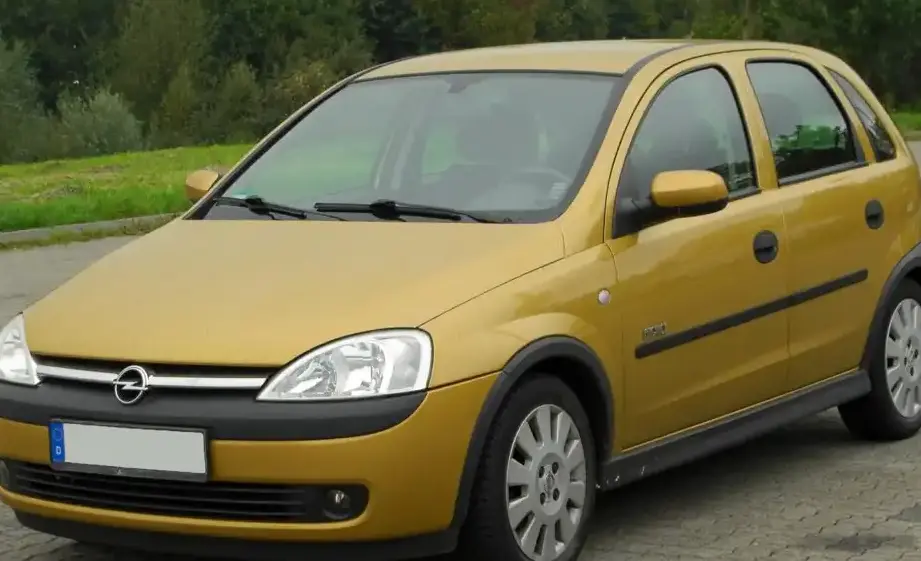
The Opel Corsa C 1.8 16V, produced between 2001 and 2003, represented a performance-oriented variant within the Corsa C range (1999-2006). Positioned as a step up from the base models, it aimed to offer a more engaging driving experience while still maintaining the Corsa’s reputation for practicality and affordability. This model was primarily sold in Europe, where the Corsa was a key competitor in the supermini segment, battling rivals like the Volkswagen Polo, Ford Fiesta, and Renault Clio. The 1.8 16V trim was not a volume seller, but it catered to drivers seeking a sportier feel without the expense of the later, more focused OPC (Opel Performance Center) models.
Technical Specifications
| Brand | Opel |
| Model | Corsa |
| Generation | Corsa C |
| Type (Engine) | 1.8 16V (125 Hp) |
| Start of production | 2001 |
| End of production | 2003 |
| Powertrain Architecture | Internal Combustion engine |
| Body type | Hatchback |
| Seats | 5 |
| Doors | 3 |
| Fuel consumption (urban) | 11.2 l/100 km (21 US mpg, 25.2 UK mpg, 8.9 km/l) |
| Fuel consumption (extra urban) | 6 l/100 km (39.2 US mpg, 47.1 UK mpg, 16.7 km/l) |
| Fuel consumption (combined) | 7.9 l/100 km (29.8 US mpg, 35.8 UK mpg, 12.7 km/l) |
| CO2 emissions | 269 g/km |
| Fuel Type | Petrol (Gasoline) |
| Acceleration 0 – 100 km/h | 9 sec |
| Acceleration 0 – 62 mph | 9 sec |
| Acceleration 0 – 60 mph | 8.6 sec |
| Maximum speed | 202 km/h (125.52 mph) |
| Weight-to-power ratio | 8.1 kg/Hp, 123.2 Hp/tonne |
| Weight-to-torque ratio | 6 kg/Nm, 167.5 Nm/tonne |
| Power | 125 Hp @ 5600 rpm |
| Power per litre | 69.6 Hp/l |
| Torque | 170 Nm @ 3800 rpm (125.39 lb.-ft. @ 3800 rpm) |
| Engine layout | Front, Transverse |
| Engine Model/Code | Z18XE |
| Engine displacement | 1796 cm3 (109.6 cu. in.) |
| Number of cylinders | 4 |
| Engine configuration | Inline |
| Cylinder Bore | 80.5 mm (3.17 in.) |
| Piston Stroke | 88.2 mm (3.47 in.) |
| Compression ratio | 10.5:1 |
| Number of valves per cylinder | 4 |
| Fuel injection system | Multi-port manifold injection |
| Engine aspiration | Naturally aspirated engine |
| Valvetrain | DOHC |
| Engine oil capacity | 4.5 l (4.76 US qt | 3.96 UK qt) |
| Coolant capacity | 5.3 l (5.6 US qt | 4.66 UK qt) |
| Kerb Weight | 1015 kg (2237.69 lbs.) |
| Max. weight | 1530 kg (3373.07 lbs.) |
| Max load | 515 kg (1135.38 lbs.) |
| Trunk (boot) space – minimum | 260 l (9.18 cu. ft.) |
| Trunk (boot) space – maximum | 1060 l (37.43 cu. ft.) |
| Fuel tank capacity | 44 l (11.62 US gal | 9.68 UK gal) |
| Length | 3817 mm (150.28 in.) |
| Width | 1646 mm (64.8 in.) |
| Height | 1440 mm (56.69 in.) |
| Wheelbase | 2491 mm (98.07 in.) |
| Front track | 1415 mm (55.71 in.) |
| Rear track | 1410 mm (55.51 in.) |
| Ride height (ground clearance) | 140 mm (5.51 in.) |
| Drivetrain Architecture | Front wheel drive |
| Number of gears | 5 |
| Gearbox type | Manual transmission |
| Front suspension | Coil spring |
| Rear suspension | Coil spring |
| Front brakes | Disc |
| Rear brakes | Disc |
| Assisting systems | ABS (Anti-lock braking system) |
| Steering type | Steering rack and pinion |
| Power steering | Hydraulic Steering |
| Tires size | 185/55 R15 |
| Wheel rims size | 15 |
Powertrain & Engine Architecture
The heart of the Corsa C 1.8 16V is the Z18XE engine, a 1.8-liter inline-four cylinder gasoline engine. This engine is part of Opel’s ‘Ecotec’ family, known for its focus on efficiency and refinement. The ‘16V’ designation indicates a dual overhead camshaft (DOHC) valvetrain with four valves per cylinder, enhancing breathing and contributing to the engine’s power output. Fuel delivery is managed by a multi-port fuel injection system, providing precise fuel metering for optimal combustion. The Z18XE produces 125 horsepower at 5600 rpm and 170 Nm (125 lb-ft) of torque at 3800 rpm. The engine’s relatively high compression ratio of 10.5:1 further aids in performance. The standard transmission for this variant was a five-speed manual gearbox, although a four-speed automatic transmission was also available, albeit less common. The automatic transmission, while offering convenience, did impact acceleration and fuel economy compared to the manual.
Driving Characteristics
The Corsa C 1.8 16V offered a noticeable step up in performance compared to the lower-displacement engines available in the range, such as the 1.0 or 1.2-liter variants. The 0-60 mph time of around 8.6 seconds (manual transmission) was respectable for a supermini of its era. The engine felt responsive, with a linear power delivery that made it easy to drive in everyday situations. However, it wasn’t a particularly high-revving engine; the peak power was achieved at 5600 rpm, encouraging drivers to shift up sooner rather than holding onto gears for extended periods. The automatic transmission, while smooth, resulted in slightly slower acceleration and a less engaging driving experience. Gear ratios were tuned for a balance between fuel efficiency and usability, rather than outright performance. The Corsa C’s relatively lightweight construction helped to offset the engine’s modest power output, resulting in a nimble and enjoyable driving experience.
Equipment & Trim Levels
The 1.8 16V trim typically included features such as power steering, central locking, electric front windows, and an adjustable steering column. Interior upholstery was usually cloth, with a relatively simple but functional dashboard layout. Optional extras included air conditioning, alloy wheels, a CD player, and upgraded seat fabrics. The trim level sat in the mid-range of the Corsa C lineup, offering more equipment than the base models but falling short of the more luxurious or sporty OPC variants. The focus was on providing a well-equipped and comfortable package for drivers who wanted a bit more performance without sacrificing practicality.
Chassis & Braking
The Corsa C utilized a MacPherson strut front suspension and a torsion beam rear suspension. This setup provided a good balance between ride comfort and handling. The front brakes were ventilated discs, while the rear brakes were typically solid discs, offering adequate stopping power for the vehicle’s weight and performance. Anti-lock Braking System (ABS) was standard, enhancing safety. The Corsa C’s relatively small size and lightweight construction contributed to its agile handling characteristics. Stabilizer bars were fitted to both the front and rear axles to reduce body roll during cornering.
Market Reception & Comparison
The Corsa C 1.8 16V was generally well-received by automotive critics, who praised its responsive engine and nimble handling. However, some reviewers noted that the automatic transmission could feel sluggish and that the interior was somewhat basic compared to some of its rivals. Fuel economy was considered reasonable for a 1.8-liter engine, but not exceptional. Compared to the 1.0 and 1.2-liter versions, the 1.8 16V offered a significant performance boost, but at the cost of slightly higher fuel consumption and insurance costs. The OPC models, with their more powerful engines and sport-tuned suspensions, offered a more focused driving experience, but came at a higher price point.
Legacy
The Z18XE engine, while not known for any major inherent flaws, requires regular maintenance to ensure longevity. Common issues include oil leaks and occasional sensor failures. The Corsa C 1.8 16V has maintained a reasonable level of popularity in the used car market, particularly among buyers looking for an affordable and reliable supermini with a bit more performance than the base models. Parts availability is generally good, and the Corsa C is relatively easy to maintain and repair. While not a collector’s item, the 1.8 16V represents a sweet spot in the Corsa C range, offering a good balance of performance, practicality, and affordability.