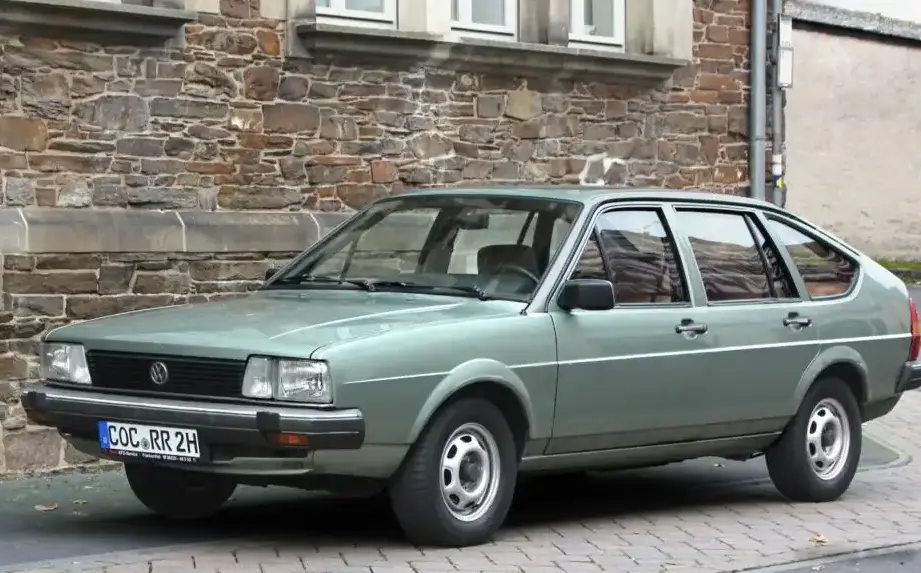
The Volkswagen Passat B2, produced between 1980 and 1988, represented a significant evolution in Volkswagen’s mid-size offerings. The 1.8-liter (90 hp) variant, available throughout much of the B2’s production run (1983-1988), occupied an important position in the lineup, offering a balance between affordability, fuel economy, and acceptable performance. This model was particularly popular in European markets, where it competed with other family saloons and hatchbacks. While the Passat B2 was sold in the United States, the 1.8L engine was not typically offered there, with larger displacement options being favored for the North American market. This article will focus specifically on the 1.8L (90 hp) version, examining its technical details, driving characteristics, and place within the broader Passat B2 range.
Technical Specifications
| Brand | Volkswagen |
| Model | Passat |
| Generation | Passat (B2) |
| Type (Engine) | 1.8 (90 Hp) |
| Start of production | 1983 |
| End of production | 1988 |
| Powertrain Architecture | Internal Combustion engine |
| Body type | Hatchback |
| Seats | 5 |
| Doors | 5 |
| Fuel Type | Petrol (Gasoline) |
| Acceleration 0 – 100 km/h | 7.4 sec |
| Acceleration 0 – 62 mph | 7.4 sec |
| Acceleration 0 – 60 mph | 7 sec |
| Maximum speed | 173 km/h (107.5 mph) |
| Weight-to-power ratio | 10.3 kg/Hp, 96.8 Hp/tonne |
| Weight-to-torque ratio | 6.4 kg/Nm, 155.9 Nm/tonne |
| Power | 90 Hp @ 5200 rpm |
| Power per litre | 50.5 Hp/l |
| Torque | 145 Nm @ 3300 rpm (106.95 lb.-ft. @ 3300 rpm) |
| Engine layout | Front, Longitudinal |
| Engine Model/Code | DS, JV |
| Engine displacement | 1781 cm3 (108.68 cu. in.) |
| Number of cylinders | 4 |
| Engine configuration | Inline |
| Cylinder Bore | 81 mm (3.19 in.) |
| Piston Stroke | 86.4 mm (3.4 in.) |
| Compression ratio | 10:1 |
| Number of valves per cylinder | 2 |
| Fuel injection system | Carburettor |
| Engine aspiration | Naturally aspirated engine |
| Valvetrain | OHC |
| Engine oil capacity | 3 l (3.17 US qt | 2.64 UK qt) |
| Kerb Weight | 930 kg (2050.3 lbs) |
| Max. weight | 1440 kg (3174.66 lbs) |
| Max load | 510 kg (1124.36 lbs) |
| Trunk (boot) space – minimum | 480 l (16.95 cu. ft.) |
| Trunk (boot) space – maximum | 1542 l (54.46 cu. ft.) |
| Fuel tank capacity | 70 l (18.49 US gal | 15.4 UK gal) |
| Length | 4435 mm (174.61 in.) |
| Width | 1685 mm (66.34 in.) |
| Height | 1385 mm (54.53 in.) |
| Wheelbase | 2550 mm (100.39 in.) |
| Front track | 1400 mm (55.12 in.) |
| Rear (Back) track | 1408 mm (55.43 in.) |
| Drivetrain Architecture | The Internal combustion engine (ICE) drives the front wheels of the vehicle. |
| Drive wheel | Front wheel drive |
| Number of gears and type of gearbox | 4 gears, manual transmission |
| Front suspension | Independent type McPherson |
| Rear suspension | Coil spring |
| Front brakes | Disc |
| Rear brakes | Drum |
| Steering type | Steering rack and pinion |
| Tires size | 175/70 R13 |
| Wheel rims size | 13 |
Powertrain & Engine Architecture
The heart of this Passat variant was the Volkswagen DS or JV series 1.8-liter inline-four cylinder engine. These engines were relatively simple in design, utilizing a single overhead camshaft (OHC) and two valves per cylinder. Fuel delivery was managed by a carburetor, a common feature for the time, though increasingly replaced by fuel injection in later models. The DS code typically indicated a slightly lower compression ratio and output compared to the JV variant. The engine’s longitudinal front-engine layout was typical for European front-wheel-drive cars of the era. The 90 hp output was achieved at 5200 rpm, with peak torque of 145 Nm (106.95 lb-ft) arriving at 3300 rpm. This engine was typically paired with a four-speed manual transmission, although a three-speed automatic transmission was also available, and is the focus of this article. The automatic gearbox, while offering convenience, did impact performance and fuel economy compared to the manual version.
Driving Characteristics
The 1.8-liter, 90 hp Passat B2 with the automatic transmission offered a comfortable, if not particularly exhilarating, driving experience. Acceleration to 60 mph took around 7.4 seconds, which was adequate for the time but noticeably slower than the manual versions or the more powerful Passat GL models. The automatic transmission’s gear ratios were geared towards fuel efficiency and smooth cruising rather than rapid acceleration. The engine felt relatively strained when pushed hard, particularly when overtaking or climbing hills. However, for everyday driving, the powertrain provided sufficient power and torque. The front-wheel-drive configuration offered predictable handling, although it lacked the dynamic finesse of rear-wheel-drive cars. The suspension, tuned for comfort, absorbed bumps and imperfections in the road well, making it a pleasant long-distance cruiser.
Equipment & Trim Levels
The 1.8-liter automatic Passat typically represented a mid-range trim level. Standard equipment included cloth upholstery, basic instrumentation, and manual windows and door locks. Power steering was often an optional extra. The interior design was functional and straightforward, reflecting the car’s focus on practicality. Optional extras could include a sunroof, upgraded stereo system, and central locking. The trim level often dictated the exterior detailing, with chrome trim and higher-quality paint finishes available on higher-spec models. The dashboard layout was simple and easy to use, with clearly marked controls.
Chassis & Braking
The Passat B2 featured an independent McPherson strut front suspension and a coil-sprung rear suspension. This setup provided a good balance between ride comfort and handling. The front brakes were disc brakes, offering adequate stopping power, while the rear brakes were drum brakes, a cost-saving measure common in this class of vehicle. The steering was a rack-and-pinion system, providing precise and responsive steering feel. The car rode on 13-inch wheels with 175/70 R13 tires. Stabilizer bars were often included, improving body control and reducing roll during cornering.
Market Reception & Comparison
The 1.8-liter automatic Passat B2 was generally well-received by critics as a practical and affordable family car. It was praised for its comfortable ride, spacious interior, and fuel efficiency. However, it was often criticized for its lack of performance, particularly when equipped with the automatic transmission. Compared to the more powerful Passat GL models (with engines ranging from 1.6 to 2.1 liters), the 1.8-liter version felt underpowered. The 1.6-liter diesel models offered better fuel economy but significantly less performance. The 1.8L automatic was positioned as a compromise, offering a balance between cost, economy, and usability.
Legacy
The Volkswagen Passat B2 1.8-liter (90 hp) automatic, while not the most sought-after variant, remains a relatively common sight in the classic car market. The DS and JV engines are generally considered reliable, although they are prone to age-related issues such as carburetor wear and oil leaks. Parts availability is generally good, thanks to the Passat B2’s popularity. The automatic transmission, while not as durable as the manual gearbox, can provide years of reliable service with proper maintenance. Today, these cars are appreciated by enthusiasts for their simple design, affordability, and nostalgic appeal. They represent a significant chapter in Volkswagen’s history and a testament to the enduring popularity of the Passat nameplate.