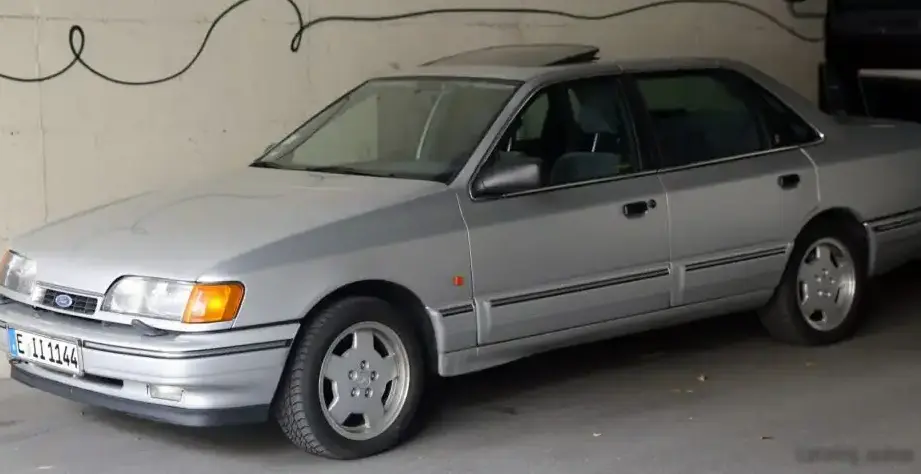
Technical Specifications
| Brand | Ford |
| Model | Scorpio |
| Generation | Scorpio I Hatch (GGE) |
| Type (Engine) | 2.5 TD (92 Hp) |
| Start of production | 1988 |
| End of production | 1992 |
| Powertrain Architecture | Internal Combustion engine |
| Body type | Hatchback |
| Fuel Type | Diesel |
| Power | 92 Hp |
| Engine Model/Code | SFA, SFB |
| Engine aspiration | Turbocharger |
| Engine oil capacity | 5.6 l (5.92 US qt | 4.93 UK qt) |
| Coolant capacity | 11 l (11.62 US qt | 9.68 UK qt) |
The Ford Scorpio I Hatch (GGE) 2.5 TD, produced between 1988 and 1992, represented Ford’s attempt to create a genuinely competitive executive car for the European market. Replacing the aging Granada, the Scorpio aimed to offer a more modern design, improved technology, and a wider range of engines. The 2.5 TD variant, powered by a turbocharged diesel engine producing 92 horsepower, occupied a specific niche within the Scorpio lineup, appealing to buyers prioritizing fuel economy and long-distance comfort over outright performance. It was positioned as a practical, if not particularly exciting, option for fleet buyers and private owners alike.
Powertrain & Engine Architecture
The heart of the Scorpio 2.5 TD was the SFA or SFB diesel engine, a 2.5-liter inline-four cylinder unit. This engine was a significant departure from the older, naturally aspirated diesels Ford had previously offered. The addition of a turbocharger and intercooler dramatically increased power output compared to its predecessors, bringing it to 92 horsepower and a respectable 184 lb-ft of torque. The engine utilized indirect injection, a common technology for diesel engines of the era, and featured a Bosch fuel injection system. While not the most sophisticated system available, it proved relatively reliable. The engine block was cast iron, contributing to its durability, while the cylinder head was aluminum. The engine’s valvetrain employed a single overhead camshaft (SOHC) design. The automatic transmission paired with this engine was a four-speed unit, designed to provide smooth shifts and ease of driving, particularly on long journeys. It wasn’t known for its sportiness, prioritizing comfort and fuel efficiency over rapid acceleration.
Driving Characteristics
The driving experience in the Scorpio 2.5 TD Automatic was defined by its relaxed nature. The 92 horsepower engine, while adequate for cruising, didn’t offer particularly brisk acceleration. The four-speed automatic transmission, while smooth, had relatively widely spaced gear ratios, meaning the engine often felt strained when attempting to accelerate quickly. The turbocharger did provide a noticeable boost in power once spooled up, but there was a degree of turbo lag present. Compared to the petrol-powered Scorpio variants, the 2.5 TD was significantly slower, especially in higher gears. However, it excelled at maintaining a steady speed on motorways (freeways), offering a comfortable and relatively quiet ride. The automatic transmission made it a much easier car to drive in congested urban environments than the manual versions. The steering was light and precise, but lacked significant feedback. Overall, the driving experience was geared towards practicality and comfort rather than driver engagement.
Equipment & Trim Levels
The Scorpio 2.5 TD Automatic typically came with a reasonable level of standard equipment, reflecting its position as an executive car. Standard features included central locking, electric windows, and a basic stereo system. Interior upholstery was typically cloth, although leather was available as an optional extra. The dashboard layout was functional and straightforward, with clearly labeled controls. Higher trim levels, such as the Ghia, added features like alloy wheels, upgraded upholstery, and more sophisticated audio systems. Optional extras included air conditioning, a sunroof, and cruise control. The Scorpio’s interior was spacious, offering ample headroom and legroom for both front and rear passengers. The hatchback configuration provided a large and practical trunk space, making it suitable for carrying luggage or other cargo.
Chassis & Braking
The Scorpio I utilized a MacPherson strut front suspension and a semi-trailing arm rear suspension. This setup provided a comfortable ride, although it wasn’t particularly sporty. The suspension was tuned to prioritize ride quality over handling precision. The 2.5 TD variant, being a heavier engine, often featured slightly stiffer springs and dampers compared to the lighter petrol models. Braking on the Scorpio 2.5 TD typically consisted of disc brakes on the front wheels and drum brakes on the rear. Anti-lock braking system (ABS) was available as an optional extra, and became more common on higher trim levels. The steering was power-assisted, making it easy to maneuver at low speeds. Stabilizer bars were fitted to both the front and rear axles to reduce body roll during cornering, but the Scorpio was not designed to be a cornering machine.
Market Reception & Comparison
The Ford Scorpio 2.5 TD Automatic received mixed reviews from automotive critics. While praised for its fuel economy and comfortable ride, it was often criticized for its lack of performance and somewhat dated interior design. Compared to rivals like the BMW 5 Series and Mercedes-Benz E-Class, the Scorpio felt less refined and lacked the same level of prestige. However, it offered a significantly lower price point, making it an attractive option for budget-conscious buyers. Within the Scorpio lineup, the 2.5 TD Automatic was positioned below the more powerful petrol variants, such as the 2.9i V6. The 2.4i offered a more balanced blend of performance and economy, while the diesel prioritized fuel efficiency. The 2.5 TD was often favored by fleet operators and high-mileage drivers who valued its low running costs.
Legacy
The Ford Scorpio I 2.5 TD, while not a resounding success in terms of sales, established a reputation for durability and reliability. The SFA/SFB diesel engine, when properly maintained, proved to be a long-lasting unit. Today, the Scorpio 2.5 TD is a relatively rare sight on the roads, but it has gained a following among classic car enthusiasts who appreciate its practicality and affordability. Parts availability can be a challenge, but many components are still available through specialist suppliers. The automatic transmission, while not known for its robustness, can provide years of reliable service with regular fluid changes. The Scorpio 2.5 TD represents a unique chapter in Ford’s history, a time when the company attempted to challenge the established German dominance in the executive car segment. It remains a testament to Ford’s engineering capabilities and a reminder of a bygone era of automotive design.