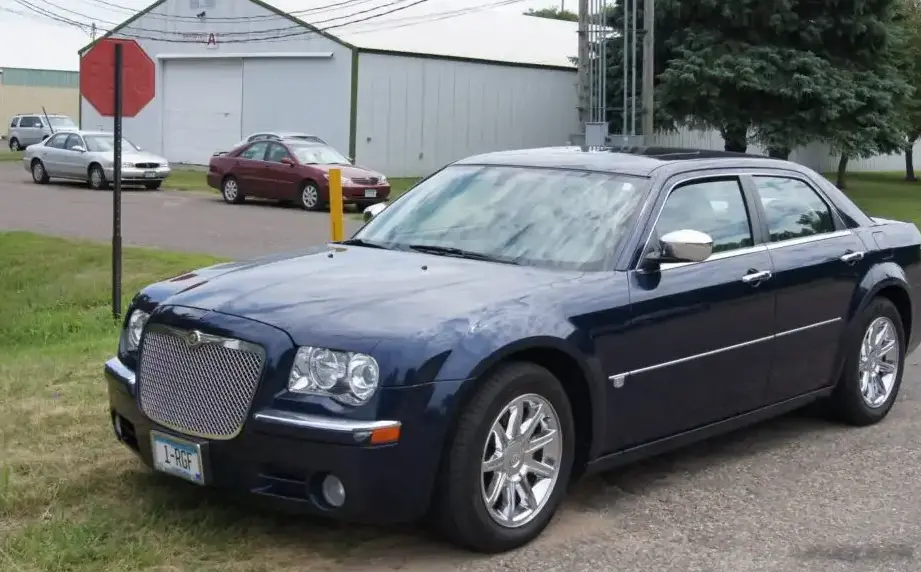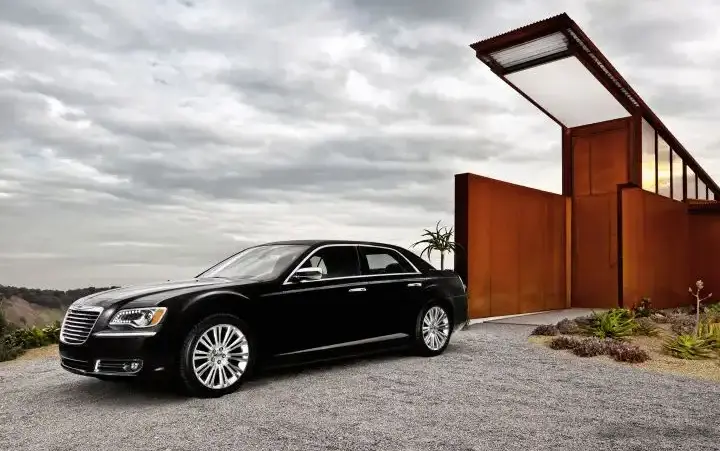
The Chrysler 300 Touring 6.1L V8 SRT-8, produced from 2005 to 2010, represented the high-performance variant of the second-generation Chrysler 300 series. Positioned as the flagship model, it aimed to recapture the spirit of Chrysler’s muscle car heritage while offering a degree of practicality through its five-seat, five-door station wagon (estate) body style. This model was a key component of Chrysler’s attempt to re-establish itself in the full-size performance segment, competing with domestic rivals like the Chevrolet Impala SS and Ford Crown Victoria. The 300 Touring SRT-8 was unique in offering a potent V8 engine in a body style not traditionally associated with high performance, appealing to buyers seeking both power and versatility.
Technical Specifications
| Brand | Chrysler |
| Model | 300 |
| Generation | 300 Touring |
| Type (Engine) | 6.1L i V8 16V SRT-8 (431 Hp) |
| Start of production | 2005 |
| End of production | 2010 |
| Powertrain Architecture | Internal Combustion engine |
| Body type | Station wagon (estate) |
| Seats | 5 |
| Doors | 5 |
| Fuel consumption (urban) | 21 l/100 km (11.2 US mpg, 13.5 UK mpg, 4.8 km/l) |
| Fuel consumption (extra urban) | 9.9 l/100 km (23.8 US mpg, 28.5 UK mpg, 10.1 km/l) |
| Fuel Type | Petrol (Gasoline) |
| Acceleration 0 – 100 km/h | 5 sec |
| Acceleration 0 – 62 mph | 5 sec |
| Acceleration 0 – 60 mph | 4.9 sec |
| Maximum speed | 270 km/h (167.77 mph) |
| Weight-to-power ratio | 4.6 kg/Hp, 219.3 Hp/tonne |
| Weight-to-torque ratio | 3.5 kg/Nm, 289.6 Nm/tonne |
| Power | 431 Hp @ 6200 rpm |
| Power per litre | 71.1 Hp/l |
| Torque | 569 Nm @ 4800 rpm (419.67 lb.-ft. @ 4800 rpm) |
| Engine layout | Front, Longitudinal |
| Engine Model/Code | ESF |
| Engine displacement | 6059 cm3 (369.74 cu. in.) |
| Number of cylinders | 8 |
| Engine configuration | V-engine |
| Cylinder Bore | 103 mm (4.06 in.) |
| Piston Stroke | 90.9 mm (3.58 in.) |
| Compression ratio | 10.3:1 |
| Number of valves per cylinder | 2 |
| Fuel injection system | Multi-port manifold injection |
| Engine aspiration | Naturally aspirated engine |
| Valvetrain | OHV |
| Engine oil capacity | 6.6 l (6.97 US qt | 5.81 UK qt) |
| Coolant capacity | 14 l (14.79 US qt | 12.32 UK qt) |
| Kerb Weight | 1965 kg (4332.08 lbs.) |
| Max. weight | 2340 kg (5158.82 lbs.) |
| Max load | 375 kg (826.73 lbs.) |
| Trunk (boot) space – minimum | 630 l (22.25 cu. ft.) |
| Trunk (boot) space – maximum | 1602 l (56.57 cu. ft.) |
| Fuel tank capacity | 71 l (18.76 US gal | 15.62 UK gal) |
| Length | 5015 mm (197.44 in.) |
| Width | 1880 mm (74.02 in.) |
| Height | 1462 mm (57.56 in.) |
| Wheelbase | 3048 mm (120 in.) |
| Front track | 1600 mm (62.99 in.) |
| Rear (Back) track | 1605 mm (63.19 in.) |
| Drivetrain Architecture | Rear wheel drive |
| Drive wheel | Rear wheel drive |
| Number of gears and type of gearbox | 5 gears, automatic transmission |
| Front suspension | Independent, type McPherson with coil spring and anti-roll bar |
| Rear suspension | Coil spring |
| Front brakes | Disc |
| Rear brakes | Disc |
| Assisting systems | ABS (Anti-lock braking system) |
| Steering type | Steering rack and pinion |
| Tires size | 255/45 R20 |
Introduction
The Chrysler 300 Touring 6.1L SRT-8 debuted in 2005 as part of the second generation (LX platform) of the 300 series. This generation marked a significant departure from the boxy styling of its predecessor, adopting a more modern and aggressive aesthetic. The SRT-8 variant, in particular, was designed to appeal to enthusiasts seeking a blend of American muscle and contemporary design. The station wagon body style, while less common in the performance segment, offered increased cargo capacity and practicality compared to the sedan version. Production continued through the 2010 model year, with the 6.1L engine being a defining feature of this performance trim.
Powertrain & Engine Architecture
At the heart of the 300 Touring SRT-8 lies the 6.1-liter (6059 cc) HEMI V8 engine, internally designated as the ESF. This engine is a naturally aspirated, overhead valve (OHV) design featuring multi-port fuel injection. The 6.1L HEMI was a significant upgrade over the earlier 5.7L Hemi, boasting increased displacement, revised cylinder heads, and a higher compression ratio of 10.3:1. These changes resulted in a substantial power increase. The engine produced 431 horsepower at 6200 rpm and 419.67 lb-ft of torque at 4800 rpm. The engine’s robust construction and relatively simple design contributed to its reliability. The engine is paired with a five-speed automatic transmission, designed to handle the substantial power output. This transmission featured AutoStick, allowing for some degree of driver control over gear selection. While not a dual-clutch or particularly advanced transmission by modern standards, it was durable and provided smooth shifts.
Driving Characteristics
The 300 Touring SRT-8 delivered a distinctly American driving experience. The 6.1L V8 provided ample low-end torque, making it responsive in everyday driving situations. Acceleration was brisk, with 0-60 mph times consistently in the 4.9-second range. The automatic transmission, while smooth, wasn’t particularly quick-shifting, and lacked the responsiveness of more modern transmissions. The car’s substantial weight (approximately 4332 lbs) was noticeable in cornering, with some body roll present. However, the SRT-8 featured a stiffer suspension and larger stabilizer bars compared to lower trims, improving handling. Compared to the standard 300 models with the V6 engine, the SRT-8 offered a dramatically different driving experience, prioritizing power and acceleration over fuel efficiency and refinement. Compared to potential European rivals, the SRT-8 offered a more raw and visceral driving experience, emphasizing straight-line performance.
Equipment & Trim Levels
The 300 Touring SRT-8 came generously equipped, reflecting its position as the flagship model. Standard features included leather upholstery, heated front seats, a premium sound system, automatic climate control, and power-adjustable pedals. Exterior features included unique SRT-specific styling cues, such as a mesh grille, body-colored side moldings, and 20-inch alloy wheels. Optional extras included a sunroof, navigation system, and upgraded audio options. The interior design was generally functional and comfortable, though not as luxurious as some European competitors. The SRT-8 trim focused on performance-oriented features rather than opulent luxury.
Chassis & Braking
The 300 Touring SRT-8 featured an independent McPherson strut front suspension and a multi-link rear suspension. The suspension was tuned for a balance of ride comfort and handling performance, with stiffer springs and dampers compared to the standard 300 models. Braking duties were handled by disc brakes on all four wheels, equipped with ABS (Anti-lock Braking System). The braking system was adequate for the car’s performance, but not exceptionally powerful. The car’s weight contributed to longer stopping distances compared to lighter vehicles. The 20-inch wheels were fitted with performance tires (255/45 R20) to enhance grip.
Market Reception & Comparison
The Chrysler 300 Touring SRT-8 received generally positive reviews from automotive critics. It was praised for its powerful engine, distinctive styling, and spacious interior. However, some critics noted the car’s weight and somewhat dated interior design. Compared to other trims in the 300 lineup, the SRT-8 offered significantly more performance but at the expense of fuel economy. The standard V6 models offered better fuel efficiency and a lower price point, appealing to a broader range of buyers. The SRT-8 competed with other American performance cars, such as the Chevrolet Impala SS and Ford Crown Victoria, offering a more modern and stylish alternative.
Legacy
The 6.1L HEMI V8 engine proved to be a reliable and durable powerplant. The 300 Touring SRT-8 has developed a following among enthusiasts, and well-maintained examples are sought after in the used car market. While not a particularly rare car, the combination of the powerful V8 engine, spacious interior, and distinctive styling has made it a desirable classic. The car represents a period of renewed focus on performance for Chrysler, and its legacy continues to resonate with those who appreciate American muscle cars.