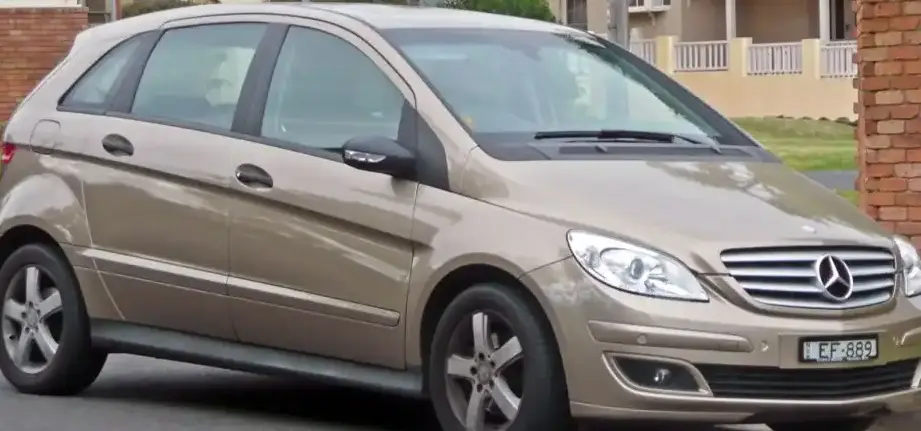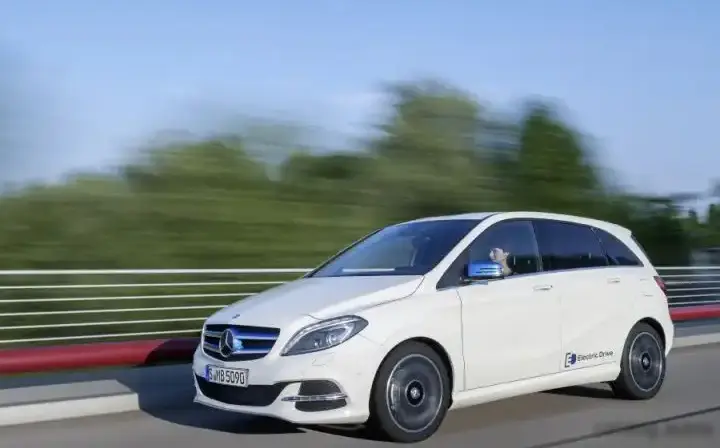
The Mercedes-Benz B-Class Electric Drive (W242) B 250 e, produced from 2014 to 2017, represented Mercedes-Benz’s initial foray into a fully electric, mass-market hatchback. Positioned as a premium electric vehicle, it was primarily aimed at European and North American markets seeking a practical, zero-emission vehicle with the build quality and refinement associated with the Mercedes-Benz brand. This variant, equipped with a 31 kWh battery pack and a 180 horsepower electric motor, offered a compelling blend of range, performance, and luxury within the emerging electric vehicle landscape. It was built on the W242 B-Class platform, sharing its basic structure with the conventionally powered B-Class models but distinguished by its fully electric powertrain.
Technical Specifications
| Brand | Mercedes-Benz |
| Model | B-class |
| Generation | B-Class Electric Drive (W242) |
| Type (Engine) | B 250 e 31 kWh (180 Hp) |
| Start of production | 2014 year |
| End of production | 2017 year |
| Powertrain Architecture | BEV (Electric Vehicle) |
| Body type | Hatchback |
| Seats | 5 |
| Doors | 5 |
| Fuel Type | Electricity |
| Acceleration 0 – 100 km/h | 7.9 sec |
| Acceleration 0 – 62 mph | 7.9 sec |
| Acceleration 0 – 60 mph | 7.5 sec |
| Maximum speed | 160 km/h, Electronically limited (99.42 mph) |
| Emission standard | Euro 6 |
| Weight-to-power ratio | 9.2 kg/Hp, 109.1 Hp/tonne |
| Weight-to-torque ratio | 4.9 kg/Nm, 206.1 Nm/tonne |
| Gross battery capacity | 31 kWh |
| Net (usable) battery capacity | 28 kWh |
| Battery technology | Lithium-ion (Li-Ion) |
| Battery weight | 325 kg (716.5 lbs.) |
| Battery location | Below the floor |
| All-electric range (NEDC) | 200 km (124.27 mi) |
| Average Energy consumption (NEDC) | 16.6 kWh/100 km (26.72 kWh/100 mi, 126 MPGe, 6 km/kWh, 3.7 mi/kWh) |
| Electric motor power | 180 Hp @ 9900-12500 rpm |
| Electric motor Torque | 340 Nm (250.77 lb.-ft.) |
| Electric motor model/code | EM0004 |
| Electric motor location | Front axle, Transverse |
| System power | 180 Hp @ 9900-12500 rpm |
| System torque | 340 Nm (250.77 lb.-ft.) |
| Kerb Weight | 1650 kg (3637.63 lbs.) |
| Max. weight | 2170 kg (4784.03 lbs.) |
| Max load | 520 kg (1146.4 lbs.) |
| Trunk (boot) space – minimum | 501 l (17.69 cu. ft.) |
| Trunk (boot) space – maximum | 1456 l (51.42 cu. ft.) |
| Max. roof load | 75 kg (165.35 lbs.) |
| Length | 4358 mm (171.57 in.) |
| Width | 1812 mm (71.34 in.) |
| Width including mirrors | 2010 mm (79.13 in.) |
| Height | 1599 mm (62.95 in.) |
| Wheelbase | 2699 mm (106.26 in.) |
| Front track | 1544 mm (60.79 in.) |
| Rear (Back) track | 1551 mm (61.06 in.) |
| Front overhang | 886 mm (34.88 in.) |
| Rear overhang | 773 mm (30.43 in.) |
| Drag coefficient (Cd) | 0.28 |
| Minimum turning circle | 11 m (36.09 ft.) |
| Drivetrain Architecture | One electric motor drives the front wheels. |
| Drive wheel | Front wheel drive |
| Number of gears | 1 gears, automatic transmission |
| Front suspension | Independent type McPherson |
| Rear suspension | Independent multi-link suspension |
| Front brakes | Ventilated discs |
| Rear brakes | Disc |
| Assisting systems | ABS (Anti-lock braking system) |
| Steering type | Steering rack and pinion |
| Power steering | Electric Steering |
| Tires size | 205/60 R16 |
| Wheel rims size | 6.5J x 16 |
Powertrain & Engine Architecture
The B 250 e utilizes a single electric motor, designated EM0004, producing 180 horsepower and 340 Nm (250.77 lb.-ft.) of torque. This motor is transversely mounted on the front axle, driving the front wheels. The powertrain is a direct-drive system, employing a single-speed automatic transmission. The heart of the system is the 31 kWh lithium-ion battery pack, positioned under the vehicle floor to maintain a low center of gravity and preserve interior space. The battery pack is liquid-cooled to maintain optimal operating temperatures. The vehicle incorporates a sophisticated battery management system (BMS) to monitor and control charging, discharging, and thermal regulation, maximizing battery life and performance. The onboard charger allows for AC charging, while DC fast charging capability was also available, though charging times varied depending on the charging infrastructure.
Driving Characteristics
The B 250 e offered brisk acceleration for its class, achieving 0-60 mph in approximately 7.5 seconds. The instant torque delivery characteristic of electric motors provided responsive acceleration, particularly at lower speeds. The single-speed transmission meant there were no gear changes, resulting in a smooth and linear power delivery. Compared to the gasoline-powered B-Class variants, the Electric Drive offered a quieter and more refined driving experience. However, the added weight of the battery pack (325 kg / 716.5 lbs.) did impact handling somewhat, making it feel less agile than its lighter counterparts. Regenerative braking was implemented, allowing the vehicle to recapture energy during deceleration, increasing efficiency and extending range. The level of regenerative braking could be adjusted by the driver.
Equipment & Trim Levels
The B 250 e typically came well-equipped, reflecting its premium positioning. Standard features included automatic climate control, a multi-function steering wheel, a touchscreen infotainment system with navigation, and a suite of safety features such as ABS, stability control, and multiple airbags. Interior upholstery was typically a combination of fabric and synthetic leather. Optional extras included a panoramic sunroof, leather upholstery, upgraded sound system, and parking assist features. Trim levels were relatively limited, with most variations stemming from optional packages rather than distinct model designations.
Chassis & Braking
The B 250 e retained the independent suspension setup of the standard B-Class, featuring a McPherson strut front suspension and a multi-link rear suspension. However, the suspension was tuned to accommodate the increased weight of the battery pack. Braking duties were handled by ventilated discs at the front and solid discs at the rear. The ABS system was standard, providing enhanced braking performance and stability. The steering system was an electric power steering setup, offering precise and responsive control.
Market Reception & Comparison
The B-Class Electric Drive received generally positive reviews, with critics praising its smooth and quiet operation, decent range, and comfortable interior. However, its relatively high price compared to conventional B-Class models and other electric vehicles at the time was a point of criticism. Compared to the gasoline-powered B-Class variants, the Electric Drive offered significantly lower running costs due to the elimination of fuel expenses. However, the initial purchase price was considerably higher. Against competitors like the Nissan Leaf and BMW i3, the B 250 e offered a more conventional hatchback body style and a more luxurious interior, but its range was somewhat limited.
Legacy
The Mercedes-Benz B-Class Electric Drive served as an important stepping stone for Mercedes-Benz in the electric vehicle market. While production was relatively short-lived, it provided valuable experience and insights that informed the development of subsequent electric models, such as the EQC and EQ series. On the used car market, the B 250 e remains a relatively uncommon sight. The longevity of the battery pack is a key concern for potential buyers, and regular maintenance of the battery management system is crucial. However, for those seeking a well-built and refined electric hatchback, the B-Class Electric Drive offers a compelling option.