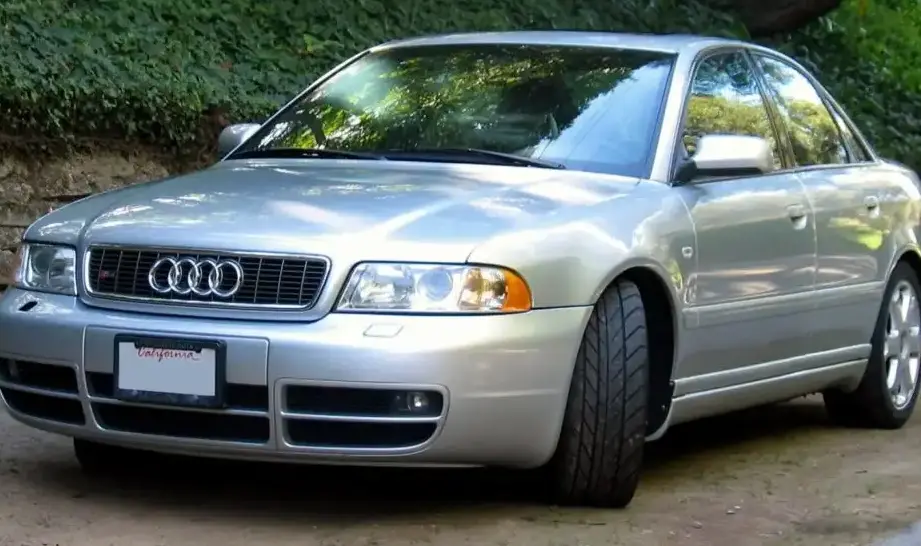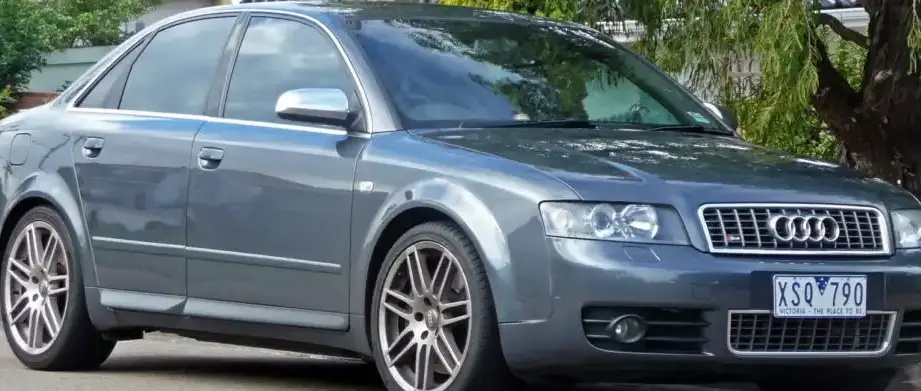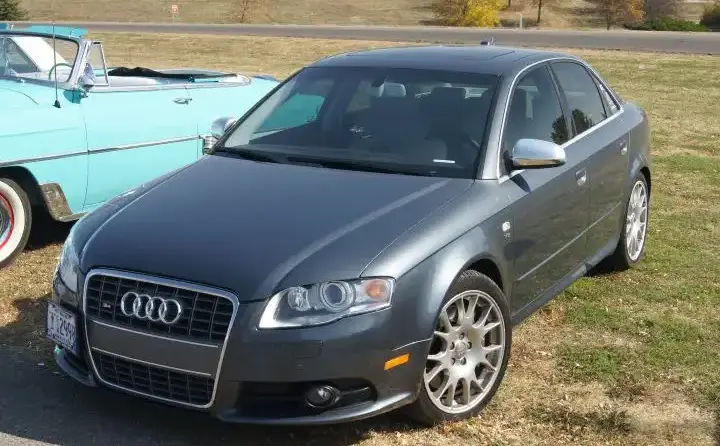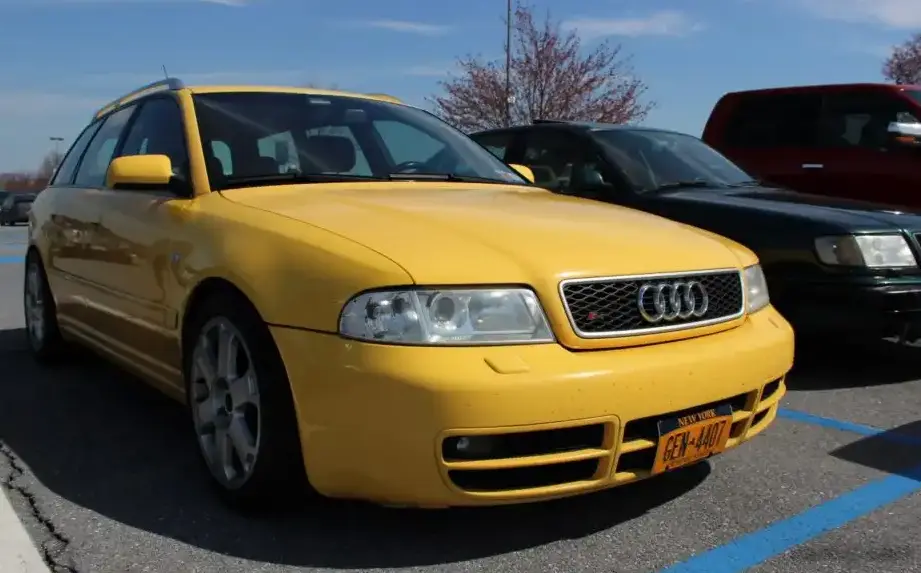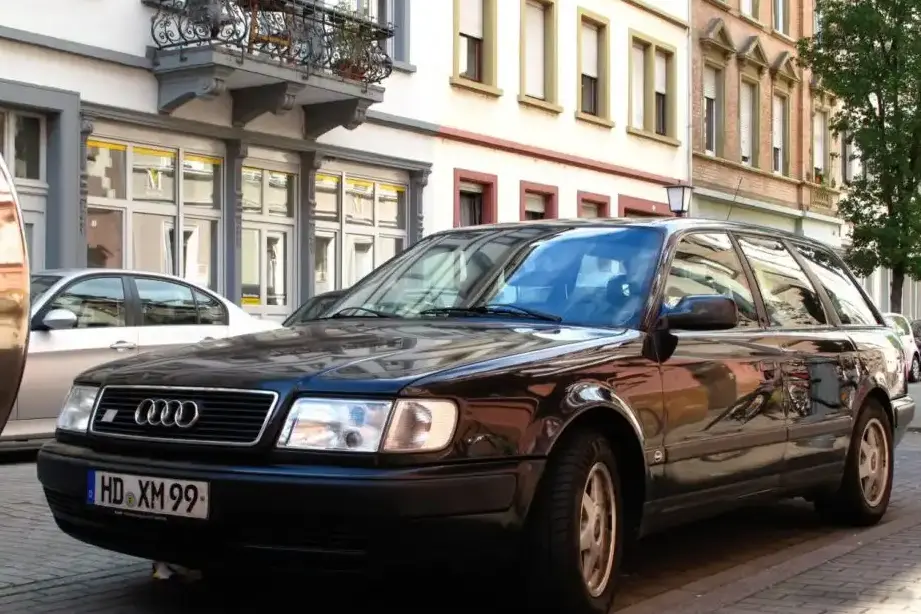
The Audi S4 Avant (4A, C4) 2.2i 20V Turbo quattro Automatic, produced between August 1991 and July 1994, represents a significant iteration of Audi’s performance-oriented wagon. Positioned as the top-tier variant of the C4 Avant range, it combined the practicality of a station wagon with the performance of a sports sedan. This model was a key component of Audi’s strategy to establish itself as a premium brand in the European market, offering a compelling alternative to rivals like the BMW Touring and Mercedes-Benz Estate. The S4 Avant utilized the Audi 80/90 platform (B3/B4), specifically the 4A chassis code, and was distinguished by its turbocharged five-cylinder engine and standard quattro all-wheel drive system.
Technical Specifications
| Brand | Audi |
| Model | S4 |
| Generation | S4 Avant (4A,C4) |
| Type (Engine) | 2.2i 20V Turbo (230 Hp) quattro Automatic |
| Start of production | August, 1991 |
| End of production | July, 1994 |
| Powertrain Architecture | Internal Combustion engine |
| Body type | Station wagon (estate) |
| Seats | 5 |
| Doors | 5 |
| Fuel consumption (combined) | 13 l/100 km (18.1 US mpg, 21.7 UK mpg, 7.7 km/l) |
| Fuel Type | Petrol (Gasoline) |
| Acceleration 0 – 100 km/h | 8.6 sec |
| Acceleration 0 – 62 mph | 8.6 sec |
| Acceleration 0 – 60 mph | 8.2 sec |
| Maximum speed | 230 km/h (142.92 mph) |
| Weight-to-power ratio | 7.2 kg/Hp, 138.6 Hp/tonne |
| Weight-to-torque ratio | 4.7 kg/Nm, 210.8 Nm/tonne |
| Power | 230 Hp @ 5900 rpm |
| Power per litre | 103.3 Hp/l |
| Torque | 350 Nm @ 1950 rpm (258.15 lb.-ft. @ 1950 rpm) |
| Engine layout | Front, Transverse |
| Engine Model/Code | AAN |
| Engine displacement | 2226 cm3 (135.84 cu. in.) |
| Number of cylinders | 5 |
| Engine configuration | Inline |
| Cylinder Bore | 81 mm (3.19 in.) |
| Piston Stroke | 86.4 mm (3.4 in.) |
| Compression ratio | 9.3:1 |
| Number of valves per cylinder | 4 |
| Fuel injection system | Multi-port manifold injection |
| Engine aspiration | Turbocharger |
| Valvetrain | DOHC |
| Engine oil capacity | 4.5 l (4.76 US qt | 3.96 UK qt) |
| Coolant | 8 l (8.45 US qt | 7.04 UK qt) |
| Kerb Weight | 1660 kg (3659.67 lbs.) |
| Max. weight | 2210 kg (4872.22 lbs.) |
| Max load | 550 kg (1212.54 lbs.) |
| Trunk (boot) space – minimum | 390 l (13.77 cu. ft.) |
| Trunk (boot) space – maximum | 1310 l (46.26 cu. ft.) |
| Fuel tank capacity | 80 l (21.13 US gal | 17.6 UK gal) |
| Length | 4790 mm (188.58 in.) |
| Width | 1804 mm (71.02 in.) |
| Height | 1454 mm (57.24 in.) |
| Wheelbase | 2692 mm (105.98 in.) |
| Front track | 1562 mm (61.5 in.) |
| Rear (Back) track | 1531 mm (60.28 in.) |
| Drag coefficient (Cd) | 0.34 |
| Minimum turning circle | 11.4 m (37.4 ft.) |
| Drive wheel | All wheel drive (4×4) |
| Number of gears | 4 |
| Gearbox type | automatic transmission |
| Front brakes | Ventilated discs |
| Rear brakes | Disc |
| Assisting systems | ABS (Anti-lock braking system) |
| Steering type | Steering rack and pinion |
| Power steering | Hydraulic Steering |
| Tires size | 215/60 R15 |
| Wheel rims size | 16 |
Powertrain & Engine Architecture
The heart of the S4 Avant was the Audi AAN engine, a 2.2-liter inline five-cylinder powerplant. This engine was a derivative of the unit used in the Audi Quattro rally car, albeit detuned for road use. The AAN featured a cast iron block, aluminum cylinder head with four valves per cylinder (20V), and a sophisticated Bosch Motronic engine management system. Crucially, it employed a Garrett T25 turbocharger with an intercooler, delivering 230 horsepower and 258 lb-ft of torque. Fuel delivery was handled by a multi-port fuel injection system. The four-speed automatic transmission, a ZF 4HP22 unit, was specifically chosen for its robustness and ability to handle the engine’s torque output. While offering convenience, it wasn’t as sporty as the available five-speed manual.
Driving Characteristics
The 2.2i 20V Turbo Automatic S4 Avant offered a blend of performance and practicality. Acceleration from 0-60 mph took approximately 8.2 seconds, and it could reach a top speed of 143 mph. The automatic transmission, while smooth, did result in some power loss compared to the manual version. Gear ratios were optimized for comfortable cruising, but downshifts could be somewhat slow. The quattro all-wheel drive system provided excellent traction in all weather conditions, making it a capable year-round vehicle. The suspension was tuned for a balance between comfort and handling, offering a more compliant ride than the more focused S2 coupe.
Equipment & Trim Levels
The S4 Avant came well-equipped as standard. Interior features included sport seats upholstered in patterned fabric, leather-wrapped steering wheel, and power windows and locks. Air conditioning was standard, as was an upgraded audio system. Optional extras included a sunroof, heated front seats, and upgraded leather upholstery. The dashboard featured a unique instrument cluster with distinctive gauges. Exterior styling cues included a subtle body kit, including a rear spoiler, and unique alloy wheels.
Chassis & Braking
The S4 Avant utilized a MacPherson strut front suspension and a semi-trailing arm rear suspension. Stabilizer bars were fitted front and rear to reduce body roll. Braking duties were handled by ventilated discs at the front and solid discs at the rear, with ABS standard. The braking system was generally considered adequate for the car’s performance, but some owners opted for upgraded brake pads for improved stopping power. The quattro system distributed power between the front and rear axles as needed, enhancing stability and traction.
Market Reception & Comparison
The S4 Avant was generally well-received by automotive critics. It was praised for its performance, practicality, and all-weather capability. However, the automatic transmission was sometimes criticized for detracting from the driving experience. Compared to the manual transmission version, the automatic offered slightly lower fuel economy (around 18.1 mpg combined) and marginally slower acceleration. Against competitors like the BMW 5 Series Touring and Mercedes-Benz E-Class Estate, the S4 Avant offered a more sporting driving experience and a more modern interior.
Legacy
The Audi S4 Avant (4A, C4) 2.2i 20V Turbo Automatic has become a sought-after classic among Audi enthusiasts. The AAN engine is known for its durability and tunability, and well-maintained examples are relatively common. However, finding original, unmolested cars is becoming increasingly difficult. Common maintenance issues include turbocharger wear, oil leaks, and corrosion. The quattro system requires regular servicing to ensure optimal performance. Today, these cars represent a unique blend of performance, practicality, and Audi heritage, and continue to provide an engaging driving experience.