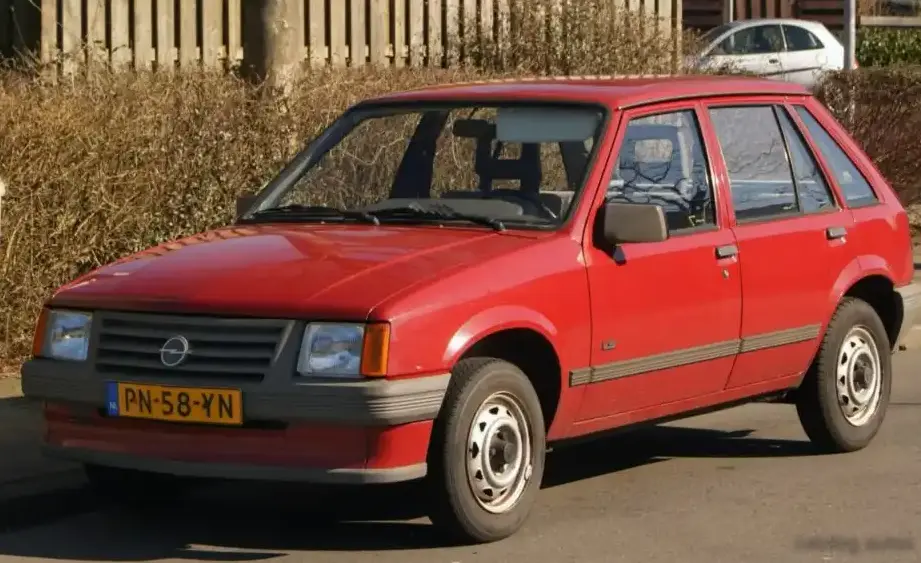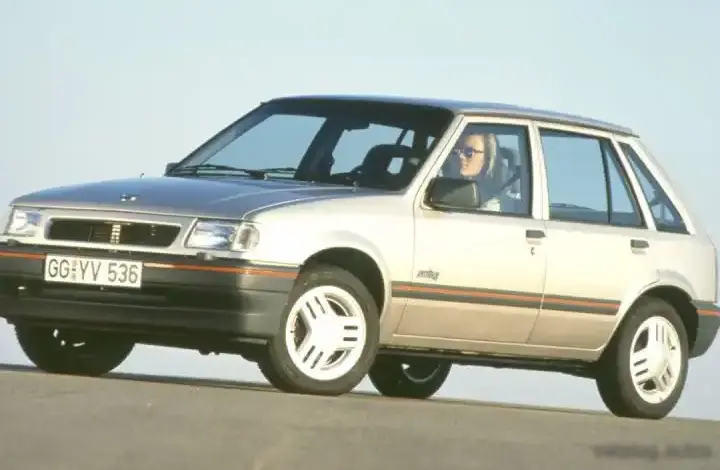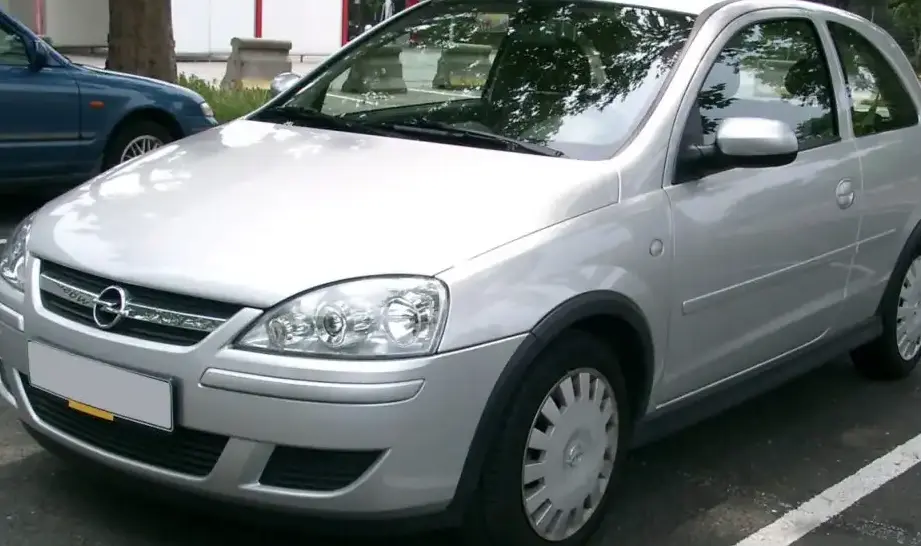
The Opel Corsa C (facelift, introduced in 2003) 1.4 16V 90 hp automatic represents a significant iteration within the Corsa C generation (1999-2006). Positioned as a mainstream, accessible option within the Corsa lineup, this variant aimed to provide comfortable and economical transportation for a broad customer base. Production of this specific configuration ran from July 2003 to June 2006. It was primarily marketed in Europe, where the Corsa competed with rivals like the Ford Fiesta, Renault Clio, and Peugeot 206. The facelift brought revised styling, improved safety features, and refinements to the interior, enhancing the Corsa’s appeal in a competitive segment.
Technical Specifications
| Brand | Opel |
| Model | Corsa |
| Generation | Corsa C (facelift 2003) |
| Type (Engine) | 1.4 16V (90 Hp) Automatic |
| Start of production | July, 2003 |
| End of production | June, 2006 |
| Powertrain Architecture | Internal Combustion engine |
| Body type | Hatchback |
| Seats | 5 |
| Doors | 3-5 |
| Fuel consumption (urban) | 11.2 l/100 km (21 US mpg, 25.2 UK mpg) |
| Fuel consumption (extra urban) | 6 l/100 km (39.2 US mpg, 47.1 UK mpg) |
| Fuel consumption (combined) | 7.9 l/100 km (29.8 US mpg, 35.8 UK mpg) |
| Fuel Type | Petrol (Gasoline) |
| Acceleration 0 – 100 km/h | 13 sec |
| Acceleration 0 – 62 mph | 13 sec |
| Acceleration 0 – 60 mph | 12.4 sec |
| Maximum speed | 170 km/h (105.63 mph) |
| Power | 90 Hp @ 6000 rpm |
| Power per litre | 64.8 Hp/l |
| Torque | 125 Nm @ 4000 rpm (92.2 lb.-ft. @ 4000 rpm) |
| Engine layout | Front, Transverse |
| Engine Model/Code | Z14XEP |
| Engine displacement | 1389 cm3 (84.76 cu. in.) |
| Number of cylinders | 4 |
| Engine configuration | Inline |
| Cylinder Bore | 77.6 mm (3.06 in.) |
| Piston Stroke | 73.4 mm (2.89 in.) |
| Compression ratio | 10.5:1 |
| Number of valves per cylinder | 4 |
| Fuel injection system | Multi-port manifold injection |
| Engine aspiration | Naturally aspirated engine |
| Valvetrain | DOHC |
| Engine oil capacity | 3.5 l (3.7 US qt | 3.08 UK qt) |
| Coolant capacity | 6.5 l (6.87 US qt | 5.72 UK qt) |
| Max. weight | 1500 kg (3306.93 lbs.) |
| Trunk (boot) space – minimum | 260 l (9.18 cu. ft.) |
| Trunk (boot) space – maximum | 1060 l (37.43 cu. ft.) |
| Length | 3839 mm (151.14 in.) |
| Width | 1646 mm (64.8 in.) |
| Height | 1440 mm (56.69 in.) |
| Wheelbase | 2491 mm (98.07 in.) |
| Front track | 1429 mm (56.26 in.) |
| Rear track | 1420 mm (55.91 in.) |
| Ride height (ground clearance) | 140 mm (5.51 in.) |
| Drivetrain Architecture | The Internal combustion engine (ICE) drives the front wheels of the vehicle. |
| Drive wheel | Front wheel drive |
| Number of gears and type of gearbox | 4 gears, automatic transmission |
| Front suspension | Independent type McPherson |
| Front brakes | Ventilated discs |
| Rear brakes | Disc |
| Tires size | 175/65 R14 |
| Wheel rims size | 14 |
Introduction
The Corsa C facelift, and specifically the 1.4 16V automatic variant, represented Opel’s attempt to broaden the appeal of their small hatchback. Introduced in 2003, the facelift addressed some criticisms of the original Corsa C, offering a more refined driving experience and updated aesthetics. This particular engine and transmission combination was aimed at buyers prioritizing ease of use and fuel efficiency over outright performance. It occupied a middle ground in the Corsa C range, sitting above the base 1.0-liter models and below the sportier 1.7 CDTi diesel and the more powerful 1.8-liter gasoline options.
Powertrain & Engine Architecture
The heart of this Corsa C is the Z14XEP engine, a 1.4-liter (1389 cc) inline-four cylinder gasoline engine. This engine features a dual overhead camshaft (DOHC) valvetrain with four valves per cylinder, contributing to its relatively efficient operation. Fuel delivery is managed by a multi-port fuel injection system. The Z14XEP is a naturally aspirated engine, meaning it doesn’t utilize a turbocharger or supercharger. The engine produces 90 horsepower at 6000 rpm and 125 Nm (92.2 lb-ft) of torque at 4000 rpm. Paired with this engine is a four-speed automatic transmission. This transmission, while providing convenience, is a relatively simple design compared to modern automatics, and its gear ratios are optimized for fuel economy rather than rapid acceleration. It’s a conventional hydraulic automatic, lacking the efficiency of continuously variable transmissions (CVTs) or more advanced multi-gear automatics.
Driving Characteristics
The 1.4 16V automatic Corsa C delivers a comfortable, if not particularly exciting, driving experience. Acceleration from 0-100 km/h (0-62 mph) takes around 13 seconds, and top speed is limited to 170 km/h (105.63 mph). The four-speed automatic transmission contributes to a smooth, but somewhat leisurely, driving style. Gear changes are noticeable, and the transmission can sometimes feel hesitant when requesting sudden bursts of power. Compared to the five-speed manual version of the same engine, the automatic suffers a slight performance penalty and reduced fuel economy. The automatic is geared more towards relaxed cruising than spirited driving. The relatively light weight of the Corsa C helps mitigate the lack of outright power, making it feel reasonably nimble in city driving.
Equipment & Trim Levels
The 1.4 16V automatic Corsa C typically came equipped with a reasonable level of standard features. These included power steering, central locking, electric front windows, and an adjustable steering column. Interior upholstery was typically cloth, with a relatively simple dashboard layout. Optional extras included air conditioning, alloy wheels, a CD player, and upgraded interior trim. Higher trim levels, such as the ‘Enjoy’ or ‘Cosmo’ variants, added features like alloy wheels, fog lights, and more sophisticated audio systems. Safety features were relatively basic for the time, typically including driver and passenger airbags and ABS brakes.
Chassis & Braking
The Corsa C utilizes a front-wheel-drive layout with an independent McPherson strut suspension at the front and a torsion beam suspension at the rear. The front brakes are ventilated discs, providing adequate stopping power, while the rear brakes are discs. The suspension setup is tuned for comfort, providing a reasonably smooth ride over most road surfaces. The relatively narrow tires (typically 175/65 R14) contribute to a predictable handling balance, but don’t offer a great deal of grip. Stabilizer bars were often included, improving body roll control during cornering.
Market Reception & Comparison
The Corsa C 1.4 16V automatic was generally well-received as a practical and affordable small car. Critics praised its comfortable ride and relatively low running costs. However, the automatic transmission was often criticized for its lack of responsiveness and its impact on fuel economy. Compared to the manual version, the automatic offered less driver engagement and slightly poorer fuel consumption. The diesel variants, such as the 1.7 CDTi, offered significantly better fuel economy, but at a higher purchase price. The 1.8-liter gasoline models provided more performance, but were also more expensive to run.
Legacy
The Opel Corsa C 1.4 16V automatic has proven to be a relatively reliable powertrain combination, although long-term durability can be affected by maintenance history. The Z14XEP engine is generally considered robust, but regular oil changes and timely servicing are crucial. The four-speed automatic transmission is relatively simple and reliable, but can be prone to wear and tear if not properly maintained. Today, these Corsas are readily available on the used car market at affordable prices. They represent a practical and economical option for those seeking a basic, reliable small car. However, potential buyers should be aware of the age-related issues common to older vehicles, such as corrosion and wear on suspension components.