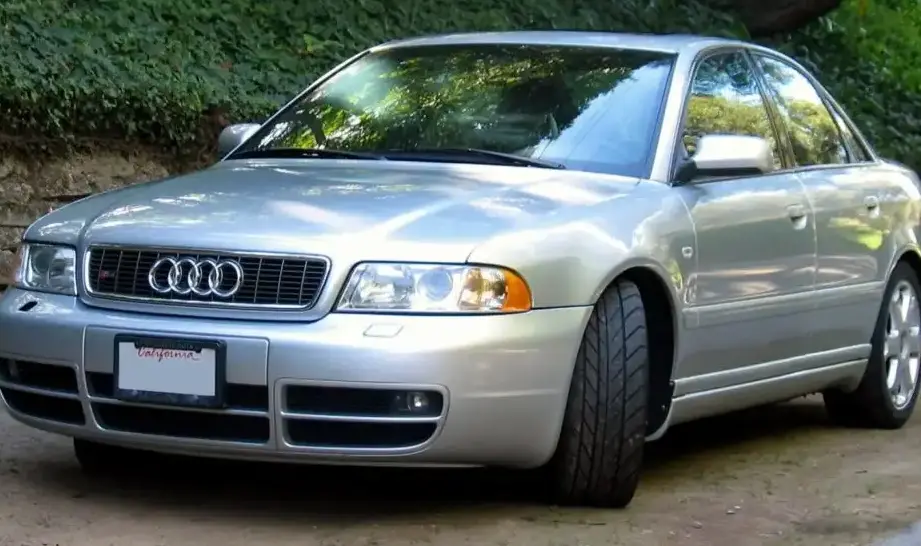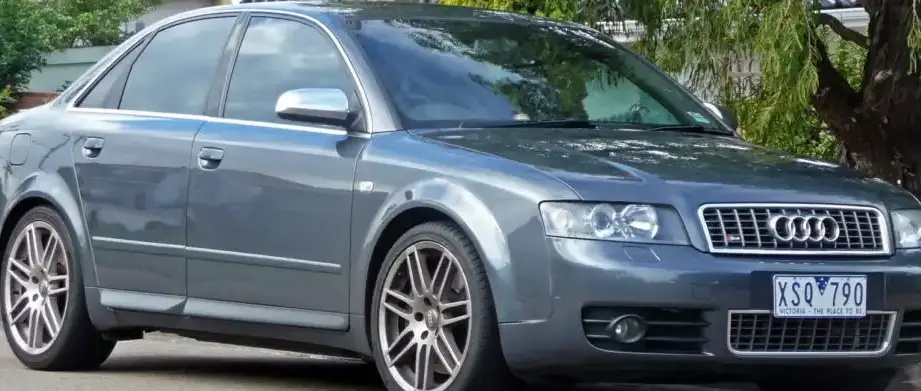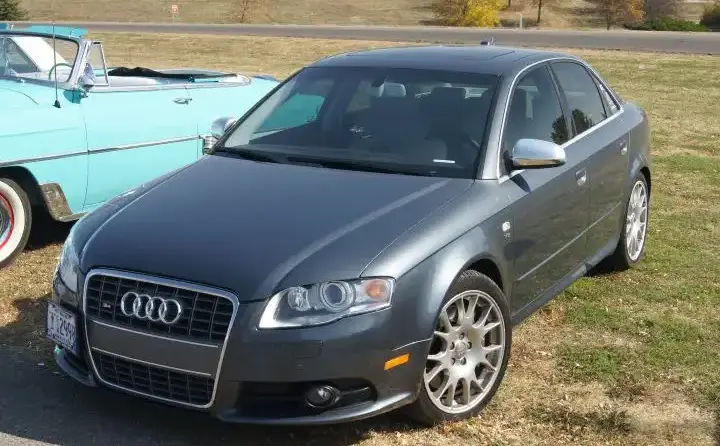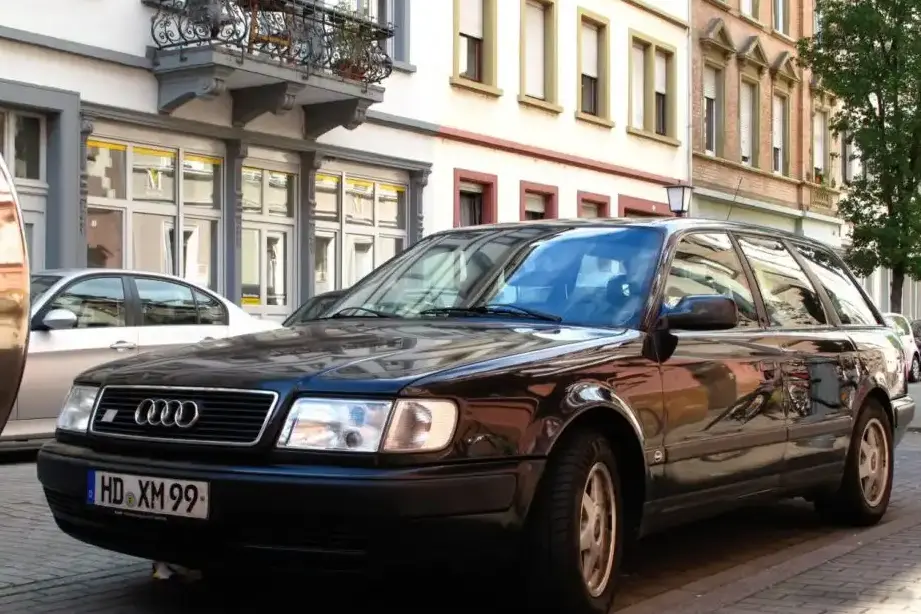
The Audi S4 Avant (8D, B5) 2.7 BiTurbo, produced from October 1997 to September 2001, represents a significant evolution in the high-performance station wagon segment. Positioned as the top-tier variant of the B5 generation Audi A4 Avant, the S4 offered a compelling blend of practicality, luxury, and exhilarating performance. It was primarily marketed in Europe and other international markets, establishing a reputation as a sophisticated and capable all-weather performance vehicle. The “Avant” designation signifies Audi’s term for a station wagon or estate body style. This particular 2.7 BiTurbo quattro model was a flagship offering, showcasing Audi’s commitment to advanced engineering and driving dynamics.
Technical Specifications
| Brand | Audi |
| Model | S4 |
| Generation | S4 Avant (8D,B5) |
| Type (Engine) | 2.7 BiTurbo V6 (265 Hp) quattro |
| Start of production | October, 1997 |
| End of production | September, 2001 |
| Powertrain Architecture | Internal Combustion engine |
| Body type | Station wagon (estate) |
| Seats | 5 |
| Doors | 5 |
| Fuel consumption (urban) | 15.8 l/100 km (14.9 US mpg, 17.9 UK mpg, 6.3 km/l) |
| Fuel consumption (extra urban) | 8.7 l/100 km (27 US mpg, 32.5 UK mpg, 11.5 km/l) |
| Fuel consumption (combined) | 11.3 l/100 km (20.8 US mpg, 25 UK mpg, 8.8 km/l) |
| CO2 emissions | 271 g/km |
| Fuel Type | Petrol (Gasoline) |
| Acceleration 0 – 100 km/h | 5.7 sec |
| Acceleration 0 – 62 mph | 5.7 sec |
| Acceleration 0 – 60 mph | 5.4 sec |
| Maximum speed | 250 km/h (155.34 mph) |
| Weight-to-power ratio | 5.8 kg/Hp, 172.1 Hp/tonne |
| Weight-to-torque ratio | 3.9 kg/Nm, 259.7 Nm/tonne |
| Power | 265 Hp @ 5800 rpm |
| Power per litre | 99.2 Hp/l |
| Torque | 400 Nm @ 1850-3600 rpm (295.02 lb.-ft. @ 1850-3600 rpm) |
| Engine layout | Front, Longitudinal |
| Engine Model/Code | AGB, AZB |
| Engine displacement | 2671 cm3 (162.99 cu. in.) |
| Number of cylinders | 6 |
| Engine configuration | V-engine |
| Cylinder Bore | 81 mm (3.19 in.) |
| Piston Stroke | 86.4 mm (3.4 in.) |
| Compression ratio | 9.3:1 |
| Number of valves per cylinder | 5 |
| Fuel injection system | Multi-port manifold injection |
| Engine aspiration | BiTurbo, Intercooler |
| Valvetrain | DOHC |
| Engine oil capacity | 6 l (6.34 US qt | 5.28 UK qt) |
| Coolant | 6 l (6.34 US qt | 5.28 UK qt) |
| Kerb Weight | 1540 kg (3395.12 lbs.) |
| Max. weight | 2090 kg (4607.66 lbs.) |
| Max load | 550 kg (1212.54 lbs.) |
| Trunk (boot) space – minimum | 390 l (13.77 cu. ft.) |
| Trunk (boot) space – maximum | 1250 l (44.14 cu. ft.) |
| Fuel tank capacity | 62 l (16.38 US gal | 13.64 UK gal) |
| Max. roof load | 75 kg (165.35 lbs.) |
| Permitted trailer load with brakes (8%) | 1800 kg (3968.32 lbs.) |
| Permitted trailer load with brakes (12%) | 1700 kg (3747.86 lbs.) |
| Permitted trailer load without brakes | 750 kg (1653.47 lbs.) |
| Permitted towbar download | 75 kg (165.35 lbs.) |
| Length | 4488 mm (176.69 in.) |
| Width | 1733 mm (68.23 in.) |
| Height | 1396 mm (54.96 in.) |
| Wheelbase | 2607 mm (102.64 in.) |
| Front track | 1498 mm (58.98 in.) |
| Rear (Back) track | 1490 mm (58.66 in.) |
| Drag coefficient (Cd) | 0.32 |
| Minimum turning circle (turning diameter) | 11.4 m (37.4 ft.) |
| Drive wheel | All wheel drive (4×4) |
| Number of gears and type of gearbox | 6 gears, manual transmission |
| Front suspension | Independent multi-link suspension |
| Rear suspension | Double wishbone |
| Front brakes | Ventilated discs |
| Rear brakes | Disc |
| Assisting systems | ABS (Anti-lock braking system) |
| Steering type | Steering rack and pinion |
| Power steering | Hydraulic Steering |
| Tires size | 225/45 R17 |
| Wheel rims size | 7.5J x 17 |
Powertrain & Engine Architecture
The heart of the S4 Avant 2.7 BiTurbo is the 2.7-liter V6 engine, designated AGB or AZB depending on minor revisions. This engine is notable for its use of two turbochargers, one for each bank of cylinders, providing a broad torque curve and minimal turbo lag. The engine utilizes multi-port fuel injection and a double overhead camshaft (DOHC) valvetrain with five valves per cylinder. The turbochargers are coupled with intercoolers to reduce intake air temperatures, further enhancing performance. The engine’s longitudinal mounting and the quattro all-wheel-drive system contribute to balanced handling. The 6-speed manual transmission was standard, offering precise gear changes and a direct connection to the engine’s power.
Driving Characteristics
The 2.7 BiTurbo engine delivers a potent 265 horsepower and 295 lb-ft of torque, resulting in a 0-60 mph time of approximately 5.4 seconds. The quattro all-wheel-drive system provides exceptional traction, particularly in adverse weather conditions. The manual transmission allows for full driver control, while the engine’s torque output ensures strong acceleration in any gear. Compared to the standard A4 Avant’s engine options, the S4 offered a significantly more responsive and engaging driving experience. While not as raw or focused as some dedicated sports cars, the S4 Avant provided a comfortable and capable platform for spirited driving, blending performance with everyday usability.
Equipment & Trim Levels
The S4 Avant came well-equipped as standard, featuring sport seats upholstered in a unique patterned fabric, a leather-wrapped steering wheel and shift knob, and a premium audio system. Exterior styling cues included a distinctive front grille, body-colored side skirts and bumpers, and quad exhaust outlets. Optional extras included leather upholstery, sunroof, navigation system, and upgraded alloy wheels. The interior trim generally featured dark wood or aluminum accents, contributing to a sophisticated ambiance.
Chassis & Braking
The S4 Avant featured a sport-tuned suspension with stiffer springs and dampers compared to the standard A4 Avant. The front suspension utilized an independent multi-link design, while the rear employed a double wishbone setup. Braking duties were handled by ventilated discs at all four corners, providing ample stopping power. ABS (Anti-lock Braking System) was standard. The chassis was reinforced to handle the increased power and torque, enhancing rigidity and handling precision.
Market Reception & Comparison
The Audi S4 Avant 2.7 BiTurbo was generally well-received by automotive critics, praised for its performance, handling, and practicality. It was often compared to other high-performance station wagons of the time, such as the BMW M3 Touring (though the M3 Touring wasn’t officially sold in the US during this generation) and the Mercedes-Benz AMG variants. Fuel economy was a concern for some, given the engine’s size and turbocharging, but the S4 offered a reasonable balance between performance and efficiency for its class. Reliability was generally good, although the complex turbocharging system required diligent maintenance.
Legacy
The Audi S4 Avant 2.7 BiTurbo remains a sought-after vehicle among enthusiasts today. Its combination of performance, practicality, and distinctive styling has made it a classic. The 2.7 BiTurbo engine, while capable, can be prone to issues if not properly maintained, including turbocharger failure and boost leaks. However, well-maintained examples continue to provide a rewarding driving experience. The S4 Avant helped establish Audi as a leader in the high-performance wagon segment, paving the way for future generations of S and RS models.