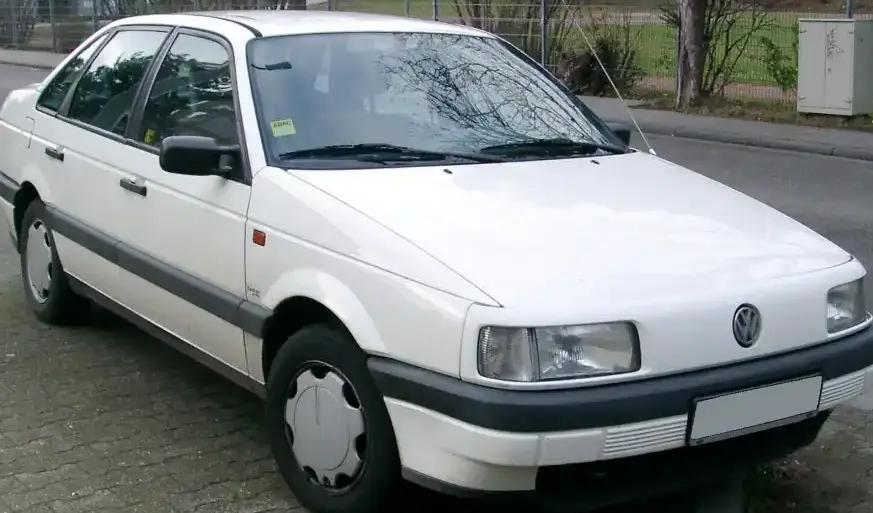
The Volkswagen Passat B3 1.8, produced between 1988 and 1991, represented a significant step forward for Volkswagen’s mid-size offering. Positioned as an entry-level to mid-range trim within the B3 Passat lineup, it provided a more affordable alternative to the more powerful and technologically advanced variants like the VR6. This model was primarily aimed at buyers seeking a comfortable, reliable, and economical family sedan, particularly in European markets where fuel efficiency and practicality were highly valued. The B3 generation, built on the A3 platform (internally designated 1HX0), marked a departure from the earlier, more angular designs, adopting a more rounded and aerodynamic aesthetic. This 1.8-liter variant, typically paired with a 5-speed manual transmission, also saw a smaller number produced with an automatic gearbox, catering to drivers prioritizing ease of use over outright performance.
Technical Specifications
| Brand | Volkswagen |
| Model | Passat |
| Generation | Passat (B3) |
| Type (Engine) | 1.8 (107 Hp) |
| Start of production | 1988 |
| End of production | 1991 |
| Powertrain Architecture | Internal Combustion engine |
| Body type | Sedan |
| Seats | 5 |
| Doors | 4 |
| Fuel consumption (urban) | 10.7 l/100 km (22 US mpg, 26.4 UK mpg, 9.3 km/l) |
| Fuel consumption (extra urban) | 5.7 l/100 km (41.3 US mpg, 49.6 UK mpg, 17.5 km/l) |
| Fuel consumption (combined) | 7.7 l/100 km (30.5 US mpg, 36.7 UK mpg, 13 km/l) |
| Fuel Type | Petrol (Gasoline) |
| Acceleration 0 – 100 km/h | 12.3 sec |
| Acceleration 0 – 62 mph | 12.3 sec |
| Acceleration 0 – 60 mph | 11.7 sec |
| Maximum speed | 190 km/h (118.06 mph) |
| Weight-to-power ratio | 10.8 kg/Hp, 92.6 Hp/tonne |
| Weight-to-torque ratio | 7.4 kg/Nm, 135.9 Nm/tonne |
| Power | 107 Hp @ 5400 rpm |
| Power per litre | 60.1 Hp/l |
| Torque | 157 Nm @ 3800 rpm (115.8 lb.-ft. @ 3800 rpm) |
| Engine layout | Front, Transverse |
| Engine Model/Code | PF |
| Engine displacement | 1781 cm3 (108.68 cu. in.) |
| Number of cylinders | 4 |
| Engine configuration | Inline |
| Cylinder Bore | 81 mm (3.19 in.) |
| Piston Stroke | 86.4 mm (3.4 in.) |
| Compression ratio | 10:1 |
| Number of valves per cylinder | 2 |
| Fuel injection system | Multi-port manifold injection |
| Engine aspiration | Naturally aspirated engine |
| Engine oil capacity | 4 l (4.23 US qt | 3.52 UK qt) |
| Coolant capacity | 5 l (5.28 US qt | 4.4 UK qt) |
| Kerb Weight | 1155 kg (2546.34 lbs.) |
| Max. weight | 1700 kg (3747.86 lbs.) |
| Max load | 545 kg (1201.52 lbs.) |
| Trunk (boot) space – minimum | 495 l (17.48 cu. ft.) |
| Fuel tank capacity | 70 l (18.49 US gal | 15.4 UK gal) |
| Length | 4573 mm (180.04 in.) |
| Width | 1704 mm (67.09 in.) |
| Height | 1428 mm (56.22 in.) |
| Wheelbase | 2623 mm (103.27 in.) |
| Drivetrain Architecture | The Internal combustion engine (ICE) drives the front wheels of the vehicle. |
| Drive wheel | Front wheel drive |
| Number of gears and type of gearbox | 5 gears, manual transmission |
| Front brakes | Disc |
| Rear brakes | Drum |
| Tires size | 165/70 R14; 175/60 R14 |
| Wheel rims size | 14 |
Powertrain & Engine Architecture
The heart of the Passat B3 1.8 was the PF engine, a 1.8-liter inline four-cylinder gasoline engine. This engine utilized a naturally aspirated configuration and a multi-port fuel injection system, a common setup for the time. The PF engine featured a single overhead camshaft (SOHC) design with two valves per cylinder. This configuration prioritized simplicity and reliability over outright performance. The engine’s 107 horsepower output at 5400 rpm and 157 Nm (115.8 lb-ft) of torque at 3800 rpm were considered adequate for comfortable cruising and everyday driving. While not a powerhouse, the engine was known for its smooth operation and relatively good fuel economy. The automatic transmission option, typically a four-speed unit, was designed to provide a more relaxed driving experience, but at the cost of some performance and efficiency compared to the standard five-speed manual.
Driving Characteristics
The Passat B3 1.8 with the automatic transmission offered a comfortable, albeit not particularly sporty, driving experience. Acceleration from 0 to 60 mph took around 11.7 seconds, which was typical for a family sedan of that era. The automatic gearbox, while convenient, resulted in noticeable power loss compared to the manual version. Gear ratios were optimized for fuel efficiency and smooth cruising rather than rapid acceleration. The engine felt relatively strained during hard acceleration, and overtaking maneuvers required careful planning. The suspension, tuned for comfort, provided a reasonably smooth ride, absorbing most road imperfections effectively. However, it wasn’t particularly engaging for drivers seeking a more dynamic handling experience.
Equipment & Trim Levels
The 1.8-liter Passat B3 typically came with a fairly basic level of equipment, reflecting its position as an entry-level model. Standard features generally included cloth upholstery, manual windows and door locks, and a basic stereo system. Air conditioning was often an optional extra, as were power windows and central locking. Higher trim levels, available at an additional cost, offered features such as upgraded upholstery, alloy wheels, and a more sophisticated audio system. The interior design was functional and straightforward, prioritizing practicality over luxury. Dashboard layout was clean and easy to use, with clearly labeled controls.
Chassis & Braking
The Passat B3 1.8 featured a front-wheel-drive layout with independent suspension at the front and a semi-independent torsion beam suspension at the rear. The front brakes were disc brakes, providing adequate stopping power, while the rear brakes were drum brakes, a cost-saving measure common in this class of vehicle. The suspension was tuned for comfort, providing a relatively smooth ride. Stabilizer bars were fitted to both the front and rear axles to reduce body roll during cornering, but the handling was still primarily geared towards stability and ease of driving rather than sporty performance.
Market Reception & Comparison
The Passat B3 1.8 was generally well-received by automotive critics as a practical and reliable family sedan. It was praised for its comfortable ride, spacious interior, and relatively good fuel economy. However, it was often criticized for its lack of performance, particularly when equipped with the automatic transmission. Compared to the more powerful VR6 variant, the 1.8 offered significantly less performance but at a lower price point. The 1.9 TDI diesel version, while offering superior fuel economy, was more expensive to purchase initially and had a different driving character. The 1.8 Automatic appealed to buyers who prioritized comfort and convenience over outright performance and were looking for a reasonably priced and reliable family car.
Legacy
The Volkswagen Passat B3 1.8, particularly the automatic transmission version, has proven to be a relatively durable and reliable vehicle. While age and mileage inevitably take their toll, many examples are still on the road today. The PF engine is known for its robustness, and with regular maintenance, it can provide many years of service. However, like all older vehicles, it is susceptible to age-related issues such as corrosion and wear and tear on rubber components. In the used car market, the B3 1.8 is often sought after by enthusiasts and those looking for a classic Volkswagen that is relatively affordable to maintain and repair. Its simplicity and readily available parts contribute to its continued appeal.