
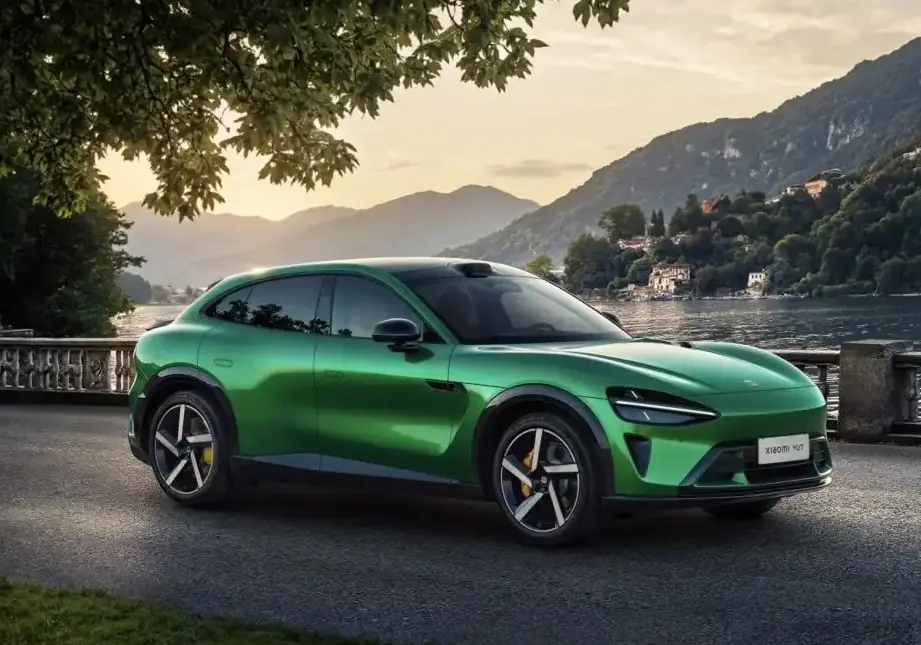
The Xiaomi YU7 96.3 kWh, producing 320 horsepower, marks Xiaomi’s debut into the electric SUV market. Launched in July 2025, the YU7 is positioned as a technologically advanced, long-range electric vehicle targeting consumers who desire a blend of performance, practicality, and smart features. Built on a dedicated EV platform, it embodies Xiaomi’s ambition to become a key player in the expanding EV sector. The YU7 is a five-seater, five-door SUV designed for a broad audience, offering a competitive alternative to established EV manufacturers.
Technical Specifications
| Brand | Xiaomi |
| Model | YU7 |
| Generation | YU7 |
| Type (Engine) | 96.3 kWh (320 Hp) |
| Start of production | July, 2025 |
| Powertrain Architecture | BEV (Electric Vehicle) |
| Body type | SUV |
| Seats | 5 |
| Doors | 5 |
| Fuel Type | Electricity |
| Acceleration 0 – 100 km/h | 5.88 sec |
| Acceleration 0 – 62 mph | 5.88 sec |
| Acceleration 0 – 60 mph | 5.6 sec |
| Maximum speed | 240 km/h (149.13 mph) |
| Weight-to-power ratio | 7.2 kg/Hp, 138.2 Hp/tonne |
| Weight-to-torque ratio | 4.4 kg/Nm, 228.1 Nm/tonne |
| Gross battery capacity | 96.3 kWh |
| Battery voltage | 897 V |
| Battery technology | Lithium iron phosphate (LiFePO4) |
| Battery location | Below the floor |
| All-electric range (CLTC) | 835 km (518.84 mi) |
| Average Energy consumption (CLTC) | 13.3 kWh/100 km (21.4 kWh/100 mi, 157 MPGe, 7.5 km/kWh, 4.7 mi/kWh) |
| Electric motor power | 320 Hp |
| Electric motor Torque | 528 Nm (389.43 lb.-ft.) |
| Electric motor model/code | TZ220XY110 |
| Electric motor location | Rear axle, Transverse |
| Electric motor type | Synchronous |
| System power | 320 Hp |
| System torque | 528 Nm (389.43 lb.-ft.) |
| Kerb Weight | 2315 kg (5103.7 lbs.) |
| Max. weight | 2765 kg (6095.78 lbs.) |
| Max load | 450 kg (992.08 lbs.) |
| Trunk (boot) space – minimum | 678 l (23.94 cu. ft.) |
| Trunk (boot) space – maximum | 1758 l (62.08 cu. ft.) |
| Length | 4999 mm (196.81 in.) |
| Width | 1996 mm (78.58 in.) |
| Height | 1608 mm (63.31 in.) |
| Wheelbase | 3000 mm (118.11 in.) |
| Front track | 1694 mm (66.69 in.) |
| Rear (Back) track | 1700 mm (66.93 in.) |
| Ride height (ground clearance) | 147-222 mm (5.79 – 8.74 in.) |
| Drag coefficient (Cd) | 0.245 |
| Minimum turning circle | 11.4 m (37.4 ft.) |
| Approach angle | 17° |
| Departure angle | 19° |
| Drivetrain Architecture | One electric motor drives the rear wheels. |
| Drive wheel | Rear wheel drive |
| Number of gears | 1 |
| Gearbox type | Automatic transmission |
| Front suspension | Double wishbone, Transverse stabilizer, Air suspension |
| Rear suspension | Independent multi-link suspension, Air suspension, Transverse stabilizer |
| Front brakes | Ventilated discs |
| Rear brakes | Ventilated discs |
| Assisting systems | ABS (Anti-lock braking system) |
| Steering type | Steering rack and pinion |
| Power steering | Electric Steering |
| Tires size | 245/55 R19 |
| Wheel rims size | 19 |
Powertrain & Engine Architecture
The Xiaomi YU7 96.3 kWh is propelled by a single rear-mounted synchronous electric motor, designated TZ220XY110, generating 320 horsepower and 528 Nm (389.43 lb.-ft.) of torque. The vehicle employs a high-voltage 897V lithium iron phosphate (LiFePO4) battery pack with a gross capacity of 96.3 kWh, strategically positioned under the floor to optimize weight distribution and maximize passenger space. A single-speed automatic transmission efficiently transfers power to the rear wheels. The selection of LiFePO4 chemistry prioritizes thermal stability and longevity over the energy density of other battery technologies like Nickel Manganese Cobalt (NMC), making it a sensible choice for a mass-market EV. The motor’s transverse mounting contributes to efficient packaging within the rear subframe.
Driving Characteristics
The YU7 96.3 kWh delivers brisk acceleration, reaching 0-60 mph in approximately 5.6 seconds. The rear-wheel-drive configuration provides a balanced driving experience, although some traction limitations may be encountered during hard acceleration, especially in unfavorable weather conditions. The single-speed transmission ensures seamless power delivery, eliminating the need for gear changes. The air suspension contributes to a comfortable ride quality, effectively absorbing road imperfections. While not designed as a performance-focused EV, the YU7 offers ample power for everyday driving and highway cruising. The relatively low curb weight of 2315 kg (5103.7 lbs) enhances agility and responsiveness.
Equipment & Trim Levels
The YU7 96.3 kWh comes standard with a comprehensive array of technology and convenience features. These include a large touchscreen infotainment system, advanced driver-assistance systems (ADAS) such as adaptive cruise control and lane-keeping assist, and a premium sound system. Interior upholstery typically features a combination of synthetic leather and fabric, with higher trims offering full leather options. Optional extras include a panoramic sunroof, ventilated front seats, and an upgraded audio system. The dashboard boasts a minimalist design, emphasizing the large central touchscreen display. Xiaomi’s integration of its smartphone ecosystem into the vehicle’s software is a key distinguishing feature.
Chassis & Braking
The YU7 utilizes a double wishbone suspension setup at the front and an independent multi-link suspension at the rear, both incorporating air suspension and a transverse stabilizer bar. This configuration provides a comfortable ride and stable handling characteristics. Ventilated disc brakes are fitted on all four wheels, providing substantial stopping power. The inclusion of ABS (Anti-lock braking system) enhances safety during emergency braking situations. The vehicle’s relatively low center of gravity, thanks to the underfloor battery pack, contributes to its stability and cornering ability.
Market Reception & Comparison
Initial reviews of the Xiaomi YU7 96.3 kWh have been largely positive, with critics commending its long range, advanced technology, and competitive pricing. The CLTC range of 835 km (518.84 mi) is a significant advantage, surpassing the range of many competitors in its class. Compared to other EVs in the same segment, such as the Tesla Model Y and the Hyundai IONIQ 5, the YU7 presents a compelling value proposition. However, some reviewers have pointed out that the interior materials, while well-assembled, may not feel as luxurious as those found in certain rival vehicles. The YU7’s energy consumption of 13.3 kWh/100 km (21.4 kWh/100 mi) is competitive, positioning it among the more efficient EVs currently available.
Legacy
As a recent entrant into the EV market, the long-term reliability of the Xiaomi YU7 96.3 kWh remains to be fully established. However, the use of LiFePO4 battery technology suggests a potentially extended lifespan and robust thermal stability. The vehicle’s advanced technology and over-the-air software update capabilities could also contribute to its longevity. In the used car market, the YU7 is anticipated to maintain its value reasonably well, particularly if Xiaomi continues to provide software support and cultivate a strong brand reputation. The YU7 represents a significant milestone for Xiaomi, solidifying the company’s position as a serious contender in the rapidly evolving electric vehicle landscape.
