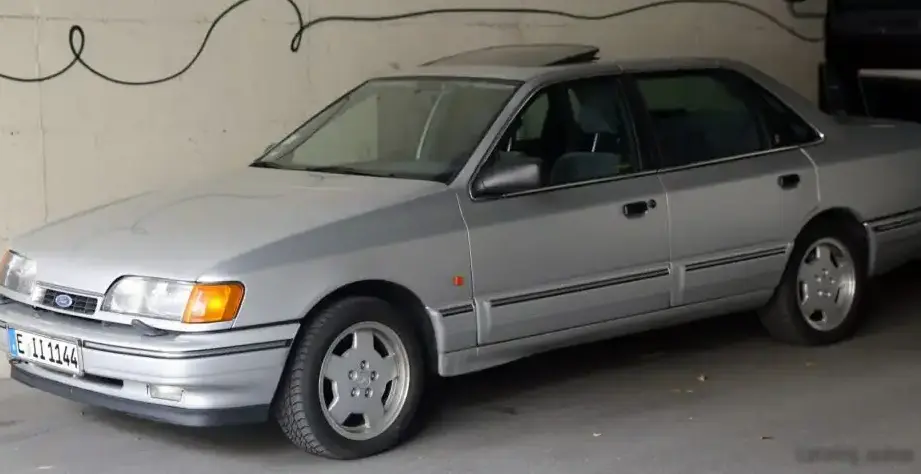
The Ford Scorpio I Turnier (GGE) 2.9 24V, produced between 1993 and 1994, represents a high-performance variant of Ford’s flagship executive car. Positioned as the top-of-the-line engine option within the Turnier (estate) body style of the Scorpio I range, it aimed to offer a blend of practicality, space, and spirited driving. The GGE chassis code designates the Turnier body style, distinguishing it from the saloon versions. This model occupied a niche market, appealing to buyers who desired a luxurious and capable estate car with genuine performance credentials. It was a relatively short-lived iteration, bridging the gap between the initial Scorpio launch and subsequent revisions.
Technical Specifications
| Brand | Ford |
| Model | Scorpio |
| Generation | Scorpio I Turnier (GGE) |
| Type (Engine) | 2.9 24V (194 Hp) |
| Start of production | 1993 |
| End of production | 1994 |
| Powertrain Architecture | Internal Combustion engine |
| Body type | Station wagon (estate) |
| Fuel Type | Petrol (Gasoline) |
| Power | 195 Hp @ 5750 rpm |
| Power per litre | 66.5 Hp/l |
| Engine layout | Front, Longitudinal |
| Engine Model/Code | BOA |
| Engine displacement | 2933 cm3 / 178.98 cu. in. |
| Number of cylinders | 6 |
| Engine configuration | V-engine |
| Cylinder Bore | 93 mm / 3.66 in. |
| Piston Stroke | 72 mm / 2.83 in. |
| Number of valves per cylinder | 2 |
| Fuel injection system | Multi-port manifold injection |
| Engine aspiration | Naturally aspirated engine |
| Valvetrain | OHC |
| Engine oil capacity | 4.3 l / 4.54 US qt | 3.78 UK qt |
| Coolant | 8.5 l / 8.98 US qt | 7.48 UK qt |
Powertrain & Engine Architecture
The heart of the Scorpio I Turnier 2.9 24V is the Ford BOA engine, a 2.9-liter V6. This engine is notable for its dual overhead camshafts (DOHC) operating four valves per cylinder – hence the “24V” designation. This configuration allowed for improved breathing and higher engine speeds compared to earlier Ford V6 designs. The BOA engine utilizes a multi-port fuel injection system, delivering fuel directly to each intake port for precise fuel metering and enhanced combustion efficiency. The engine’s layout is longitudinal, meaning it’s mounted lengthwise within the chassis, driving the rear wheels. This configuration was typical for larger Ford models of the era and contributed to a balanced weight distribution. The engine’s construction features a cast iron block and aluminum cylinder heads, a common combination for durability and weight reduction. While not a particularly high-revving engine, it delivered a strong mid-range torque curve, making it well-suited for effortless cruising and overtaking.
Driving Characteristics
The 2.9 24V Scorpio Turnier offered a distinctly different driving experience compared to the lower-powered versions. With 194 horsepower, it provided brisk acceleration, capable of reaching 60 mph in around 8.5 seconds – a respectable figure for a large estate car in the early 1990s. The rear-wheel-drive layout contributed to a balanced feel, although it lacked the all-weather capability of all-wheel-drive systems found on some competitors. The automatic transmission, while offering convenience, did slightly diminish the engine’s potential. Gear ratios were tuned for comfortable cruising rather than outright performance, and the transmission wasn’t particularly quick to downshift. Compared to the manual transmission option, the automatic resulted in a slight reduction in fuel economy and a less engaging driving experience. However, for buyers prioritizing ease of use and relaxed long-distance travel, the automatic was a logical choice.
Equipment & Trim Levels
The 2.9 24V Turnier typically represented the highest trim level available. Standard equipment included central locking, electric windows, power steering, and an upgraded audio system. Interior upholstery was typically a high-quality cloth or leather, with wood trim accents on the dashboard and door panels. Air conditioning was standard. Optional extras included a sunroof, upgraded sound systems, and heated front seats. The dashboard layout was functional and well-equipped, although it lacked the modern aesthetics of some contemporary rivals. The Turnier’s spacious interior and large cargo area were key selling points, making it a practical choice for families and those requiring ample carrying capacity.
Chassis & Braking
The Scorpio I Turnier utilized a MacPherson strut front suspension and a multi-link rear suspension. This setup provided a comfortable ride quality while maintaining reasonable handling characteristics. Stabilizer bars were fitted front and rear to reduce body roll during cornering. Braking was typically accomplished with ventilated disc brakes at the front and drum brakes at the rear. While adequate for most driving situations, the rear drum brakes were a point of criticism, as they lacked the stopping power and fade resistance of disc brakes. The steering was power-assisted, providing light and easy steering feel. The chassis was robustly built, providing a solid and stable platform for the engine and suspension.
Market Reception & Comparison
The Scorpio I Turnier 2.9 24V was generally well-received by automotive critics, who praised its performance, spaciousness, and comfortable ride. However, it faced stiff competition from established rivals such as the Volvo 940 Estate, BMW 5 Series Touring, and Mercedes-Benz E-Class Estate. Compared to these competitors, the Scorpio offered a more affordable price point, but it lacked the prestige and refinement of the German brands. Fuel economy was reasonable for a V6 engine of this size, averaging around 20-25 mpg. Reliability was generally good, although some owners reported issues with the automatic transmission and electrical components. The 2.9 24V variant was considered a significant step up in performance compared to the lower-powered 2.0-liter and 2.8-liter versions, but it came at a higher price.
Legacy
The Ford Scorpio I Turnier 2.9 24V, while not a massive sales success, remains a fondly remembered car among enthusiasts. The BOA engine is known for its durability and relatively straightforward maintenance. Today, well-maintained examples are becoming increasingly rare and sought after by collectors. The automatic transmission, while not the most sporty, has proven to be reasonably reliable with proper servicing. The Scorpio I Turnier 2.9 24V represents a unique blend of practicality, performance, and affordability, making it a distinctive and appealing classic estate car. Its long-term reliability, coupled with its spacious interior and comfortable ride, ensures its continued appeal in the used car market.