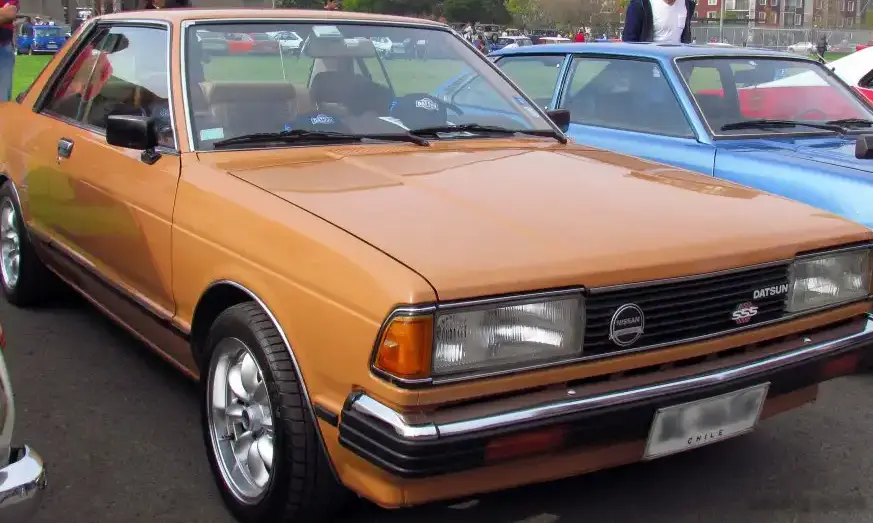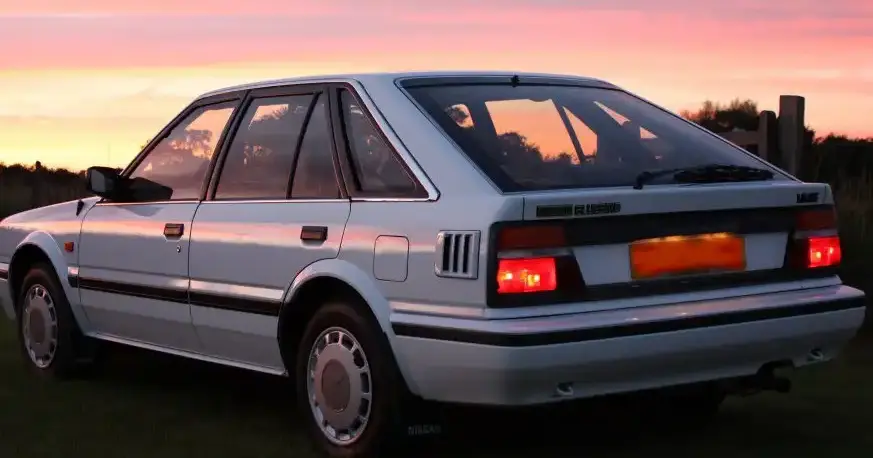
The Nissan Bluebird Sylphy I 1.6i, produced between 2000 and 2002, represented a significant iteration in Nissan’s long-running Bluebird lineage. This model, part of the broader Bluebird Sylphy I generation (designated N16), was primarily aimed at the Japanese domestic market (JDM) and select Asian export markets. It served as a comfortable and practical family sedan, positioned as a step up from more basic offerings while remaining accessible to a wide range of buyers. The 1.6i variant, with its 110 horsepower engine, occupied a middle ground within the Sylphy I lineup, offering a balance between fuel efficiency and adequate performance. It was offered alongside other engine options, including larger displacement engines and, in some markets, diesel variants.
Technical Specifications
| Brand | Nissan |
| Model | Bluebird |
| Generation | Bluebird Sylphy I |
| Type (Engine) | 1.6i (110 Hp) |
| Start of production | 2000 year |
| End of production | 2002 year |
| Powertrain Architecture | Internal Combustion engine |
| Body type | Sedan |
| Seats | 5 |
| Doors | 4 |
| Fuel Type | Petrol (Gasoline) |
| Power | 110 Hp @ 6000 rpm |
| Power per litre | 68.9 Hp/l |
| Torque | 165 Nm @ 4000 rpm |
| Torque (lb.-ft.) | 121.7 lb.-ft. @ 4000 rpm |
| Engine layout | Front, Transverse |
| Engine displacement | 1597 cm3 |
| Engine displacement (cu. in.) | 97.45 cu. in. |
| Number of cylinders | 4 |
| Engine configuration | Inline |
| Cylinder Bore | 76 mm |
| Cylinder Bore (in.) | 2.99 in. |
| Piston Stroke | 88 mm |
| Piston Stroke (in.) | 3.46 in. |
| Compression ratio | 9.5:1 |
| Number of valves per cylinder | 4 |
| Fuel injection system | Multi-port manifold injection |
| Engine aspiration | Naturally aspirated engine |
| Valvetrain | DOHC |
| Fuel tank capacity | 50 l |
| Fuel tank capacity (US gal) | 13.21 US gal |
| Fuel tank capacity (UK gal) | 11 UK gal |
| Length | 4470 mm |
| Length (in.) | 175.98 in. |
| Width | 1695 mm |
| Width (in.) | 66.73 in. |
| Height | 1445 mm |
| Height (in.) | 56.89 in. |
| Wheelbase | 2535 mm |
| Wheelbase (in.) | 99.8 in. |
| Front track | 1490 mm |
| Front track (in.) | 58.66 in. |
| Rear track | 1470 mm |
| Rear track (in.) | 57.87 in. |
| Ride height (ground clearance) | 145 mm |
| Ride height (ground clearance) (in.) | 5.71 in. |
| Drivetrain Architecture | The Internal combustion engine (ICE) drives the front wheels of the vehicle. |
| Drive wheel | Front wheel drive |
| Number of gears and type of gearbox | 5 gears, manual transmission |
| Front brakes | Ventilated discs |
| Rear brakes | Drum |
| Assisting systems | ABS (Anti-lock braking system) |
| Steering type | Steering rack and pinion |
| Power steering | Hydraulic Steering |
| Tires size | 175/70 R14 |
| Wheel rims size | 14 |
Powertrain & Engine Architecture
The heart of the Bluebird Sylphy I 1.6i was the GA16DE engine, a 1.6-liter inline-four cylinder powerplant. This engine featured a double overhead camshaft (DOHC) valvetrain with four valves per cylinder, contributing to its relatively efficient operation. The GA16DE utilized multi-port fuel injection, a common technology at the time, to deliver fuel directly into the intake ports. The engine’s 9.5:1 compression ratio was a compromise between performance and fuel economy. The 110 horsepower output, while not exceptionally high, was considered adequate for everyday driving in the Sylphy’s target market. The engine was transversely mounted in the front of the vehicle, driving the front wheels. The standard transmission for this variant was a five-speed manual gearbox, offering drivers a direct connection to the engine.
Driving Characteristics
The 1.6i variant of the Bluebird Sylphy I offered a comfortable, if not particularly sporty, driving experience. The five-speed manual transmission allowed for reasonable control over the engine’s power band. Acceleration was adequate for merging onto highways and navigating city streets, but it wasn’t designed for rapid acceleration. Compared to larger-engined Sylphy models, the 1.6i felt less strained during highway cruising, and its lighter weight contributed to slightly better fuel economy. The gear ratios were tuned for everyday usability rather than outright performance. The manual transmission provided a more engaging driving experience than the optional automatic transmission, which was available on some trim levels.
Equipment & Trim Levels
The Bluebird Sylphy I 1.6i typically came equipped with a reasonable level of standard features. These included power windows, power door locks, and a basic audio system. Air conditioning was often standard, though it could be optional on lower trim levels. Interior upholstery was typically cloth, with a focus on durability and comfort. Higher trim levels offered upgrades such as alloy wheels, a more sophisticated audio system, and optional features like a sunroof. The dashboard layout was functional and straightforward, prioritizing ease of use. Safety features included ABS (Anti-lock Braking System) as standard equipment, a notable inclusion for the time.
Chassis & Braking
The Bluebird Sylphy I utilized a conventional front-wheel-drive chassis layout. The front suspension consisted of MacPherson struts, while the rear suspension employed a torsion beam setup. This configuration provided a comfortable ride quality, suitable for everyday driving. The braking system featured ventilated discs on the front wheels and drum brakes on the rear wheels. The ABS system helped to maintain steering control during emergency braking situations. Steering was provided by a hydraulic power steering system, offering light and easy maneuverability. The 175/70 R14 tires provided a good balance between ride comfort and handling.
Market Reception & Comparison
The Nissan Bluebird Sylphy I 1.6i was generally well-received in its target markets. Critics praised its comfortable ride, spacious interior, and reasonable fuel economy. However, some reviewers noted that its performance was not particularly exciting compared to some of its competitors. Compared to the larger-engined Sylphy variants, the 1.6i offered a more affordable entry point into the model range. It also provided better fuel economy than the more powerful engines. Against competitors like the Toyota Corolla and Honda Civic, the Sylphy I 1.6i offered a competitive package in terms of features and price.
Legacy
The GA16DE engine, found in the Bluebird Sylphy I 1.6i, is generally considered a reliable and durable powerplant. With proper maintenance, these engines can last for many years and accumulate high mileage. The Bluebird Sylphy I, as a whole, has developed a reputation for being a practical and dependable family car. In the used car market today, these vehicles are often sought after for their affordability and reliability. While not a particularly collectible model, the Bluebird Sylphy I 1.6i represents a significant chapter in Nissan’s history and continues to provide reliable transportation for many owners.