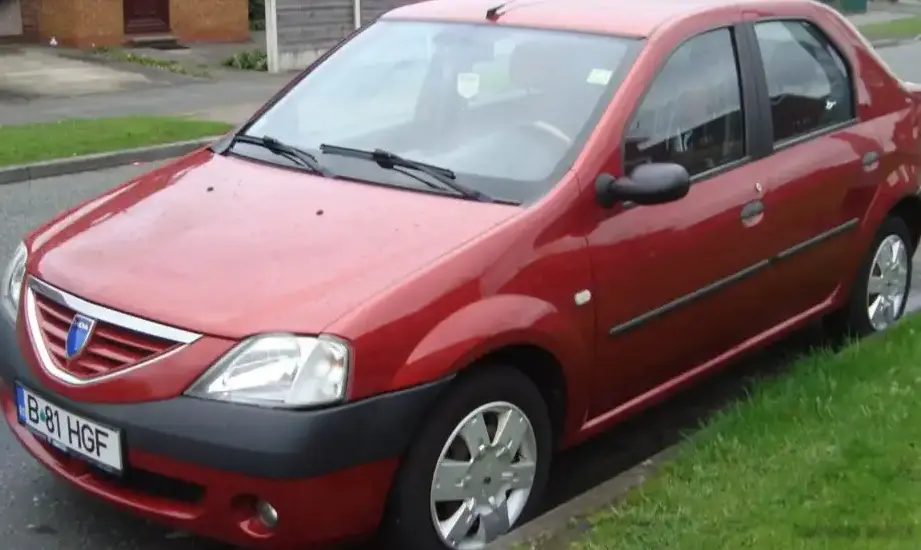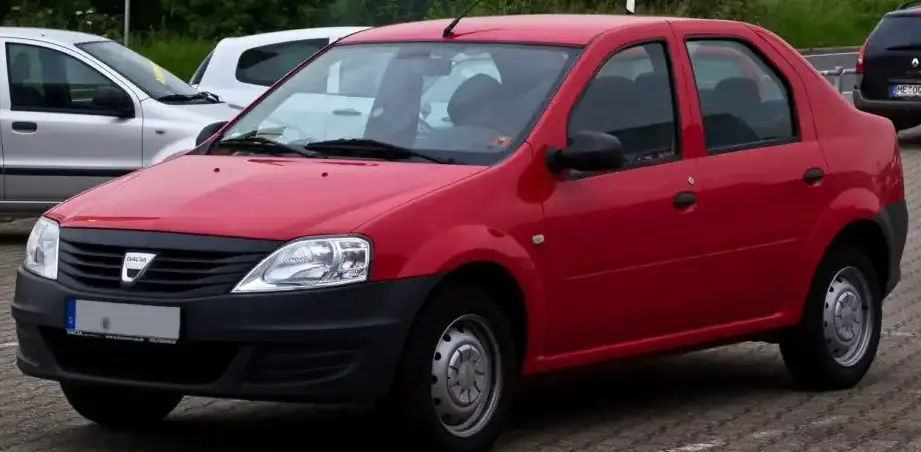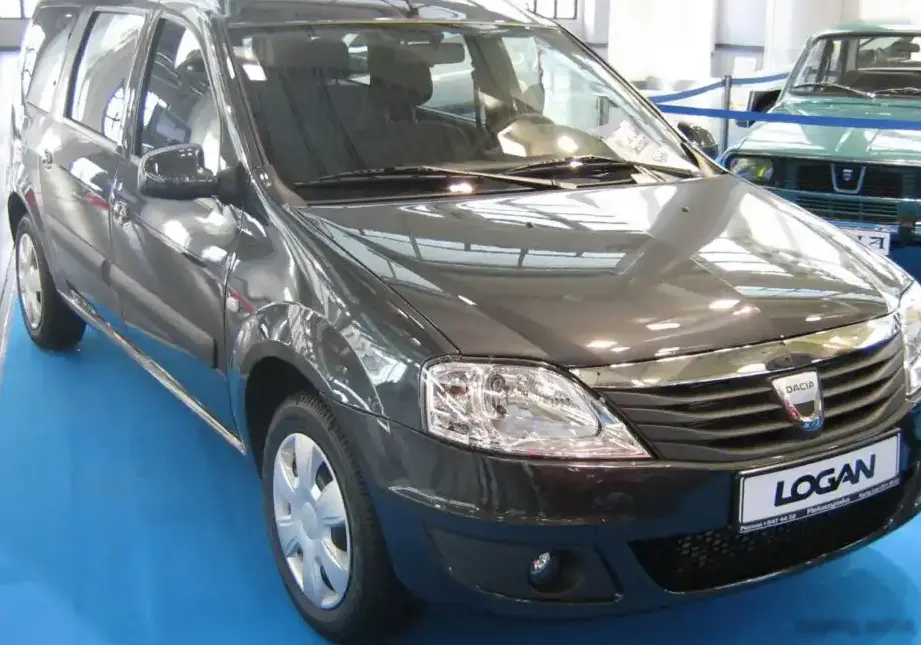
The Dacia Logan I MCV (facelift 2008) 1.5 dCi 88 hp with a Diesel Particulate Filter (FAP) and seven seats represents a practical and affordable option within the first generation Logan MCV (Multi-Capacity Vehicle) range. Produced from 2010 to 2013, this variant aimed to provide family-oriented transportation with a focus on fuel efficiency and space. It occupied a mid-range position in the Logan MCV lineup, offering a balance between cost, performance, and practicality. The Logan MCV, based on the 1HX0/A3 platform, was Dacia’s answer to the growing demand for affordable station wagons, particularly in Eastern European markets, and later expanded to Western Europe as a budget-friendly alternative.
Technical Specifications
| Brand | Dacia |
| Model | Logan |
| Generation | Logan I MCV (facelift 2008) |
| Type (Engine) | 1.5 dCi (88 Hp) FAP 7 Seats |
| Start of production | 2010 |
| End of production | 2013 |
| Powertrain Architecture | Internal Combustion engine |
| Body type | Station wagon (estate) |
| Seats | 7 |
| Doors | 5 |
| Fuel consumption (urban) | 5.4 l/100 km (43.6 US mpg, 52.3 UK mpg, 18.5 km/l) |
| Fuel consumption (extra urban) | 4.2 l/100 km (56 US mpg, 67.3 UK mpg, 23.8 km/l) |
| Fuel consumption (combined) | 4.6 l/100 km (51.1 US mpg, 61.4 UK mpg, 21.7 km/l) |
| CO2 emissions | 119 g/km |
| Fuel Type | Diesel |
| Acceleration 0 – 100 km/h | 13.7 sec |
| Acceleration 0 – 62 mph | 13.7 sec |
| Acceleration 0 – 60 mph | 13 sec |
| Maximum speed | 165 km/h (102.53 mph) |
| Emission standard | Euro 5 |
| Weight-to-power ratio | 14.3 kg/Hp, 70.1 Hp/tonne |
| Weight-to-torque ratio | 6.3 kg/Nm, 159.4 Nm/tonne |
| Power | 88 Hp @ 3750 rpm |
| Power per litre | 60.2 Hp/l |
| Torque | 200 Nm @ 1750 rpm (147.51 lb.-ft. @ 1750 rpm) |
| Engine layout | Front, Transverse |
| Engine Model/Code | K9K 892 |
| Engine displacement | 1461 cm3 (89.16 cu. in.) |
| Number of cylinders | 4 |
| Engine configuration | Inline |
| Cylinder Bore | 76 mm (2.99 in.) |
| Piston Stroke | 80.5 mm (3.17 in.) |
| Compression ratio | 17.6:1 |
| Number of valves per cylinder | 2 |
| Fuel injection system | Diesel Commonrail |
| Engine aspiration | Turbocharger, Intercooler |
| Valvetrain | SOHC |
| Engine oil capacity | 4.5 l (4.76 US qt | 3.96 UK qt) |
| Coolant capacity | 4.5 l (4.76 US qt | 3.96 UK qt) |
| Kerb Weight | 1255 kg (2766.8 lbs.) |
| Max. weight | 1870 kg (4122.64 lbs.) |
| Max load | 615 kg (1355.84 lbs.) |
| Trunk (boot) space – minimum | 198 l (6.99 cu. ft.) |
| Trunk (boot) space – maximum | 2350 l (82.99 cu. ft.) |
| Fuel tank capacity | 50 l (13.21 US gal | 11 UK gal) |
| Max. roof load | 80 kg (176.37 lbs.) |
| Permitted trailer load with brakes (12%) | 1300 kg (2866.01 lbs.) |
| Permitted trailer load without brakes | 665 kg (1466.07 lbs.) |
| Permitted towbar download | 75 kg (165.35 lbs.) |
| Length | 4473 mm (176.1 in.) |
| Width | 1740 mm (68.5 in.) |
| Width including mirrors | 1993 mm (78.46 in.) |
| Height | 1640 mm (64.57 in.) |
| Wheelbase | 2905 mm (114.37 in.) |
| Front track | 1469 mm (57.83 in.) |
| Rear track | 1466 mm (57.72 in.) |
| Front overhang | 797 mm (31.38 in.) |
| Rear overhang | 771 mm (30.35 in.) |
| Ride height (ground clearance) | 160 mm (6.3 in.) |
| Drag coefficient (Cd) | 0.36 |
| Minimum turning circle | 11.25 m (36.91 ft.) |
| Drivetrain Architecture | The Internal combustion engine (ICE) drives the front wheels of the vehicle. |
| Drive wheel | Front wheel drive |
| Number of gears and type of gearbox | 5 gears, manual transmission |
| Front suspension | Independent type McPherson, Transverse stabilizer |
| Rear suspension | Coil spring, Torsion |
| Front brakes | Ventilated discs, 259 mm |
| Rear brakes | Drum, 203 mm |
| Assisting systems | ABS (Anti-lock braking system) |
| Steering type | Steering rack and pinion |
| Power steering | Hydraulic Steering |
| Tires size | 185/65 R15 |
| Wheel rims size | 6J x 15 |
INTRODUCTION
The Dacia Logan I MCV (facelift 2008) 1.5 dCi 88 hp FAP 7-seater is a station wagon variant of the original Logan MCV, produced between 2010 and 2013. It was designed to offer a spacious and economical vehicle for families, particularly in markets where affordability was a key consideration. The facelifted model, introduced in 2008, brought cosmetic updates and improvements to the interior, enhancing the overall appeal of the Logan range. This specific engine and transmission combination was positioned as a practical choice, prioritizing fuel economy and low running costs over outright performance.
Powertrain & Engine Architecture
The heart of this Logan MCV is the Renault-sourced K9K 892 1.5-liter inline-four diesel engine. This engine is a common rail direct injection (CDI) unit, utilizing Delphi technology. The K9K engine family is known for its robustness and relatively simple design. The 88 hp version employs a fixed-geometry turbocharger with an intercooler to boost power and torque. The engine features a single overhead camshaft (SOHC) and two valves per cylinder. The Diesel Particulate Filter (DPF), denoted by the “FAP” designation, was included to meet increasingly stringent Euro 5 emission standards. The engine is transversely mounted at the front of the vehicle. The 5-speed manual transmission was the only gearbox option available with this engine configuration, chosen for its efficiency and cost-effectiveness.
Driving Characteristics
The 1.5 dCi 88 hp engine, paired with the 5-speed manual gearbox, delivers modest performance. Acceleration from 0-100 km/h takes approximately 13.7 seconds, and the top speed is around 165 km/h. The engine’s 200 Nm of torque, available from 1750 rpm, provides adequate pulling power for everyday driving and carrying a full load of passengers and luggage. However, it’s not a particularly quick vehicle, and overtaking maneuvers require careful planning. The gear ratios are geared towards fuel efficiency rather than sporty acceleration. Compared to higher-output versions of the 1.5 dCi or the petrol-powered Logan MCVs, this variant feels noticeably slower. The manual transmission allows for greater driver control and contributes to the vehicle’s fuel economy.
Equipment & Trim Levels
The 1.5 dCi 88 hp FAP 7-seat variant typically came with a basic level of equipment, reflecting its position as a value-oriented vehicle. Standard features included power steering, central locking, electric front windows, and an ABS anti-lock braking system. The seven-seat configuration offered versatility for families, although the rearmost seats were best suited for occasional use. Interior upholstery was typically cloth, and the dashboard featured a functional but basic design. Optional extras included air conditioning, a radio/CD player, and alloy wheels. Higher trim levels offered additional features such as fog lights, parking sensors, and upgraded interior trim.
Chassis & Braking
The Logan I MCV utilizes a McPherson strut independent suspension at the front and a coil spring torsion beam suspension at the rear. This setup provides a comfortable ride, although it’s not particularly sporty. The front brakes are ventilated discs, while the rear brakes are drums. This configuration was chosen to keep costs down. The hydraulic power steering provides reasonable assistance, making the vehicle easy to maneuver. The 185/65 R15 tires offer a good balance between comfort and grip. The chassis is designed to handle the increased weight associated with the seven-seat configuration and a full load.
Market Reception & Comparison
The Dacia Logan I MCV 1.5 dCi 88 hp FAP 7-seat was generally well-received by critics for its practicality, affordability, and fuel efficiency. It was praised for its spacious interior and versatile seven-seat configuration. However, it was also criticized for its basic interior, modest performance, and somewhat agricultural driving experience. Compared to other station wagons in its class, the Logan MCV offered significantly more space for the money. The 1.5 dCi engine provided excellent fuel economy, making it an attractive option for budget-conscious buyers. Compared to the petrol versions, the diesel offered superior fuel efficiency and torque, but at a higher initial cost.
Legacy
The K9K engine, in its various iterations, has proven to be a reliable and durable powertrain. The 1.5 dCi 88 hp version is generally considered to be a robust unit, although regular maintenance is essential, particularly regarding the DPF. On the used car market, the Logan I MCV 1.5 dCi 88 hp FAP 7-seat remains a popular choice for those seeking an affordable and practical family vehicle. Its low running costs and spacious interior continue to appeal to buyers. While not known for its refinement or performance, it represents a sensible and dependable option for those prioritizing value and practicality.