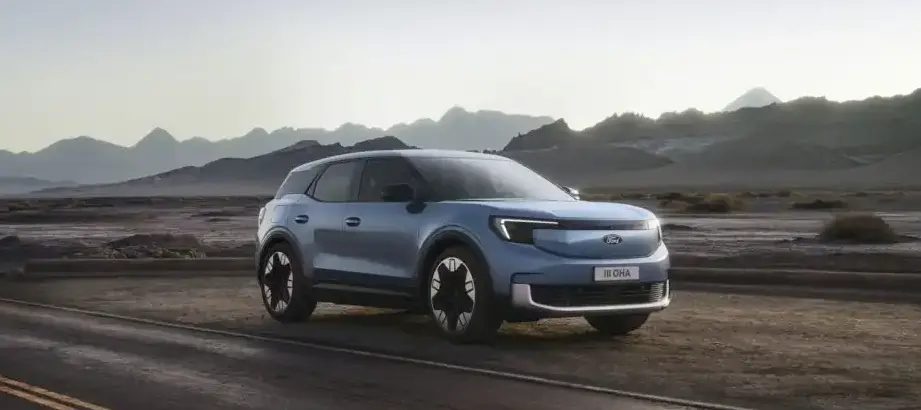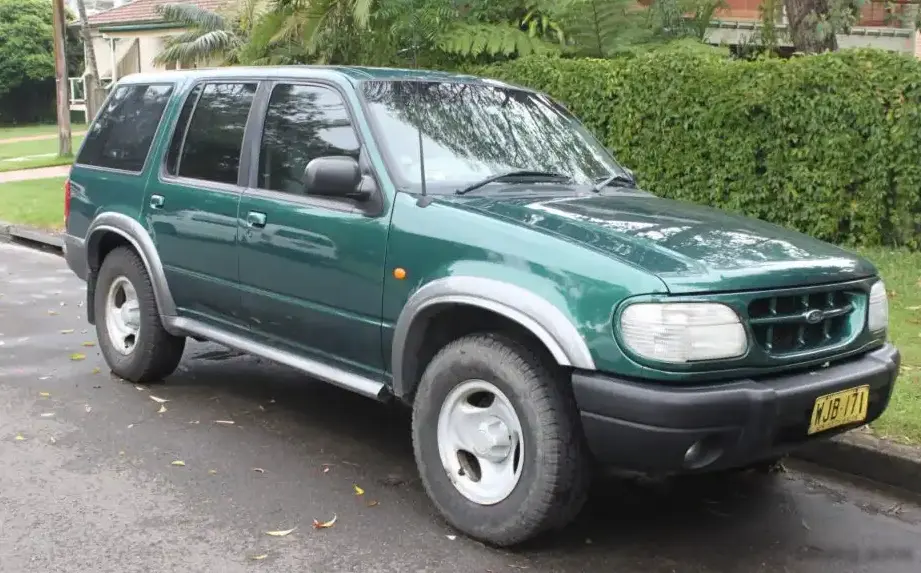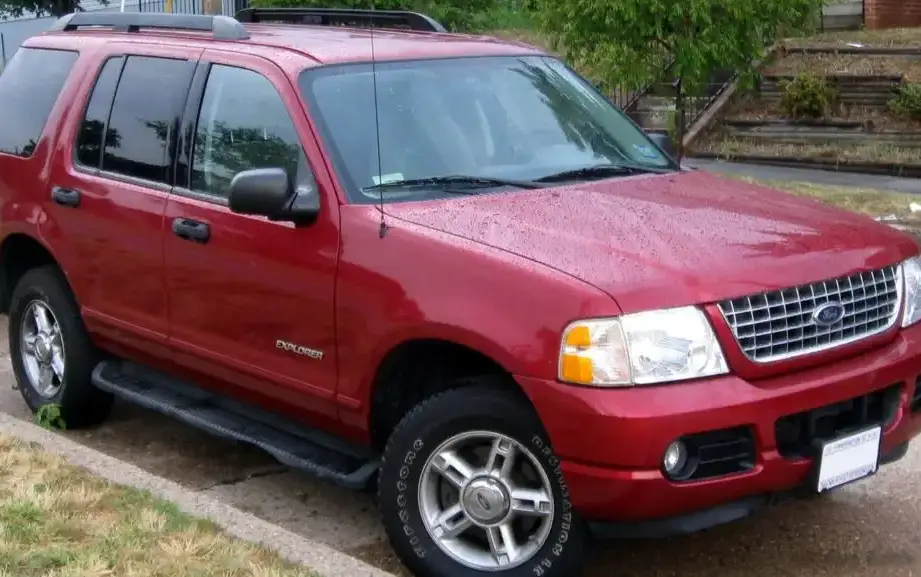
The Ford Explorer III, produced between 2002 and 2005, represented a significant evolution for Ford’s popular SUV. The 4.6i V8 variant, generating 242 horsepower, occupied a prominent position within the Explorer III lineup, offering a balance of power and capability for families and those needing a robust vehicle. This model year marked a shift towards a more refined and modern Explorer, building upon the success of its predecessors while incorporating updated styling and technology. The 4.6i V8 was positioned as a step up from the base V6 models, appealing to buyers who desired stronger acceleration and towing capacity.
Technical Specifications
| Brand | Ford |
| Model | Explorer |
| Generation | Explorer III |
| Type (Engine) | 4.6i V8 (242 Hp) |
| Start of production | 2002 year |
| End of production | 2005 year |
| Powertrain Architecture | Internal Combustion engine |
| Body type | SUV |
| Seats | 5 |
| Doors | 5 |
| Fuel consumption (economy) – urban | 16.8 l/100 km (14 US mpg, 16.8 UK mpg) |
| Fuel consumption (economy) – extra urban | 12.4 l/100 km (19 US mpg, 22.8 UK mpg) |
| Fuel Type | Petrol (Gasoline) |
| Acceleration 0 – 100 km/h | 8.6 sec |
| Acceleration 0 – 62 mph | 8.6 sec |
| Acceleration 0 – 60 mph | 8.2 sec |
| Maximum speed | 158 km/h (98.18 mph) |
| Weight-to-power ratio | 8.2 kg/Hp |
| Weight-to-torque ratio | 5.2 kg/Nm |
| Power | 242 Hp @ 4750 rpm |
| Power per litre | 52.6 Hp/l |
| Torque | 382 Nm @ 4000 rpm (281.75 lb.-ft. @ 4000 rpm) |
| Engine layout | Front, Longitudinal |
| Engine Model/Code | Modular |
| Engine displacement | 4601 cm3 (280.77 cu. in.) |
| Number of cylinders | 8 |
| Engine configuration | V-engine |
| Cylinder Bore | 90.2 mm (3.55 in.) |
| Piston Stroke | 90 mm (3.54 in.) |
| Compression ratio | 9.4:1 |
| Number of valves per cylinder | 2 |
| Fuel injection system | Multi-port manifold injection |
| Engine aspiration | Naturally aspirated engine |
| Engine oil capacity | 5.7 l (6.02 US qt | 5.02 UK qt) |
| Coolant | 17.6 l (18.6 US qt | 15.49 UK qt) |
| Kerb Weight | 1990 kg (4387.2 lbs.) |
| Max. weight | 2595 kg (5721 lbs.) |
| Max load | 605 kg (1333.8 lbs.) |
| Trunk (boot) space – minimum | 391 l (13.81 cu. ft.) |
| Trunk (boot) space – maximum | 2492 l (88 cu. ft.) |
| Fuel tank capacity | 85 l (22.45 US gal | 18.7 UK gal) |
| Length | 4813 mm (189.49 in.) |
| Width | 1832 mm (72.13 in.) |
| Height | 1814 mm (71.42 in.) |
| Wheelbase | 2890 mm (113.78 in.) |
| Front track | 1547 mm (60.91 in.) |
| Rear (Back) track | 1555 mm (61.22 in.) |
| Drivetrain Architecture | The Internal combustion engine (ICE) drives the rear wheels of the vehicle. |
| Drive wheel | Rear wheel drive |
| Number of gears and type of gearbox | 5 gears, manual transmission |
| Front suspension | Torsion |
| Rear suspension | Coil spring |
| Front brakes | Disc |
| Rear brakes | Disc |
| Assisting systems | ABS (Anti-lock braking system) |
| Steering type | Steering rack and pinion |
| Tires size | 245/70 R16 |
INTRODUCTION
The Ford Explorer III 4.6i V8, manufactured from 2003 to 2005, was a key component of the third-generation Explorer (2002-2005) lineup. Built on the 1HX0/A3 platform, this iteration of the Explorer aimed to provide a more comfortable and refined driving experience compared to earlier models. The 4.6-liter V8 engine was a significant upgrade over the standard 4.0-liter V6, offering increased power and torque for towing and hauling. This variant catered to buyers who needed a capable SUV without sacrificing everyday usability. It was a popular choice for families and individuals in the United States and Canada, where large SUVs remained in high demand.
Powertrain & Engine Architecture
At the heart of the Explorer III 4.6i V8 lies Ford’s Modular engine family. Specifically, this Explorer utilized a 4.6-liter (4601 cc) SOHC two-valve-per-cylinder V8. The engine code is generally identified as part of the broader Modular V8 family. This engine featured multi-port fuel injection, delivering fuel directly into the intake ports for optimized combustion. The engine’s architecture was designed for durability and relatively easy maintenance. The 5-speed manual transmission paired with this engine provided a direct connection to the rear wheels. While an automatic transmission was more common in Explorers, the manual option offered drivers greater control and potentially improved fuel efficiency. The engine’s 9.4:1 compression ratio contributed to its balance of power and efficiency.
Driving Characteristics
The 4.6i V8-equipped Explorer III offered a noticeable performance improvement over its V6 counterparts. The 242 horsepower and 382 lb-ft of torque translated to brisk acceleration, with 0-60 mph times around 8.2 seconds. The manual transmission allowed for precise gear selection, maximizing the engine’s power band. However, the Explorer’s substantial weight (approximately 4,387 lbs) meant it wasn’t a particularly nimble vehicle. The rear-wheel-drive configuration provided a more traditional SUV driving experience, offering good traction in most conditions. Compared to the automatic transmission versions, the manual offered a more engaging driving experience, but required more driver involvement. The 5-speed manual’s gear ratios were tuned for a balance of acceleration and highway cruising, providing adequate power for both city driving and long-distance trips.
Equipment & Trim Levels
The Explorer III 4.6i V8 was typically offered in higher trim levels, such as XLT and Limited. Standard features included air conditioning, power windows and locks, a CD player, and cloth upholstery. Higher trims added features like leather seats, a premium sound system, and alloy wheels. Optional extras included a sunroof, a navigation system, and a rear entertainment system. The interior design was functional and comfortable, with ample space for passengers and cargo. The dashboard layout was straightforward and easy to use, with clearly labeled controls. The XLT trim provided a good balance of features and value, while the Limited trim offered a more luxurious experience.
Chassis & Braking
The Explorer III utilized a body-on-frame construction, providing a robust and durable chassis. The front suspension featured independent torsion bars, while the rear suspension employed coil springs. This setup offered a comfortable ride, but wasn’t particularly sporty. The braking system consisted of disc brakes on all four wheels, with ABS (Anti-lock Braking System) as standard equipment. The Explorer’s weight necessitated a strong braking system to ensure safe and controlled stopping power. The rear disc brakes were an improvement over earlier Explorer models that used drum brakes. Stabilizer bars were included on both the front and rear axles to reduce body roll during cornering.
Market Reception & Comparison
The Explorer III 4.6i V8 received generally positive reviews from automotive critics. It was praised for its powerful engine, comfortable ride, and spacious interior. However, some critics noted its relatively poor fuel economy and bulky handling. Compared to the V6 models, the 4.6i V8 offered a significant performance boost, but at the cost of increased fuel consumption. The manual transmission version was appreciated by enthusiasts for its engaging driving experience, but it was less popular than the automatic transmission. In terms of reliability, the 4.6-liter V8 engine proved to be relatively durable, but some owners reported issues with the timing chain tensioners and the intake manifold gaskets.
Legacy
The Ford Explorer III 4.6i V8 remains a popular choice among used car buyers seeking a capable and affordable SUV. The 4.6-liter V8 engine is known for its longevity and relatively low maintenance costs. However, potential buyers should be aware of the potential for timing chain tensioner issues and intake manifold gasket leaks. The manual transmission version is particularly sought after by enthusiasts, as it offers a unique driving experience. Overall, the Explorer III 4.6i V8 represents a solid and reliable SUV that continues to provide years of service to its owners. Its blend of power, space, and affordability has cemented its place as a classic American SUV.