
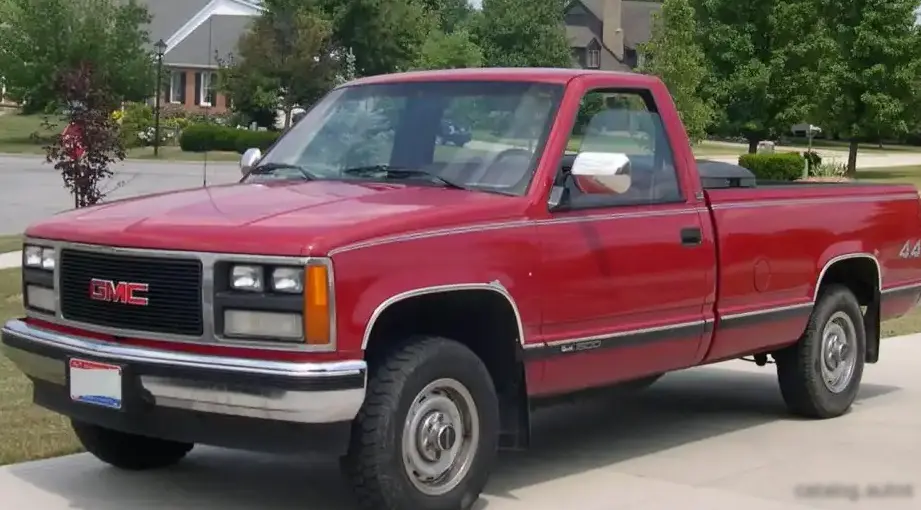
The GMC Sierra 1500, in its first generation (GMT400 platform), was a full-size pickup truck produced from 1988 through 1992. This iteration marked a significant redesign for GMC’s truck line, moving away from the older, more squared-off designs of the 1970s and 80s. The Regular Cab Long Wheelbase (LWB) Wideside configuration, equipped with the 5.7-liter V8 engine and a four-speed automatic transmission, represented a popular choice for buyers needing a capable and versatile work truck with the added benefit of four-wheel drive. This particular variant occupied a mid-range position within the Sierra 1500 lineup, offering a balance between power, capability, and affordability.
Technical Specifications
| Brand | GMC |
| Model | Sierra 1500 |
| Generation | Sierra 1500 I (GMT400) Regular cab LWB Wideside |
| Type (Engine) | 5.7 V8 (210 Hp) 4WD Automatic |
| Start of production | 1988 |
| End of production | 1992 |
| Powertrain Architecture | Internal Combustion engine |
| Body type | Pick-up |
| Seats | 3 |
| Doors | 2 |
| Fuel Type | Petrol (Gasoline) |
| Power | 210 Hp @ 4000 rpm |
| Torque | 407 Nm @ 2800 rpm / 300.19 lb.-ft. @ 2800 rpm |
| Engine layout | Front, Longitudinal |
| Number of cylinders | 8 |
| Engine configuration | V-engine |
| Cylinder Bore | 101.6 mm / 4 in |
| Piston Stroke | 88.39 mm / 3.48 in |
| Compression ratio | 9.3:1 |
| Fuel injection system | Multi-port manifold injection |
| Engine aspiration | Naturally aspirated engine |
| Max. weight | 2767 kg / 6100.19 lbs |
| Fuel tank capacity | 129 l / 34.08 US gal | 28.38 UK gal |
| Length | 5547 mm / 218.39 in |
| Width | 1951 mm / 76.81 in |
| Height | 1788 mm / 70.39 in |
| Wheelbase | 3340 mm / 131.5 in |
| Front overhang | 886 mm / 34.88 in |
| Rear overhang | 1321 mm / 52.01 in |
| Drivetrain Architecture | The Internal combustion engine (ICE) drives the rear wheels permanently, and the front wheels are driven through an electrically or mechanically operated clutch if necessary. |
| Drive wheel | All wheel drive (4×4) |
| Number of gears and type of gearbox | 4 gears, automatic transmission |
| Front suspension | Independent torsion bar, double wishbone |
| Rear suspension | Rigid axle suspension, Leaf spring |
| Front brakes | Disc |
| Rear brakes | Drum |
| Tires size | 225/75 R16 |
Powertrain & Engine Architecture
The heart of this Sierra 1500 variant was the 5.7-liter (350 cubic inch) small-block Chevrolet V8 engine. This engine, internally designated as the L05, was a staple of General Motors’ truck and SUV lineup for many years. It featured a cast iron block and cylinder heads, a 9.3:1 compression ratio, and a multi-port fuel injection system. The multi-port injection, a relatively modern feature for the time, improved fuel efficiency and throttle response compared to earlier carbureted designs. The engine produced 210 horsepower at 4,000 rpm and 300 lb-ft of torque at 2,800 rpm. This torque output was particularly important for a pickup truck, providing ample pulling power for towing and hauling. The engine was mounted longitudinally in the chassis. The four-speed automatic transmission (likely a 4L60 or similar) was chosen for its ease of use and suitability for both on-road driving and light off-road work. While not as fuel-efficient as a manual transmission, the automatic offered a more comfortable driving experience for many buyers.
Driving Characteristics
The 5.7L V8 and automatic transmission combination delivered a respectable, if not exhilarating, driving experience. Acceleration was adequate for everyday driving, but the truck wasn’t particularly quick. The automatic transmission’s gear ratios were optimized for towing and hauling, meaning that the truck felt somewhat sluggish at higher speeds. The 4WD system provided enhanced traction in slippery conditions, making it a capable work truck in a variety of environments. Compared to the available 6.2L diesel engine, the 5.7L V8 offered quicker acceleration but significantly lower fuel economy. Against the smaller 4.3L V6, the 5.7L provided a substantial power increase, making it the preferred choice for those regularly towing or carrying heavy loads. The leaf spring rear suspension, while robust, resulted in a somewhat firm ride, especially when the truck was unloaded.
Equipment & Trim Levels
The Regular Cab LWB Wideside 5.7L 4WD Sierra 1500 typically came standard with features like air conditioning, a basic AM/FM radio, and cloth upholstery. Power steering and power brakes were also standard equipment. The “Wideside” designation referred to the width of the bed, offering more cargo space than the narrower “Narrowside” option. Optional extras included a tilt steering wheel, upgraded sound systems, cruise control, and various trim packages that added features like color-matched exterior trim and upgraded interior materials. The interior was functional and durable, designed to withstand the rigors of work truck use. The dashboard layout was straightforward and easy to use, with clearly labeled controls.
Chassis & Braking
The GMT400 chassis featured an independent torsion bar suspension in the front, providing a relatively comfortable ride and good handling. The rear suspension utilized a traditional leaf spring setup, which was known for its durability and load-carrying capacity. The front brakes were disc brakes, while the rear brakes were drum brakes. This combination was adequate for the truck’s weight and intended use. The 225/75R16 tires provided a good balance of on-road comfort and off-road traction. The frame was a fully boxed design, providing a solid foundation for the truck and contributing to its overall durability.
Market Reception & Comparison
The GMC Sierra 1500, and this 5.7L V8/automatic configuration specifically, was well-received by buyers looking for a capable and reliable work truck. Critics praised its robust construction, ample power, and comfortable ride (for a pickup truck). However, some noted that the fuel economy was relatively poor compared to smaller trucks or those with diesel engines. Compared to the Ford F-150 and Chevrolet C/K 1500 (which shared many components with the Sierra), the GMC offered a slightly more upscale image and often came with a higher price tag. The 5.7L V8 offered a good compromise between power and cost, making it a popular choice for buyers who didn’t need the extra power of the larger 6.2L diesel but still wanted a capable truck.
Legacy
The GMT400 Sierra 1500, particularly the 5.7L V8/automatic combination, has proven to be a relatively reliable and durable truck. Many examples are still on the road today, a testament to their robust construction. The 5.7L V8 engine is known for its longevity and relatively simple maintenance requirements. However, like any older vehicle, these trucks can suffer from rust, especially in areas with harsh winters. Parts availability is generally good, as many components were shared with other GM vehicles. In the used car market, these trucks are often sought after by enthusiasts and those looking for a classic American pickup truck. They represent a simpler era of truck design, before the advent of complex electronic systems and luxury features. The 5.7L engine remains a popular choice for engine swaps and restorations, ensuring its continued presence in the automotive landscape.

