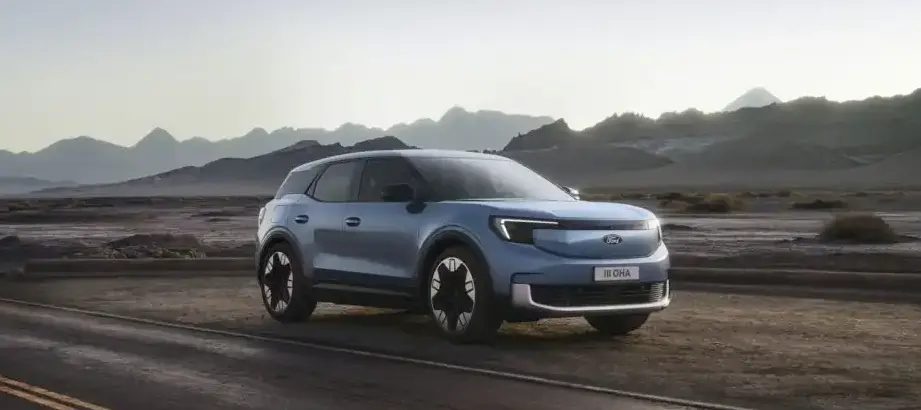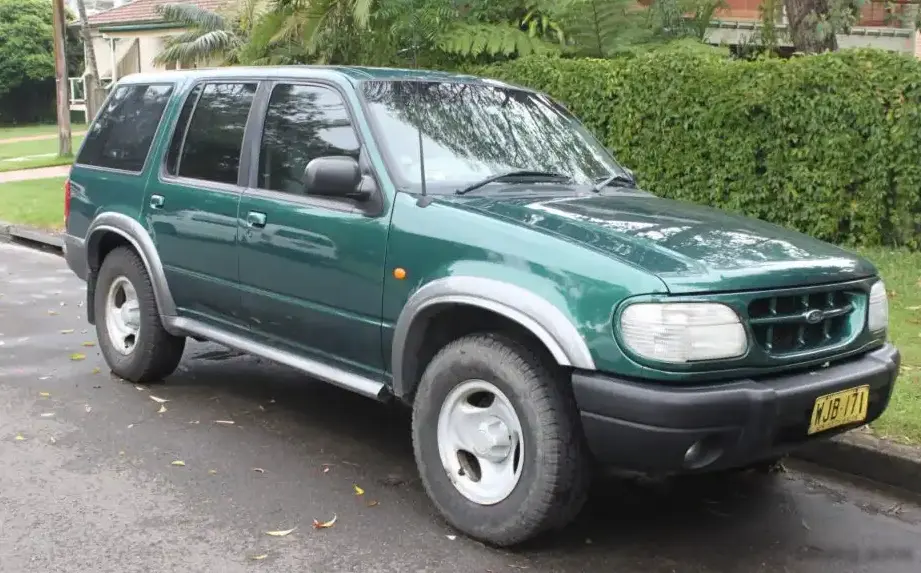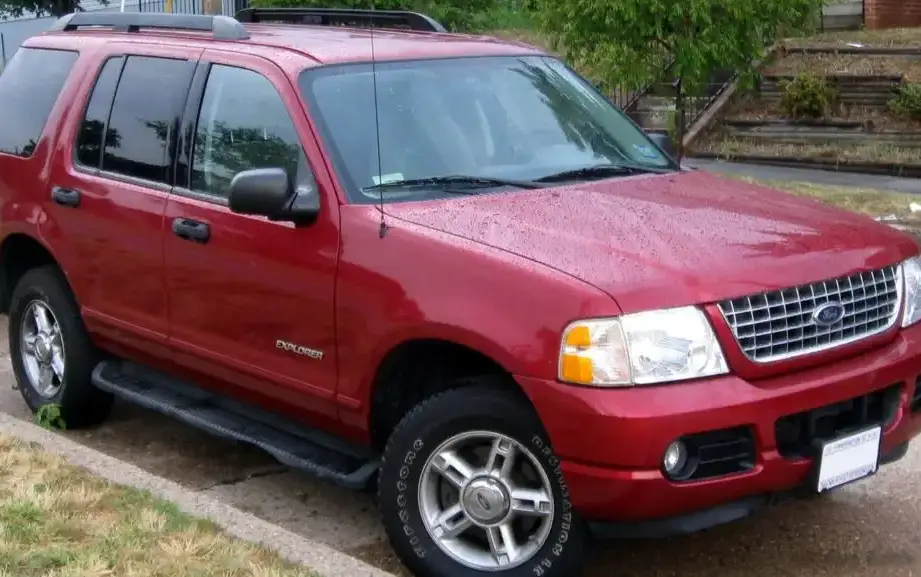
The Ford Explorer III, produced between 2002 and 2005, represented a significant evolution for Ford’s popular SUV. The 4.6i V8 4WD variant, generating 242 horsepower, occupied a prominent position within the Explorer lineup, offering a blend of capability, space, and relative luxury. This generation Explorer moved to a body-on-frame construction, a departure from the unibody design of the first two generations, aiming to enhance towing capacity and off-road performance. The 4.6i V8 4WD model was targeted towards buyers needing substantial power for towing, navigating challenging terrain, or simply desiring a more robust driving experience. It sat above the base V6 models in terms of price and performance, but below any potential limited-edition or higher-trim packages that might have been offered.
Technical Specifications
| Brand | Ford |
| Model | Explorer |
| Generation | Explorer III |
| Type (Engine) | 4.6i V8 4WD (242 Hp) |
| Start of production | 2002 year |
| End of production | 2005 year |
| Powertrain Architecture | Internal Combustion engine |
| Body type | SUV |
| Seats | 5 |
| Doors | 5 |
| Fuel consumption (economy) – urban | 16.8 l/100 km (14 US mpg, 16.8 UK mpg) |
| Fuel consumption (economy) – extra urban | 12.4 l/100 km (19 US mpg, 22.8 UK mpg) |
| Fuel Type | Petrol (Gasoline) |
| Acceleration 0 – 100 km/h | 8 sec |
| Acceleration 0 – 62 mph | 8 sec |
| Acceleration 0 – 60 mph | 7.6 sec |
| Maximum speed | 158 km/h (98.18 mph) |
| Weight-to-power ratio | 8.5 kg/Hp, 117.2 Hp/tonne |
| Weight-to-torque ratio | 5.4 kg/Nm, 185 Nm/tonne |
| Power | 242 Hp @ 4750 rpm |
| Power per litre | 52.6 Hp/l |
| Torque | 382 Nm @ 4000 rpm (281.75 lb.-ft. @ 4000 rpm) |
| Engine layout | Front, Longitudinal |
| Engine Model/Code | Modular |
| Engine displacement | 4601 cm3 (280.77 cu. in.) |
| Number of cylinders | 8 |
| Engine configuration | V-engine |
| Cylinder Bore | 90.2 mm (3.55 in.) |
| Piston Stroke | 90 mm (3.54 in.) |
| Compression ratio | 9.4:1 |
| Number of valves per cylinder | 2 |
| Fuel injection system | Multi-port manifold injection |
| Engine aspiration | Naturally aspirated engine |
| Engine oil capacity | 5.7 l (6.02 US qt | 5.02 UK qt) |
| Coolant | 17.6 l (18.6 US qt | 15.49 UK qt) |
| Kerb Weight | 2065 kg (4552.55 lbs.) |
| Max. weight | 2667 kg (5879.73 lbs.) |
| Max load | 602 kg (1327.18 lbs.) |
| Trunk (boot) space – minimum | 391 l (13.81 cu. ft.) |
| Trunk (boot) space – maximum | 2492 l (88 cu. ft.) |
| Fuel tank capacity | 85 l (22.45 US gal | 18.7 UK gal) |
| Length | 4813 mm (189.49 in.) |
| Width | 1832 mm (72.13 in.) |
| Height | 1814 mm (71.42 in.) |
| Wheelbase | 2890 mm (113.78 in.) |
| Front track | 1547 mm (60.91 in.) |
| Rear (Back) track | 1555 mm (61.22 in.) |
| Drive wheel | All wheel drive (4×4) |
| Number of gears and type of gearbox | 5 gears, manual transmission |
| Front suspension | Torsion |
| Rear suspension | Coil spring |
| Front brakes | Disc |
| Rear brakes | Disc |
| Assisting systems | ABS (Anti-lock braking system) |
| Steering type | Steering rack and pinion |
| Tires size | 245/70 R16 |
Powertrain & Engine Architecture
The heart of the Explorer III 4.6i V8 4WD is Ford’s 4.6-liter Modular V8 engine. This engine, part of the Triton family, featured a cast-iron block with aluminum cylinder heads. The engine utilized a single overhead camshaft (SOHC) design with two valves per cylinder. Fuel delivery was managed by a multi-port fuel injection system, providing precise fuel metering for optimal performance and efficiency. The 4.6L engine was known for its relatively smooth operation and ample low-end torque, making it well-suited for the Explorer’s size and intended use. The 5-speed manual transmission provided a direct connection to the engine, offering drivers more control over gear selection. The 4WD system was typically an electronic shift-on-the-fly system, allowing the driver to switch between 2WD and 4WD modes as needed.
Driving Characteristics
The 4.6i V8 4WD Explorer offered a noticeable step up in performance compared to the V6 models. Acceleration from 0-60 mph was achieved in around 7.6 seconds, making it reasonably quick for a full-size SUV of its era. The V8 engine delivered strong low-end torque, providing effortless acceleration in everyday driving situations. The manual transmission allowed for precise gear changes and a more engaging driving experience. However, the Explorer’s substantial weight and body-on-frame construction meant that it wasn’t particularly nimble in corners. The ride quality was generally comfortable, but could be somewhat firm, especially on rough roads. The 4WD system provided excellent traction in slippery conditions, making it a capable vehicle for off-road adventures or winter driving.
Equipment & Trim Levels
The Explorer III 4.6i V8 4WD typically came standard with features such as air conditioning, power windows and locks, a CD player, and cloth upholstery. Higher trim levels, such as the Limited, added features like leather upholstery, heated front seats, a premium sound system, and alloy wheels. Optional extras included a sunroof, a navigation system, and a rear entertainment system. Safety features included anti-lock brakes (ABS) and front airbags. The interior design was functional and straightforward, with a focus on practicality and durability.
Chassis & Braking
The Explorer III utilized a body-on-frame construction, providing a robust and durable chassis. The front suspension consisted of an independent torsion bar setup, while the rear suspension featured a solid axle with coil springs. This suspension configuration provided a good balance of ride comfort and load-carrying capacity. The braking system consisted of disc brakes on all four wheels, providing adequate stopping power. ABS was standard, helping to prevent wheel lockup during hard braking. The Explorer’s tires were typically 245/70R16, providing a good compromise between on-road comfort and off-road traction.
Market Reception & Comparison
The Explorer III 4.6i V8 4WD was generally well-received by critics and consumers alike. It was praised for its powerful engine, spacious interior, and capable 4WD system. However, some critics noted that its fuel economy was relatively poor, and its handling was not as refined as some of its competitors. Compared to the V6 models, the 4.6i V8 4WD offered a significant performance advantage, but at a higher price. Compared to other V8-powered SUVs of the time, such as the Chevrolet Tahoe or GMC Yukon, the Explorer was generally more affordable and compact.
Legacy
The Ford Explorer III 4.6i V8 4WD remains a popular choice among used car buyers today. The 4.6-liter Modular V8 engine is known for its reliability, although it can be prone to spark plug issues and oil leaks as it ages. The 5-speed manual transmission is also generally reliable, but may require maintenance over time. Overall, the Explorer III 4.6i V8 4WD is a capable and durable SUV that offers a good value for the money. Its combination of power, space, and 4WD capability makes it a versatile vehicle for a variety of needs. It represents a pivotal point in the Explorer’s history, transitioning to a more rugged and capable platform while maintaining its appeal as a family-friendly SUV.