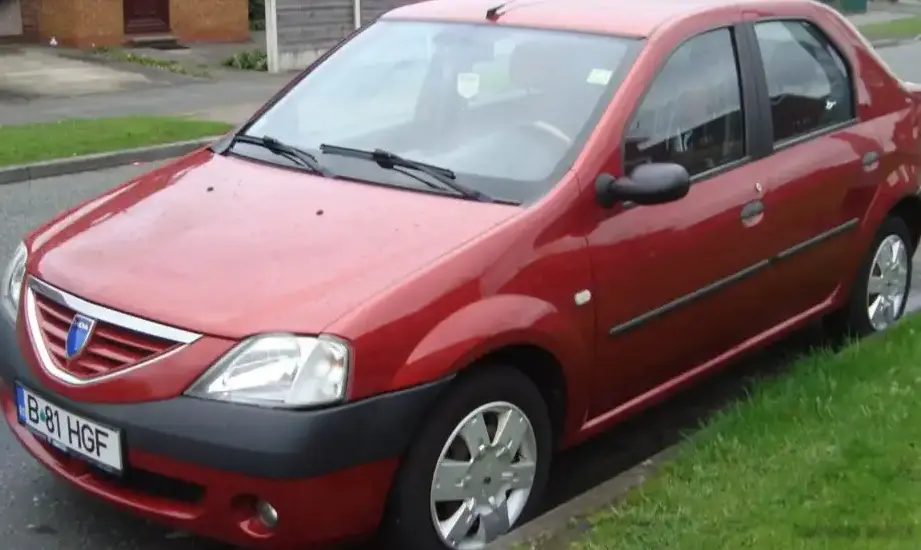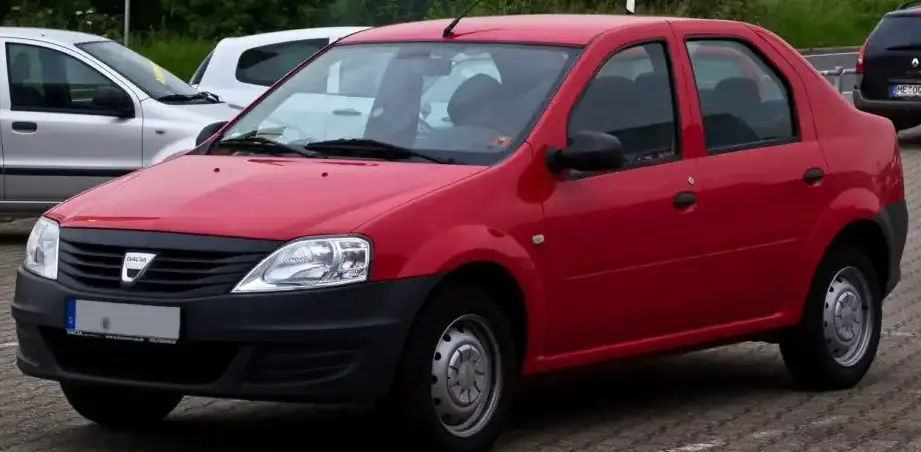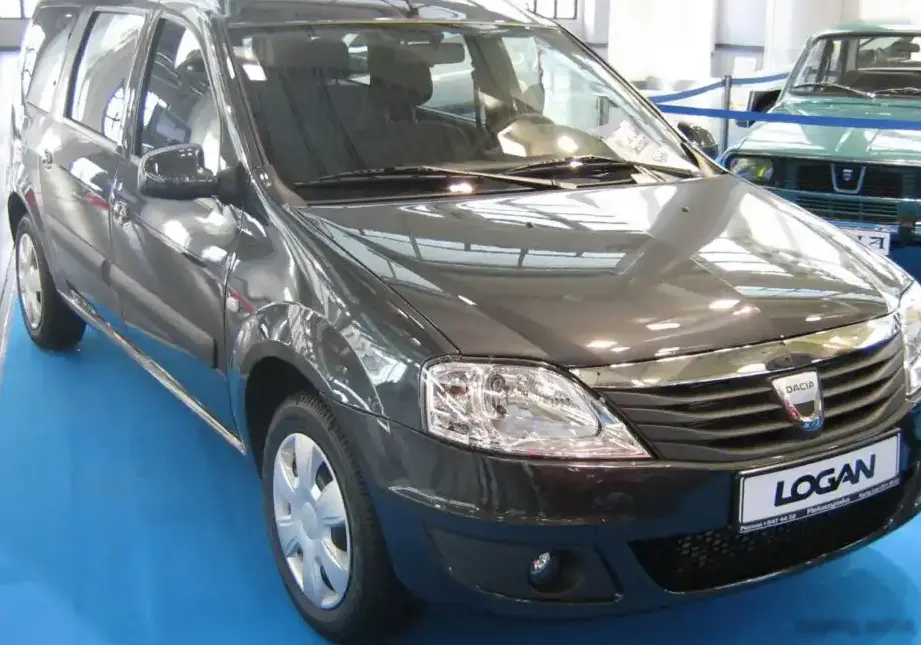
The Dacia Logan I MCV (facelift, 2008) 1.6 16V 7-seat variant was a practical and affordable station wagon aimed at families and those needing versatile cargo space. Introduced as part of the facelift for the first-generation Logan MCV, this version offered a 1.6-liter gasoline engine producing 105 horsepower, paired with a five-speed manual transmission. Production ran from 2008 to 2010, and it represented a key offering within the Logan MCV range, providing a balance between cost, space, and usability. The MCV, standing for “Multi-Capacity Vehicle,” was Dacia’s answer to the growing demand for affordable, spacious family cars, particularly in Eastern Europe and emerging markets.
Technical Specifications
| Brand | Dacia |
| Model | Logan |
| Generation | Logan I MCV (facelift 2008) |
| Type (Engine) | 1.6 16V (105 Hp) 7 Seats |
| Start of production | 2008 |
| End of production | 2010 |
| Powertrain Architecture | Internal Combustion engine |
| Body type | Station wagon (estate) |
| Seats | 7 |
| Doors | 5 |
| Fuel consumption (urban) | 9.8 l/100 km (24 US mpg, 28.8 UK mpg, 10.2 km/l) |
| Fuel consumption (extra urban) | 6.3 l/100 km (37.3 US mpg, 44.8 UK mpg, 15.9 km/l) |
| Fuel consumption (combined) | 7.5 l/100 km (31.4 US mpg, 37.7 UK mpg, 13.3 km/l) |
| CO2 emissions | 178 g/km |
| Fuel Type | Petrol (Gasoline) |
| Acceleration 0 – 100 km/h | 12.1 sec |
| Acceleration 0 – 62 mph | 12.1 sec |
| Acceleration 0 – 60 mph | 11.5 sec |
| Maximum speed | 174 km/h (108.12 mph) |
| Emission standard | Euro 4 |
| Weight-to-power ratio | 11.7 kg/Hp, 85.7 Hp/tonne |
| Weight-to-torque ratio | 8.3 kg/Nm, 120.8 Nm/tonne |
| Power | 105 Hp @ 5750 rpm |
| Power per litre | 65.7 Hp/l |
| Torque | 148 Nm @ 3750 rpm (109.16 lb.-ft. @ 3750 rpm) |
| Engine layout | Front, Transverse |
| Engine Model/Code | K4M 690 |
| Engine displacement | 1598 cm3 (97.52 cu. in.) |
| Number of cylinders | 4 |
| Engine configuration | Inline |
| Cylinder Bore | 79.5 mm (3.13 in.) |
| Piston Stroke | 80.5 mm (3.17 in.) |
| Compression ratio | 9.8:1 |
| Number of valves per cylinder | 4 |
| Fuel injection system | Multi-port manifold injection |
| Engine aspiration | Naturally aspirated |
| Valvetrain | DOHC |
| Engine oil capacity | 4.8 l (5.07 US qt, 4.22 UK qt) |
| Coolant capacity | 4.5 l (4.76 US qt, 3.96 UK qt) |
| Kerb Weight | 1225 kg (2700.66 lbs.) |
| Max. weight | 1840 kg (4056.51 lbs.) |
| Max load | 615 kg (1355.84 lbs.) |
| Trunk (boot) space – minimum | 198 l (6.99 cu. ft.) |
| Trunk (boot) space – maximum | 2350 l (82.99 cu. ft.) |
| Fuel tank capacity | 50 l (13.21 US gal, 11 UK gal) |
| Max. roof load | 80 kg (176.37 lbs.) |
| Permitted trailer load (braked) | 1300 kg (2866.01 lbs.) |
| Permitted trailer load (unbraked) | 650 kg (1433 lbs.) |
| Permitted towbar download | 75 kg (165.35 lbs.) |
| Length | 4473 mm (176.1 in.) |
| Width | 1740 mm (68.5 in.) |
| Width (with mirrors) | 1993 mm (78.46 in.) |
| Height | 1640 mm (64.57 in.) |
| Wheelbase | 2905 mm (114.37 in.) |
| Front track | 1469 mm (57.83 in.) |
| Rear track | 1466 mm (57.72 in.) |
| Front overhang | 797 mm (31.38 in.) |
| Rear overhang | 771 mm (30.35 in.) |
| Ride height (ground clearance) | 160 mm (6.3 in.) |
| Drag coefficient (Cd) | 0.36 |
| Turning circle | 11.25 m (36.91 ft.) |
| Drivetrain | Front wheel drive |
| Number of gears | 5 |
| Gearbox type | Manual transmission |
| Front suspension | Independent type McPherson, Transverse stabilizer |
| Rear suspension | Coil spring, Torsion |
| Front brakes | Ventilated discs, 259 mm |
| Rear brakes | Drum, 203 mm |
| Assisting systems | ABS (Anti-lock braking system) |
| Steering type | Steering rack and pinion |
| Power steering | Hydraulic |
| Tires size | 185/65 R15 |
| Wheel rims size | 6J x 15 |
INTRODUCTION
The Dacia Logan I MCV (facelift, 2008) 1.6 16V 7-seat model was a significant addition to the Logan range, offering a practical and affordable solution for larger families. Built on the 1HX0/A3 platform, the MCV (Multi Capacity Vehicle) variant extended the Logan’s wheelbase and roofline to create a more spacious and versatile station wagon. The 2008 facelift brought subtle styling updates and improvements to the interior. This particular 1.6-liter, 105 horsepower version with a five-speed manual transmission occupied a middle ground in the Logan MCV lineup, offering a balance between performance, fuel economy, and price. It was positioned above the base 1.4-liter engine and below the more powerful, though less common, 1.6-liter engine with higher output.
Powertrain & Engine Architecture
The heart of this Logan MCV variant is the K4M 690 1.6-liter inline-four cylinder gasoline engine. This engine, a product of Renault engineering (Dacia being a Renault subsidiary), is known for its simplicity and robustness. It features a multi-point fuel injection system and a double overhead camshaft (DOHC) valvetrain, operating with four valves per cylinder. The engine produces 105 horsepower at 5750 rpm and 148 Nm (109.16 lb-ft) of torque at 3750 rpm. The five-speed manual transmission provides a relatively conventional gear ratio spread, prioritizing fuel efficiency over outright acceleration. The transmission is a standard, cable-operated unit, known for its durability and ease of maintenance. The engine’s design emphasizes reliability and low running costs, rather than cutting-edge performance.
Driving Characteristics
The 1.6 16V engine, while not particularly powerful, provided adequate performance for everyday driving, even when fully loaded with passengers and luggage. Acceleration from 0-60 mph took around 11.5 seconds, and the top speed was approximately 108 mph. The five-speed manual transmission allowed for reasonable control over the engine’s power band. Compared to the base 1.4-liter engine, the 1.6 offered noticeably more responsive acceleration and better highway cruising ability. However, it lacked the punch of higher-performance variants. The gear ratios were tuned for economy, meaning the engine needed to be revved to extract maximum performance. The suspension, while comfortable, was tuned for practicality rather than sporty handling. The 7-seat configuration did impact handling slightly due to the increased weight and altered center of gravity, but the MCV remained stable and predictable.
Equipment & Trim Levels
The 1.6 16V 7-seat Logan MCV typically came with a modest level of standard equipment. This included power steering, central locking, electric front windows, and an adjustable steering column. Safety features included ABS brakes and driver/passenger airbags. The interior trim was functional and durable, with hard-wearing cloth upholstery. Optional extras included air conditioning, a radio/CD player, and alloy wheels. The 7-seat configuration featured a split-folding rear bench and removable third-row seats, providing flexible cargo space. The dashboard layout was simple and straightforward, prioritizing ease of use over aesthetic appeal.
Chassis & Braking
The Logan MCV utilized a McPherson strut front suspension and a coil spring torsion beam rear suspension. This setup provided a comfortable ride, although it wasn’t particularly sporty. The front brakes were ventilated discs, while the rear brakes were drums. This configuration was typical for vehicles in this price segment. ABS (Anti-lock Braking System) was standard, enhancing braking performance and safety. The steering was a hydraulic rack and pinion system, providing reasonable feedback and control. The tires were typically 185/65 R15, offering a good balance between comfort and grip.
Market Reception & Comparison
The Dacia Logan I MCV 1.6 16V 7-seat variant was generally well-received by critics and consumers alike. It was praised for its spaciousness, affordability, and practicality. However, some reviewers noted the engine’s lack of refinement and the somewhat basic interior. Compared to other station wagons on the market, the Logan MCV offered significantly more space for the money. In terms of fuel economy, it performed respectably, achieving around 31.4 US mpg on the combined cycle. Reliability was also a strong point, with the K4M engine proving to be durable and relatively trouble-free. Compared to the 1.4-liter version, the 1.6 offered a noticeable improvement in performance, making it a more suitable choice for those who frequently carried passengers or cargo.
Legacy
The Dacia Logan I MCV 1.6 16V 7-seat remains a popular choice in the used car market, particularly in Eastern Europe and developing countries. Its robust engine and simple construction contribute to its long-term reliability. While not a performance car, it continues to provide affordable and practical transportation for families. Parts availability is generally good, and maintenance costs are relatively low. The Logan MCV helped establish Dacia as a major player in the budget car market, demonstrating that it was possible to build a spacious, reliable, and affordable vehicle without compromising on essential features. Today, these vehicles are often sought after for their practicality and low running costs, making them a sensible choice for budget-conscious buyers.