
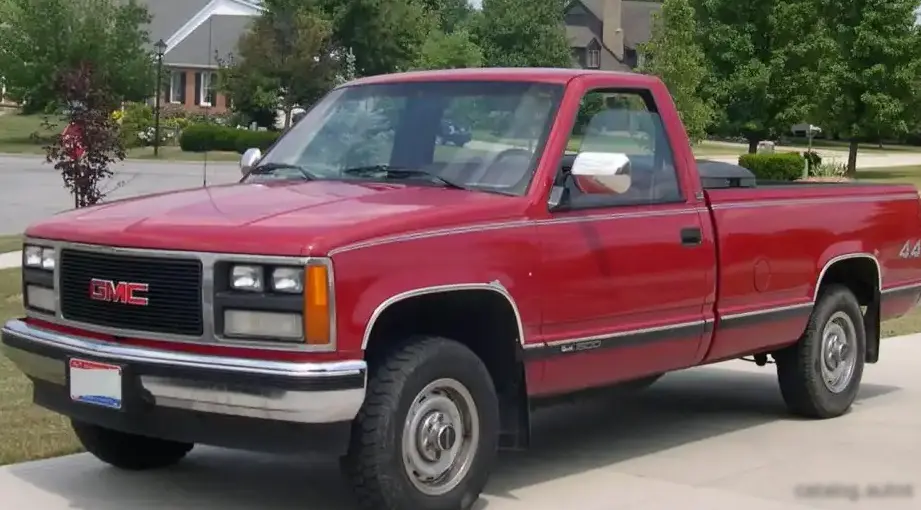
The GMC Sierra 1500, in its first generation (GMT400), represented GMC’s entry into the increasingly popular full-size pickup truck market. Produced from 1988 through 1992, this iteration of the Sierra aimed to provide a robust and capable work vehicle, while also offering a degree of comfort and refinement not always found in its class. The Regular Cab Long Wheelbase Wideside configuration, equipped with the 5.7-liter V8 engine and automatic transmission, occupied a significant position within the lineup, appealing to buyers needing a balance of power, practicality, and ease of use. This particular variant served as a workhorse for many, finding favor with both individual owners and commercial fleets.
Technical Specifications
| Brand | GMC |
| Model | Sierra 1500 |
| Generation | Sierra 1500 I (GMT400) Regular cab LWB Wideside |
| Type (Engine) | 5.7 V8 (210 Hp) Automatic |
| Start of production | 1988 |
| End of production | 1992 |
| Powertrain Architecture | Internal Combustion engine |
| Body type | Pick-up |
| Seats | 3 |
| Doors | 2 |
| Fuel Type | Petrol (Gasoline) |
| Power | 210 Hp @ 4000 rpm |
| Torque | 407 Nm @ 2800 rpm / 300.19 lb.-ft. @ 2800 rpm |
| Engine layout | Front, Longitudinal |
| Number of cylinders | 8 |
| Engine configuration | V-engine |
| Cylinder Bore | 101.6 mm / 4 in. |
| Piston Stroke | 88.39 mm / 3.48 in. |
| Compression ratio | 9.3:1 |
| Fuel injection system | Multi-port manifold injection |
| Engine aspiration | Naturally aspirated engine |
| Max. weight | 2767 kg / 6100.19 lbs |
| Fuel tank capacity | 129 l / 34.08 US gal | 28.38 UK gal |
| Length | 5547 mm / 218.39 in. |
| Width | 1951 mm / 76.81 in. |
| Height | 1788 mm / 70.39 in. |
| Wheelbase | 3340 mm / 131.5 in. |
| Front overhang | 886 mm / 34.88 in. |
| Rear overhang | 1321 mm / 52.01 in. |
| Drivetrain Architecture | The Internal combustion engine (ICE) drives the rear wheels of the vehicle. |
| Drive wheel | Rear wheel drive |
| Number of gears and type of gearbox | 4 gears, automatic transmission |
| Front suspension | Independent coil spring |
| Rear suspension | Rigid axle suspension, Leaf spring |
| Front brakes | Disc |
| Rear brakes | Drum |
| Tires size | 225/75 R15 |
Powertrain & Engine Architecture
The heart of this Sierra 1500 variant was the 5.7-liter (350 cubic inch) small-block Chevrolet V8 engine. This engine, internally designated as the L05, was a staple of General Motors’ truck and SUV lineup for many years. It featured a cast iron block and cylinder heads, a 9.3:1 compression ratio, and a multi-port fuel injection system. The multi-port injection, a relatively modern feature for the time, improved fuel efficiency and throttle response compared to earlier carbureted designs. The engine produced 210 horsepower at 4000 rpm and 300 lb-ft of torque at 2800 rpm. The automatic transmission paired with this engine was a 4-speed TH700R4, known for its durability and relatively smooth shifting. This transmission was a significant upgrade over the older 3-speed automatics, offering improved fuel economy and a wider range of gear ratios.
Driving Characteristics
The 5.7L V8 and 4-speed automatic combination provided adequate, though not exhilarating, performance. Acceleration was reasonable for a full-size pickup, but the truck wasn’t designed for speed. The automatic transmission’s gear ratios were tuned for towing and hauling, prioritizing low-end torque over outright acceleration. Compared to the available 6.2L diesel engine, the 5.7L offered quicker acceleration but lacked the diesel’s superior towing capacity and fuel economy. Against the smaller 4.3L V6 option, the 5.7L provided a noticeable power increase, making it the preferred choice for those regularly carrying heavy loads or towing trailers. The long wheelbase contributed to a comfortable ride, but also made the truck feel large and somewhat cumbersome in tight spaces.
Equipment & Trim Levels
The Sierra 1500 in this configuration typically came with a fairly basic level of equipment. Standard features included a bench seat, basic instrumentation, and a tilt steering wheel. The interior was generally utilitarian, with durable vinyl or cloth upholstery. Optional extras included air conditioning, a stereo system, power windows and locks, and a sliding rear window. The “Wideside” designation indicated the truck’s bed configuration, featuring a wider bed than the standard configuration, increasing cargo capacity. Trim levels were relatively simple, with options for different interior colors and exterior paint schemes. This variant generally sat in the mid-range of the Sierra 1500 lineup, offering a good balance of features and affordability.
Chassis & Braking
The GMT400 chassis featured a body-on-frame construction, providing a robust and durable platform. The front suspension utilized independent coil springs, offering a relatively comfortable ride. The rear suspension employed a traditional leaf spring setup, designed to handle heavy loads. Brakes were disc brakes in the front and drum brakes in the rear. While adequate for the truck’s weight, the braking system wasn’t particularly powerful by modern standards. The rear drum brakes were a cost-saving measure, and limited the overall braking performance. A stabilizer bar was included in the front suspension to reduce body roll during cornering.
Market Reception & Comparison
The GMC Sierra 1500 GMT400 was generally well-received by the market. Critics praised its robust construction, comfortable ride, and available V8 power. However, some noted the truck’s relatively basic interior and lack of advanced features compared to some competitors. The 5.7L V8 automatic combination was considered a solid all-around performer, offering a good balance of power, fuel economy, and reliability. Compared to the Ford F-150 and Chevrolet C/K series trucks of the same era, the Sierra 1500 offered a similar level of capability and refinement. Fuel economy was typical for a full-size pickup of the time, averaging around 14-16 mpg in mixed driving.
Legacy
The GMT400 Sierra 1500, particularly the 5.7L V8 automatic variant, has proven to be a relatively durable and reliable truck. The 350 small-block V8 is known for its longevity and ease of maintenance. Many of these trucks are still on the road today, serving as reliable work vehicles or classic pickups. However, age and mileage can lead to common issues such as rust, worn suspension components, and oil leaks. The TH700R4 transmission, while durable, can require occasional maintenance and rebuilds. In the used car market, these trucks are often sought after by enthusiasts and those looking for a classic American pickup. Their relatively simple mechanical design makes them relatively easy to repair and maintain, contributing to their enduring popularity.

