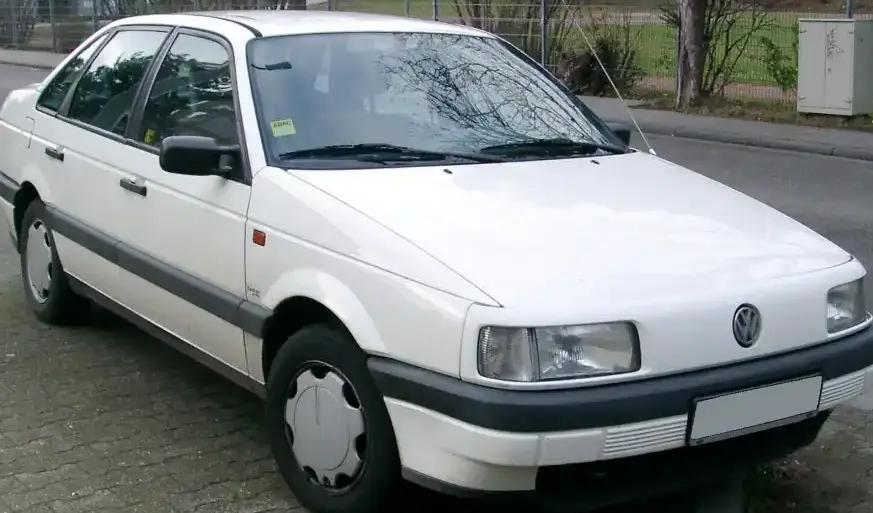
The Volkswagen Passat B3 2.0 16V GT, produced between 1988 and 1993, represented a significant step forward for Volkswagen’s mid-size offering. Positioned as a sporty, upper-mid-range trim within the B3 Passat lineup (the third generation of the Passat, internally designated as the 1HX0/A3 platform), the 2.0 16V GT aimed to deliver a more engaging driving experience than the base models while remaining more accessible than the flagship VR6 variant. It was a key model in solidifying the Passat’s reputation as a practical yet refined family sedan, particularly in European markets where it competed with vehicles like the Ford Mondeo and Opel/Vauxhall Vectra.
Technical Specifications
| Brand | Volkswagen |
| Model | Passat |
| Generation | Passat (B3) |
| Type (Engine) | 2.0 16V GT (136 Hp) |
| Start of production | 1988 |
| End of production | 1993 |
| Powertrain Architecture | Internal Combustion engine |
| Body type | Sedan |
| Seats | 5 |
| Doors | 4 |
| Fuel consumption (urban) | 12.3 l/100 km (19.1 US mpg, 23 UK mpg, 8.1 km/l) |
| Fuel consumption (extra urban) | 6.3 l/100 km (37.3 US mpg, 44.8 UK mpg, 15.9 km/l) |
| Fuel consumption (combined) | 8.1 l/100 km (29 US mpg, 34.9 UK mpg, 12.3 km/l) |
| Fuel Type | Petrol (Gasoline) |
| Acceleration 0 – 100 km/h | 10.2 sec |
| Acceleration 0 – 62 mph | 10.2 sec |
| Acceleration 0 – 60 mph | 9.7 sec |
| Maximum speed | 206 km/h (128 mph) |
| Weight-to-power ratio | 10 kg/Hp, 100.4 Hp/tonne |
| Weight-to-torque ratio | 7.5 kg/Nm, 132.8 Nm/tonne |
| Power | 136 Hp @ 5800 rpm |
| Power per litre | 68.5 Hp/l |
| Torque | 180 Nm @ 4400 rpm (132.76 lb.-ft. @ 4400 rpm) |
| Engine layout | Front, Transverse |
| Engine Model/Code | 9A |
| Engine displacement | 1984 cm3 (121.07 cu. in.) |
| Number of cylinders | 4 |
| Engine configuration | Inline |
| Cylinder Bore | 82.5 mm (3.25 in.) |
| Piston Stroke | 92.8 mm (3.65 in.) |
| Compression ratio | 10.8:1 |
| Number of valves per cylinder | 4 |
| Fuel injection system | Multi-port manifold injection |
| Engine aspiration | Naturally aspirated engine |
| Valvetrain | DOHC |
| Engine oil capacity | 4 l (4.23 US qt | 3.52 UK qt) |
| Coolant capacity | 5 l (5.28 US qt | 4.4 UK qt) |
| Kerb Weight | 1355 kg (2987.26 lbs.) |
| Max. weight | 1760 kg (3880.14 lbs.) |
| Max load | 405 kg (892.87 lbs.) |
| Trunk (boot) space – minimum | 495 l (17.48 cu. ft.) |
| Trunk (boot) space – maximum | 820 l (28.96 cu. ft.) |
| Fuel tank capacity | 70 l (18.49 US gal | 15.4 UK gal) |
| Length | 4575 mm (180.12 in.) |
| Width | 1705 mm (67.13 in.) |
| Height | 1460 mm (57.48 in.) |
| Wheelbase | 2625 mm (103.35 in.) |
| Front track | 1480 mm (58.27 in.) |
| Rear (Back) track | 1420 mm (55.91 in.) |
| Drivetrain Architecture | The Internal combustion engine (ICE) drives the front wheels of the vehicle. |
| Drive wheel | Front wheel drive |
| Number of gears and type of gearbox | 5 gears, manual transmission |
| Front suspension | Coil spring |
| Rear suspension | Coil spring |
| Front brakes | Ventilated discs |
| Rear brakes | Disc |
| Assisting systems | ABS (Anti-lock braking system) |
| Steering type | Steering rack and pinion |
| Power steering | Hydraulic Steering |
| Tires size | 195/60 R14 |
| Wheel rims size | 6J x 14 |
Powertrain & Engine Architecture
The heart of the Passat 2.0 16V GT is the 9A engine, a 1984cc (121.07 cubic inches) inline-four cylinder gasoline engine. This engine featured a dual overhead camshaft (DOHC) valvetrain operating four valves per cylinder, a configuration that significantly improved breathing and allowed for higher engine speeds compared to older, single overhead cam designs. The 9A utilized Bosch Motronic fuel injection, a multi-port system that precisely controlled fuel delivery for optimal combustion and efficiency. The 10.8:1 compression ratio further contributed to the engine’s performance. The engine’s transverse mounting and front-wheel drive configuration were typical for European vehicles of this era, maximizing interior space and improving packaging. The standard transmission was a five-speed manual, although a four-speed automatic transmission was also available, albeit less common and impacting performance.
Driving Characteristics
The 2.0 16V GT offered a noticeable step up in performance compared to the base Passat models equipped with smaller engines. The 136 horsepower and 180 Nm (132.76 lb-ft) of torque provided adequate acceleration, with a 0-60 mph time of around 9.7 seconds. While not a sports car, the 16V engine felt responsive and willing to rev, making it enjoyable to drive on both city streets and highways. The five-speed manual transmission allowed drivers to keep the engine in its sweet spot, maximizing power delivery. The automatic transmission, while offering convenience, resulted in a slight performance decrease and a less engaging driving experience. The suspension, tuned for comfort, provided a reasonably compliant ride, although it wasn’t as sporty as the VR6 variant.
Equipment & Trim Levels
The 2.0 16V GT trim typically included features such as central locking, electric windows, power steering, and an upgraded interior trim compared to the base models. Upholstery was usually cloth, with options for upgraded velour or leather available. The dashboard featured a more comprehensive instrument cluster with additional gauges. Optional extras included a sunroof, alloy wheels, and an upgraded audio system. Air conditioning was a popular option, particularly in warmer climates. The GT trim aimed to provide a balance of comfort and convenience without the higher price tag of the fully-equipped VR6.
Chassis & Braking
The Passat B3 utilized a MacPherson strut front suspension and a semi-independent torsion beam rear suspension. This setup provided a good balance of ride comfort and handling. The 2.0 16V GT typically came equipped with ventilated disc brakes on the front wheels and solid disc brakes on the rear, providing adequate stopping power for the vehicle’s weight and performance. An Anti-lock Braking System (ABS) was often included as standard equipment, enhancing safety. The steering was a rack-and-pinion system with hydraulic power assistance, offering precise and responsive steering feel.
Market Reception & Comparison
The Passat 2.0 16V GT was generally well-received by automotive critics. It was praised for its refined engine, comfortable ride, and practical interior. Compared to the base Passat models, the 16V GT offered a significant performance upgrade. However, it couldn’t match the outright performance of the VR6 variant, which boasted a more powerful engine and sportier suspension. The 1.9 TDI diesel models offered superior fuel economy but lacked the 16V GT’s spirited driving experience. Fuel economy for the 2.0 16V GT was respectable for its time, averaging around 29 US mpg in combined driving.
Legacy
The Volkswagen Passat B3 2.0 16V GT remains a popular choice among classic car enthusiasts. The 9A engine is known for its reliability, although regular maintenance is crucial. Parts availability is generally good, although some specific trim pieces may be difficult to find. The B3 Passat’s simple mechanical design makes it relatively easy to maintain and repair. Today, these vehicles are often sought after as affordable and reliable classic cars, offering a taste of 1990s German engineering. The 2.0 16V GT, in particular, strikes a good balance between performance, comfort, and affordability, making it a desirable variant within the B3 Passat range.