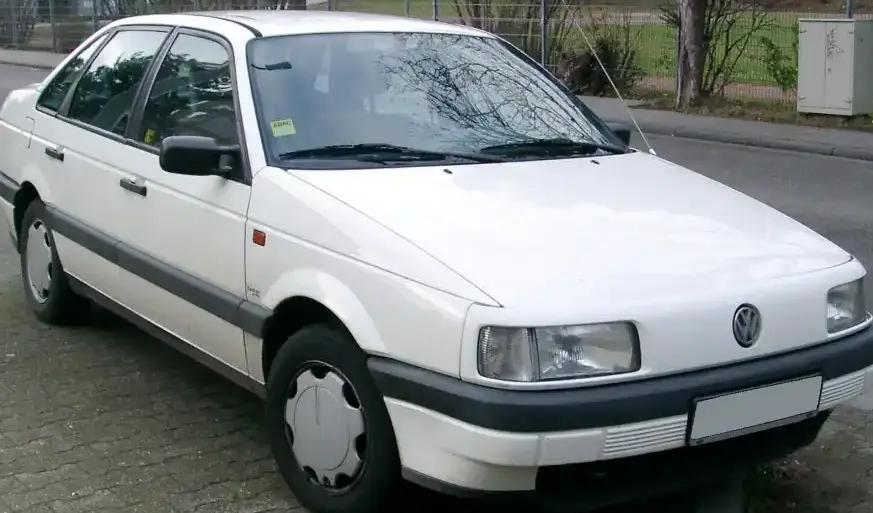
The Volkswagen Passat B3 2.0 Syncro, produced between 1990 and 1993, represented a significant step forward for Volkswagen’s mid-size offering. Positioned as a more capable and all-weather variant within the B3 Passat range (the third generation of the Passat, internally designated as the 1HX0/A3 platform), the 2.0 Syncro combined a 115 horsepower gasoline engine with Volkswagen’s Synchro all-wheel-drive system. This model aimed to provide a blend of practicality, performance, and enhanced traction, particularly appealing to drivers in regions experiencing inclement weather. It occupied a mid-range position in the B3 Passat lineup, offering more performance and capability than the base models but falling short of the more expensive and powerful VR6 variants.
Technical Specifications
| Brand | Volkswagen |
| Model | Passat |
| Generation | Passat (B3) |
| Type (Engine) | 2.0 Syncro (115 Hp) |
| Start of production | 1990 |
| End of production | 1993 |
| Powertrain Architecture | Internal Combustion engine |
| Body type | Sedan |
| Seats | 5 |
| Doors | 4 |
| Fuel consumption (urban) | 11.7 l/100 km (20.1 US mpg, 24.1 UK mpg, 8.5 km/l) |
| Fuel consumption (extra urban) | 6.4 l/100 km (36.8 US mpg, 44.1 UK mpg, 15.6 km/l) |
| Fuel consumption (combined) | 8.4 l/100 km (28 US mpg, 33.6 UK mpg, 11.9 km/l) |
| Fuel Type | Petrol (Gasoline) |
| Acceleration 0 – 100 km/h | 11.7 sec |
| Acceleration 0 – 62 mph | 11.7 sec |
| Acceleration 0 – 60 mph | 11.1 sec |
| Maximum speed | 191 km/h (118.68 mph) |
| Weight-to-power ratio | 11.3 kg/Hp, 88.5 Hp/tonne |
| Weight-to-torque ratio | 7.8 kg/Nm, 127.7 Nm/tonne |
| Power | 115 Hp @ 5400 rpm |
| Power per litre | 58 Hp/l |
| Torque | 166 Nm @ 3200 rpm (122.44 lb.-ft. @ 3200 rpm) |
| Engine layout | Front, Transverse |
| Engine Model/Code | 2E |
| Engine displacement | 1984 cm3 (121.07 cu. in.) |
| Number of cylinders | 4 |
| Engine configuration | Inline |
| Cylinder Bore | 82.5 mm (3.25 in.) |
| Piston Stroke | 92.8 mm (3.65 in.) |
| Compression ratio | 10.3:1 |
| Number of valves per cylinder | 2 |
| Fuel injection system | Multi-port manifold injection |
| Engine aspiration | Naturally aspirated engine |
| Valvetrain | OHC |
| Engine oil capacity | 4 l (4.23 US qt | 3.52 UK qt) |
| Coolant | 5 l (5.28 US qt | 4.4 UK qt) |
| Kerb Weight | 1300 kg (2866.01 lbs.) |
| Max. weight | 1825 kg (4023.44 lbs.) |
| Max load | 525 kg (1157.43 lbs.) |
| Trunk (boot) space – minimum | 495 l (17.48 cu. ft.) |
| Trunk (boot) space – maximum | 820 l (28.96 cu. ft.) |
| Fuel tank capacity | 70 l (18.49 US gal | 15.4 UK gal) |
| Length | 4575 mm (180.12 in.) |
| Width | 1705 mm (67.13 in.) |
| Height | 1460 mm (57.48 in.) |
| Wheelbase | 2625 mm (103.35 in.) |
| Front track | 1480 mm (58.27 in.) |
| Rear (Back) track | 1420 mm (55.91 in.) |
| Drive wheel | All wheel drive (4×4) |
| Number of gears and type of gearbox | 5 gears, manual transmission |
| Front suspension | Coil spring |
| Rear suspension | Spring Strut |
| Front brakes | Ventilated discs |
| Rear brakes | Disc |
| Assisting systems | ABS (Anti-lock braking system) |
| Steering type | Steering rack and pinion |
| Power steering | Hydraulic Steering |
| Tires size | 185/65 R14 |
| Wheel rims size | 6J x 14 |
Powertrain & Engine Architecture
The heart of the Passat B3 2.0 Syncro was the 2E engine, a 1984cc inline-four cylinder gasoline engine. This engine featured a cast iron block and an aluminum cylinder head, employing a single overhead camshaft (OHC) design with two valves per cylinder. Fuel delivery was managed by Bosch multi-port fuel injection, providing a balance between efficiency and performance. The 2E engine was known for its relative simplicity and durability, making it a reasonably reliable unit. The engine produced 115 horsepower at 5400 rpm and 166 Nm (122.44 lb-ft) of torque at 3200 rpm. The five-speed manual transmission was the standard offering, providing drivers with full control over the engine’s power. The transmission was designed to handle the increased torque output of the 2.0-liter engine and effectively distribute power to all four wheels.
Driving Characteristics
The 2.0 Syncro offered a noticeable improvement in traction compared to the front-wheel-drive Passat variants, particularly on slippery surfaces. While not a sports car, the 115 hp engine provided adequate performance for everyday driving. Acceleration from 0 to 60 mph took around 11.1 seconds, and the top speed was approximately 118.68 mph. The Syncro system, while adding weight, enhanced stability and cornering grip. The five-speed manual transmission allowed for precise gear selection, and the engine’s torque curve provided reasonable responsiveness in most driving situations. Compared to the more powerful VR6 models, the 2.0 Syncro felt less potent, but it offered a more economical and practical driving experience. The manual transmission also provided a more engaging driving experience than the optional automatic transmission.
Equipment & Trim Levels
The 2.0 Syncro trim typically included features such as power steering, central locking, and electric windows. Interior upholstery was generally cloth, with options for upgraded materials available. Dashboard configuration was relatively straightforward, with clearly marked gauges and controls. Optional extras included a sunroof, air conditioning, and upgraded audio systems. The Syncro models often featured unique badging to distinguish them from the standard Passat variants. The level of equipment was generally considered competitive for its price point in the early 1990s.
Chassis & Braking
The Passat B3 2.0 Syncro utilized a coil spring suspension at the front and a spring strut suspension at the rear. The suspension was tuned to provide a comfortable ride while maintaining reasonable handling characteristics. The Syncro system added some weight to the vehicle, requiring slightly stiffer spring rates to maintain control. Braking duties were handled by ventilated discs at the front and solid discs at the rear, supplemented by an Anti-lock Braking System (ABS) as standard equipment. The ABS system enhanced braking performance and stability, particularly in adverse conditions. The steering system was a rack and pinion setup with hydraulic power assistance, providing precise and responsive steering feel.
Market Reception & Comparison
The Passat B3 2.0 Syncro was generally well-received by automotive critics, who praised its all-wheel-drive capability and practicality. It was seen as a sensible choice for drivers in regions with challenging weather conditions. Compared to the front-wheel-drive Passat models, the 2.0 Syncro offered superior traction and stability. However, it was more expensive and slightly less fuel-efficient. Compared to the VR6 variants, the 2.0 Syncro offered a more affordable entry point into the Passat range, albeit with less performance. Fuel economy was respectable for the time, averaging around 28 US mpg in combined driving.
Legacy
The Volkswagen Passat B3 2.0 Syncro has developed a loyal following among enthusiasts. The 2E engine is known for its durability and relative ease of maintenance. While not as sought-after as the VR6 models, the 2.0 Syncro remains a practical and capable classic car. Finding well-maintained examples can be challenging, as many have succumbed to rust or neglect. However, those that have been properly cared for offer a unique blend of practicality, performance, and all-weather capability. The Syncro system, while requiring occasional maintenance, continues to provide enhanced traction and stability, making these Passats a rewarding choice for classic car enthusiasts.