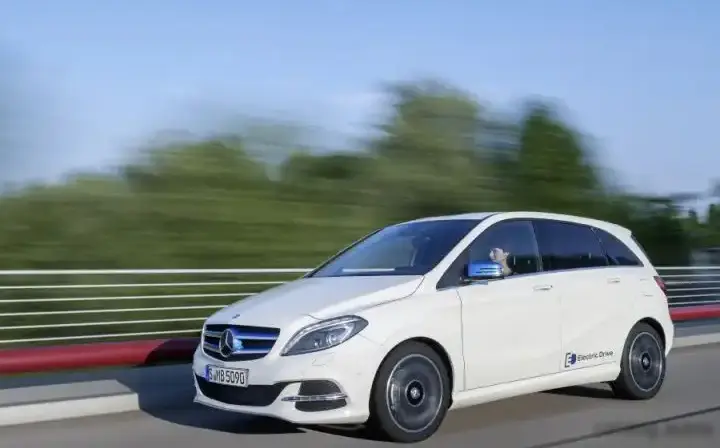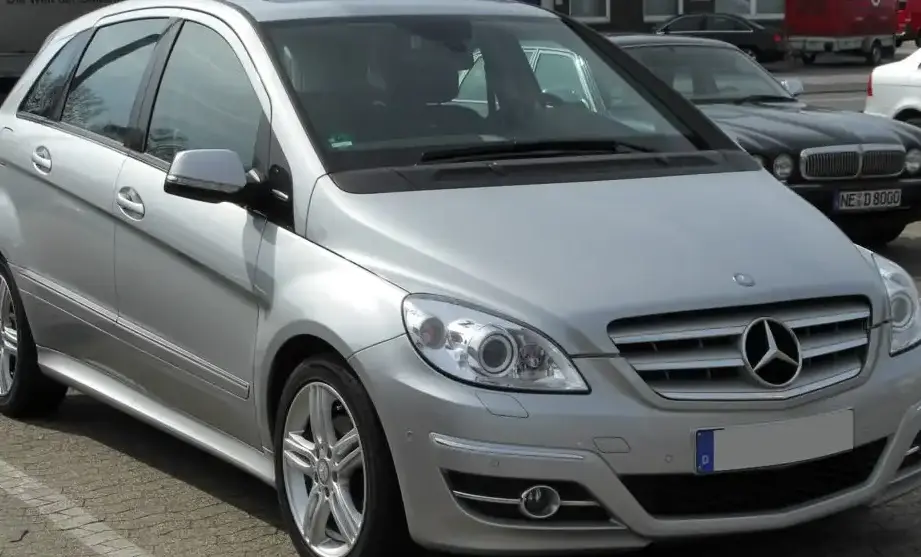
The Mercedes-Benz B 200, part of the W245 facelift series produced from April 2008 to April 2009, represented a key offering in the compact multi-purpose vehicle (MPV) segment for the German automaker. Positioned as a mid-range trim within the B-Class lineup, it aimed to balance practicality, comfort, and reasonable performance. The W245 B-Class, and specifically the B 200, was primarily marketed in Europe as a premium alternative to traditional hatchbacks and smaller MPVs, offering a more sophisticated driving experience and a higher level of interior refinement. This variant featured a 2.0-liter naturally aspirated engine paired with a continuously variable transmission (CVT), a configuration designed to prioritize fuel efficiency and smooth operation over outright speed.
Technical Specifications
| Brand | Mercedes-Benz |
| Model | B-class |
| Generation | B-class (W245 facelift 2008) |
| Type (Engine) | B 200 (136 Hp) |
| Start of production | April, 2008 |
| End of production | April, 2009 |
| Powertrain Architecture | Internal Combustion engine |
| Body type | MPV |
| Seats | 5 |
| Doors | 5 |
| Fuel consumption (urban) | 9.3-9.6 l/100 km (25.3 – 24.5 US mpg) |
| Fuel consumption (extra urban) | 6-6.3 l/100 km (39.2 – 37.3 US mpg) |
| Fuel consumption (combined) | 7.2-7.5 l/100 km (32.7 – 31.4 US mpg) |
| CO2 emissions | 173-180 g/km |
| Fuel Type | Petrol (Gasoline) |
| Acceleration 0 – 100 km/h | 10.1 sec |
| Acceleration 0 – 62 mph | 10.1 sec |
| Acceleration 0 – 60 mph | 9.6 sec |
| Maximum speed | 196 km/h (121.79 mph) |
| Emission standard | Euro 4 |
| Weight-to-power ratio | 9.3 kg/Hp |
| Weight-to-torque ratio | 6.9 kg/Nm |
| Power | 136 Hp @ 5750 rpm |
| Torque | 185 Nm @ 3500-4000 rpm (136.45 lb.-ft. @ 3500-4000 rpm) |
| Engine layout | Front, Transverse |
| Engine Model/Code | M 266.960 |
| Engine displacement | 2034 cm3 (124.12 cu. in.) |
| Number of cylinders | 4 |
| Engine configuration | Inline |
| Cylinder Bore | 83 mm (3.27 in.) |
| Piston Stroke | 94 mm (3.7 in.) |
| Compression ratio | 11:1 |
| Number of valves per cylinder | 2 |
| Fuel injection system | Multi-port manifold injection |
| Engine aspiration | Naturally aspirated |
| Valvetrain | SOHC |
| Engine oil capacity | 5 l (5.28 US qt | 4.4 UK qt) |
| Coolant capacity | 6.6 l (6.97 US qt | 5.81 UK qt) |
| Kerb Weight | 1270 kg (2799.87 lbs.) |
| Max. weight | 1880 kg (4144.69 lbs.) |
| Max load | 610 kg (1344.82 lbs.) |
| Trunk (boot) space – minimum | 544 l (19.21 cu. ft.) |
| Trunk (boot) space – maximum | 2245 l (79.28 cu. ft.) |
| Fuel tank capacity | 54 l (14.27 US gal | 11.88 UK gal) |
| Max. roof load | 75 kg (165.35 lbs.) |
| Permitted trailer load (braked) | 1500 kg (3306.93 lbs.) |
| Permitted trailer load (unbraked) | 645 kg (1421.98 lbs.) |
| Permitted towbar download | 75 kg (165.35 lbs.) |
| Length | 4273 mm (168.23 in.) |
| Width | 1777 mm (69.96 in.) |
| Width including mirrors | 2035 mm (80.12 in.) |
| Height | 1604 mm (63.15 in.) |
| Wheelbase | 2778 mm (109.37 in.) |
| Front track | 1552 mm (61.1 in.) |
| Rear track | 1547 mm (60.91 in.) |
| Drag coefficient (Cd) | 0.31 |
| Minimum turning circle | 11.95 m (39.21 ft.) |
| Drivetrain | Front wheel drive |
| Number of gears & type | 5 gears, manual transmission |
| Front suspension | Independent type McPherson, Transverse stabilizer |
| Rear suspension | Transverse stabilizer, Coil spring |
| Front brakes | Ventilated discs |
| Rear brakes | Disc |
| Assisting systems | ABS (Anti-lock braking system) |
| Steering type | Steering rack and pinion |
| Power steering | Electric |
| Tires size | 205/55 R16 |
| Wheel rims size | 6J x 16 |
Powertrain & Engine Architecture
The B 200 was powered by the M 266.960 engine, a 2.0-liter inline-four cylinder gasoline engine. This engine utilized multi-port fuel injection and a single overhead camshaft (SOHC) valvetrain. The engine produced 136 horsepower at 5750 rpm and 185 Nm (136.45 lb-ft) of torque between 3500 and 4000 rpm. The engine’s design prioritized refinement and fuel economy over peak power output. The transmission was a 5-speed automatic, chosen for its smooth shifting characteristics and contribution to overall fuel efficiency. While not a particularly sporty setup, the powertrain was well-suited to the B 200’s intended role as a comfortable and practical family vehicle.
Driving Characteristics
The B 200 with the automatic transmission offered a relaxed and comfortable driving experience. Acceleration from 0 to 60 mph took approximately 9.6 seconds, and top speed was limited to 196 km/h (121.79 mph). The CVT transmission, while smooth, didn’t offer the direct feel of a traditional automatic or manual gearbox. Power delivery was linear, but the engine lacked the punch of higher-output variants like the B 220. The focus was on ease of use and fuel efficiency, making it ideal for urban commuting and long-distance cruising. Compared to the manual transmission version, the automatic offered greater convenience, but at the expense of some responsiveness.
Equipment & Trim Levels
The B 200 typically came standard with features such as air conditioning, power windows, central locking, and an audio system. Higher trim levels offered options like alloy wheels, a panoramic sunroof, leather upholstery, and a more advanced infotainment system. Safety features included ABS brakes, airbags, and electronic stability control. The interior was generally well-appointed for its class, with a focus on practicality and ergonomics. The B 200 aimed to provide a comfortable and functional cabin for both driver and passengers.
Chassis & Braking
The W245 B-Class featured an independent McPherson strut suspension at the front and a semi-independent torsion beam suspension at the rear. This setup provided a good balance between ride comfort and handling. The B 200 was equipped with ventilated disc brakes at the front and solid disc brakes at the rear. ABS (Anti-lock Braking System) was standard, enhancing braking performance and safety. The suspension was tuned for comfort, prioritizing a smooth ride over sporty handling. The chassis was designed to provide a stable and predictable driving experience.
Market Reception & Comparison
The B 200 was generally well-received by automotive critics as a practical and comfortable MPV. However, some reviewers noted that the engine lacked the power of its competitors and that the CVT transmission could feel somewhat sluggish. Fuel economy was a strong point, and the B 200 offered a more refined interior than many of its rivals. Compared to the more powerful B 220, the B 200 was more affordable and fuel-efficient, but it offered less performance. The B 200 appealed to buyers who prioritized practicality, comfort, and fuel economy over outright speed.
Legacy
The M 266 engine family, while not known for being exceptionally durable, generally proved reliable with regular maintenance. The CVT transmission, however, could be a potential weak point, requiring careful servicing to prevent issues. Today, the W245 B 200 can be found on the used car market at relatively affordable prices. It remains a viable option for buyers seeking a practical and comfortable MPV, but potential buyers should be aware of the potential maintenance costs associated with the CVT transmission. The B 200 represents a solid, if unspectacular, entry in the compact MPV segment, offering a blend of practicality, comfort, and fuel efficiency.