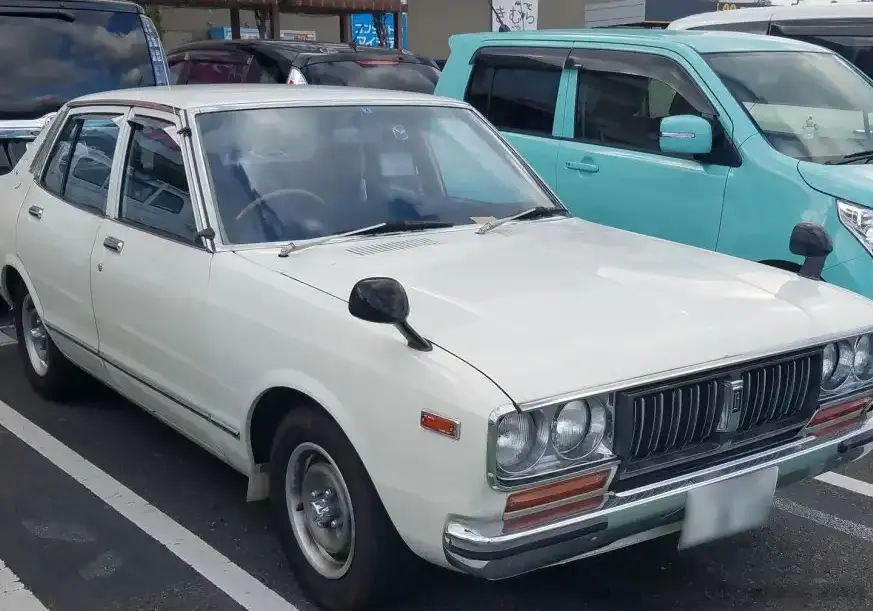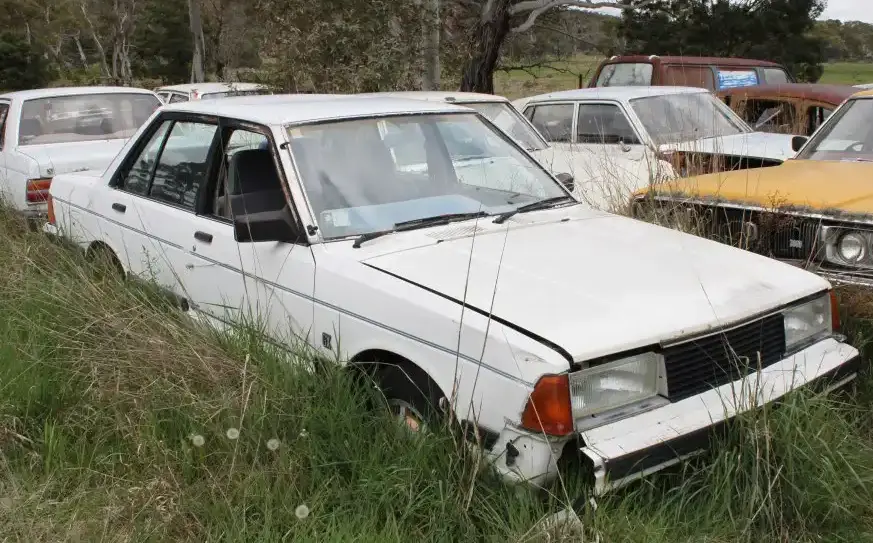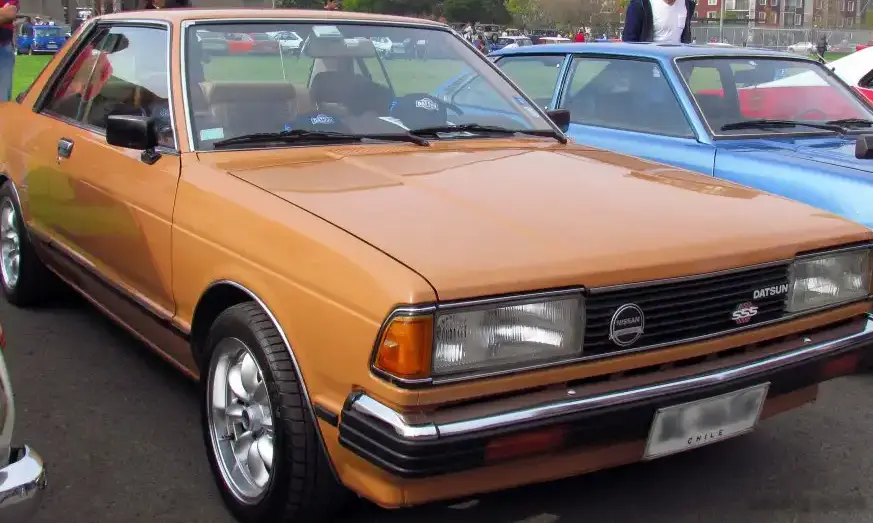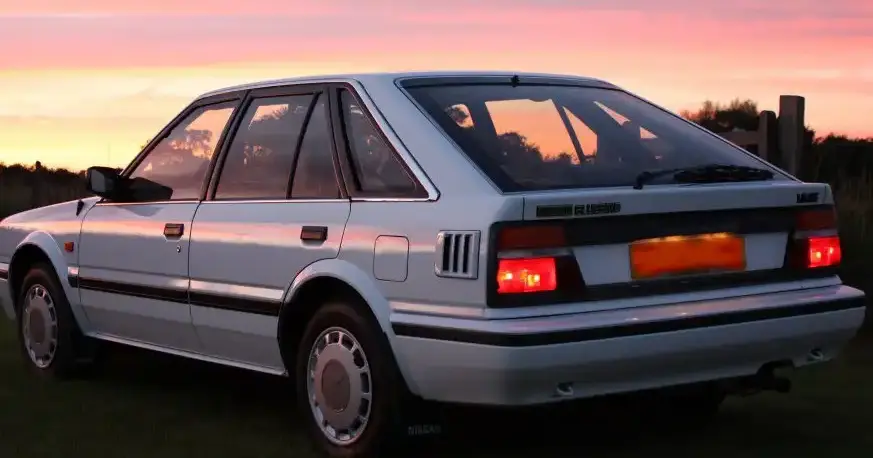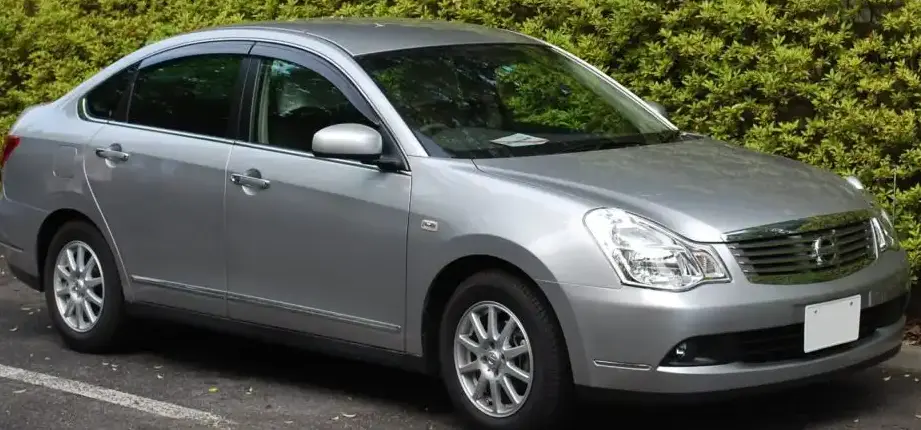
The Nissan Bluebird Sylphy II 1.5i (109 hp) 4×4 Automatic, produced between 2006 and 2012, represented a significant iteration of Nissan’s long-running Bluebird lineage. This variant was primarily marketed in Japan and select Asian markets as a comfortable, practical, and relatively affordable family sedan. It occupied a mid-range position within the Sylphy II lineup, offering all-wheel drive capability and the convenience of an automatic transmission, appealing to buyers prioritizing ease of use and all-weather traction over outright performance. The Sylphy II, built on the Nissan S platform, aimed to provide a refined driving experience and improved fuel efficiency compared to its predecessors.
Technical Specifications
| Brand | Nissan |
| Model | Bluebird |
| Generation | Bluebird Sylphy II |
| Type (Engine) | 1.5i (109 Hp) 4×4 Automatic |
| Start of production | 2006 year |
| End of production | 2012 year |
| Powertrain Architecture | Internal Combustion engine |
| Body type | Sedan |
| Seats | 5 |
| Doors | 4 |
| Fuel consumption (economy) – urban | 8.5-11.1 l/100 km (27.7 – 21.2 US mpg, 33.2 – 25.4 UK mpg, 11.8 – 9 km/l) |
| Fuel consumption (economy) – extra urban | 5.8-7.6 l/100 km (40.6 – 30.9 US mpg, 48.7 – 37.2 UK mpg, 17.2 – 13.2 km/l) |
| Fuel consumption (economy) – combined | 7.8 l/100 km (30.2 US mpg, 36.2 UK mpg, 12.8 km/l) |
| Fuel Type | Petrol (Gasoline) |
| Acceleration 0 – 100 km/h | 13 sec |
| Acceleration 0 – 62 mph | 13 sec |
| Acceleration 0 – 60 mph | 12.4 sec |
| Maximum speed | 183 km/h (113.71 mph) |
| Weight-to-power ratio | 11.5 kg/Hp, 87.2 Hp/tonne |
| Weight-to-torque ratio | 8.4 kg/Nm, 118.4 Nm/tonne |
| Power | 109 Hp @ 6000 rpm |
| Power per litre | 72.8 Hp/l |
| Torque | 148 Nm @ 4400 rpm (109.16 lb.-ft. @ 4400 rpm) |
| Engine layout | Front, Transverse |
| Engine Model/Code | HR15DE |
| Engine displacement | 1498 cm3 (91.41 cu. in.) |
| Number of cylinders | 4 |
| Engine configuration | Inline |
| Cylinder Bore | 78 mm (3.07 in.) |
| Piston Stroke | 78.3 mm (3.08 in.) |
| Compression ratio | 10.5:1 |
| Number of valves per cylinder | 4 |
| Fuel injection system | Multi-port manifold injection |
| Engine aspiration | Naturally aspirated engine |
| Valvetrain | DOHC |
| Engine oil capacity | 3 l (3.17 US qt | 2.64 UK qt) |
| Coolant | 6.7 l (7.08 US qt | 5.9 UK qt) |
| Kerb Weight | 1250 kg (2755.78 lbs.) |
| Max. weight | 1525 kg (3362.05 lbs.) |
| Max load | 275 kg (606.27 lbs.) |
| Fuel tank capacity | 52 l (13.74 US gal | 11.44 UK gal) |
| Length | 4610 mm (181.5 in.) |
| Width | 1695 mm (66.73 in.) |
| Height | 1510 mm (59.45 in.) |
| Wheelbase | 2700 mm (106.3 in.) |
| Front track | 1480 mm (58.27 in.) |
| Rear (Back) track | 1485 mm (58.46 in.) |
| Ride height (ground clearance) | 165 mm (6.5 in.) |
| Drag coefficient (Cd) | 0.30 |
| Minimum turning circle (turning diameter) | 10.6 m (34.78 ft.) |
| Drive wheel | All wheel drive (4×4) |
| Number of gears and type of gearbox | 4 gears, automatic transmission |
| Front brakes | Ventilated discs |
| Rear brakes | Drum |
| Steering type | Steering rack and pinion |
| Tires size | 185/65 R15 |
| Wheel rims size | 15 |
INTRODUCTION
The Nissan Bluebird Sylphy II, launched in 2006, was a continuation of the Sylphy line, a compact sedan designed to offer a blend of comfort, practicality, and fuel efficiency. The 1.5i 4×4 Automatic variant specifically targeted buyers seeking a dependable and easy-to-drive vehicle with enhanced stability in inclement weather. This model was a key offering in Nissan’s lineup for the Japanese domestic market (JDM) and export markets in Asia, competing with vehicles like the Toyota Corolla and Honda Civic. The Sylphy II represented a move towards more refined styling and improved interior appointments compared to earlier Bluebird models.
Powertrain & Engine Architecture
At the heart of the 1.5i 4×4 Automatic Sylphy II lies the HR15DE engine, a 1.5-liter inline-four cylinder gasoline engine. This engine is characterized by its lightweight aluminum block and cylinder head, contributing to overall fuel efficiency. The HR15DE utilizes multi-point fuel injection and a double overhead camshaft (DOHC) valvetrain with four valves per cylinder, optimizing airflow for improved power delivery. The engine produces 109 horsepower at 6000 rpm and 148 Nm (109.16 lb-ft) of torque at 4400 rpm. Paired with this engine is a four-speed automatic transmission, chosen for its smooth operation and ease of use. This transmission, while not offering the most advanced gear ratios, was well-suited to the engine’s power characteristics and the target audience’s preference for convenience. The all-wheel-drive system employed a viscous coupling to distribute torque between the front and rear axles, providing enhanced traction without the complexity of more sophisticated systems.
Driving Characteristics
The 1.5i 4×4 Automatic Sylphy II offered a comfortable and predictable driving experience. Acceleration was adequate for everyday driving, with a 0-60 mph time of around 12.4 seconds. However, it wasn’t designed for spirited performance. The four-speed automatic transmission, while smooth, lacked the responsiveness of more modern transmissions with a greater number of gears. Gear ratios were optimized for fuel economy rather than outright acceleration. The all-wheel-drive system provided noticeable improvements in handling and stability, particularly on slippery surfaces. Compared to the front-wheel-drive versions of the Sylphy II, the 4×4 model offered increased confidence in adverse weather conditions. Compared to higher-trim models equipped with larger engines, such as the 2.0-liter variants, the 1.5i felt noticeably less powerful, especially when fully loaded with passengers and cargo.
Equipment & Trim Levels
The 1.5i 4×4 Automatic trim typically included standard features such as air conditioning, power windows and locks, and a basic audio system. Interior upholstery was typically cloth, with a focus on durability and practicality. Optional extras included alloy wheels, a more advanced audio system with CD player, and a sunroof. Higher trim levels within the Sylphy II range offered features like leather upholstery, automatic climate control, and navigation systems, but these were generally not available on the base 1.5i model. The dashboard layout was functional and straightforward, prioritizing ease of use over stylistic flair.
Chassis & Braking
The Sylphy II utilized a MacPherson strut front suspension and a torsion beam rear suspension. This setup provided a comfortable ride quality, absorbing bumps and irregularities in the road surface effectively. The 1.5i 4×4 Automatic model featured ventilated disc brakes on the front wheels and drum brakes on the rear wheels. While adequate for normal driving conditions, the rear drum brakes were a cost-saving measure and didn’t offer the same stopping power as disc brakes. The steering system employed a rack-and-pinion setup, providing precise and responsive steering feel. Stabilizer bars were fitted to both the front and rear axles to reduce body roll during cornering.
Market Reception & Comparison
The Nissan Bluebird Sylphy II 1.5i 4×4 Automatic was generally well-received by consumers seeking a reliable and affordable family sedan. Critics praised its comfortable ride, fuel efficiency, and the added security of all-wheel drive. However, some reviewers noted the engine’s lack of power and the transmission’s limited number of gears. Compared to other trims in the Sylphy II lineup, the 1.5i 4×4 Automatic offered a more accessible price point but sacrificed performance. Fuel economy was competitive within its class, averaging around 30.2 US mpg in combined driving conditions. Reliability was generally good, with the HR15DE engine proving to be a durable and dependable unit.
Legacy
The Nissan Bluebird Sylphy II 1.5i 4×4 Automatic has proven to be a relatively reliable vehicle in the used car market. The HR15DE engine is known for its longevity, and the four-speed automatic transmission, while not particularly sophisticated, is generally robust. Common maintenance issues include routine servicing of the engine and transmission, as well as replacement of wear items such as brakes and tires. Today, these vehicles are often sought after by buyers looking for an affordable and dependable transportation option, particularly in regions where all-wheel drive is valued for its added safety and traction. While not a performance icon, the Sylphy II 1.5i 4×4 Automatic remains a testament to Nissan’s commitment to building practical and reliable vehicles.