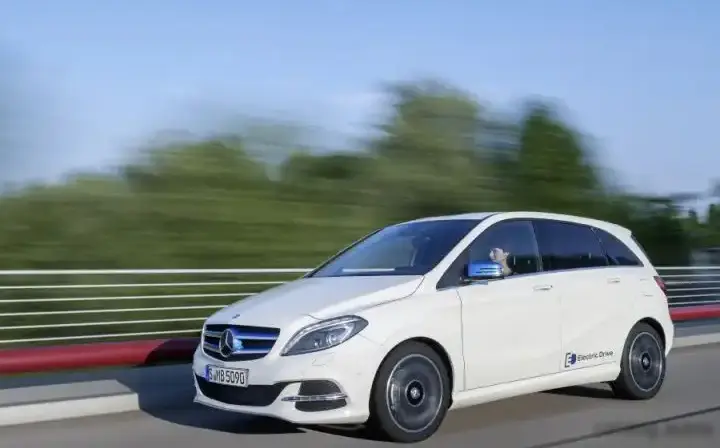
The Mercedes-Benz B 200 CDI, specifically the variant produced from April 2008 to April 2010 as part of the W245 facelift, represented a key offering in the compact multi-purpose vehicle (MPV) segment. Positioned as a mid-range option within the B-Class lineup, it aimed to balance fuel efficiency with respectable performance, appealing to buyers seeking a practical and comfortable family vehicle. This iteration of the B-Class, built on the 1HX0 platform, was a significant update to the original W245, featuring revised styling, improved interior materials, and updated engine technology. The B 200 CDI with the Autotronic transmission was a popular choice in European markets, where diesel-powered MPVs were highly favored.
Technical Specifications
| Brand | Mercedes-Benz |
| Model | B-class |
| Generation | B-class (W245 facelift 2008) |
| Type (Engine) | B 200 CDI (140 Hp) Autotronic |
| Start of production | April, 2008 |
| End of production | April, 2010 |
| Powertrain Architecture | Internal Combustion engine |
| Body type | MPV |
| Seats | 5 |
| Doors | 5 |
| Fuel consumption (urban) | 7.6-8 l/100 km (30.9 – 29.4 US mpg) |
| Fuel consumption (extra urban) | 5-5.3 l/100 km (47 – 44.4 US mpg) |
| Fuel consumption (combined) | 6-6.3 l/100 km (39.2 – 37.3 US mpg) |
| CO2 emissions | 159-165 g/km |
| Fuel Type | Diesel |
| Acceleration 0 – 100 km/h | 9.7 sec |
| Acceleration 0 – 62 mph | 9.7 sec |
| Acceleration 0 – 60 mph | 9.2 sec |
| Maximum speed | 195 km/h (121.17 mph) |
| Emission standard | Euro 4 |
| Weight-to-power ratio | 10 kg/Hp |
| Weight-to-torque ratio | 5 kg/Nm |
| Power | 140 Hp @ 4200 rpm |
| Torque | 280 Nm @ 1600-3000 rpm (206.52 lb.-ft.) |
| Engine layout | Front, Transverse |
| Engine Model/Code | OM 640.941 |
| Engine displacement | 1991 cm3 (121.5 cu. in.) |
| Number of cylinders | 4 |
| Engine configuration | Inline |
| Cylinder Bore | 83 mm (3.27 in.) |
| Piston Stroke | 92 mm (3.62 in.) |
| Compression ratio | 18:1 |
| Number of valves per cylinder | 4 |
| Fuel injection system | Diesel Commonrail |
| Engine aspiration | Turbocharger, Intercooler |
| Valvetrain | DOHC |
| Engine oil capacity | 5.4 l (5.71 US qt | 4.75 UK qt) |
| Coolant capacity | 9.7 l (10.25 US qt | 8.53 UK qt) |
| Kerb Weight | 1395 kg (3075.45 lbs.) |
| Max. weight | 1880 kg (4144.69 lbs.) |
| Max load | 485 kg (1069.24 lbs.) |
| Trunk (boot) space – minimum | 544 l (19.21 cu. ft.) |
| Trunk (boot) space – maximum | 2245 l (79.28 cu. ft.) |
| Fuel tank capacity | 54 l (14.27 US gal | 11.88 UK gal) |
| Max. roof load | 75 kg (165.35 lbs.) |
| Permitted trailer load (braked) | 1500 kg (3306.93 lbs.) |
| Permitted trailer load (unbraked) | 715 kg (1576.31 lbs.) |
| Permitted towbar download | 75 kg (165.35 lbs.) |
| Length | 4273 mm (168.23 in.) |
| Width | 1777 mm (69.96 in.) |
| Width including mirrors | 2035 mm (80.12 in.) |
| Height | 1604 mm (63.15 in.) |
| Wheelbase | 2778 mm (109.37 in.) |
| Front track | 1552 mm (61.1 in.) |
| Rear track | 1547 mm (60.91 in.) |
| Drag coefficient (Cd) | 0.30 |
| Minimum turning circle | 11.95 m (39.21 ft.) |
| Drivetrain | Front wheel drive |
| Gearbox | automatic transmission Autotronic |
| Front suspension | Independent type McPherson, Transverse stabilizer |
| Rear suspension | Transverse stabilizer, Coil spring |
| Front brakes | Ventilated discs |
| Rear brakes | Disc |
| Assisting systems | ABS (Anti-lock braking system) |
| Steering type | Steering rack and pinion |
| Power steering | Electric |
| Tires size | 205/55 R16 |
| Wheel rims size | 6J x 16 |
Powertrain & Engine Architecture
The B 200 CDI was powered by the OM 640.941, a 2.0-liter inline-four cylinder diesel engine. This engine was a mainstay in the Mercedes-Benz lineup during this period, known for its robust construction and relatively simple design. It featured a common rail direct injection system, delivering fuel at extremely high pressure for improved combustion efficiency and reduced emissions. A turbocharger with an intercooler further enhanced performance, boosting power output to 140 horsepower at 4200 rpm and 280 Nm (206.52 lb-ft) of torque between 1600 and 3000 rpm. The engine utilized a double overhead camshaft (DOHC) valvetrain with four valves per cylinder, optimizing gas flow for increased power and efficiency. The Autotronic transmission, a continuously variable transmission (CVT), was paired with this engine. While offering smooth acceleration, the Autotronic was sometimes criticized for its lack of responsiveness compared to traditional automatic gearboxes.
Driving Characteristics
The B 200 CDI Autotronic offered a comfortable and refined driving experience, prioritizing ease of use over outright performance. Acceleration from 0 to 60 mph took approximately 9.2 seconds, and the top speed was 195 km/h (121.17 mph). The Autotronic transmission, while smooth, could feel somewhat sluggish during quick acceleration or overtaking maneuvers. The engine’s strong low-end torque made it well-suited for everyday driving, providing ample power for merging onto highways and navigating city streets. Compared to the more powerful B 200 Turbo or the fuel-efficient B 180 CDI, the B 200 CDI struck a balance between performance and economy. The CVT’s continuously variable ratios meant the engine often operated at its most efficient point, contributing to good fuel economy.
Equipment & Trim Levels
The B 200 CDI typically came equipped with a respectable level of standard features. These included air conditioning, power windows, central locking, and an audio system with CD player. Safety features such as ABS, airbags, and traction control were also standard. Interior upholstery was typically cloth, although leather options were available. Optional extras included a panoramic sunroof, navigation system, parking sensors, and upgraded audio systems. The dashboard layout was functional and ergonomically designed, with clear instrumentation and intuitive controls. Trim levels varied slightly depending on the market, but generally, the B 200 CDI offered a comfortable and well-equipped interior.
Chassis & Braking
The W245 B-Class featured an independent McPherson strut suspension at the front and a semi-independent torsion beam suspension at the rear. This setup provided a comfortable ride quality, absorbing bumps and imperfections in the road effectively. A transverse stabilizer bar was fitted to both the front and rear axles to reduce body roll during cornering. The B 200 CDI was equipped with ventilated disc brakes at the front and solid disc brakes at the rear, providing adequate stopping power for its weight class. Electric power steering offered light and precise steering feel.
Market Reception & Comparison
The B 200 CDI was generally well-received by automotive critics as a practical and efficient MPV. Its fuel economy was a major selling point, particularly in Europe, where diesel fuel was often cheaper than gasoline. However, the Autotronic transmission received mixed reviews, with some critics finding it lacking in responsiveness. Compared to the B 180 CDI, the B 200 CDI offered more power, but at the expense of slightly lower fuel economy. The B 200 Turbo provided significantly more performance but was also more expensive to purchase and operate. The B 200 CDI appealed to buyers who prioritized fuel efficiency and practicality over sporty handling.
Legacy
The OM 640 engine family, including the OM 640.941 found in the B 200 CDI, is known for its durability and reliability. With proper maintenance, these engines can accumulate high mileage without major issues. The Autotronic transmission, however, is sometimes prone to failure, and replacement can be costly. In the used car market, the B 200 CDI remains a relatively affordable and practical option for buyers seeking a compact MPV. Its fuel efficiency and spacious interior continue to make it a popular choice for families and individuals who need a versatile vehicle.