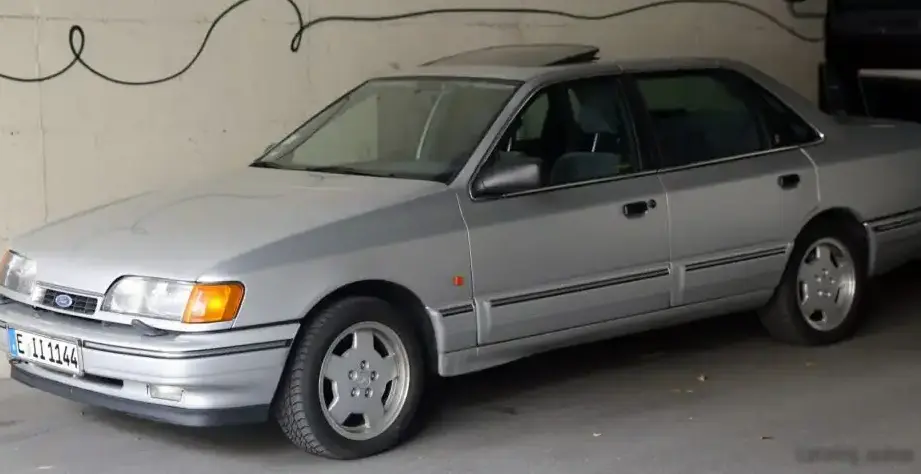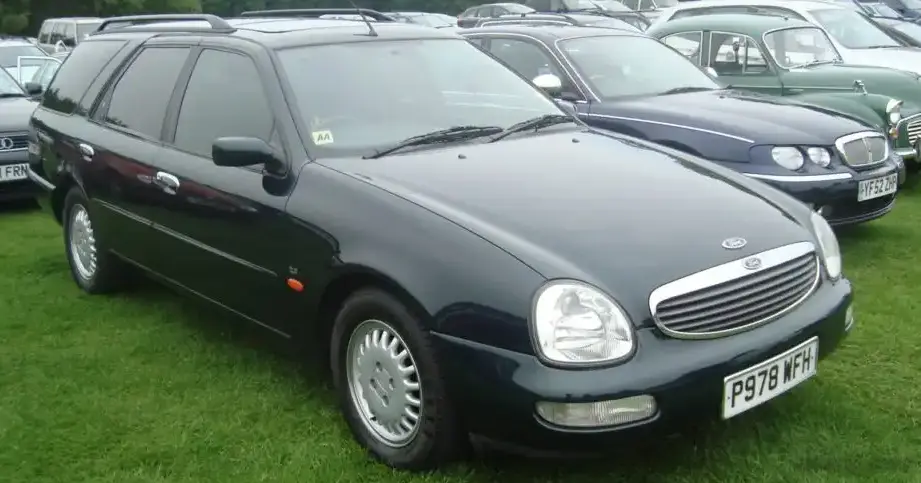
The Ford Scorpio II Turnier 2.5 TD, produced between 1994 and 1998, represented a significant offering in the European executive car market. As a station wagon (estate) variant of the Scorpio II, it aimed to combine practicality with a degree of luxury and performance, particularly with its turbocharged diesel engine. This specific 2.5-liter turbodiesel version, generating 115 horsepower, occupied a middle ground within the Turnier lineup, positioned as a more economical and torque-focused alternative to the petrol-powered models. The Scorpio II, and by extension the Turnier, was Ford’s attempt to compete with established European rivals like the BMW 5 Series, Audi 100, and Mercedes-Benz E-Class, offering a spacious and well-equipped package at a competitive price point.
Technical Specifications
| Brand | Ford |
| Model | Scorpio |
| Generation | Scorpio II Turnier |
| Type (Engine) | 2.5 TD (115 Hp) |
| Start of production | 1994 |
| End of production | 1998 |
| Powertrain Architecture | Internal Combustion engine |
| Body type | Station wagon (estate) |
| Seats | 5 |
| Doors | 5 |
| Fuel consumption (combined) | 8.1 l/100 km (29 US mpg, 34.9 UK mpg, 12.3 km/l) |
| Fuel Type | Diesel |
| Weight-to-power ratio | 13.9 kg/Hp, 72 Hp/tonne |
| Weight-to-torque ratio | 5.9 kg/Nm, 169.1 Nm/tonne |
| Power | 115 Hp @ 4200 rpm |
| Power per litre | 46 Hp/l |
| Torque | 270 Nm @ 2200 rpm (199.14 lb.-ft. @ 2200 rpm) |
| Engine layout | Front, Longitudinal |
| Engine Model/Code | SCC |
| Engine displacement | 2500 cm3 (152.56 cu. in.) |
| Number of cylinders | 4 |
| Engine configuration | Inline |
| Cylinder Bore | 92 mm (3.62 in.) |
| Piston Stroke | 94 mm (3.7 in.) |
| Compression ratio | 21.5:1 |
| Number of valves per cylinder | 2 |
| Fuel injection system | Precombustion chamber injection |
| Engine aspiration | Turbocharger |
| Valvetrain | OHC |
| Engine oil capacity | 6.6 l (6.97 US qt | 5.81 UK qt) |
| Kerb Weight | 1597 kg (3520.78 lbs.) |
| Max. weight | 2200 kg (4850.17 lbs.) |
| Max load | 603 kg (1329.39 lbs.) |
| Trunk (boot) space – minimum | 550 l (19.42 cu. ft.) |
| Trunk (boot) space – maximum | 1020 l (36.02 cu. ft.) |
| Fuel tank capacity | 70 l (18.49 US gal | 15.4 UK gal) |
| Length | 4826 mm (190 in.) |
| Width | 1760 mm (69.29 in.) |
| Width including mirrors | 1875 mm (73.82 in.) |
| Height | 1442 mm (56.77 in.) |
| Wheelbase | 2770 mm (109.06 in.) |
| Front track | 1478 mm (58.19 in.) |
| Rear (Back) track | 1495 mm (58.86 in.) |
| Drivetrain Architecture | Rear wheel drive |
| Number of gears and type of gearbox | 5 gears, manual transmission |
| Front suspension | Wishbone |
| Rear suspension | Coil spring |
| Front brakes | Ventilated discs |
| Rear brakes | Ventilated discs |
| Assisting systems | ABS (Anti-lock braking system), Hydraulic Steering |
| Tires size | 195/65 R15 |
Powertrain & Engine Architecture
The heart of the Scorpio II Turnier 2.5 TD was the SCC engine, a 2.5-liter inline-four cylinder diesel. This engine utilized precombustion chamber injection, a system common in European diesels of the era, designed to improve combustion efficiency and reduce noise. A turbocharger was employed to boost power output, bringing it to 115 horsepower at 4200 rpm and a substantial 270 Nm (199 lb-ft) of torque at a relatively low 2200 rpm. The engine featured an overhead camshaft (OHC) valvetrain with two valves per cylinder. The engine was mounted longitudinally in the front of the vehicle, driving the rear wheels. The five-speed manual transmission was the standard offering for this variant, providing a balance between fuel economy and drivability. While an automatic transmission was available on other Scorpio models, it wasn’t typically paired with the 2.5 TD engine due to torque limitations of the available automatic gearboxes.
Driving Characteristics
The 2.5 TD variant of the Scorpio II Turnier offered a distinctly different driving experience compared to its petrol-powered siblings. The emphasis was on torque rather than outright horsepower. This resulted in strong acceleration from low engine speeds, making it well-suited for hauling loads or tackling hilly terrain. The five-speed manual transmission allowed drivers to keep the engine in its optimal power band. While not a particularly fast car, the 2.5 TD provided ample power for comfortable cruising on motorways. Compared to the higher-output petrol engines, the diesel felt less refined and produced more engine noise, but it compensated with significantly better fuel economy. The rear-wheel-drive configuration provided a balanced feel, although it could be prone to oversteer in challenging conditions.
Equipment & Trim Levels
The Scorpio II Turnier 2.5 TD typically came with a reasonable level of standard equipment. This included central locking, electric front windows, power steering, and an anti-lock braking system (ABS). Interior upholstery was generally cloth, with options for upgraded velour or leather available. The dashboard layout was functional and straightforward, with clear instrumentation. Optional extras included a sunroof, air conditioning, and a more advanced audio system. The Turnier trim level itself denoted the estate body style, offering a larger cargo area than the saloon version. The 2.5 TD trim didn’t represent a particularly luxurious specification; it was more focused on providing a practical and economical option for buyers needing a spacious vehicle.
Chassis & Braking
The Scorpio II utilized a traditional body-on-frame construction, contributing to its robust feel. Front suspension consisted of wishbones, while the rear employed a coil spring setup. This suspension configuration aimed to provide a comfortable ride, although it wasn’t particularly sporty. Braking was handled by ventilated discs on all four wheels, providing adequate stopping power for the vehicle’s weight. The ABS system helped to maintain steering control during emergency braking. The steering was hydraulic, offering a reasonable level of assistance without feeling overly light or disconnected.
Market Reception & Comparison
The Scorpio II Turnier 2.5 TD received mixed reviews. Critics praised its spaciousness, practicality, and fuel economy, but often criticized its somewhat dated design and lack of refinement compared to its German rivals. The diesel engine was generally well-regarded for its torque and efficiency, but its noise and vibration levels were points of concern. Compared to the petrol-powered Scorpio models, the 2.5 TD offered significantly better fuel economy, making it a popular choice for high-mileage drivers. However, it lacked the performance and refinement of the V6 petrol engines. Against competitors like the BMW 5 Series and Audi 100, the Scorpio II Turnier 2.5 TD offered a more affordable alternative, but it couldn’t quite match their levels of build quality or driving dynamics.
Legacy
The Ford Scorpio II Turnier 2.5 TD has developed a reputation for being a reliable and durable vehicle, particularly the engine itself. The SCC diesel engine, while not known for being cutting-edge technology, proved to be robust and capable of high mileage with proper maintenance. Today, these vehicles are relatively rare, but they are sought after by enthusiasts looking for a spacious and practical classic estate car. Parts availability can be a challenge, but many components are still available through specialist suppliers. The 2.5 TD variant remains a testament to Ford’s attempt to create a competitive European executive car, offering a unique blend of practicality, economy, and durability.