Technical Specifications
| Brand | Hyundai |
| Model | Verna |
| Generation | Verna V (facelift 2020) |
| Type (Engine) | 1.5 MPi (115 Hp) |
| Start of production | March, 2020 |
| End of production | February, 2023 |
| Powertrain Architecture | Internal Combustion engine |
| Body type | Sedan |
| Seats | 5 |
| Doors | 4 |
| Fuel Type | Petrol (Gasoline) |
| Power | 115 Hp @ 6300 rpm |
| Power per litre | 76.8 Hp/l |
| Torque | 144 Nm @ 4500 rpm / 106.21 lb.-ft. @ 4500 rpm |
| Engine layout | Front, Transverse |
| Engine Model/Code | Smartstream / G4FL |
| Engine displacement | 1497 cm3 / 91.35 cu. in. |
| Number of cylinders | 4 |
| Engine configuration | Inline |
| Number of valves per cylinder | 4 |
| Fuel injection system | Multi-port manifold injection |
| Engine aspiration | Naturally aspirated engine |
| Valvetrain | DOHC, VIS |
| Engine oil capacity | 3.8 l / 4.02 US qt | 3.34 UK qt |
| Fuel tank capacity | 45 l / 11.89 US gal | 9.9 UK gal |
| Length | 4440 mm / 174.8 in |
| Width | 1729 mm / 68.07 in |
| Height | 1475 mm / 58.07 in |
| Wheelbase | 2600 mm / 102.36 in |
| Drivetrain Architecture | The Internal combustion engine (ICE) drives the front wheels of the vehicle. |
| Drive wheel | Front wheel drive |
| Number of gears and type of gearbox | 6 gears, manual transmission |
| Front suspension | Coil spring, Independent type McPherson |
| Rear suspension | Torsion |
| Front brakes | Disc |
| Rear brakes | Drum |
| Assisting systems | ABS (Anti-lock braking system) |
| Steering type | Steering rack and pinion |
| Power steering | Electric Steering |
| Tires size | 185/65 R15; 195/55 R16 |
| Wheel rims size | 15; 16 |
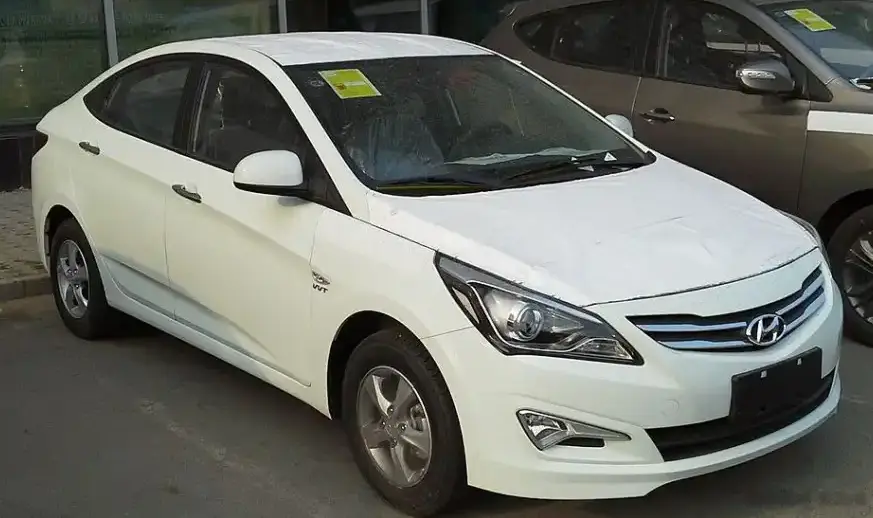
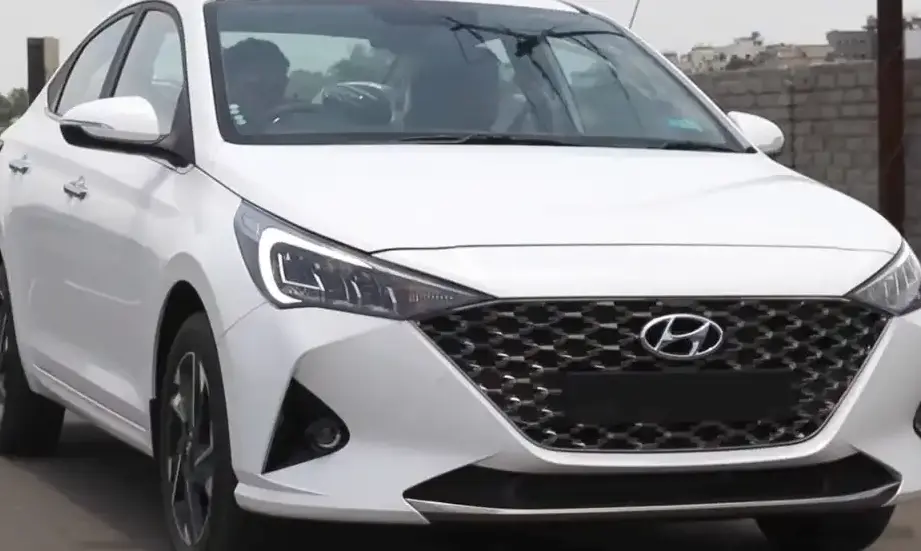
The Hyundai Verna V (facelift, introduced in March 2020 and continuing through February 2023) represents a mid-cycle refresh of the fifth-generation Verna, a compact sedan primarily aimed at the Asian and, to a lesser extent, South American markets. This particular variant, powered by the 1.5 MPi engine producing 115 horsepower, served as a core offering within the Verna V lineup, positioned as a balance between affordability and acceptable performance. The facelift brought updated styling, improved interior features, and refinements to the existing powertrain options, aiming to maintain the Verna’s competitive edge in a crowded segment.
Powertrain & Engine Architecture
The heart of this Verna variant is the Hyundai Smartstream G4FL 1.5-liter inline-four cylinder engine. This engine is a naturally aspirated unit employing multi-point fuel injection. The G4FL engine is part of Hyundai’s Smartstream family, designed with a focus on improved fuel efficiency and reduced emissions. It features a double overhead camshaft (DOHC) valvetrain with Variable Intake System (VIS) technology, optimizing airflow into the cylinders for better performance across the rev range. The engine produces 115 horsepower at 6,300 rpm and 144 Nm (106.21 lb-ft) of torque at 4,500 rpm. This power is delivered to the front wheels through a six-speed manual transmission. While an automatic transmission was offered on other Verna trims, this 1.5 MPi configuration was exclusively paired with the manual gearbox in many markets.
Driving Characteristics
The 1.5 MPi engine, coupled with the six-speed manual transmission, provides adequate, though not exhilarating, performance. Acceleration is linear, with the engine feeling most responsive in the mid-range. The manual gearbox is well-matched to the engine’s characteristics, offering precise shifts and allowing the driver to maintain control. Compared to the higher-output 1.6-liter engine available on some Verna trims, this 1.5-liter version feels less powerful, particularly when fully loaded or tackling steep inclines. However, the lighter engine weight contributes to slightly improved handling and fuel economy. The gear ratios are tuned for everyday driving, prioritizing fuel efficiency over outright speed. The clutch feel is relatively light, making it suitable for urban commutes.
Equipment & Trim Levels
The 1.5 MPi variant typically served as an entry-level or mid-range trim within the Verna V lineup. Standard equipment generally included air conditioning, power windows, power steering, and a basic audio system. Safety features such as dual airbags and ABS were also standard. Higher trim levels added features like alloy wheels, a touchscreen infotainment system, rear parking sensors, and automatic climate control. Interior upholstery was typically cloth, with a straightforward dashboard layout. Optional extras often included a sunroof, upgraded audio system, and keyless entry.
Chassis & Braking
The Verna V utilizes a front-wheel-drive layout with a McPherson strut independent suspension at the front and a torsion beam suspension at the rear. This suspension setup provides a comfortable ride quality, absorbing bumps and irregularities in the road surface effectively. The front brakes are disc brakes, providing adequate stopping power, while the rear brakes are drum brakes, a cost-saving measure common in this segment. Electric power steering provides light and easy steering feel, making it convenient for maneuvering in tight spaces. Tire sizes typically ranged from 185/65 R15 to 195/55 R16, depending on the trim level.
Market Reception & Comparison
The Hyundai Verna V, including the 1.5 MPi variant, was generally well-received in its target markets. Critics praised its comfortable ride, spacious interior, and value for money. However, the 1.5-liter engine was sometimes criticized for lacking outright power, especially when compared to competitors offering larger displacement engines. In terms of fuel economy, the 1.5 MPi version performed competitively, offering a good balance between performance and efficiency. Compared to the higher-trim Verna models with the 1.6-liter engine, the 1.5 MPi was more appealing to budget-conscious buyers who prioritized fuel economy and affordability over performance.
Legacy
The Hyundai Verna V, and specifically the 1.5 MPi variant, has established a reputation for reliability and affordability in the used car market. The Smartstream G4FL engine is known for its durability and relatively low maintenance costs. While not a performance standout, the 1.5 MPi powertrain has proven to be a dependable option for everyday commuting. Parts availability is generally good, and the Verna V remains a popular choice for buyers seeking a practical and economical compact sedan. The combination of a manual transmission and a fuel-efficient engine makes it an attractive option for those prioritizing long-term ownership costs.