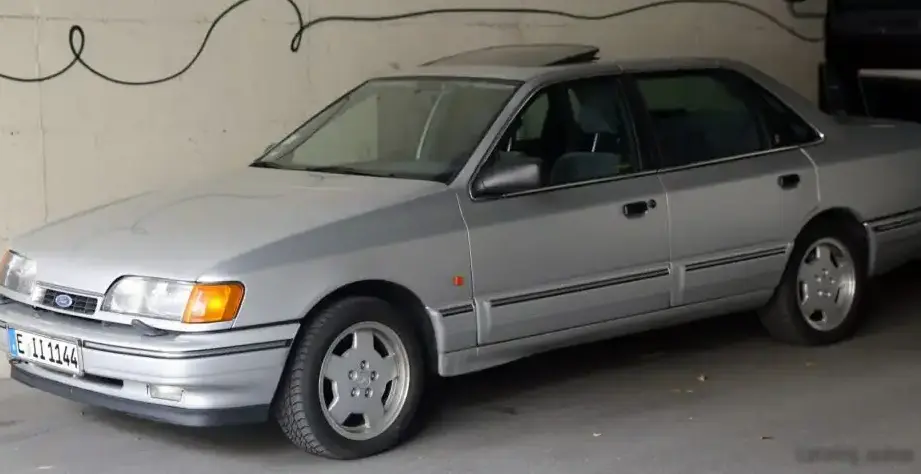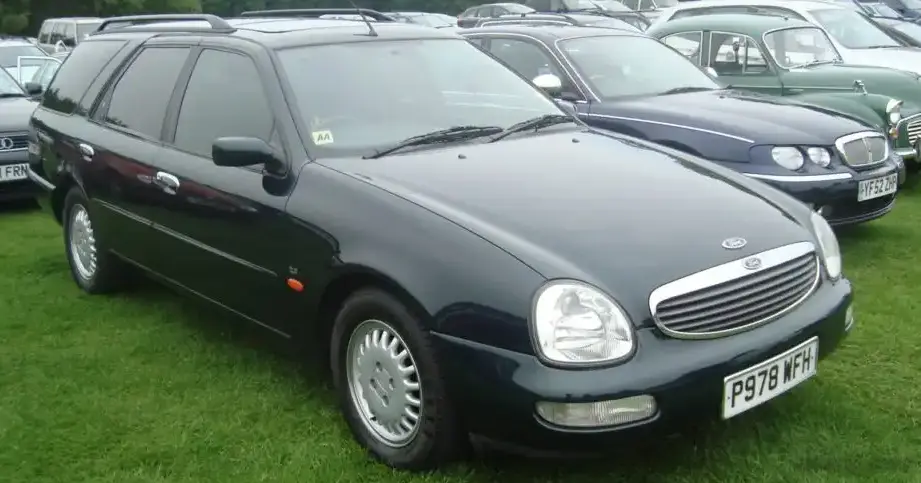
The Ford Scorpio II Turnier 2.9i 24V, produced between 1994 and 1998, represented the high-performance end of the Scorpio II estate (wagon) range. Positioned as a premium offering, it catered to buyers seeking a spacious, comfortable, and relatively quick family vehicle. The Turnier body style, Ford’s designation for its station wagon, added practicality to the already sizable Scorpio platform (1HX0/A3). This variant distinguished itself with a potent 2.9-liter V6 engine and a four-speed automatic transmission, offering a blend of performance and convenience not found in the lower-spec models.
Technical Specifications
| Brand | Ford |
| Model | Scorpio |
| Generation | Scorpio II Turnier |
| Type (Engine) | 2.9i 24V (210 Hp) |
| Start of production | 1994 |
| End of production | 1998 |
| Powertrain Architecture | Internal Combustion engine |
| Body type | Station wagon (estate) |
| Seats | 5 |
| Doors | 5 |
| Fuel consumption (combined) | 10.9 l/100 km (21.6 US mpg, 25.9 UK mpg, 9.2 km/l) |
| Fuel Type | Petrol (Gasoline) |
| Maximum speed | 215 km/h (133.59 mph) |
| Weight-to-power ratio | 7.6 kg/Hp, 132 Hp/tonne |
| Weight-to-torque ratio | 5.8 kg/Nm, 172.8 Nm/tonne |
| Power | 210 Hp @ 6000 rpm |
| Power per litre | 71.6 Hp/l |
| Torque | 275 Nm @ 4500 rpm (202.83 lb.-ft. @ 4500 rpm) |
| Engine layout | Front, Longitudinal |
| Engine displacement | 2935 cm3 (179.1 cu. in.) |
| Number of cylinders | 6 |
| Engine configuration | V-engine |
| Cylinder Bore | 93 mm (3.66 in.) |
| Piston Stroke | 72 mm (2.83 in.) |
| Compression ratio | 9.7:1 |
| Number of valves per cylinder | 4 |
| Fuel injection system | Multi-port manifold injection |
| Engine aspiration | Naturally aspirated engine |
| Valvetrain | DOHC |
| Engine oil capacity | 4.5 l (4.76 US qt | 3.96 UK qt) |
| Coolant | 9.5 l (10.04 US qt | 8.36 UK qt) |
| Kerb Weight | 1591 kg (3507.55 lbs.) |
| Max. weight | 2200 kg (4850.17 lbs.) |
| Max load | 609 kg (1342.62 lbs.) |
| Trunk (boot) space – minimum | 550 l (19.42 cu. ft.) |
| Trunk (boot) space – maximum | 1020 l (36.02 cu. ft.) |
| Fuel tank capacity | 70 l (18.49 US gal | 15.4 UK gal) |
| Length | 4826 mm (190 in.) |
| Width | 1760 mm (69.29 in.) |
| Width including mirrors | 1875 mm (73.82 in.) |
| Height | 1442 mm (56.77 in.) |
| Wheelbase | 2770 mm (109.06 in.) |
| Front track | 1478 mm (58.19 in.) |
| Rear (Back) track | 1495 mm (58.86 in.) |
| Drivetrain Architecture | Rear wheel drive |
| Number of gears and type of gearbox | 4 gears, automatic transmission |
| Front suspension | Wishbone |
| Rear suspension | Coil spring |
| Front brakes | Ventilated discs |
| Rear brakes | Ventilated discs |
| Assisting systems | ABS (Anti-lock braking system), Hydraulic Power steering |
| Tires size | 205/60 R15 |
Powertrain & Engine Architecture
The heart of the Scorpio II Turnier 2.9i 24V was the Ford Cologne V6 engine, specifically the 2.9-liter variant. This engine, designated with code names like those beginning with ‘B’ (depending on specific market and emissions regulations), featured a 60-degree V-angle and a dual overhead camshaft (DOHC) design with four valves per cylinder. The 24-valve configuration, combined with multi-port fuel injection, allowed for a respectable 210 horsepower and 275 Nm (202.83 lb-ft) of torque. The engine’s longitudinal mounting and rear-wheel-drive configuration were hallmarks of the Scorpio’s more traditional, European-inspired engineering. The four-speed automatic transmission, while providing convenience, wasn’t known for its particularly quick shifts or fuel efficiency compared to the available five-speed manual.
Driving Characteristics
The 2.9i 24V automatic Scorpio Turnier offered a comfortable and refined driving experience. While not a sports car, the V6 provided ample power for relaxed cruising and overtaking. The automatic transmission, however, did detract somewhat from the engine’s potential. Gear ratios were geared towards comfort and fuel economy rather than outright acceleration. Compared to the manual transmission versions, the automatic felt noticeably slower, particularly during kickdown maneuvers. The rear-wheel-drive layout provided balanced handling, but the Scorpio’s considerable weight (1591 kg / 3507.55 lbs) meant it wasn’t particularly agile. The suspension, tuned for comfort, absorbed bumps well but could exhibit some body roll in corners.
Equipment & Trim Levels
The 2.9i 24V Turnier typically came well-equipped, reflecting its position as a higher-end trim. Standard features often included central locking, electric windows, power steering, an anti-lock braking system (ABS), and a decent audio system. Interior upholstery was usually a comfortable cloth or, as an option, leather. Dashboard configuration was relatively straightforward, with clear instrumentation. Optional extras could include a sunroof, upgraded audio systems, and climate control. The Turnier estate body style itself added a significant amount of practicality, with a generous 550-1020 liter (19.42-36.02 cu. ft.) cargo area.
Chassis & Braking
The Scorpio II utilized a traditional body-on-frame construction, contributing to its robust feel but also its weight. Front suspension employed a wishbone setup, while the rear featured a coil spring arrangement. Braking was handled by ventilated discs on all four wheels, providing adequate stopping power for the vehicle’s weight. The ABS system enhanced safety by preventing wheel lockup during hard braking. Stabilizer bars were fitted front and rear to reduce body roll, but the Scorpio’s size and weight still limited its cornering ability.
Market Reception & Comparison
The Scorpio II, in general, faced a challenging market. It was often seen as a somewhat conservative design compared to its rivals, and its size could be intimidating for some drivers. The 2.9i 24V automatic variant was praised for its smooth engine and comfortable ride, but criticized for its relatively high fuel consumption (10.9 l/100 km / 21.6 US mpg) and the automatic transmission’s lack of responsiveness. Compared to the lower-spec 2.0-liter models, the 2.9i offered significantly more performance, but at a higher price point. Against competitors like the BMW 5 Series or Mercedes-Benz E-Class, the Scorpio offered a lot of space and comfort for the money, but lacked the prestige of the German brands.
Legacy
The Ford Scorpio II, while not a commercial success in many markets, has gained a following among enthusiasts. The 2.9-liter V6 engine is generally considered reliable, although regular maintenance is crucial. The automatic transmission, however, can be prone to issues if not properly serviced. Today, well-maintained examples of the Scorpio II Turnier 2.9i 24V are becoming increasingly rare and sought after by collectors and those looking for a spacious, comfortable, and distinctive classic car. Parts availability can be a challenge, but a dedicated community of owners and specialists exists to support the preservation of these vehicles.