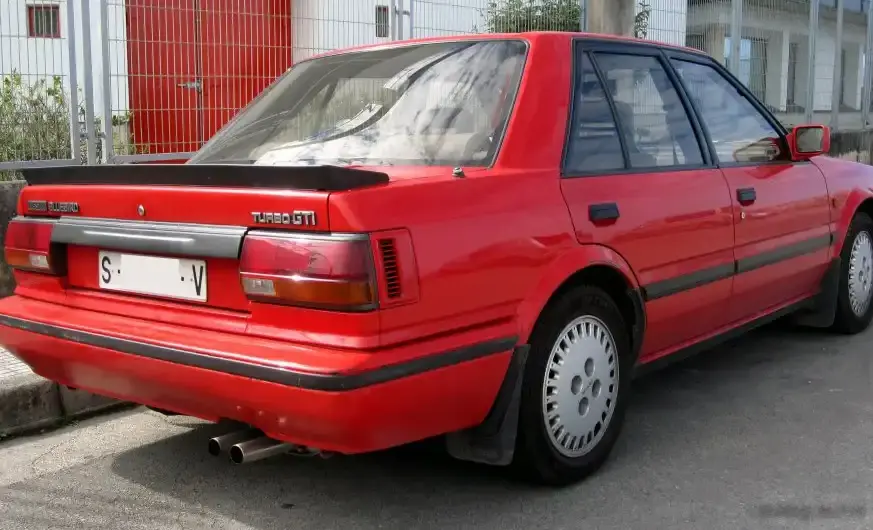
The Nissan Bluebird 2.0i (HLT72, T12), produced between 1985 and 1990, represents a significant iteration of Nissan’s long-running Bluebird lineage. Falling within the T72 and subsequent T12 series, this variant was primarily aimed at the mid-range segment of the family sedan market, particularly in markets outside of North America where the Bluebird enjoyed considerable popularity. It served as a step up from the base models, offering a balance of comfort, fuel efficiency, and respectable performance. The T72/T12 Bluebird was a key player in Nissan’s strategy to offer a competitive and reliable vehicle in a crowded segment, often positioned against rivals like the Toyota Corolla and Honda Accord.
Technical Specifications
| Brand | Nissan |
| Model | Bluebird |
| Generation | Bluebird (T72, T12) |
| Type (Engine) | 2.0 i (HLT72, T12) (105 Hp) |
| Start of Production | 1985 |
| End of Production | 1990 |
| Powertrain Architecture | Internal Combustion Engine |
| Body Type | Sedan |
| Seats | 5 |
| Doors | 4 |
| Fuel Type | Petrol (Gasoline) |
| Power | 105 Hp |
| Engine Aspiration | Naturally Aspirated |
| Drivetrain | Front Wheel Drive |
Powertrain & Engine Architecture
The heart of the Bluebird 2.0i is the Nissan CA20S engine, a 2.0-liter inline-four cylinder gasoline engine. This engine is naturally aspirated and utilizes a single overhead camshaft (SOHC) design. Fuel delivery is managed by a carburetor system, typical for vehicles of this era, though later iterations within the T12 series saw the introduction of fuel injection. The CA20S engine is known for its relative simplicity and durability, making it a reliable powerplant. The engine produces 105 horsepower and approximately 138 lb-ft of torque. The transmission paired with this engine is a 3-speed automatic, designed for smooth and comfortable operation rather than outright performance. This automatic transmission was a common choice for buyers prioritizing ease of use over driver engagement.
Driving Characteristics
The driving experience in the Bluebird 2.0i with the automatic transmission is characterized by its smoothness and predictability. Acceleration is adequate for everyday driving, but it’s not a particularly sporty vehicle. The 3-speed automatic transmission, while providing comfortable shifts, lacks the responsiveness of a manual gearbox or a more modern automatic with additional gears. The gear ratios are tuned for fuel efficiency and relaxed cruising, rather than quick acceleration. Compared to the manual transmission versions of the Bluebird, the automatic variant sacrifices some performance, but gains in convenience. The suspension is tuned for comfort, absorbing bumps and providing a relatively smooth ride. Handling is competent but not particularly engaging, leaning towards understeer when pushed hard.
Equipment & Trim Levels
The 2.0i trim level of the Bluebird T72/T12 typically included features aimed at enhancing comfort and convenience. Standard equipment often included cloth upholstery, power steering, and an AM/FM radio. Higher-spec versions within the 2.0i range could include features like air conditioning, electric windows, and a more sophisticated audio system. The interior design is functional and straightforward, with a focus on practicality rather than luxury. The dashboard layout is typical of the 1980s, with clearly labeled controls and a relatively simple instrument cluster. Optional extras could include a sunroof, upgraded sound systems, and alloy wheels.
Chassis & Braking
The Bluebird T72/T12 utilizes a front-engine, front-wheel-drive layout. The suspension consists of MacPherson struts at the front and a semi-trailing arm suspension at the rear. Braking is typically accomplished with disc brakes at the front and drum brakes at the rear, a common configuration for vehicles in this class during the 1980s. The braking system provides adequate stopping power for normal driving conditions. Stabilizer bars are included at both the front and rear to reduce body roll during cornering, improving handling stability. The chassis is designed to provide a comfortable ride while maintaining reasonable handling characteristics.
Market Reception & Comparison
The Nissan Bluebird 2.0i was generally well-received by automotive critics as a practical and reliable family sedan. It was praised for its comfortable ride, fuel efficiency, and overall build quality. However, it was often criticized for its lack of sporting pretensions and its somewhat dated interior design compared to some of its rivals. Compared to the base models with smaller engines, the 2.0i offered a noticeable improvement in performance, making it a more enjoyable vehicle to drive, especially on longer journeys. Compared to the more powerful and sporty variants, such as those equipped with larger engines or manual transmissions, the 2.0i automatic was seen as a more sensible and practical choice for buyers prioritizing comfort and convenience. Fuel economy was a strong point, offering competitive figures for its class.
Legacy
The Nissan Bluebird T72/T12 series, and the 2.0i variant in particular, has earned a reputation for long-term reliability. The CA20S engine is known for its durability, and many examples are still on the road today. In the used car market, these Bluebirds are often sought after by enthusiasts looking for a classic Japanese sedan that is relatively easy to maintain and repair. Parts availability is generally good, and the simple mechanical design makes it accessible to home mechanics. While not a particularly collectible vehicle, the Bluebird 2.0i represents a well-built and dependable car from a bygone era, offering a glimpse into the automotive landscape of the 1980s. Its enduring reliability has cemented its place as a respected and fondly remembered vehicle in many markets.