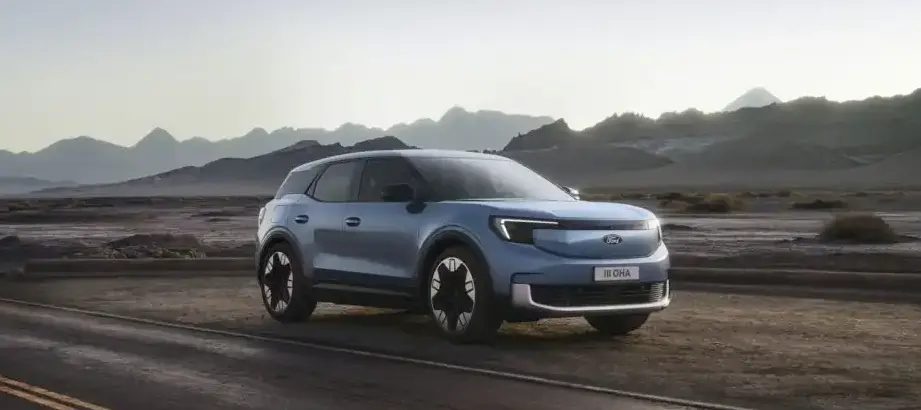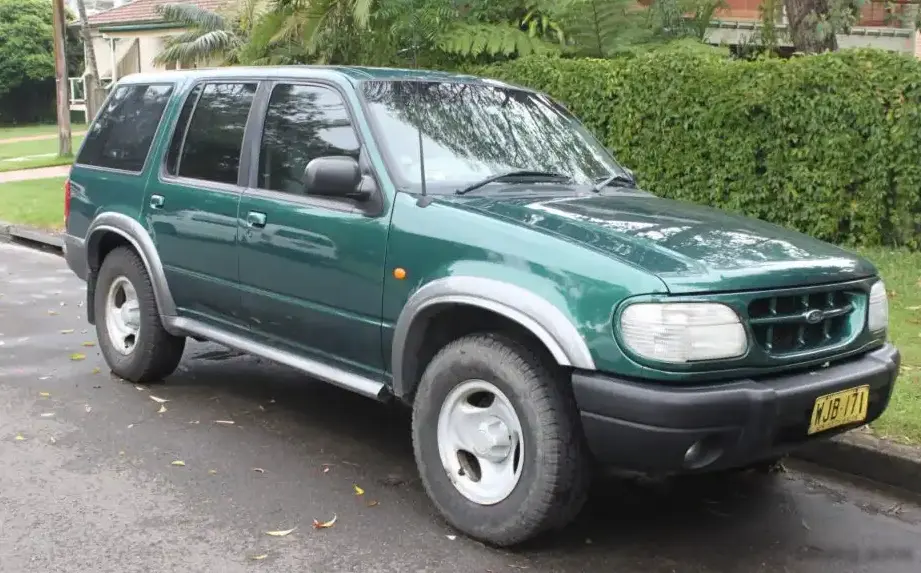
The Ford Explorer V (facelift, 2016-2018) with the 3.5 Ti-VCT V6 engine and SelectShift automatic transmission represents a mid-cycle refresh of the fifth-generation Explorer. Introduced for the 2016 model year, this variant aimed to balance family-oriented practicality with a more engaging driving experience than the base four-cylinder models. Positioned as a step up from the entry-level Explorer, it offered a significant power increase and all-wheel drive capability, making it a popular choice for American families needing space and all-weather traction. This version of the Explorer competed directly with vehicles like the Honda Pilot, Toyota Highlander, and Chevrolet Traverse.
Technical Specifications
| Brand | Ford |
| Model | Explorer |
| Generation | Explorer V (facelift 2016) |
| Type (Engine) | 3.5 Ti VCT V6 (249 Hp) AWD SelectShift |
| Start of production | 2016 |
| End of production | 2018 |
| Powertrain Architecture | Internal Combustion engine |
| Body type | SUV |
| Seats | 7 |
| Doors | 5 |
| Fuel consumption (urban) | 13.8 l/100 km (17 US mpg, 20.5 UK mpg, 7.2 km/l) |
| Fuel consumption (extra urban) | 10.2 l/100 km (23.1 US mpg, 27.7 UK mpg, 9.8 km/l) |
| Fuel consumption (combined) | 12.4 l/100 km (19 US mpg, 22.8 UK mpg, 8.1 km/l) |
| Fuel Type | Petrol (Gasoline) |
| Acceleration 0 – 100 km/h | 8.7 sec |
| Acceleration 0 – 62 mph | 8.7 sec |
| Acceleration 0 – 60 mph | 8.3 sec |
| Maximum speed | 183 km/h (113.71 mph) |
| Power | 249 Hp @ 6500 rpm |
| Power per litre | 71.2 Hp/l |
| Torque | 346 Nm @ 4000 rpm (255.2 lb.-ft. @ 4000 rpm) |
| Engine layout | Front, Longitudinal |
| Engine displacement | 3497 cm3 (213.4 cu. in.) |
| Number of cylinders | 6 |
| Engine configuration | V-engine |
| Number of valves per cylinder | 4 |
| Fuel injection system | Multi-port manifold injection |
| Engine aspiration | Naturally aspirated engine |
| Valvetrain | Ti-VCT |
| Engine oil capacity | 5.7 l (6.02 US qt, 5.02 UK qt) |
| Coolant capacity | 12.4 l (13.1 US qt, 10.91 UK qt) |
| Trunk (boot) space – minimum | 595 l (21.01 cu. ft.) |
| Trunk (boot) space – maximum | 2313 l (81.68 cu. ft.) |
| Fuel tank capacity | 70 l (18.49 US gal, 15.4 UK gal) |
| Length | 5019 mm (197.6 in.) |
| Width | 1988 mm (78.27 in.) |
| Width with mirrors folded | 2095 mm (82.48 in.) |
| Width including mirrors | 2291 mm (90.2 in.) |
| Height | 1788 mm (70.39 in.) |
| Wheelbase | 2860 mm (112.6 in.) |
| Ride height (ground clearance) | 211 mm (8.31 in.) |
| Drive wheel | All wheel drive (4×4) |
| Number of gears and type of gearbox | 6 gears, automatic transmission SelectShift |
| Front suspension | Independent type McPherson |
| Rear suspension | Independent multi-link suspension |
| Front brakes | Ventilated discs |
| Rear brakes | Disc |
| Assisting systems | ABS (Anti-lock braking system) |
| Steering type | Steering rack and pinion |
| Power steering | Electric Steering |
| Tires size | 245/60 R18; 255/50 R20 |
| Wheel rims size | 18; 20 |
Powertrain & Engine Architecture
The heart of this Explorer variant is the 3.5-liter Ti-VCT V6 engine. “Ti-VCT” stands for Twin Independent Variable Camshaft Timing, a Ford technology that optimizes valve timing for improved performance and fuel efficiency. This engine utilizes multi-port fuel injection, delivering fuel directly into the intake ports. The engine produces 249 horsepower at 6500 rpm and 255 lb-ft of torque at 4000 rpm. The engine is longitudinally mounted in the chassis, driving all four wheels through Ford’s SelectShift six-speed automatic transmission. SelectShift allows for manual gear selection via steering wheel-mounted paddles, offering drivers more control. The transmission is tuned for smooth shifts and responsive acceleration, though it prioritizes comfort over outright sportiness.
Driving Characteristics
The 3.5L V6 paired with the six-speed automatic provides adequate, if not exhilarating, performance. Acceleration from 0-60 mph takes around 8.3 seconds, making it competitive within its class. The automatic transmission is generally smooth, but can sometimes feel hesitant during quick downshifts. Compared to the base 2.3L EcoBoost four-cylinder, the V6 offers significantly more power and a more refined driving experience. It doesn’t match the quicker acceleration of the optional 3.7L V6 found in some Explorer trims, but provides a good balance of power and fuel economy. The all-wheel-drive system provides enhanced traction in inclement weather, making it a practical choice for drivers in regions with snow or rain. The Explorer’s size is noticeable during cornering, and it doesn’t feel particularly agile.
Equipment & Trim Levels
The 2016-2018 Explorer with the 3.5L V6 and AWD typically came standard with features like tri-zone automatic climate control, a rearview camera, Ford’s Sync infotainment system, and a power liftgate. Higher trim levels, such as the Limited, added leather upholstery, heated and ventilated front seats, a premium audio system, and advanced safety features like blind-spot monitoring and rear cross-traffic alert. Optional extras included a panoramic sunroof, navigation system, and a trailer towing package. Interior upholstery was typically cloth on lower trims and leather on higher trims. Dashboard configurations were consistent across the range, with a focus on user-friendliness and practicality.
Chassis & Braking
The Explorer V utilizes an independent McPherson strut front suspension and an independent multi-link rear suspension. This setup provides a comfortable ride, absorbing bumps and imperfections in the road effectively. Front brakes are ventilated discs, while rear brakes are discs. The Explorer’s chassis is designed to handle the weight of the vehicle and its passengers, providing a stable and predictable driving experience. Stabilizer bars are present on both the front and rear axles to reduce body roll during cornering. The all-wheel-drive system adds to the vehicle’s stability, particularly in slippery conditions.
Market Reception & Comparison
Critics generally praised the Explorer V’s spacious interior, comfortable ride, and available features. The 3.5L V6 engine was considered a good compromise between power and fuel economy. However, some reviewers noted that the Explorer’s handling wasn’t as sharp as some of its competitors. Fuel economy was rated at around 19 mpg combined, which was average for the segment. Compared to the 2.3L EcoBoost, the V6 offered more power but slightly lower fuel efficiency. The 3.7L V6 provided even more performance but came at a higher price point. Reliability was generally good, with few major issues reported.
Legacy
The 3.5L Ti-VCT V6 engine proved to be a reliable and durable powertrain. While not known for exceptional longevity like some Toyota engines, it generally holds up well with proper maintenance. In the used car market, Explorers from this generation, particularly those with the 3.5L V6 and AWD, remain popular choices for families seeking a spacious and capable SUV. Common maintenance items include regular oil changes, transmission fluid flushes, and spark plug replacements. The SelectShift transmission is generally reliable, but some owners have reported minor issues with shift quality as the vehicle ages. Overall, the 2016-2018 Ford Explorer 3.5 Ti-VCT V6 AWD SelectShift represents a solid and practical choice in the mid-size SUV segment.