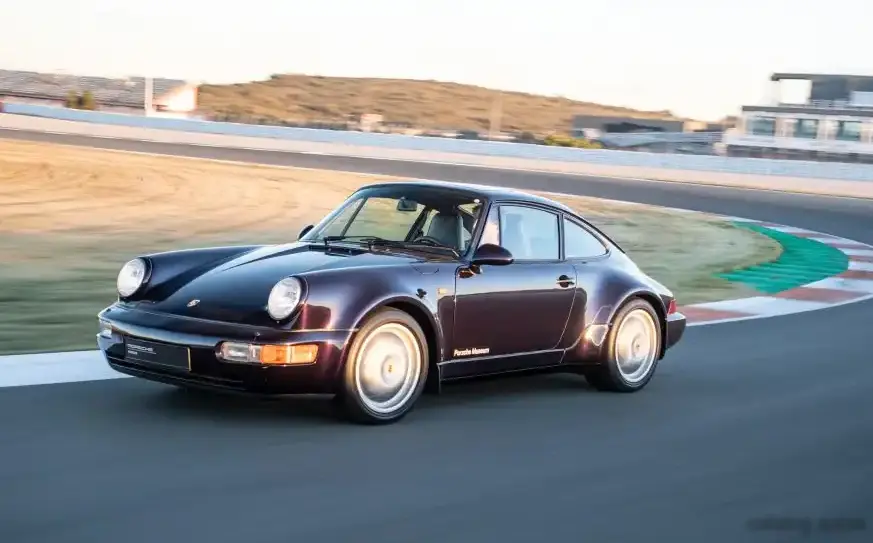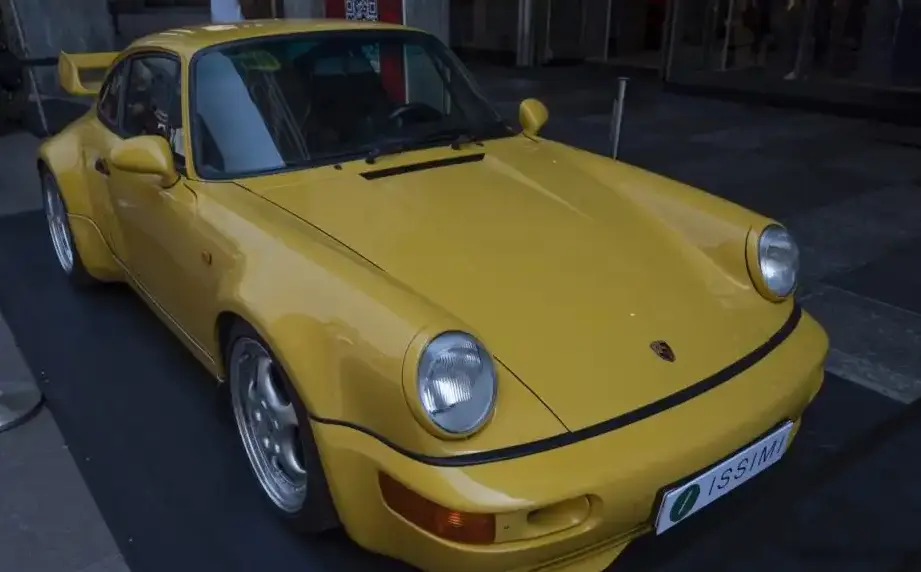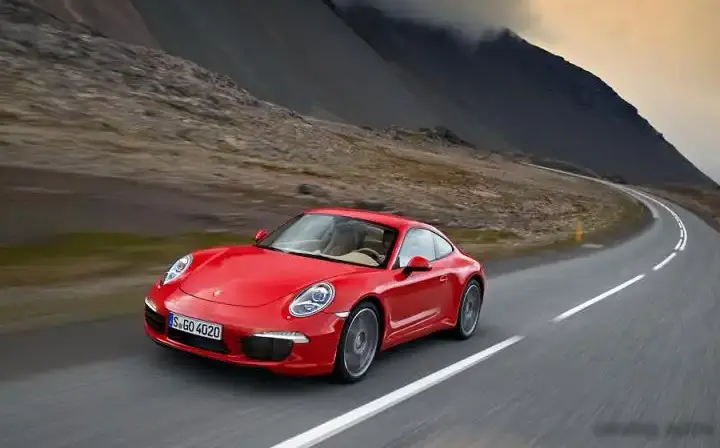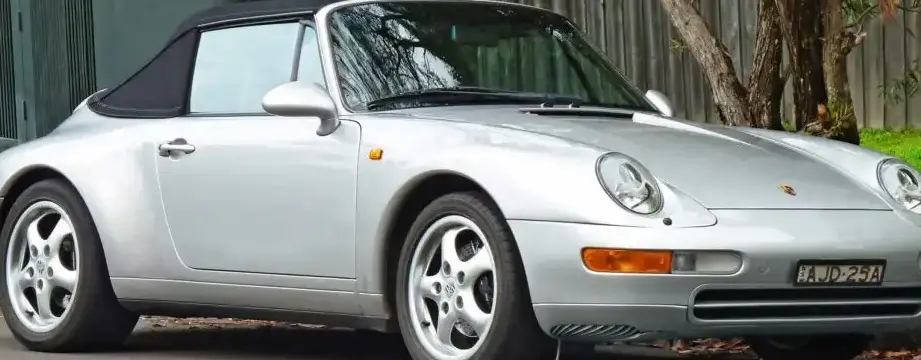
The Porsche 911 Cabriolet (993) Carrera 3.6, produced between 1994 and 1997, represents a pivotal moment in the 911 lineage. As the final iteration of the air-cooled 911 before a complete redesign, the 993 generation, and specifically the Carrera 3.6, blended classic Porsche aesthetics with significant technological advancements. This variant occupied the middle ground within the 993 Cabriolet range, offering a compelling balance between performance and everyday usability, positioned above the base Carrera 2 and below the more potent Carrera S models. It was a key model for Porsche in maintaining its foothold in the sports car market during a period of increasing competition.
Technical Specifications
| Brand | Porsche |
| Model | 911 |
| Generation | 911 Cabriolet (993) |
| Type (Engine) | Carrera 3.6 (272 Hp) |
| Start of production | 1994 |
| End of production | 1997 |
| Powertrain Architecture | Internal Combustion engine |
| Body type | Cabriolet |
| Seats | 4 |
| Doors | 2 |
| Fuel consumption (combined) | 11.5 l/100 km |
| Fuel consumption (US mpg) | 20.5 US mpg |
| Fuel consumption (UK mpg) | 24.6 UK mpg |
| Fuel consumption (km/l) | 8.7 km/l |
| Fuel Type | Petrol (Gasoline) |
| Acceleration 0 – 100 km/h | 5.6 sec |
| Acceleration 0 – 62 mph | 5.6 sec |
| Acceleration 0 – 60 mph | 5.3 sec |
| Maximum speed | 270 km/h (167.77 mph) |
| Weight-to-power ratio | 5 kg/Hp |
| Weight-to-torque ratio | 4.2 kg/Nm |
| Power | 272 Hp @ 6100 rpm |
| Power per litre | 75.6 Hp/l |
| Torque | 330 Nm @ 5000 rpm (243.4 lb.-ft. @ 5000 rpm) |
| Engine layout | Rear, Longitudinal |
| Engine Model/Code | M64.05 |
| Engine displacement | 3600 cm3 (219.69 cu. in.) |
| Number of cylinders | 6 |
| Engine configuration | Boxer |
| Cylinder Bore | 100 mm (3.94 in.) |
| Piston Stroke | 76.4 mm (3.01 in.) |
| Compression ratio | 11.3:1 |
| Number of valves per cylinder | 2 |
| Fuel injection system | Multi-port manifold injection |
| Engine aspiration | Naturally aspirated engine |
| Valvetrain | OHC |
| Engine oil capacity | 9 l (9.51 US qt | 7.92 UK qt) |
| Kerb Weight | 1370 kg (3020.33 lbs.) |
| Max. weight | 1710 kg (3769.9 lbs.) |
| Max load | 340 kg (749.57 lbs.) |
| Trunk (boot) space – minimum | 123 l (4.34 cu. ft.) |
| Fuel tank capacity | 74 l (19.55 US gal | 16.28 UK gal) |
| Length | 4245 mm (167.13 in.) |
| Width | 1735 mm (68.31 in.) |
| Height | 1300 mm (51.18 in.) |
| Wheelbase | 2272 mm (89.45 in.) |
| Front track | 1405 mm (55.31 in.) |
| Rear (Back) track | 1444 mm (56.85 in.) |
| Drivetrain Architecture | Rear wheel drive |
| Number of gears and type of gearbox | 6 gears, manual transmission |
| Front suspension | Independent type McPherson |
| Rear suspension | Independent multi-link suspension |
| Front brakes | Ventilated discs |
| Rear brakes | Ventilated discs |
| Assisting systems | ABS (Anti-lock braking system) |
| Steering type | Steering rack and pinion |
| Power steering | Hydraulic Steering |
| Tires size | 205/55 R16; 245/45 R16 |
| Wheel rims size | 16 |
Powertrain & Engine Architecture
The heart of the 993 Carrera 3.6 is the M64.05 engine, a 3.6-liter naturally aspirated flat-six. This engine marked a significant departure from previous 911s, incorporating hydraulic valve lifters to eliminate the need for periodic valve adjustments – a maintenance headache for earlier air-cooled models. The engine utilizes a multi-port fuel injection system, delivering precise fuel metering for optimal combustion. The boxer configuration, with its horizontally opposed cylinders, contributes to a low center of gravity, enhancing handling characteristics. The 6-speed manual transmission, a standard feature, provided precise gear changes and allowed drivers to fully exploit the engine’s powerband. The engine’s design prioritized smooth power delivery and reliability, rather than outright peak horsepower, making it a more accessible and user-friendly powerplant.
Driving Characteristics
The 993 Carrera 3.6 offered a refined driving experience compared to its predecessors. While not as brutally fast as the Carrera S, the 272 horsepower and 243 lb-ft of torque provided ample performance for both spirited driving and comfortable cruising. The six-speed manual transmission’s gear ratios were well-matched to the engine’s torque curve, allowing for strong acceleration in any gear. The rear-wheel-drive layout and the engine’s rearward placement contributed to the 911’s characteristic handling balance, though it required respect and skill to drive at the limit. Compared to the base Carrera 2, the 3.6 offered a noticeable increase in power and torque, resulting in quicker acceleration and a more engaging driving experience. It was a more balanced car than the more focused Carrera S, appealing to drivers who wanted a blend of performance and usability.
Equipment & Trim Levels
The Carrera 3.6 came standard with a well-appointed interior featuring leather upholstery, power windows, power steering, and an upgraded audio system. Optional extras included a sunroof, heated seats, and a limited-slip differential. The dashboard layout was typical of the 993 generation, with a clear and functional design. Interior trim options allowed for some personalization, with various leather colors and wood or carbon fiber accents available. The Cabriolet version featured a fully automatic, insulated soft top that could be raised or lowered in seconds, providing open-air driving enjoyment without sacrificing comfort.
Chassis & Braking
The 993 Carrera 3.6 utilized an independent suspension system with McPherson struts at the front and a multi-link setup at the rear. This suspension design provided a comfortable ride while maintaining excellent handling characteristics. Ventilated disc brakes were fitted on all four wheels, providing ample stopping power. An Anti-lock Braking System (ABS) was standard, enhancing safety and control. The chassis was constructed from steel, providing a robust and rigid platform for the suspension and powertrain. The car’s relatively low weight, at around 3020 lbs, contributed to its agile handling.
Market Reception & Comparison
The 993 Carrera 3.6 was well-received by automotive critics, who praised its blend of performance, refinement, and classic Porsche styling. It was considered a significant improvement over previous 911 generations, offering a more modern and user-friendly driving experience. Compared to the base Carrera 2, the 3.6 offered a noticeable performance upgrade, justifying its higher price tag. Fuel economy was reasonable for a sports car of its era, averaging around 20.5 mpg. Reliability was generally good, although maintenance costs could be high due to the car’s complex engineering and the need for specialized parts.
Legacy
The Porsche 911 (993) Carrera 3.6 is now considered a highly collectible classic. Its status as the last of the air-cooled 911s has contributed to its enduring appeal. The M64.05 engine is known for its durability and relatively straightforward maintenance, making it a desirable powerplant for enthusiasts. Well-maintained examples command high prices in the used car market, reflecting their rarity and historical significance. The 993 Carrera 3.6 represents a sweet spot in the 911 lineage, offering a classic Porsche experience with a touch of modern refinement.