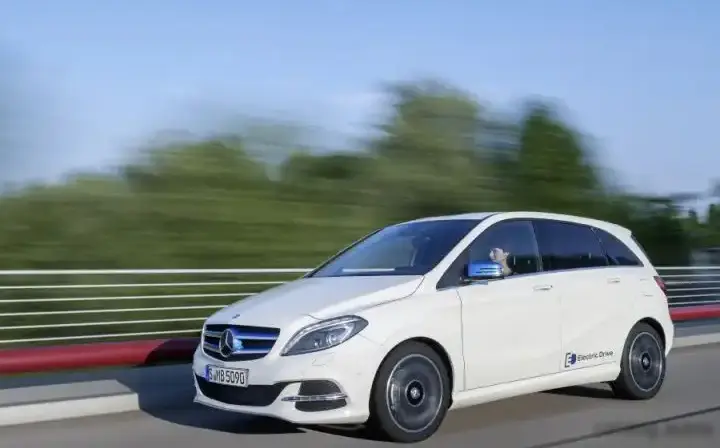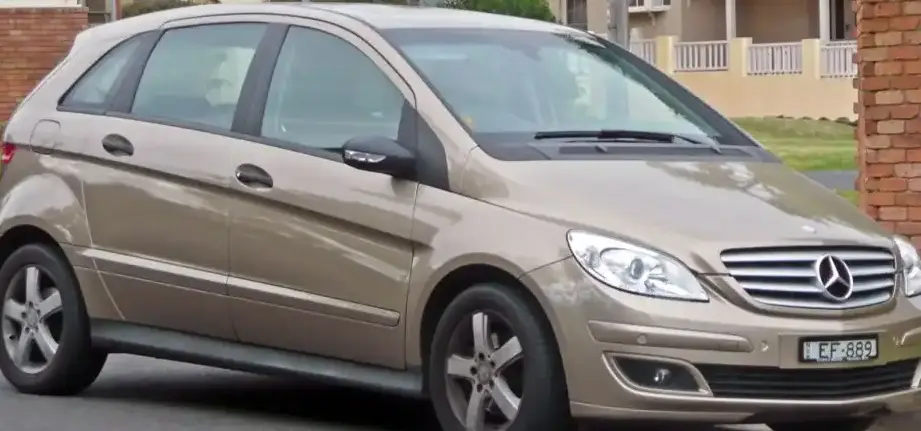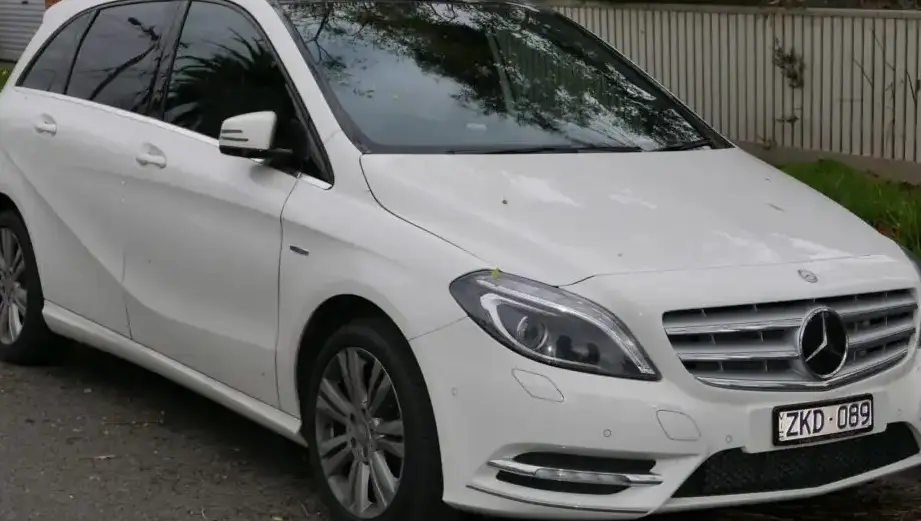
The Mercedes-Benz B 200, part of the W246 B-Class generation produced between 2011 and 2014, represented a significant entry point into the premium compact hatchback segment for Mercedes-Benz. Positioned as a more practical and accessible alternative to the A-Class, the B-Class offered increased interior space and versatility, appealing to families and those prioritizing functionality. The B 200 trim, powered by a 1.6-liter turbocharged engine producing 156 horsepower, served as a mid-range offering within the B-Class lineup, slotting between the base B 180 and the more powerful B 250 models. This variant aimed to strike a balance between fuel efficiency, performance, and affordability.
Technical Specifications
| Brand | Mercedes-Benz |
| Model | B-class |
| Generation | B-class (W246) |
| Type (Engine) | B 200 (156 Hp) |
| Start of production | 2011 |
| End of production | 2014 |
| Powertrain Architecture | Internal Combustion engine |
| Body type | Hatchback |
| Seats | 5 |
| Doors | 5 |
| Fuel consumption (urban) | 8.3-8.0 l/100 km (28.3 – 29.4 US mpg) |
| Fuel consumption (extra urban) | 5.0-4.7 l/100 km (47 – 50 US mpg) |
| Fuel consumption (combined) | 6.2-5.9 l/100 km (37.9 – 39.9 US mpg) |
| CO2 emissions | 144-137 g/km |
| Fuel Type | Petrol (Gasoline) |
| Acceleration 0 – 100 km/h | 8.6 sec |
| Acceleration 0 – 62 mph | 8.6 sec |
| Acceleration 0 – 60 mph | 8.2 sec |
| Maximum speed | 220 km/h (136.7 mph) |
| Emission standard | Euro 6 |
| Weight-to-power ratio | 8.9 kg/Hp |
| Weight-to-torque ratio | 5.6 kg/Nm |
| Power | 156 Hp @ 5300 rpm |
| Torque | 250 Nm @ 1250-4000 rpm (184.39 lb.-ft. @ 1250-4000 rpm) |
| Engine layout | Front, Transverse |
| Engine Model/Code | M 270.910 |
| Engine displacement | 1595 cm3 (97.33 cu. in.) |
| Number of cylinders | 4 |
| Engine configuration | Inline |
| Compression ratio | 10.3:1 |
| Number of valves per cylinder | 4 |
| Fuel injection system | Direct injection |
| Engine aspiration | Turbocharger, Intercooler |
| Engine oil capacity | 5.8 l (6.13 US qt | 5.1 UK qt) |
| Coolant capacity | 5.8 l (6.13 US qt | 5.1 UK qt) |
| Kerb Weight | 1395 kg (3075.45 lbs.) |
| Max. weight | 1960 kg (4321.06 lbs.) |
| Max load | 565 kg (1245.61 lbs.) |
| Trunk (boot) space – minimum | 488 l (17.23 cu. ft.) |
| Trunk (boot) space – maximum | 1547 l (54.63 cu. ft.) |
| Fuel tank capacity | 50 l (13.21 US gal | 11 UK gal) |
| Length | 4359 mm (171.61 in.) |
| Width | 1786 mm (70.31 in.) |
| Height | 1557 mm (61.3 in.) |
| Wheelbase | 2699 mm (106.26 in.) |
| Front track | 1552 mm (61.1 in.) |
| Rear track | 1549 mm (60.98 in.) |
| Minimum turning circle | 11 m (36.09 ft.) |
| Drivetrain Architecture | Front wheel drive |
| Number of gears | 6 gears, manual transmission |
| Front suspension | Independent type McPherson |
| Rear suspension | Trailing arm |
| Front brakes | Ventilated discs |
| Rear brakes | Disc |
| Assisting systems | ABS (Anti-lock braking system) |
| Steering type | Steering rack and pinion |
| Power steering | Electric Steering |
| Tires size | 205/55 R16 |
| Wheel rims size | 16 |
Powertrain & Engine Architecture
The heart of the B 200 is the M 270.910 1.6-liter inline-four cylinder engine. This engine is a key member of Mercedes-Benz’s modular engine family, known for its compact design and efficiency. It features direct fuel injection, a single turbocharger with an intercooler, and four valves per cylinder. The direct injection system allows for precise fuel delivery, optimizing combustion and contributing to both power and fuel economy. The turbocharger provides a significant boost in power output, overcoming the limitations of a relatively small displacement engine. The engine’s output of 156 horsepower at 5300 rpm and 250 Nm (184 lb-ft) of torque between 1250 and 4000 rpm provides adequate performance for everyday driving. The engine is typically paired with a 7-speed dual-clutch transmission (7G-DCT), although a 6-speed manual transmission was also available in some markets. The 7G-DCT offers smooth and quick gear changes, enhancing both performance and fuel efficiency.
Driving Characteristics
The B 200 offers a comfortable and refined driving experience. While not particularly sporty, the 1.6-liter turbo engine provides sufficient power for confident acceleration and highway cruising. The 0-60 mph time of around 8.2 seconds is respectable for a compact hatchback. The 7G-DCT transmission contributes to a seamless driving experience, with quick and precise gear changes. Compared to the base B 180, the B 200 offers a noticeable improvement in performance, particularly during overtaking maneuvers. However, it doesn’t match the more spirited performance of the B 250, which boasts a more powerful 2.0-liter engine. The suspension is tuned for comfort, absorbing bumps and imperfections in the road effectively. The steering is light and precise, making it easy to maneuver in urban environments.
Equipment & Trim Levels
The B 200 typically came equipped with a generous array of standard features, including automatic climate control, a multi-function steering wheel, and a high-quality audio system. Safety features such as ABS, ESP, and multiple airbags were also standard. Optional extras included a panoramic sunroof, leather upholstery, navigation system, and various driver assistance systems like lane keeping assist and blind spot monitoring. Interior upholstery was typically a combination of fabric and synthetic leather, with higher trim levels offering full leather options. The dashboard layout was modern and functional, with a central display screen providing access to various vehicle settings and infotainment features.
Chassis & Braking
The W246 B-Class utilizes a McPherson strut front suspension and a multi-link rear suspension, providing a good balance between comfort and handling. The front brakes are ventilated discs, while the rear brakes are solid discs. ABS (Anti-lock Braking System) and ESP (Electronic Stability Program) are standard features, enhancing safety and stability. The B 200’s chassis is relatively lightweight, contributing to its agility and fuel efficiency. The steering system is an electric power steering system, providing precise and responsive steering feel.
Market Reception & Comparison
The B 200 was generally well-received by automotive critics, who praised its practicality, comfort, and fuel efficiency. It was seen as a sensible and well-rounded option for buyers seeking a premium compact hatchback. Compared to its siblings, the B 200 offered a good balance between performance and economy. The B 180 was more affordable but lacked the B 200’s punch, while the B 250 offered more performance but came at a higher price. Fuel economy figures of around 38 mpg combined were competitive for its class. Reliability was generally good, although some owners reported minor issues with the electronic systems.
Legacy
The W246 B-Class, and specifically the B 200 variant, has proven to be a reliable and durable vehicle in the used car market. The M 270 engine, while not without its potential issues (such as occasional oil leaks and turbocharger wear), is generally considered to be a robust and long-lasting unit when properly maintained. Today, the B 200 represents a relatively affordable entry point into the Mercedes-Benz brand, offering a comfortable and practical driving experience with reasonable running costs. Its spacious interior and versatile design continue to appeal to buyers seeking a premium compact hatchback.