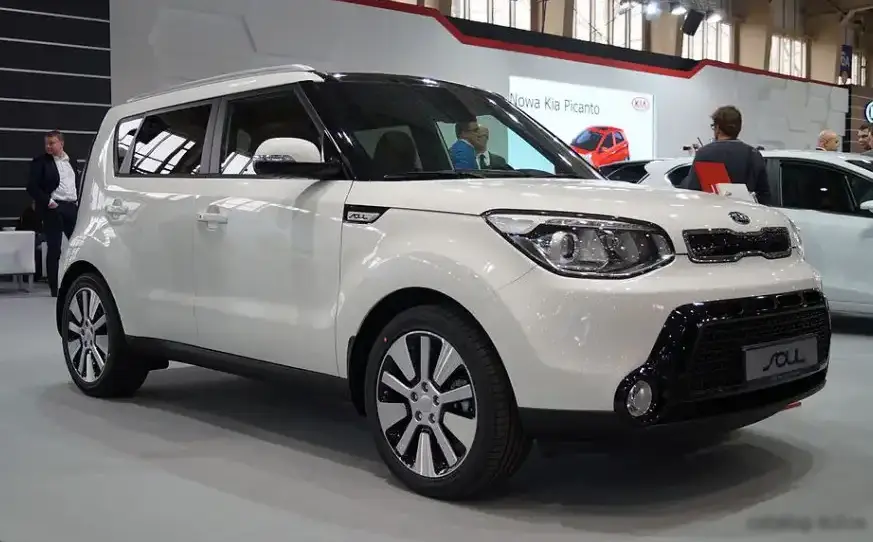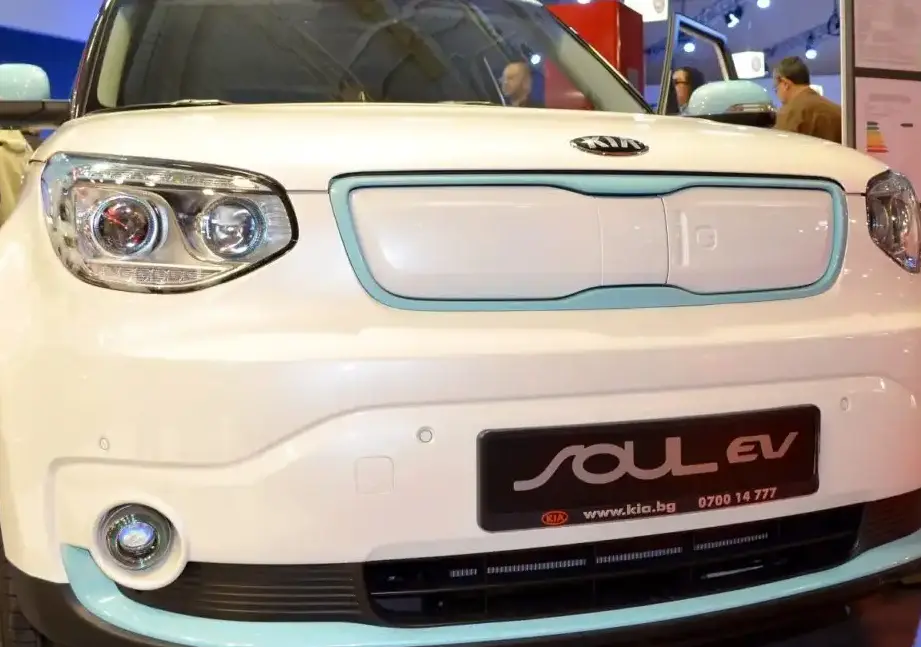
The Kia Soul II (facelift, introduced in March 2017) EV with the 33 kWh battery pack and 110 horsepower electric motor represents Kia’s early foray into the all-electric crossover market in North America and Europe. Positioned as an entry-level electric vehicle, it aimed to provide an affordable and practical option for consumers seeking a zero-emission vehicle with the Soul’s distinctive boxy styling. Production of this specific configuration continued through 2019, serving as a crucial stepping stone for Kia’s broader EV strategy. It falls within the second generation of the Soul (codenamed PS), benefitting from the facelift updates that included revised front and rear fascias, as well as interior enhancements.
Technical Specifications
| Brand | Kia |
| Model | Soul |
| Generation | Soul II (facelift 2016) |
| Type (Engine) | EV 33 kWh (110 Hp) |
| Start of production | March, 2017 |
| End of production | 2019 |
| Powertrain Architecture | BEV (Electric Vehicle) |
| Body type | Crossover |
| Seats | 5 |
| Doors | 5 |
| Fuel Type | Electricity |
| Acceleration 0 – 100 km/h | 11.3 sec |
| Acceleration 0 – 62 mph | 11.3 sec |
| Acceleration 0 – 60 mph | 10.7 sec |
| Maximum speed | 145 km/h (90.1 mph) |
| Weight-to-power ratio | 13.7 kg/Hp, 73.1 Hp/tonne |
| Weight-to-torque ratio | 5.3 kg/Nm, 189.4 Nm/tonne |
| Gross battery capacity | 33 kWh |
| Net (usable) battery capacity | 30 kWh |
| Battery voltage | 375 V |
| Battery technology | Lithium-polymer (LiPo) |
| Battery weight | 290 kg (639.34 lbs) |
| Battery location | Below the floor |
| All-electric range (NEDC) | 250 km (155.34 mi) |
| Average Energy consumption (NEDC) | 14.3 kWh/100 km (23.01 kWh/100 mi) |
| MPGe | 146 |
| km/kWh | 7 |
| mi/kWh | 4.3 |
| Electric motor power | 110 Hp @ 2730-8000 rpm |
| Electric motor Torque | 285 Nm @ 0-2730 rpm (210.21 lb.-ft. @ 0-2730 rpm) |
| Electric motor location | Front axle, Transverse |
| System power | 110 Hp @ 2730-8000 rpm |
| System torque | 285 Nm @ 0-2730 rpm (210.21 lb.-ft. @ 0-2730 rpm) |
| Kerb Weight | 1505 kg (3317.96 lbs) |
| Max. weight | 1960 kg (4321.06 lbs) |
| Max load | 455 kg (1003.1 lbs) |
| Trunk (boot) space – minimum | 281 l (9.92 cu. ft) |
| Trunk (boot) space – maximum | 891 l (31.47 cu. ft) |
| Length | 4140 mm (162.99 in) |
| Width | 1800 mm (70.87 in) |
| Width including mirrors | 2100 mm (82.68 in) |
| Height | 1593 mm (62.72 in) |
| Wheelbase | 2570 mm (101.18 in) |
| Front track | 1576 mm (62.05 in) |
| Rear (Back) track | 1585 mm (62.4 in) |
| Front overhang | 840 mm (33.07 in) |
| Rear overhang | 730 mm (28.74 in) |
| Ride height (ground clearance) | 151 mm (5.94 in) |
| Minimum turning circle | 10.6 m (34.78 ft) |
| Drivetrain Architecture | One electric motor drives the front wheels |
| Drive wheel | Front wheel drive |
| Number of gears | 1 |
| Gearbox type | Automatic transmission |
| Front suspension | Independent type McPherson, Transverse stabilizer |
| Rear suspension | Transverse stabilizer, Coil spring, Torsion |
| Front brakes | Ventilated discs, 300 mm |
| Rear brakes | Disc, 284 mm |
| Assisting systems | ABS (Anti-lock braking system) |
| Steering type | Steering rack and pinion |
| Power steering | Electric Steering |
| Tires size | 205/60 R16 |
| Wheel rims size | 6.5J x 16 |
Powertrain & Engine Architecture
The Kia Soul EV utilizes a front-wheel-drive, battery-electric vehicle (BEV) architecture. The heart of the system is a permanent magnet synchronous motor producing 110 horsepower and 285 Nm (210 lb-ft) of torque. This motor is transversely mounted at the front of the vehicle. Power is delivered through a single-speed automatic transmission, typical of most electric vehicles, providing seamless acceleration. The 33 kWh lithium-polymer battery pack is located under the floor, contributing to a lower center of gravity and maximizing interior space. The battery utilizes a 375V system. The motor controller manages the flow of energy between the battery and the motor, optimizing efficiency and performance. The Soul EV does not have a traditional internal combustion engine, exhaust system, or multi-speed gearbox.
Driving Characteristics
The 110 hp Soul EV, paired with the single-speed automatic transmission, delivers brisk, if not exhilarating, acceleration. The instant torque characteristic of electric motors provides responsive off-the-line performance, making it well-suited for urban driving. The 0-60 mph time of around 10.7 seconds is respectable for an entry-level EV. However, compared to the gasoline-powered Soul variants, particularly those with the more powerful engines, the EV feels noticeably slower, especially during highway merging and overtaking maneuvers. The single-gear ratio prioritizes efficiency over outright speed. Regenerative braking is a key feature, allowing drivers to recapture energy during deceleration, extending the vehicle’s range. The regenerative braking system offers adjustable levels, allowing drivers to customize the level of deceleration and energy recovery.
Equipment & Trim Levels
The 110 hp Soul EV typically came with a fairly comprehensive standard equipment list, reflecting Kia’s commitment to value. Standard features included air conditioning, a touchscreen infotainment system with Bluetooth connectivity, a rearview camera, and power windows and locks. Higher trim levels added features such as a larger touchscreen display, navigation, a premium audio system, and leather upholstery. Safety features such as ABS, electronic stability control, and multiple airbags were standard across all trims. Optional extras included a panoramic sunroof, heated front seats, and advanced driver-assistance systems like lane departure warning and forward collision warning.
Chassis & Braking
The Soul EV utilizes a McPherson strut front suspension and a torsion beam rear suspension. The suspension is tuned to provide a comfortable ride, prioritizing smoothness over sporty handling. The low-mounted battery pack contributes to a lower center of gravity, improving stability. The front brakes are ventilated discs measuring 300mm, while the rear brakes are solid discs measuring 284mm. ABS (Anti-lock Braking System) is standard. The steering is electrically assisted, providing light and precise control. The 205/60 R16 tires offer a balance of comfort and grip.
Market Reception & Comparison
The Kia Soul EV was generally well-received by critics as an affordable and practical entry into the electric vehicle market. Its distinctive styling and spacious interior were frequently praised. However, its limited range (around 155 miles on the NEDC cycle) was a common criticism, particularly compared to newer EVs with longer ranges. Compared to the gasoline-powered Soul variants, the EV offered significantly lower running costs due to the elimination of fuel expenses and reduced maintenance requirements. The 1.6L gasoline engine variant, while more affordable to purchase, lacked the instant torque and zero-emission benefits of the EV. The higher-powered 2.0L gasoline engine offered more performance but at the cost of increased fuel consumption.
Legacy
The Kia Soul EV (33 kWh) served as an important early model in Kia’s electrification journey. While the 33 kWh battery pack is now considered relatively small by modern standards, the powertrain proved to be reasonably reliable. Used examples are still available on the market, often at attractive price points. Common issues reported by owners include battery degradation over time, which can reduce the vehicle’s range. However, the Soul EV remains a viable option for buyers seeking an affordable and eco-friendly urban commuter vehicle. It paved the way for subsequent, more advanced Kia EVs with larger battery packs and improved performance.