
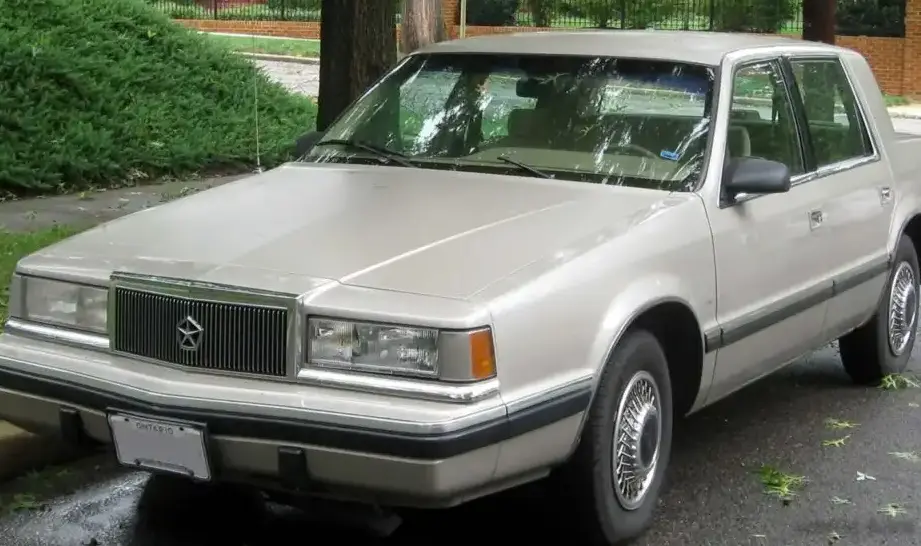
The Chrysler Dynasty 3.0L V6, produced from 1988 to 1993, represented Chrysler’s entry into the full-size sedan market, aiming to compete with domestic rivals like the Ford Crown Victoria and Chevrolet Caprice. Positioned as a more upscale offering than the Dodge Monaco (with which it shared a platform), the Dynasty sought to attract buyers desiring a comfortable, spacious, and relatively modern American sedan. The 3.0L V6 variant, producing 141 horsepower, served as the base engine option for the Dynasty during its production run, offering a balance of affordability and adequate performance for the intended market. It was built on the Y-body platform, shared with the Dodge Monaco and Eagle Premier.
Technical Specifications
| Brand | Chrysler |
| Model | Dynasty |
| Generation | Dynasty |
| Engine Type | 3.0L V6 (141 Hp) |
| Production Years | 1988 – 1993 |
| Powertrain Architecture | Internal Combustion Engine |
| Body Type | Sedan |
| Seats | 5 |
| Doors | 4 |
| Fuel Type | Petrol (Gasoline) |
| Power | 141 Hp |
| Engine Aspiration | Naturally Aspirated |
| Engine Oil Capacity | 3.9 l (4.12 US qt | 3.43 UK qt) |
| Coolant Capacity | 9.1 l (9.62 US qt | 8.01 UK qt) |
| Length | 4877 mm (192.01 in) |
| Width | 1740 mm (68.5 in) |
| Height | 1359 mm (53.5 in) |
| Wheelbase | 2649 mm (104.29 in) |
| Drivetrain | Front Wheel Drive |
| Gearbox | 4-speed Automatic Transmission |
Powertrain & Engine Architecture
The heart of the Dynasty 3.0L was Chrysler’s 3.0-liter V6 engine. This engine, internally designated as the 3.0L, was a 60-degree V6 featuring a cast iron block and aluminum cylinder heads. It utilized a multi-port fuel injection system, a relatively modern feature for the time, contributing to improved fuel efficiency and smoother operation compared to carbureted engines. The valvetrain employed two valves per cylinder (two intake, two exhaust) operated by a single overhead camshaft. While not a particularly high-revving engine, it delivered a respectable amount of torque for everyday driving. The 4-speed automatic transmission, a Chrysler-built Torqueflite A727 variant, was the sole transmission option for the 3.0L Dynasty. This transmission was known for its durability and smooth shifting, though it wasn’t particularly fuel-efficient by modern standards. The transmission’s gear ratios were geared towards comfortable cruising and acceleration rather than outright performance.
Driving Characteristics
The 141 horsepower and approximately 180 lb-ft of torque produced by the 3.0L V6 provided adequate, but not exhilarating, performance in the Dynasty. Acceleration from 0 to 60 mph was typically in the 10-11 second range. The automatic transmission contributed to a relaxed driving experience, with smooth gear changes. However, the transmission could sometimes feel hesitant during quick acceleration maneuvers. Compared to the optional 3.3L V6 available in later Dynasty models, the 3.0L felt noticeably less powerful, particularly when fully loaded with passengers and cargo. The 3.0L Dynasty prioritized comfort and ease of driving over sporty handling. The suspension was tuned for a soft ride, absorbing bumps and imperfections in the road effectively. Steering was light and responsive, making it easy to maneuver in city traffic.
Equipment & Trim Levels
The base Dynasty 3.0L came standard with a respectable array of features for its time. These included air conditioning, power steering, power brakes, cloth upholstery, a basic AM/FM stereo, and full wheel covers. Higher trim levels, such as the LE, added features like upgraded cloth or leather upholstery, power windows and locks, a more advanced stereo system, and cruise control. Optional extras included a sunroof, upgraded sound systems, and alloy wheels. The interior design of the Dynasty was fairly conservative, with a focus on functionality and spaciousness. The dashboard layout was straightforward and easy to use, with clearly labeled controls.
Chassis & Braking
The Dynasty utilized a front-wheel-drive layout with an independent front suspension featuring MacPherson struts and a multi-link rear suspension. This suspension setup provided a comfortable ride and decent handling characteristics. The base Dynasty 3.0L typically came equipped with front disc brakes and rear drum brakes. Higher trim levels often included rear disc brakes as standard equipment. Power assist was standard for both the steering and brakes. Stabilizer bars were fitted to both the front and rear suspensions to reduce body roll during cornering. The chassis was designed for durability and rigidity, providing a solid foundation for the vehicle.
Market Reception & Comparison
The Chrysler Dynasty 3.0L was generally well-received by automotive critics as a comfortable and spacious family sedan. However, its performance was often criticized as being underwhelming, particularly compared to some of its domestic rivals. Fuel economy was also considered average for the time. Compared to the higher-output 3.3L V6 Dynasty, the 3.0L offered a more affordable entry point into the model range, but at the expense of performance. The 3.0L Dynasty appealed to buyers who prioritized comfort, space, and affordability over sporty driving dynamics. It was a popular choice for families and those seeking a reliable and practical full-size sedan.
Legacy
The Chrysler Dynasty, and specifically the 3.0L V6 variant, has become a relatively uncommon sight on the roads today. While the 3.0L V6 engine proved to be reasonably durable, many examples have succumbed to age, rust, or neglect. Parts availability can be a challenge, although many components are still available through aftermarket suppliers. The Dynasty represents a significant chapter in Chrysler’s history, marking its attempt to compete in the full-size sedan segment. While it didn’t achieve the same level of success as some of its rivals, it remains a fondly remembered vehicle by those who owned and drove one. In the used car market, well-maintained examples of the Dynasty 3.0L can fetch modest prices, appealing to collectors and enthusiasts seeking a piece of 1980s/early 1990s American automotive history.
