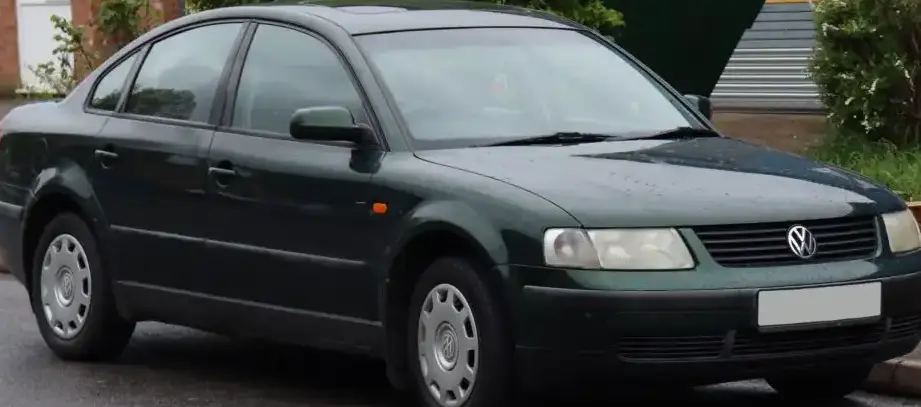
The Volkswagen Passat B5 1.8T 20V Automatic, produced between 1996 and 2000, represented a significant step forward for Volkswagen’s mid-size offering. Part of the B5 generation (internally designated Typ 3B), this variant occupied a middle ground in the Passat lineup, offering a balance between performance, fuel efficiency, and affordability. It was primarily marketed in Europe, and to a lesser extent in North America, as a comfortable and practical family sedan. This model was built on the Volkswagen Group’s PL45 platform, also known as the A4 platform, shared with the Audi A4 and Škoda Superb of the same era. The 1.8T engine, coupled with an automatic transmission, aimed to provide a more accessible entry point into the Passat range compared to the more powerful VR6 models.
Technical Specifications
| Brand | Volkswagen |
| Model | Passat |
| Generation | Passat (B5) |
| Type (Engine) | 1.8 T 20V (150 Hp) Automatic |
| Start of production | 1996 |
| End of production | 2000 |
| Powertrain Architecture | Internal Combustion engine |
| Body type | Sedan |
| Seats | 5 |
| Doors | 4 |
| Fuel consumption (urban) | 12.9 l/100 km (18.2 US mpg, 21.9 UK mpg) |
| Fuel consumption (extra urban) | 6.9 l/100 km (34.1 US mpg, 40.9 UK mpg) |
| Fuel consumption (combined) | 9.3 l/100 km (25.3 US mpg, 30.4 UK mpg) |
| Fuel Type | Petrol (Gasoline) |
| Acceleration 0 – 100 km/h | 10.5 sec |
| Acceleration 0 – 62 mph | 10.5 sec |
| Acceleration 0 – 60 mph | 10 sec |
| Maximum speed | 215 km/h (133.59 mph) |
| Weight-to-power ratio | 8.5 kg/Hp, 117.2 Hp/tonne |
| Weight-to-torque ratio | 6.1 kg/Nm, 164.1 Nm/tonne |
| Power | 150 Hp @ 5700 rpm |
| Power per litre | 84.2 Hp/l |
| Torque | 210 Nm @ 1750 rpm (154.89 lb.-ft. @ 1750 rpm) |
| Engine layout | Front, Longitudinal |
| Engine Model/Code | AEB, ANB, APU, ATW, AUG, AWT, BGC |
| Engine displacement | 1781 cm3 (108.68 cu. in.) |
| Number of cylinders | 4 |
| Engine configuration | Inline |
| Cylinder Bore | 81 mm (3.19 in.) |
| Piston Stroke | 86.4 mm (3.4 in.) |
| Compression ratio | 9.5:1 |
| Number of valves per cylinder | 5 |
| Fuel injection system | Multi-port manifold injection |
| Engine aspiration | Turbocharger |
| Valvetrain | DOHC |
| Engine oil capacity | 3.5 l (3.7 US qt | 3.08 UK qt) |
| Coolant | 7 l (7.4 US qt | 6.16 UK qt) |
| Kerb Weight | 1280 kg (2821.92 lbs.) |
| Max. weight | 1830 kg (4034.46 lbs.) |
| Max load | 550 kg (1212.54 lbs.) |
| Trunk (boot) space – minimum | 475 l (16.77 cu. ft.) |
| Trunk (boot) space – maximum | 745 l (26.31 cu. ft.) |
| Fuel tank capacity | 62 l (16.38 US gal | 13.64 UK gal) |
| Length | 4670 mm (183.86 in.) |
| Width | 1740 mm (68.5 in.) |
| Height | 1460 mm (57.48 in.) |
| Wheelbase | 2700 mm (106.3 in.) |
| Front track | 1498 mm (58.98 in.) |
| Rear (Back) track | 1500 mm (59.06 in.) |
| Drivetrain Architecture | The Internal combustion engine (ICE) drives the front wheels of the vehicle. |
| Drive wheel | Front wheel drive |
| Number of gears and type of gearbox | 5 gears, automatic transmission |
| Front suspension | Coil spring |
| Rear suspension | Coil spring |
| Front brakes | Ventilated discs |
| Rear brakes | Disc |
| Assisting systems | ABS (Anti-lock braking system) |
| Steering type | Steering rack and pinion |
| Power steering | Hydraulic Steering |
| Tires size | 195/65 R15 |
| Wheel rims size | 6J x 15 |
Powertrain & Engine Architecture
The heart of the Passat B5 1.8T Automatic is the 1.8-liter, 20-valve turbocharged inline-four engine. Engine codes commonly found in this variant include AEB, ANB, APU, ATW, AUG, AWT, and BGC, with slight variations in calibration and minor components. This engine utilizes a Bosch Motronic engine control unit (ECU) managing a multi-port fuel injection system. The turbocharger, typically a Garrett T25 or similar, provides a significant boost in power compared to naturally aspirated engines of similar displacement. The 20-valve cylinder head, featuring dual overhead camshafts (DOHC), enhances volumetric efficiency and contributes to the engine’s responsive nature. The automatic transmission used was typically a 5-speed unit, offering smooth shifts but sacrificing some of the performance and fuel economy achievable with a manual gearbox. This transmission was designed to handle the 210 Nm (155 lb-ft) of torque produced by the engine.
Driving Characteristics
The 1.8T Automatic Passat offered a comfortable and refined driving experience. Acceleration from 0-60 mph took around 10 seconds, which was adequate for everyday driving but noticeably slower than the VR6 models. The automatic transmission, while convenient, did result in some power loss and a less engaging driving feel. Gear ratios were tuned for fuel efficiency and smooth cruising, rather than outright performance. The turbocharger provided a noticeable surge of power in the mid-range, making overtaking maneuvers relatively easy. However, the engine could feel somewhat strained at higher speeds or when carrying a full load. Compared to the manual transmission versions, the automatic offered less driver control and a slightly less responsive feel.
Equipment & Trim Levels
The 1.8T Automatic typically came equipped with a reasonable level of standard features. These included power windows, power locks, air conditioning, and an AM/FM radio. Higher trim levels, often denoted by designations like “GL” or “GLS”, added features such as alloy wheels, a sunroof, upgraded upholstery (often cloth or leatherette), and a more sophisticated audio system. Optional extras included a CD changer, heated seats, and traction control. Interior appointments were generally functional and well-built, reflecting Volkswagen’s reputation for quality. The dashboard layout was clean and straightforward, with easy-to-read gauges.
Chassis & Braking
The Passat B5 featured an independent suspension system with coil springs and shock absorbers at all four wheels. The front suspension utilized MacPherson struts, while the rear employed a multi-link setup. This configuration provided a good balance between ride comfort and handling. Braking duties were handled by ventilated discs at the front and solid discs at the rear. Anti-lock Braking System (ABS) was standard equipment, enhancing safety and control during emergency braking situations. Stabilizer bars were fitted to both the front and rear axles to reduce body roll during cornering.
Market Reception & Comparison
The Passat B5 1.8T Automatic was generally well-received by automotive critics. It was praised for its comfortable ride, spacious interior, and refined engine. However, some reviewers noted that the automatic transmission detracted from the driving experience and that the engine, while capable, wasn’t as powerful as some of its competitors. Compared to the VR6 models, the 1.8T Automatic offered better fuel economy but less performance. Against rivals like the Ford Mondeo and Opel/Vauxhall Vectra, the Passat was often seen as a more premium offering, with a higher level of build quality and refinement. Fuel economy averaged around 25 mpg combined, making it a relatively economical choice for a mid-size sedan.
Legacy
The Passat B5 1.8T Automatic has proven to be a relatively reliable vehicle, although age and mileage can lead to common issues such as turbocharger failure, cooling system leaks, and electrical problems. The 1.8T engine is known for its durability, but regular maintenance is crucial to prevent issues. Today, these Passats are increasingly sought after by enthusiasts and collectors, particularly well-maintained examples. Parts availability is generally good, and the relatively simple mechanical design makes them relatively easy to repair. The B5 Passat 1.8T Automatic remains a popular choice for those seeking a comfortable, practical, and affordable used car with a touch of European flair.