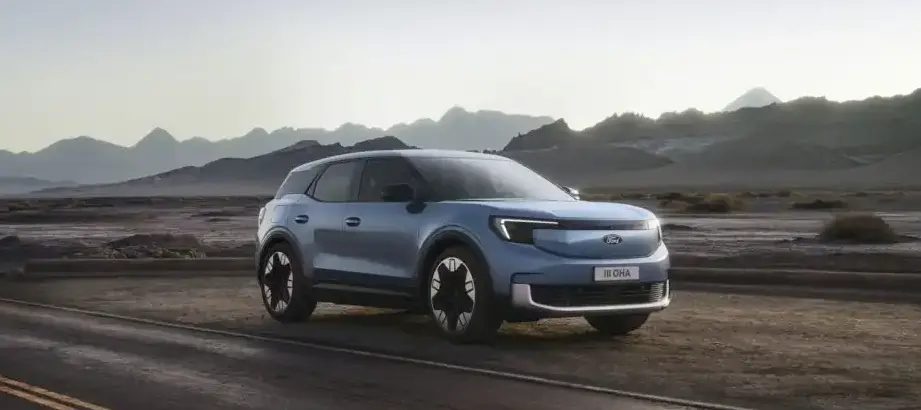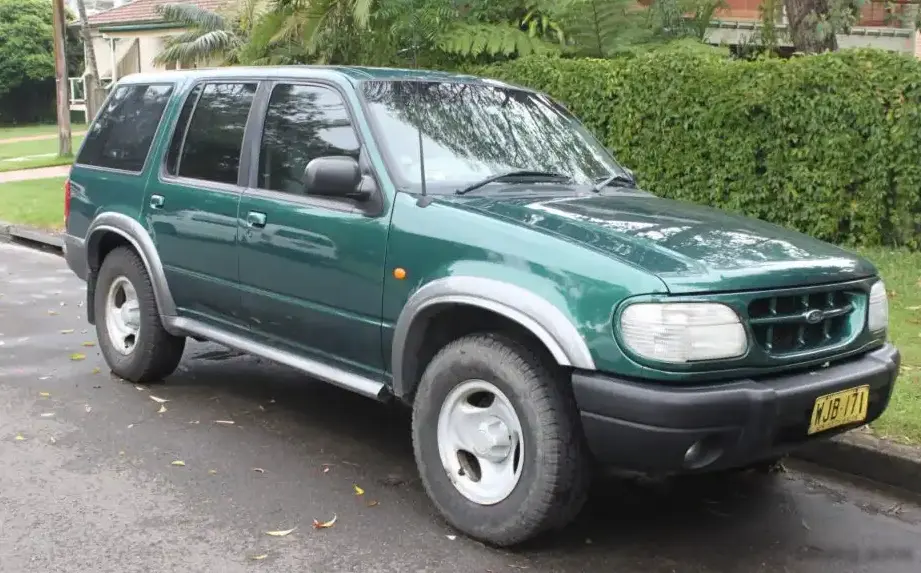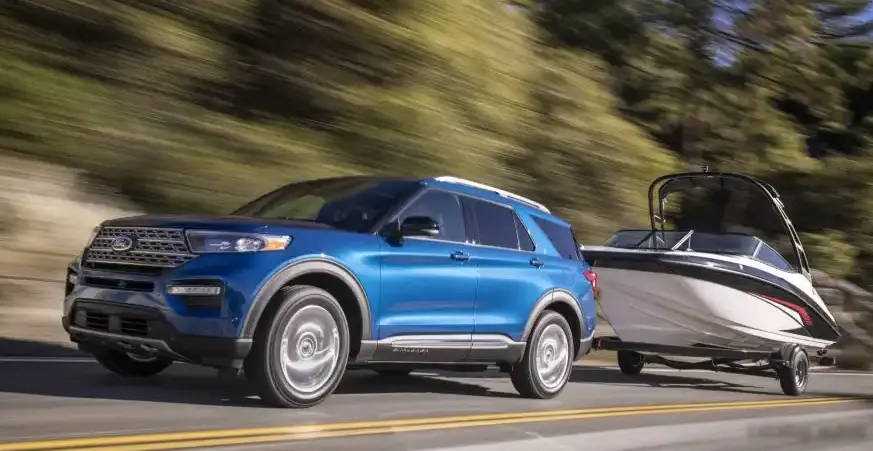
The Ford Explorer VI 3.0 EcoBoost V6 Plug-in Hybrid i-AWD Automatic, produced from September 2019 to February 2024, represents a significant step in Ford’s electrification strategy for its popular SUV. This variant, built on the sixth-generation Explorer platform, aimed to deliver both the practicality of a three-row SUV and the efficiency of a plug-in hybrid powertrain. Positioned as a premium offering within the Explorer lineup, it catered to buyers seeking a balance of performance, fuel economy, and advanced technology. The Explorer VI generation marked a shift to a rear-wheel-drive based architecture, a departure from previous front-wheel-drive Explorers, enhancing its driving dynamics and towing capacity.
Technical Specifications
| Brand | Ford |
| Model | Explorer |
| Generation | Explorer VI |
| Type (Engine) | 3.0 EcoBoost V6 (457 Hp) Plug-in Hybrid i-AWD Automatic |
| Start of production | September, 2019 |
| End of production | February, 2024 |
| Powertrain Architecture | PHEV (Plug-in Hybrid Electric Vehicle) |
| Body type | SUV |
| Seats | 7 |
| Doors | 5 |
| Combined fuel consumption (WLTP) | 3.1 l/100 km (75.9 US mpg, 91.1 UK mpg, 32.3 km/l) |
| CO2 emissions (WLTP) | 71 g/km |
| Fuel consumption (NEDC) – combined | 2.9 l/100 km (81.1 US mpg, 97.4 UK mpg, 34.5 km/l) |
| CO2 emissions (NEDC) | 66 g/km |
| Fuel Type | Petrol / electricity |
| Acceleration 0 – 100 km/h | 6 sec |
| Acceleration 0 – 62 mph | 6 sec |
| Acceleration 0 – 60 mph | 5.7 sec |
| Maximum speed | 230 km/h (142.92 mph) |
| Emission standard | Euro 6d-TEMP-EVAP-ISC |
| Weight-to-power ratio | 5.2 kg/Hp, 191.1 Hp/tonne |
| Weight-to-torque ratio | 2.9 kg/Nm, 345 Nm/tonne |
| Gross battery capacity | 13.6 kWh |
| Battery technology | Lithium-ion (Li-Ion) |
| Battery location | Under the rear seats |
| All-electric range (WLTP) | 42 km (26.1 mi) |
| Average Energy consumption (WLTP) | 21.99 kWh/100 km (35.39 kWh/100 mi, 95 MPGe, 4.5 km/kWh, 2.8 mi/kWh) |
| Average Energy consumption (NEDC) | 20.53 kWh/100 km (33.04 kWh/100 mi, 102 MPGe, 4.9 km/kWh, 3 mi/kWh) |
| Electric motor power | 102 Hp |
| Electric motor Torque | 300 Nm (221.27 lb.-ft.) |
| Electric motor location | Between the combustion engine and the transmission |
| System power | 457 Hp @ 5750 rpm |
| System torque | 825 Nm @ 2500 rpm (608.49 lb.-ft. @ 2500 rpm) |
| Power | 349 Hp @ 5750 rpm |
| Torque | 555 Nm @ 3500 rpm (409.35 lb.-ft. @ 3500 rpm) |
| Engine layout | Front, Longitudinal |
| Engine Model/Code | BQWA |
| Engine displacement | 2956 cm3 (180.39 cu. in.) |
| Number of cylinders | 6 |
| Engine configuration | V-engine |
| Cylinder Bore | 85.4 mm (3.36 in.) |
| Piston Stroke | 86 mm (3.39 in.) |
| Compression ratio | 9.5:1 |
| Number of valves per cylinder | 4 |
| Fuel injection system | Direct injection |
| Engine aspiration | Twin-Turbo, Intercooler |
| Valvetrain | DOHC |
| Engine oil capacity | 5.68 l (6 US qt | 5 UK qt) |
| Coolant | 18.3 l (19.34 US qt | 16.1 UK qt) |
| Kerb Weight | 2391 kg (5271.25 lbs.) |
| Max. weight | 3160 kg (6966.61 lbs.) |
| Max load | 769 kg (1695.35 lbs.) |
| Trunk (boot) space – minimum | 330 l (11.65 cu. ft.) |
| Trunk (boot) space – maximum | 2274 l (80.31 cu. ft.) |
| Fuel tank capacity | 71.8 l (18.97 US gal | 15.79 UK gal) |
| Max. roof load | 75 kg (165.35 lbs.) |
| Permitted trailer load with brakes (8%) | 2500 kg (5511.56 lbs.) |
| Permitted trailer load with brakes (12%) | 2500 kg (5511.56 lbs.) |
| Permitted trailer load without brakes | 750 kg (1653.47 lbs.) |
| Permitted towbar download | 100 kg (220.46 lbs.) |
| Length | 5049 mm (198.78 in.) |
| Width | 2004 mm (78.9 in.) |
| Width with mirrors folded | 2107 mm (82.95 in.) |
| Width including mirrors | 2285 mm (89.96 in.) |
| Height | 1778 mm (70 in.) |
| Wheelbase | 3025 mm (119.09 in.) |
| Ride height (ground clearance) | 204 mm (8.03 in.) |
| Minimum turning circle (turning diameter) | 12.6 m (41.34 ft.) |
| Front suspension | Independent, type McPherson with coil spring and anti-roll bar |
| Rear suspension | Independent multi-link spring suspension with stabilizer |
| Front brakes | Ventilated discs |
| Rear brakes | Disc |
| Gearbox | 10 gears, automatic transmission |
Powertrain & Engine Architecture
At the heart of the Explorer VI Plug-in Hybrid lies the 3.0-liter EcoBoost V6 engine, designated with the code BQWA. This engine utilizes direct fuel injection and twin-turbocharging to produce 349 horsepower and 555 Nm (409.35 lb-ft) of torque. The addition of an electric motor, producing 102 horsepower and 300 Nm (221.27 lb-ft) of torque, brings the total system output to a combined 457 horsepower and 825 Nm (608.49 lb-ft). The electric motor is integrated between the engine and the 10-speed automatic transmission. The 13.6 kWh lithium-ion battery pack is strategically positioned under the rear seats, minimizing impact on passenger space. The powertrain operates in various modes, including fully electric, hybrid, and gasoline-only, automatically optimizing for efficiency or performance. The 10-speed automatic transmission, a key component of Ford’s EcoBoost strategy, provides a wide range of gear ratios for smooth acceleration and efficient cruising.
Driving Characteristics
The 3.0 EcoBoost V6 Plug-in Hybrid delivers a noticeably different driving experience compared to the standard gasoline-powered Explorers. The instant torque from the electric motor provides brisk acceleration, especially from a standstill. The combined output allows for a 0-60 mph time of around 5.7 seconds. In electric-only mode, the Explorer offers a quiet and refined driving experience, suitable for short commutes. The transition between electric and gasoline power is generally seamless. The 10-speed transmission contributes to smooth gear changes, although some drivers have noted occasional hunting for the optimal gear in hybrid mode. Compared to the higher-output 3.5L EcoBoost V6, the plug-in hybrid prioritizes efficiency over outright performance, but still offers ample power for everyday driving and towing.
Equipment & Trim Levels
The Explorer VI 3.0 EcoBoost V6 Plug-in Hybrid typically came equipped with a high level of standard features. These included leather upholstery, heated and ventilated front seats, a premium sound system, a large touchscreen infotainment system with Apple CarPlay and Android Auto compatibility, and a suite of advanced driver-assistance systems (ADAS) such as adaptive cruise control, lane-keeping assist, and automatic emergency braking. Optional extras often included a panoramic sunroof, upgraded wheels, and a rear-seat entertainment system. The trim level often dictated the availability of certain features, with higher trims offering more luxurious appointments and advanced technology.
Chassis & Braking
The Explorer VI utilizes a rear-wheel-drive based chassis, providing improved handling and balance compared to previous generations. The suspension consists of an independent McPherson strut setup at the front and an independent multi-link setup at the rear, both featuring coil springs and anti-roll bars. The braking system employs ventilated discs at the front and solid discs at the rear. The i-AWD system intelligently distributes torque between the front and rear axles, enhancing traction in various driving conditions. The Explorer’s weight, approximately 2391 kg (5271.25 lbs), is managed effectively by the suspension and braking systems, providing a comfortable and controlled ride.
Market Reception & Comparison
The Explorer VI Plug-in Hybrid was generally well-received by critics, who praised its fuel efficiency, comfortable ride, and spacious interior. However, some reviewers noted that the hybrid system added complexity and weight, and that the all-electric range of 42 km (26.1 mi) was relatively limited compared to some competitors. Compared to the standard gasoline-powered Explorer, the plug-in hybrid offered significantly better fuel economy, particularly for drivers who frequently commute short distances and can take advantage of electric-only driving. Compared to other plug-in hybrid SUVs in its class, the Explorer offered a competitive combination of performance, space, and features.
Legacy
The Ford Explorer VI 3.0 EcoBoost V6 Plug-in Hybrid represents an important step in Ford’s transition to electrified vehicles. While production ended in February 2024, the powertrain has proven to be relatively reliable, with few widespread issues reported. On the used car market, these Explorers hold their value reasonably well, appealing to buyers seeking a fuel-efficient and well-equipped SUV. The integration of a plug-in hybrid system into a popular SUV like the Explorer demonstrated Ford’s commitment to offering more sustainable transportation options to a wider audience.