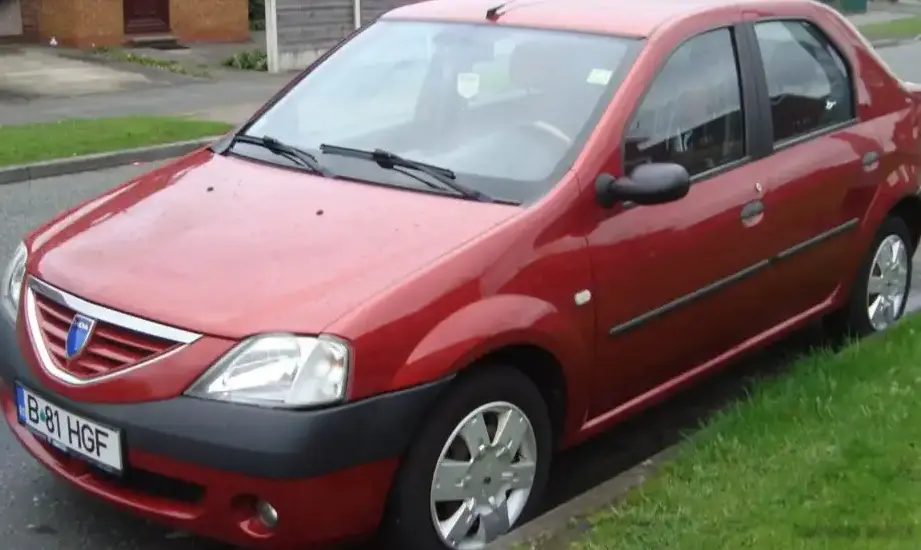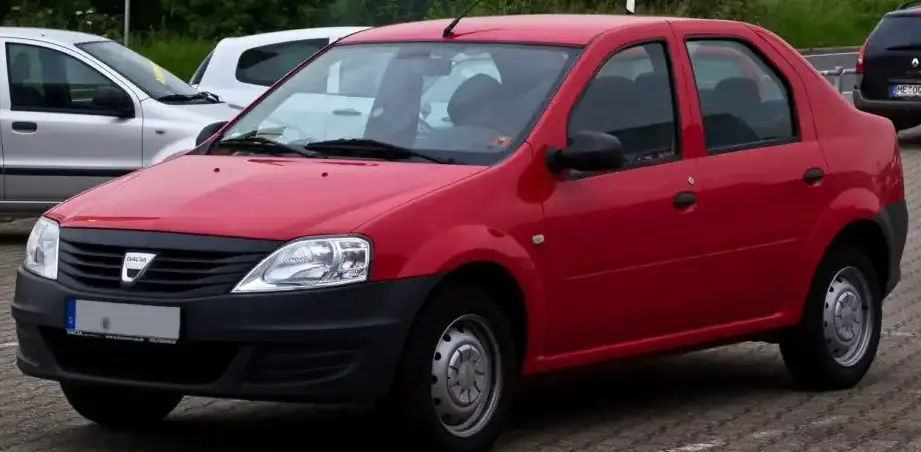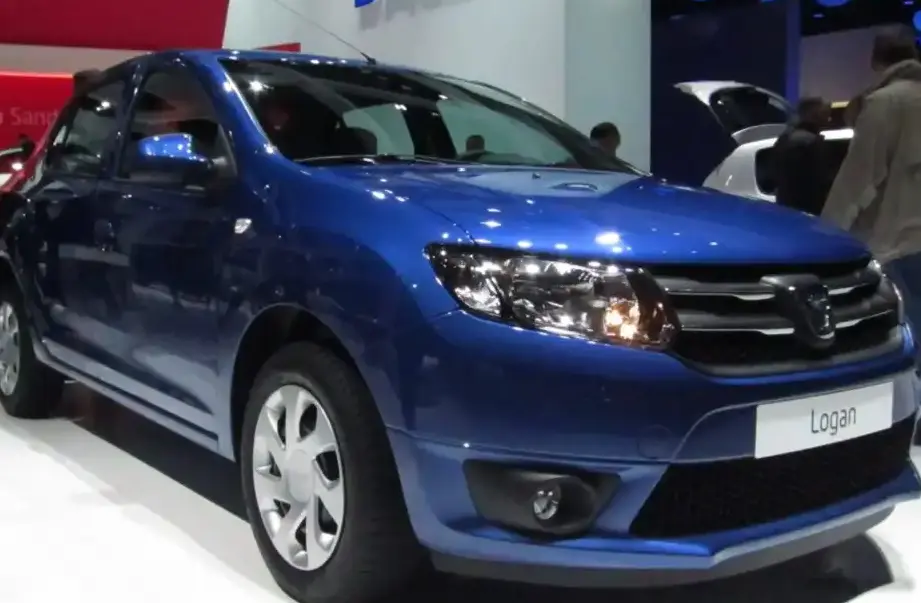
The Dacia Logan II 1.2 (75 hp) represents an entry-level offering within the second generation of Dacia’s popular Logan sedan. Produced from 2012 to 2015, this variant was primarily aimed at budget-conscious buyers in European markets, where the Logan established itself as a benchmark for affordable transportation. It occupied the base trim level of the Logan II range, positioned below the 0.9 TCe and 1.5 dCi models. The Logan II, built on the shared Renault-Nissan B0 platform, aimed to provide practical, no-frills motoring with a focus on space and affordability.
Technical Specifications
| Brand | Dacia |
| Model | Logan |
| Generation | Logan II |
| Type (Engine) | 1.2 (75 Hp) |
| Start of production | 2012 |
| End of production | 2015 |
| Powertrain Architecture | Internal Combustion engine |
| Body type | Sedan |
| Seats | 5 |
| Doors | 4 |
| Fuel consumption (urban) | 7.7 l/100 km (30.5 US mpg) |
| Fuel consumption (extra urban) | 4.9 l/100 km (48 US mpg) |
| Fuel consumption (combined) | 5.9 l/100 km (39.9 US mpg) |
| Fuel Type | Petrol (Gasoline) |
| Acceleration 0 – 100 km/h | 14.5 sec |
| Acceleration 0 – 62 mph | 14.5 sec |
| Acceleration 0 – 60 mph | 13.8 sec |
| Maximum speed | 156 km/h (96.93 mph) |
| Weight-to-power ratio | 13 kg/Hp |
| Weight-to-torque ratio | 9.1 kg/Nm |
| Power | 75 Hp @ 5500 rpm |
| Torque | 107 Nm @ 4250 rpm (78.92 lb.-ft. @ 4250 rpm) |
| Engine layout | Front, Transverse |
| Engine Model/Code | D4F 732 |
| Engine displacement | 1149 cm3 (70.12 cu. in.) |
| Number of cylinders | 4 |
| Engine configuration | Inline |
| Number of valves per cylinder | 4 |
| Fuel injection system | Multi-port manifold injection |
| Engine aspiration | Naturally aspirated |
| Engine oil capacity | 4 l (4.23 US qt | 3.52 UK qt) |
| Coolant capacity | 4.5 l (4.76 US qt | 3.96 UK qt) |
| Kerb Weight | 974 kg (2147.3 lbs) |
| Max. weight | 1505 kg (3317.96 lbs) |
| Max load | 531 kg (1170.65 lbs) |
| Fuel tank capacity | 50 l (13.21 US gal | 11 UK gal) |
| Length | 4347 mm (171.14 in) |
| Width | 1732 mm (68.19 in) |
| Height | 1517 mm (59.72 in) |
| Wheelbase | 2634 mm (103.7 in) |
| Drivetrain Architecture | Front wheel drive |
| Number of gears | 5 |
| Gearbox type | Manual transmission |
| Assisting systems | ABS (Anti-lock braking system) |
| Steering type | Steering rack and pinion |
| Tires size | 185/65 R15 |
| Wheel rims size | 15 |
Introduction
The Dacia Logan II 1.2 (75 hp) was introduced as a cost-effective option within the Logan II range, which represented a significant step forward from the original Logan in terms of design, refinement, and available features. The second-generation Logan, launched in 2012, aimed to broaden the car’s appeal beyond purely utilitarian buyers. While retaining the spaciousness and practicality that made the first Logan a success, the II offered improved build quality and a more modern interior. This 1.2-liter variant was specifically targeted at drivers prioritizing fuel efficiency and low running costs over outright performance.
Powertrain & Engine Architecture
At the heart of the Logan II 1.2 (75 hp) lies the D4F 732 engine, a 1.2-liter inline-four cylinder petrol engine. This engine is part of the Dacia-Renault family of engines and utilizes a multi-point fuel injection system. The engine features a single overhead camshaft (SOHC) valvetrain with four valves per cylinder. The 1149cc displacement provides a modest 75 horsepower at 5500 rpm and 107 Nm (78.92 lb-ft) of torque at 4250 rpm. The engine is naturally aspirated, meaning it doesn’t employ a turbocharger or supercharger. The engine is paired with a five-speed manual transmission, chosen for its simplicity and efficiency. This transmission features a conventional gear layout, optimized for fuel economy rather than sporty acceleration.
Driving Characteristics
The driving experience in the Logan II 1.2 (75 hp) is best described as functional and unpretentious. Acceleration is leisurely, taking approximately 14.5 seconds to reach 62 mph (100 km/h). The engine feels strained when pushed hard, and overtaking maneuvers require careful planning. The five-speed manual transmission is light and easy to use, but the long gearing emphasizes fuel economy over responsiveness. The power delivery is relatively linear, but the limited torque output means that the engine needs to be revved to extract the most performance. Compared to the more powerful 0.9 TCe and 1.5 dCi variants, the 1.2-liter engine feels significantly underpowered, particularly when fully loaded or tackling steep inclines.
Equipment & Trim Levels
The 1.2 (75 hp) Logan II typically came with a basic level of equipment, reflecting its position as the entry-level model. Standard features generally included power steering, central locking, electric front windows, and an ABS anti-lock braking system. Interior upholstery was typically cloth, and the dashboard featured a simple, functional design. Optional extras, such as air conditioning, a radio/CD player, and power rear windows, were available at an additional cost. Higher trim levels offered upgrades like alloy wheels, fog lights, and more sophisticated audio systems, but these were not typically fitted to the base 1.2-liter model.
Chassis & Braking
The Logan II’s chassis is a relatively simple design, prioritizing robustness and affordability. The front suspension utilizes MacPherson struts, while the rear suspension employs a torsion beam axle. This setup provides a comfortable ride quality, but it doesn’t offer the same level of handling precision as more sophisticated suspension systems. The braking system consists of disc brakes on the front wheels and drum brakes on the rear wheels. ABS is standard, providing enhanced braking performance in emergency situations. The steering is a rack-and-pinion system, offering light and easy steering feel.
Market Reception & Comparison
The Dacia Logan II 1.2 (75 hp) was generally well-received by critics as a remarkably affordable and practical vehicle. However, the engine’s lack of power was a common criticism. Reviewers noted that the engine felt underpowered, particularly when carrying passengers or luggage. Fuel economy was praised, with combined fuel consumption figures averaging around 39.9 US mpg. Compared to the 0.9 TCe turbo engine, the 1.2-liter engine offered significantly less performance but was generally considered more reliable due to its simpler design. The 1.5 dCi diesel engine provided superior fuel economy and torque but came at a higher purchase price.
Legacy
The Dacia Logan II 1.2 (75 hp) has proven to be a reliable and durable vehicle, particularly in markets where affordability is a key consideration. The D4F engine, while not particularly powerful, is known for its robustness and relatively low maintenance costs. On the used car market, these Logans represent excellent value for money, offering a spacious and practical vehicle at a very affordable price. However, potential buyers should be aware of the engine’s limited power output and the basic level of equipment. The Logan II 1.2 remains a popular choice for drivers seeking a no-frills, economical mode of transportation.