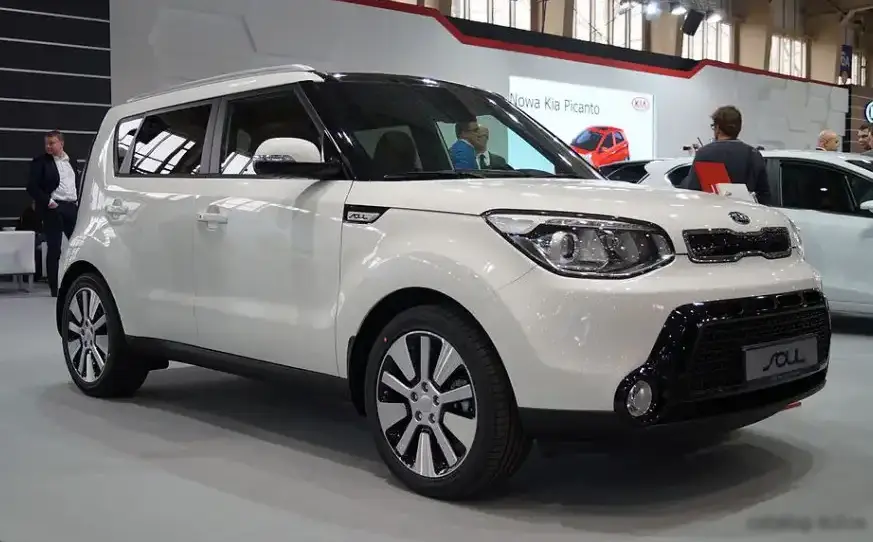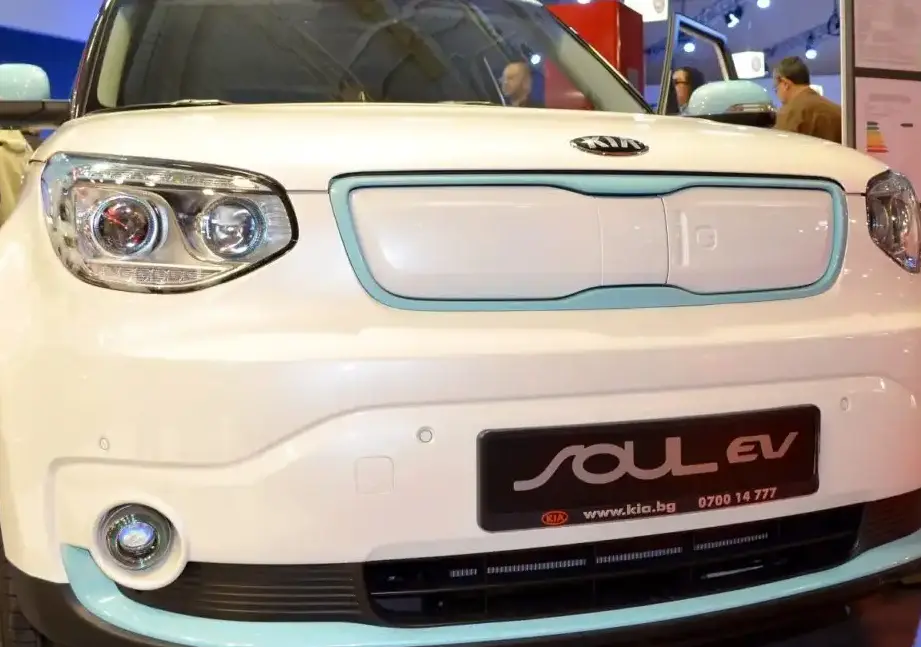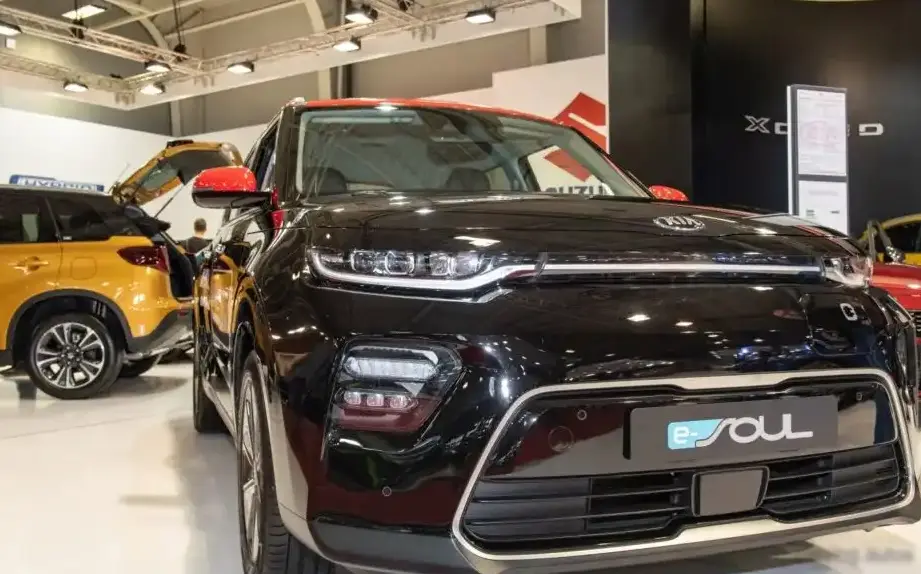
The Kia Soul III e-Soul 42 kWh, producing 136 horsepower, represents Kia’s entry into the all-electric crossover market. Introduced in 2019 and continuing through May 2022, this variant played a crucial role in establishing the Soul as a viable and affordable electric vehicle option, particularly in markets receptive to compact, urban-focused EVs. It’s built on the third-generation Soul platform (Soul III), sharing its basic architecture with gasoline-powered Soul models but distinguished by its fully electric powertrain. The e-Soul 42 kWh served as the base trim level for the electric Soul range, offering a balance of range, performance, and price.
Technical Specifications
| Brand | Kia |
| Model | Soul |
| Generation | Soul III |
| Type (Engine) | e-Soul 42 kWh (136 Hp) |
| Start of production | 2019 |
| End of production | May, 2022 |
| Powertrain Architecture | BEV (Electric Vehicle) |
| Body type | Crossover |
| Seats | 5 |
| Doors | 5 |
| Fuel Type | Electricity |
| Acceleration 0 – 100 km/h | 9.9 sec |
| Acceleration 0 – 62 mph | 9.9 sec |
| Acceleration 0 – 60 mph | 9.4 sec |
| Maximum speed | 155 km/h (96.31 mph) |
| Weight-to-power ratio | 11.3 kg/Hp, 88.6 Hp/tonne |
| Weight-to-torque ratio | 3.9 kg/Nm, 257.3 Nm/tonne |
| Gross battery capacity | 42 kWh |
| Net (usable) battery capacity | 39.2 kWh |
| Battery voltage | 327 V |
| Battery technology | Lithium-polymer (LiPo) |
| Battery weight | 315 kg (694.46 lbs) |
| Battery location | Below the floor |
| All-electric range | 276 km (171.5 mi) |
| Average Energy consumption | 15.6 kWh/100 km (25.11 kWh/100 mi) |
| MPGe | 134 |
| km/kWh | 6.4 |
| mi/kWh | 4 |
| Electric motor power | 136 Hp @ 2600-8000 rpm |
| Electric motor Torque | 395 Nm @ 0-2400 rpm (291.34 lb.-ft. @ 0-2400 rpm) |
| Electric motor model/code | EM16 |
| Electric motor location | Front axle, Transverse |
| Electric motor type | Synchronous |
| System power | 136 Hp @ 2600-8000 rpm |
| System torque | 395 Nm @ 0-2400 rpm (291.34 lb.-ft. @ 0-2400 rpm) |
| Kerb Weight | 1535 kg (3384.1 lbs) |
| Max. weight | 2025 kg (4464.36 lbs) |
| Max load | 490 kg (1080.27 lbs) |
| Trunk (boot) space – minimum | 315 l (11.12 cu. ft) |
| Trunk (boot) space – maximum | 1339 l (47.29 cu. ft) |
| Max. roof load | 100 kg (220.46 lbs) |
| Length | 4195 mm (165.16 in) |
| Width | 1800 mm (70.87 in) |
| Height | 1605 mm (63.19 in) |
| Wheelbase | 2600 mm (102.36 in) |
| Front track | 1565 mm (61.61 in) |
| Rear (Back) track | 1575 mm (62.01 in) |
| Front overhang | 865 mm (34.06 in) |
| Rear overhang | 730 mm (28.74 in) |
| Ride height (ground clearance) | 155 mm (6.1 in) |
| Minimum turning circle | 10.6 m (34.78 ft) |
| Drivetrain Architecture | One electric motor drives the front wheels |
| Drive wheel | Front wheel drive |
| Number of gears | 1 |
| Gearbox type | Automatic transmission |
| Front suspension | Independent type McPherson |
| Rear suspension | Independent multi-link suspension |
| Front brakes | Ventilated discs, 305 mm |
| Rear brakes | Disc, 300 mm |
| Assisting systems | ABS (Anti-lock braking system) |
| Steering type | Steering rack and pinion |
| Power steering | Electric Steering |
| Tires size | 215/55 R17 |
| Wheel rims size | 7J x 17 |
Powertrain & Engine Architecture
The e-Soul 42 kWh is powered by a single synchronous electric motor, designated EM16, producing 136 horsepower and 291 lb-ft of torque. This motor is transversely mounted at the front of the vehicle, driving the front wheels. The motor’s power delivery is characterized by its instant torque, typical of electric motors, providing brisk acceleration from a standstill. The 42 kWh lithium-polymer battery pack is located under the floor of the vehicle, contributing to a low center of gravity and maximizing interior space. The battery utilizes a 327V system. The single-speed automatic transmission is a direct-drive system, common in EVs, simplifying the powertrain and maximizing efficiency. The e-Soul does not have a traditional multi-gear transmission.
Driving Characteristics
The 136 hp e-Soul 42 kWh offers adequate performance for urban and suburban driving. Acceleration to 60 mph takes approximately 9.4 seconds, and it reaches a top speed of 96 mph. While not particularly sporty, the instant torque provides responsive acceleration for merging and overtaking. Compared to higher-trim e-Soul variants with larger battery packs and more powerful motors, the 42 kWh model offers a more modest driving experience. The single-speed transmission provides seamless acceleration, but lacks the gear changes found in conventional automatic transmissions. The low center of gravity, thanks to the underfloor battery pack, contributes to stable handling.
Equipment & Trim Levels
The e-Soul 42 kWh typically came standard with features such as a touchscreen infotainment system, Apple CarPlay and Android Auto compatibility, a rearview camera, and a suite of driver-assistance technologies including automatic emergency braking and lane-keeping assist. Interior upholstery was typically cloth, with available upgrades to synthetic leather. Optional extras included a premium audio system, a sunroof, and heated front seats. The trim level served as the entry point to the e-Soul range, offering a good balance of features and affordability.
Chassis & Braking
The e-Soul utilizes an independent McPherson strut suspension at the front and an independent multi-link suspension at the rear, providing a comfortable ride quality. Front brakes are ventilated discs measuring 305mm, while rear brakes are solid discs measuring 300mm. The vehicle is equipped with an Anti-lock Braking System (ABS) as standard. Steering is provided by an electric power steering rack and pinion system. The suspension tuning is geared towards comfort rather than sporty handling, prioritizing a smooth ride over sharp cornering.
Market Reception & Comparison
The Kia Soul III e-Soul 42 kWh was generally well-received by critics as an affordable and practical electric vehicle. Its quirky styling and spacious interior were often praised. However, its range of 171.5 miles was considered somewhat limited compared to some competitors. Fuel economy, measured in MPGe, was rated at 134, and energy consumption at 25.11 kWh per 100 miles. Compared to gasoline-powered Soul models, the e-Soul offered significantly lower running costs but a higher initial purchase price. Compared to the larger-battery e-Soul variants, the 42 kWh model offered a lower price point but reduced range and performance.
Legacy
The Kia Soul III e-Soul 42 kWh has proven to be a relatively reliable electric vehicle, with the electric powertrain exhibiting good longevity. The lithium-polymer battery pack has demonstrated reasonable degradation over time, although battery health can vary depending on usage and charging habits. On the used car market, the e-Soul 42 kWh remains a popular choice for buyers seeking an affordable and practical electric vehicle. Its compact size, spacious interior, and distinctive styling continue to appeal to a wide range of buyers. The e-Soul helped to normalize electric vehicle ownership and paved the way for Kia’s continued expansion into the EV market.