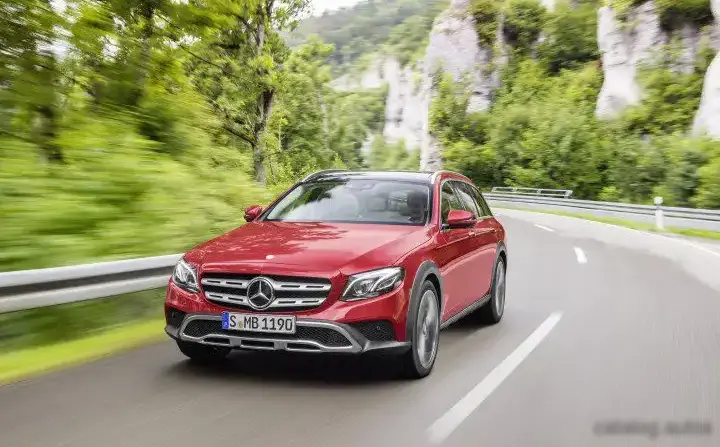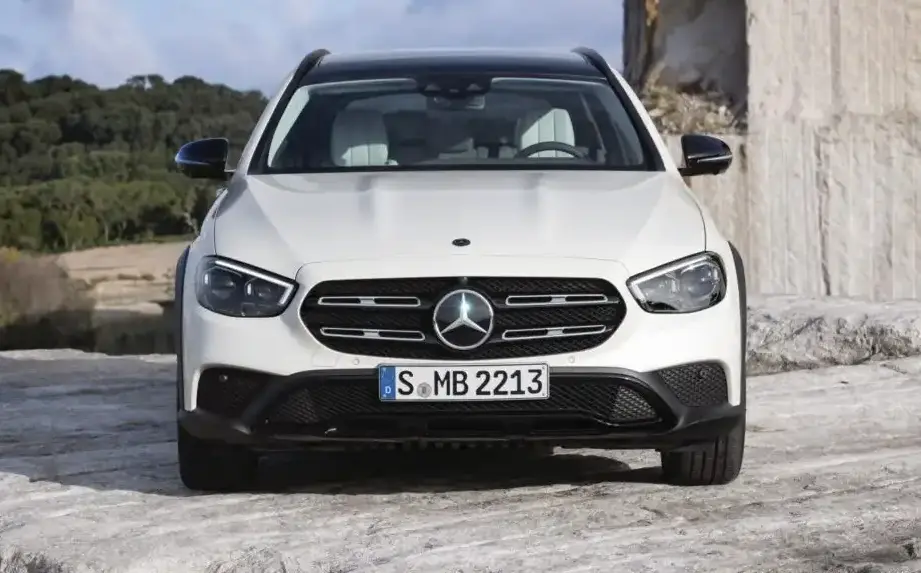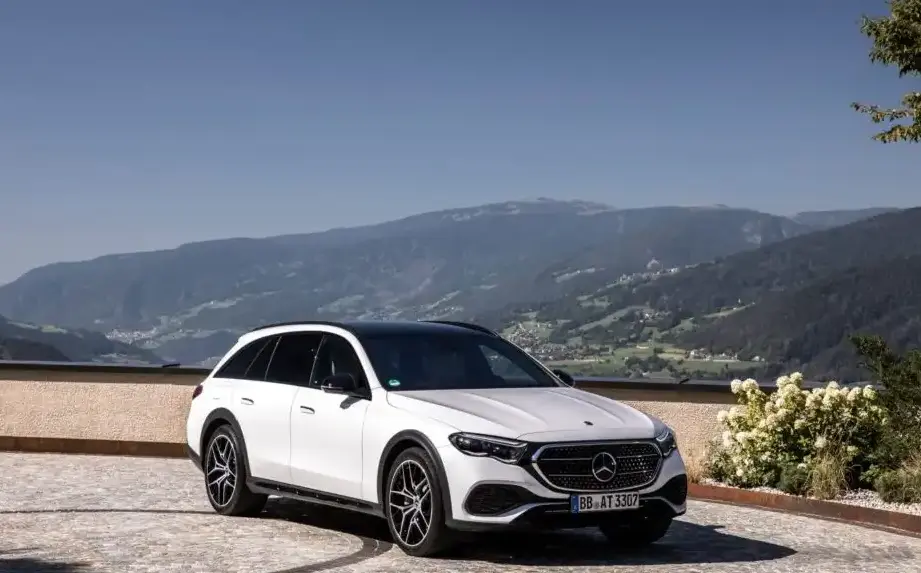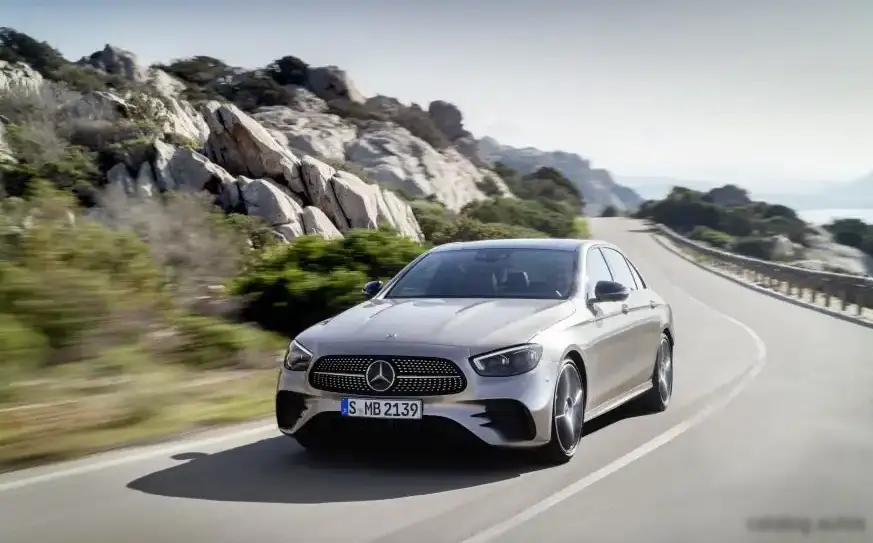
The Mercedes-Benz E 300de, introduced in June 2020 as part of the W213 facelift, represents a significant step in the brand’s push towards electrified luxury. This plug-in hybrid (PHEV) variant combines a diesel engine with an electric motor, offering a blend of efficiency, performance, and reduced emissions. Produced through 2023, the E 300de was primarily aimed at the European market, where diesel engines remained popular and government incentives favored plug-in hybrid technology. It slots into the mid-to-upper range of the W213 E-Class lineup, offering a more sophisticated and environmentally conscious alternative to the traditional gasoline-powered models.
Technical Specifications
| Brand | Mercedes-Benz |
| Model | E-class |
| Generation | E-class (W213, facelift 2020) |
| Type | E 300de (306 Hp) Plug-in Hybrid 4MATIC 9G-TRONIC |
| Start of production | June, 2020 |
| End of production | 2023 |
| Powertrain Architecture | PHEV (Plug-in Hybrid Electric Vehicle) |
| Body type | Sedan |
| Seats | 5 |
| Doors | 4 |
| Combined fuel consumption (WLTP) | 1.2-1.8 l/100 km (196 – 130.7 US mpg, 235.4 – 156.9 UK mpg, 83.3 – 55.6 km/l) |
| CO2 emissions (WLTP) | 32-46 g/km |
| Fuel consumption (NEDC) – combined | 1.6 l/100 km (147 US mpg, 176.6 UK mpg, 62.5 km/l) |
| CO2 emissions (NEDC) | 42 g/km |
| Fuel Type | Diesel / electricity |
| Acceleration 0 – 100 km/h | 5.9 sec |
| Acceleration 0 – 62 mph | 5.9 sec |
| Acceleration 0 – 60 mph | 5.6 sec |
| Maximum speed | 230 km/h (142.92 mph) |
| Emission standard | EURO 6d-ISC-FCM |
| Weight-to-power ratio | 6.7 kg/Hp, 148.9 Hp/tonne |
| Weight-to-torque ratio | 2.9 kg/Nm, 340.6 Nm/tonne |
| Gross battery capacity | 13.5 kWh |
| Net (usable) battery capacity | 9.3 kWh |
| Battery technology | Lithium-ion (Li-Ion) |
| Battery location | Inside the trunk |
| All-electric range (WLTP) | 44-54 km (27.34 – 33.55 mi) |
| All-electric range (NEDC) | 54 km (33.55 mi) |
| Average Energy consumption (WLTP) | 15.8-17.5 kWh/100 km (25.43 – 28.16 kWh/100 mi, 133 – 120 MPGe, 6.3 – 5.7 km/kWh, 3.9 – 3.6 mi/kWh) |
| Average Energy consumption (NEDC) | 16.6 kWh/100 km (26.72 kWh/100 mi, 126 MPGe, 6 km/kWh, 3.7 mi/kWh) |
| Max speed (electric) | 130 km/h (80.78 mph) |
| Electric motor power | 122 Hp @ 2000 rpm |
| Electric motor Torque | 440 Nm (324.53 lb.-ft.) |
| Electric motor location | Between the combustion engine and the transmission |
| System power | 306 Hp @ 3500-4000 rpm |
| System torque | 700 Nm (516.29 lb.-ft.) |
| Power | 194 Hp @ 3800 rpm |
| Torque | 400 Nm @ 1600-2800 rpm (295.02 lb.-ft. @ 1600-2800 rpm) |
| Engine layout | Front, Longitudinal |
| Engine Model/Code | OM 654.920 |
| Engine displacement | 1950 cm3 (119 cu. in.) |
| Number of cylinders | 4 |
| Engine configuration | Inline |
| Cylinder Bore | 82 mm (3.23 in.) |
| Piston Stroke | 92.3 mm (3.63 in.) |
| Compression ratio | 15.5:1 |
| Number of valves per cylinder | 4 |
| Fuel injection system | Diesel Commonrail |
| Engine aspiration | Turbocharger, Intercooler |
| Valvetrain | DOHC |
| Engine oil capacity | 6.3 l (6.66 US qt | 5.54 UK qt) |
| Coolant | 11 l (11.62 US qt | 9.68 UK qt) |
| Kerb Weight | 2055 kg (4530.5 lbs.) |
| Max. weight | 2760 kg (6084.76 lbs.) |
| Max load | 705 kg (1554.26 lbs.) |
| Trunk (boot) space – minimum | 370 l (13.07 cu. ft.) |
| Fuel tank capacity | 50 l (13.21 US gal | 11 UK gal) |
| AdBlue tank | 23.5 l (6.21 US gal | 5.17 UK gal) |
| Max. roof load | 100 kg (220.46 lbs.) |
| Permitted trailer load with brakes (12%) | 2100 kg (4629.71 lbs.) |
| Permitted trailer load without brakes | 750 kg (1653.47 lbs.) |
| Permitted towbar download | 84 kg (185.19 lbs.) |
| Length | 4935 mm (194.29 in.) |
| Width | 1852 mm (72.91 in.) |
| Width including mirrors | 2065 mm (81.3 in.) |
| Height | 1481 mm (58.31 in.) |
| Wheelbase | 2939 mm (115.71 in.) |
| Front track | 1604 mm (63.15 in.) |
| Rear (Back) track | 1608 mm (63.31 in.) |
| Front overhang | 853 mm (33.58 in.) |
| Rear overhang | 1143 mm (45 in.) |
| Drag coefficient (Cd) | 0.28 |
| Minimum turning circle (turning diameter) | 11.9 m (39.04 ft.) |
| Front suspension | Coil spring, Double wishbone, Transverse stabilizer |
| Rear suspension | Independent multi-link suspension, Transverse stabilizer, Coil spring |
| Front brakes | Ventilated discs |
| Rear brakes | Ventilated discs |
| Number of gears and type of gearbox | 9 gears, automatic transmission G-TRONIC |
Powertrain & Engine Architecture
The E 300de’s powertrain centers around the OM 654.920, a 2.0-liter inline-four diesel engine. This engine is a member of Mercedes-Benz’s modular engine family, known for its efficiency and refinement. It utilizes a common-rail direct injection system, delivering fuel at extremely high pressure for optimized combustion. A turbocharger with an intercooler further enhances performance. The engine produces 194 horsepower and 400 Nm (295 lb-ft) of torque. Coupled with this is a 122 horsepower electric motor, integrated between the engine and the 9G-TRONIC nine-speed automatic transmission. The electric motor contributes an additional 440 Nm (324 lb-ft) of torque. The combined system output is 306 horsepower and 700 Nm (516 lb-ft) of torque. The 9G-TRONIC transmission is specifically calibrated to work seamlessly with the electric motor, providing smooth and efficient gear changes. The 13.5 kWh lithium-ion battery pack is located under the trunk floor, reducing cargo space slightly.
Driving Characteristics
The E 300de offers a surprisingly refined driving experience. In electric-only mode, it provides near-silent operation and brisk acceleration for city driving, with a range of 44-54 km (27-34 miles) on the WLTP cycle. When the diesel engine engages, the transition is almost imperceptible. The combined power output delivers strong acceleration, achieving 0-60 mph in around 5.6 seconds. The 9G-TRONIC transmission is well-tuned, offering quick and smooth shifts. Compared to the gasoline-powered E 300, the E 300de feels slightly heavier due to the battery pack, but the added torque from the electric motor compensates for this. Compared to the E 300d (diesel only), the E 300de offers similar performance but with the added benefit of electric driving capability. The E 300de is not as sporty as the E 450 or AMG variants, but it provides a comfortable and capable driving experience.
Equipment & Trim Levels
The E 300de typically came well-equipped, reflecting its position as a premium model. Standard features included Mercedes-Benz’s MBUX infotainment system with a large touchscreen display, leather upholstery, automatic climate control, and a suite of driver-assistance systems such as adaptive cruise control and lane-keeping assist. Optional extras included a panoramic sunroof, premium sound system, and various interior trim upgrades. The interior design mirrored that of other W213 E-Class models, with a focus on luxury and technology. Trim levels varied slightly depending on the market, but generally offered options for different interior color schemes and exterior styling packages.
Chassis & Braking
The E 300de utilizes a sophisticated suspension system designed for comfort and handling. It features a four-link front suspension and a multi-link rear suspension, both with coil springs and stabilizer bars. The suspension is tuned to provide a smooth ride while maintaining good body control. Braking duties are handled by ventilated disc brakes on all four wheels. The E 300de also incorporates regenerative braking, which helps to recharge the battery during deceleration. The 4MATIC all-wheel-drive system provides excellent traction in all weather conditions.
Market Reception & Comparison
The E 300de was generally well-received by automotive critics, who praised its fuel efficiency, refined driving experience, and advanced technology. It was seen as a compelling alternative to traditional gasoline and diesel vehicles, particularly in markets with strong incentives for plug-in hybrids. Compared to the E 300d, the E 300de offered lower running costs and the ability to drive in electric-only mode, but it came with a higher purchase price. Compared to the E 300 gasoline model, the E 300de offered significantly better fuel economy and lower emissions.
Legacy
The Mercedes-Benz E 300de represents an important step in the brand’s transition to electrification. The OM 654 diesel engine, combined with the electric motor and 9G-TRONIC transmission, proved to be a reliable and efficient powertrain. On the used car market, the E 300de holds its value well, particularly in Europe. The longevity of the battery pack remains a key consideration for potential buyers, but Mercedes-Benz offers extended warranties on the battery to provide peace of mind. The E 300de paved the way for future generations of Mercedes-Benz plug-in hybrid models, demonstrating the brand’s commitment to sustainable mobility.