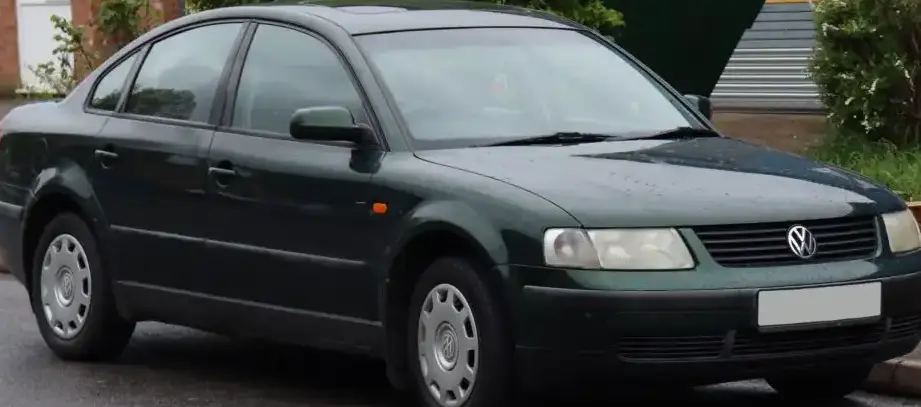
The Volkswagen Passat B5 1.9 TDI Automatic, produced primarily between 1999 and 2000, represented a popular entry point into the mid-size sedan market, particularly in Europe. Positioned as a fuel-efficient and practical option within the B5 Passat range (which spanned 1997-2005), this variant offered a blend of diesel economy and the convenience of an automatic transmission. It was built on the Volkswagen Group’s PL45 (also known as the 1HX0/A3) platform, shared with models like the Audi A4, Skoda Superb, and SEAT Passat. This specific configuration aimed to appeal to drivers prioritizing comfort and lower running costs over outright performance, making it a common choice for family transportation and long-distance commuting.
Technical Specifications
| Brand | Volkswagen |
| Model | Passat |
| Generation | Passat (B5) |
| Type (Engine) | 1.9 TDI (101 Hp) Automatic |
| Start of production | 1999 |
| End of production | 2000 |
| Powertrain Architecture | Internal Combustion engine |
| Body type | Sedan |
| Seats | 5 |
| Doors | 4 |
| Fuel consumption (urban) | 9.4 l/100 km (25 US mpg) |
| Fuel consumption (extra urban) | 5.2 l/100 km (45.2 US mpg) |
| Fuel Type | Diesel |
| Acceleration 0 – 100 km/h | 14.3 sec |
| Acceleration 0 – 62 mph | 14.3 sec |
| Acceleration 0 – 60 mph | 13.6 sec |
| Maximum speed | 185 km/h (114.95 mph) |
| Weight-to-power ratio | 13.7 kg/Hp |
| Weight-to-torque ratio | 5.8 kg/Nm |
| Power | 101 Hp @ 4000 rpm |
| Torque | 240 Nm @ 1800 rpm (177.01 lb.-ft. @ 1800 rpm) |
| Engine layout | Front, Longitudinal |
| Engine Model/Code | AVB |
| Engine displacement | 1896 cm3 (115.7 cu. in.) |
| Number of cylinders | 4 |
| Engine configuration | Inline |
| Cylinder Bore | 79.5 mm (3.13 in.) |
| Piston Stroke | 95.5 mm (3.76 in.) |
| Compression ratio | 19:1 |
| Number of valves per cylinder | 2 |
| Fuel injection system | Pump-nozzle (Unit Injector) |
| Engine aspiration | Turbocharger, Intercooler |
| Valvetrain | OHC |
| Engine oil capacity | 3.6 l (3.8 US qt | 3.17 UK qt) |
| Coolant | 7 l (7.4 US qt | 6.16 UK qt) |
| Kerb Weight | 1380 kg (3042.38 lbs.) |
| Max. weight | 1940 kg (4276.97 lbs.) |
| Max load | 560 kg (1234.59 lbs.) |
| Trunk (boot) space – minimum | 475 l (16.77 cu. ft.) |
| Trunk (boot) space – maximum | 800 l (28.25 cu. ft.) |
| Fuel tank capacity | 65 l (17.17 US gal | 14.3 UK gal) |
| Length | 4703 mm (185.16 in.) |
| Width | 1746 mm (68.74 in.) |
| Height | 1462 mm (57.56 in.) |
| Wheelbase | 2703 mm (106.42 in.) |
| Front track | 1515 mm (59.65 in.) |
| Rear (Back) track | 1515 mm (59.65 in.) |
| Drivetrain Architecture | Front wheel drive |
| Number of gears and type of gearbox | 4 gears, automatic transmission |
| Front suspension | Coil spring |
| Rear suspension | Coil spring |
| Front brakes | Ventilated discs |
| Rear brakes | Disc |
| Assisting systems | ABS (Anti-lock braking system) |
| Steering type | Steering rack and pinion |
| Power steering | Hydraulic Steering |
| Tires size | 195/65 R15 |
| Wheel rims size | 6J x 15 |
INTRODUCTION
The Volkswagen Passat B5 1.9 TDI Automatic, manufactured between 1999 and 2000, was a key variant within the broader B5 Passat lineup. The B5 generation, launched in 1997, represented a significant step forward for the Passat, offering a more refined and modern package compared to its predecessor. This particular model combined the fuel efficiency and torque characteristics of Volkswagen’s 1.9-liter TDI engine with the convenience of a four-speed automatic transmission. It was primarily marketed in Europe, where diesel engines held a much larger market share than in North America, and catered to buyers seeking a comfortable, economical, and reliable mid-size sedan.
Powertrain & Engine Architecture
At the heart of the Passat B5 1.9 TDI Automatic lies the AVB engine code, a 1.9-liter inline-four cylinder diesel engine. This engine utilized a pump-nozzle (unit injector) fuel injection system, a technology that allowed for precise fuel delivery and contributed to the engine’s efficiency and relatively low emissions for its time. The engine featured an overhead camshaft (OHC) valvetrain operating two valves per cylinder. A turbocharger with an intercooler was employed to boost power and torque. The four-speed automatic transmission, while not known for its sportiness, provided smooth shifts and ease of use, particularly in urban driving conditions. The transmission was electronically controlled, adapting shift points based on throttle input and vehicle speed. The engine produced 101 horsepower at 4000 rpm and 240 Nm (177 lb-ft) of torque at 1800 rpm, a torque figure that made it surprisingly capable for everyday driving.
Driving Characteristics
The driving experience in the Passat B5 1.9 TDI Automatic was characterized by its relaxed and comfortable nature. The 101 hp engine, coupled with the four-speed automatic, didn’t offer blistering acceleration – 0-60 mph took around 13.6 seconds. However, the readily available 240 Nm of torque provided ample pulling power for overtaking and maintaining highway speeds. The automatic transmission’s gear ratios were geared towards fuel economy rather than performance, resulting in a noticeable lack of urgency when downshifting. Compared to the more powerful 1.8T petrol variants or the higher-output TDI models, the 1.9 TDI Automatic felt noticeably slower. However, it excelled in providing a smooth and effortless driving experience, particularly on long journeys. The longitudinal engine layout contributed to a balanced weight distribution, enhancing handling stability.
Equipment & Trim Levels
The Passat B5 1.9 TDI Automatic typically came equipped with a reasonable level of standard features. These included power windows, central locking, power steering, and an ABS anti-lock braking system. Interior upholstery was generally cloth, with options for upgraded velour or leather available. Dashboard configuration was functional and straightforward, with clear instrumentation. Optional extras included air conditioning, a sunroof, alloy wheels, and a radio/cassette player (CD changers were also available). Trim levels varied depending on the market, but generally, this 1.9 TDI Automatic configuration represented a mid-range offering, positioned above the base models but below the more luxurious trims with larger engines and more extensive equipment lists.
Chassis & Braking
The Passat B5 featured a MacPherson strut front suspension and a multi-link rear suspension, providing a comfortable and controlled ride. The suspension was tuned for comfort rather than outright sportiness, absorbing bumps and imperfections in the road effectively. Braking duties were handled by ventilated discs at the front and solid discs at the rear. The ABS system provided enhanced braking performance and stability, particularly in adverse weather conditions. Stabilizer bars were fitted to both the front and rear axles to reduce body roll during cornering. The chassis was designed to accommodate the weight of the engine and transmission while maintaining a balanced and predictable handling characteristic.
Market Reception & Comparison
The Passat B5 1.9 TDI Automatic was generally well-received by automotive critics as a practical and economical choice. Its fuel economy was a major selling point, particularly in Europe where fuel prices were significantly higher. However, the automatic transmission was sometimes criticized for being somewhat sluggish and lacking the responsiveness of the manual gearbox. Compared to the 1.8T petrol variants, the TDI offered superior fuel economy and torque but lacked the engine’s overall refinement and power. The higher-output TDI models (such as the 110 hp or 130 hp versions) provided more performance but came at a higher price point. Reliability was generally good, although the pump-nozzle injection system could be prone to issues if not properly maintained.
Legacy
The Volkswagen Passat B5 1.9 TDI Automatic has proven to be a durable and reliable vehicle, with many examples still on the road today. The 1.9 TDI engine, in particular, is known for its longevity and relatively simple mechanical design. However, age and mileage can take their toll, and potential buyers should be aware of common issues such as turbocharger wear, injector problems, and corrosion. In the used car market, these Passats represent a relatively affordable option for those seeking a comfortable and economical mid-size sedan. They are often favored by drivers who prioritize practicality and fuel efficiency over outright performance, and their reputation for reliability continues to make them a popular choice.