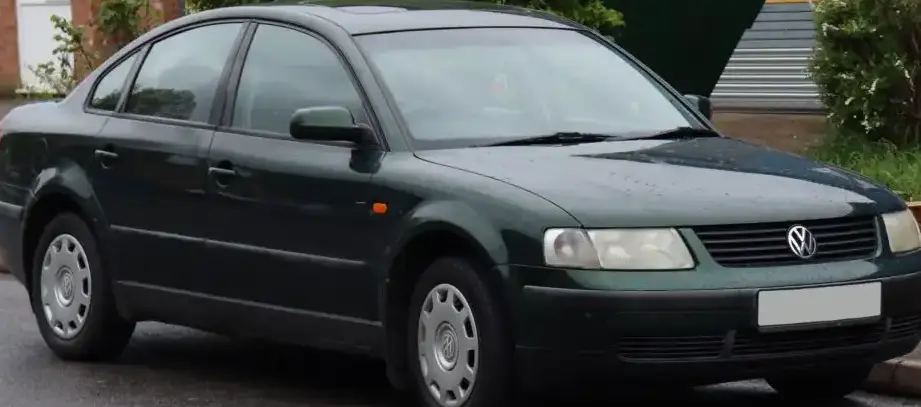
The Volkswagen Passat B5, produced between 1996 and 2000, represented a significant step forward for Volkswagen’s mid-size offering. Built on the 1HX0/A3 platform, it aimed to blend practicality, comfort, and a more modern aesthetic than its predecessor. Within the B5 range, the 1.9 TDI variant, producing 110 horsepower, occupied a crucial position as a fuel-efficient and relatively affordable option, particularly popular in European markets. While not the performance flagship, it provided a compelling balance for drivers prioritizing economy and everyday usability. This article will focus specifically on the 1.9 TDI (110 hp) model, detailing its technical specifications, driving characteristics, and market position.
Technical Specifications
| Brand | Volkswagen |
| Model | Passat |
| Generation | Passat (B5) |
| Type (Engine) | 1.9 TDI (110 Hp) |
| Start of production | 1996 |
| End of production | 2000 |
| Powertrain Architecture | Internal Combustion engine |
| Body type | Sedan |
| Seats | 5 |
| Doors | 4 |
| Fuel consumption (urban) | 7.1 l/100 km (33.1 US mpg, 39.8 UK mpg, 14.1 km/l) |
| Fuel consumption (extra urban) | 4.3 l/100 km (54.7 US mpg, 65.7 UK mpg, 23.3 km/l) |
| Fuel Type | Diesel |
| Acceleration 0 – 100 km/h | 11.4 sec |
| Acceleration 0 – 62 mph | 11.4 sec |
| Acceleration 0 – 60 mph | 10.8 sec |
| Maximum speed | 196 km/h (121.79 mph) |
| Weight-to-power ratio | 11.8 kg/Hp, 84.6 Hp/tonne |
| Weight-to-torque ratio | 5.5 kg/Nm, 180.8 Nm/tonne |
| Power | 110 Hp @ 4150 rpm |
| Power per litre | 58 Hp/l |
| Torque | 235 Nm @ 1900 rpm (173.33 lb.-ft. @ 1900 rpm) |
| Engine layout | Front, Longitudinal |
| Engine Model/Code | AFN |
| Engine displacement | 1896 cm3 (115.7 cu. in.) |
| Number of cylinders | 4 |
| Engine configuration | Inline |
| Cylinder Bore | 79.5 mm (3.13 in.) |
| Piston Stroke | 95.5 mm (3.76 in.) |
| Compression ratio | 19.5:1 |
| Number of valves per cylinder | 2 |
| Fuel injection system | Direct injection |
| Engine aspiration | Turbocharger, Intercooler |
| Valvetrain | OHC |
| Engine oil capacity | 3.8 l (4.02 US qt | 3.34 UK qt) |
| Coolant | 7.5 l (7.93 US qt | 6.6 UK qt) |
| Kerb Weight | 1300 kg (2866.01 lbs.) |
| Max. weight | 1850 kg (4078.55 lbs.) |
| Max load | 550 kg (1212.54 lbs.) |
| Trunk (boot) space – minimum | 475 l (16.77 cu. ft.) |
| Trunk (boot) space – maximum | 745 l (26.31 cu. ft.) |
| Fuel tank capacity | 62 l (16.38 US gal | 13.64 UK gal) |
| Length | 4670 mm (183.86 in.) |
| Width | 1740 mm (68.5 in.) |
| Height | 1460 mm (57.48 in.) |
| Wheelbase | 2700 mm (106.3 in.) |
| Front track | 1498 mm (58.98 in.) |
| Rear (Back) track | 1500 mm (59.06 in.) |
| Drivetrain Architecture | The Internal combustion engine (ICE) drives the front wheels of the vehicle. |
| Drive wheel | Front wheel drive |
| Number of gears and type of gearbox | 5 gears, manual transmission |
| Front suspension | Coil spring |
| Rear suspension | Coil spring |
| Front brakes | Ventilated discs |
| Rear brakes | Disc |
| Assisting systems | ABS (Anti-lock braking system) |
| Steering type | Steering rack and pinion |
| Power steering | Hydraulic Steering |
| Tires size | 195/65 R15 |
| Wheel rims size | 6J x 15 |
INTRODUCTION
The 1.9 TDI (110 hp) Passat B5, produced from 1996 to 2000, was a cornerstone of Volkswagen’s sales success in Europe. Positioned as an entry-level to mid-range offering, it provided a compelling alternative to petrol-powered variants and more powerful TDI models. The ‘AFN’ engine code designates this specific iteration of the 1.9-liter turbocharged diesel, known for its robust build and relatively simple mechanicals. It was a popular choice for fleet buyers and private individuals alike, seeking a comfortable, reliable, and economical family saloon.
Powertrain & Engine Architecture
The heart of this Passat variant is the 1.9-liter, four-cylinder diesel engine, designated AFN. This engine utilizes a direct injection system, a key feature contributing to its fuel efficiency and relatively low emissions for its time. The direct injection system, employing unit injectors, delivers fuel directly into the combustion chamber at extremely high pressure, promoting more complete combustion. The engine features an overhead camshaft (OHC) valvetrain operating two valves per cylinder. A turbocharger with an intercooler is employed to boost power output, providing increased torque and improved acceleration. The 110 hp output is achieved at 4150 rpm, while peak torque of 235 Nm (173.33 lb-ft) is available from a low 1900 rpm. This strong low-end torque is a hallmark of TDI engines. The engine is longitudinally mounted in the front of the vehicle, driving the front wheels. The 5-speed manual transmission was the standard offering, providing a balance between fuel economy and drivability.
Driving Characteristics
The 1.9 TDI (110 hp) Passat B5 offered a composed and comfortable driving experience. While not particularly quick, the strong low-end torque made it feel responsive in everyday driving situations. Acceleration to 60 mph took around 10.8 seconds, and top speed was approximately 121.79 mph. The 5-speed manual transmission was well-matched to the engine’s characteristics, allowing for relaxed cruising on the highway and sufficient power for overtaking maneuvers. Compared to the more powerful TDI variants (like the 130 hp or 150 hp versions), the 110 hp model felt less stressed at higher speeds and offered slightly better fuel economy. However, it lacked the outright performance of its siblings. The gear ratios were optimized for fuel efficiency, meaning the engine could feel slightly strained when pushed hard.
Equipment & Trim Levels
The 1.9 TDI (110 hp) Passat B5 typically came equipped with a reasonable level of standard features. These included central locking, electric front windows, power steering, and an ABS anti-lock braking system. Interior upholstery was typically cloth, with a functional and durable design. Higher trim levels, often denoted by ‘Comfort’ or ‘Trendline’ designations, added features such as alloy wheels, air conditioning, a radio/cassette player, and upgraded interior trim. Optional extras included a sunroof, leather upholstery, and a more sophisticated audio system. The dashboard layout was typical of Volkswagen at the time, with a clear and straightforward instrument cluster.
Chassis & Braking
The Passat B5 featured a MacPherson strut front suspension and a multi-link rear suspension, providing a comfortable ride and good handling characteristics. The suspension was tuned for comfort rather than outright sportiness. Front brakes were ventilated discs, providing ample stopping power, while rear brakes were solid discs. The hydraulic power steering offered a light and precise feel. The 195/65 R15 tires provided a good balance between grip and ride comfort. Stabilizer bars were fitted to both the front and rear axles to reduce body roll during cornering.
Market Reception & Comparison
The 1.9 TDI (110 hp) Passat B5 was well-received by automotive critics and consumers alike. It was praised for its fuel efficiency, comfortable ride, and spacious interior. Compared to petrol-powered Passats, the TDI offered significantly better fuel economy, making it a popular choice for high-mileage drivers. Compared to the more powerful TDI variants, the 110 hp model offered a more affordable entry point into the Passat range. However, some critics noted that the engine could feel underpowered when fully loaded or driving uphill. Reliability was generally good, although, like all diesel engines, it was susceptible to issues with the fuel injection system and turbocharger if not properly maintained.
Legacy
The 1.9 TDI (110 hp) Passat B5 has proven to be a remarkably durable and reliable vehicle. Many examples are still on the road today, testament to the robust engineering of the engine and chassis. In the used car market, these Passats are often sought after for their affordability, fuel efficiency, and practicality. While maintenance costs can increase with age, the readily available parts and relatively simple mechanicals make them a viable option for budget-conscious buyers. The AFN engine, in particular, is regarded as one of the more reliable TDI engines produced by Volkswagen, contributing to the enduring popularity of this Passat variant.