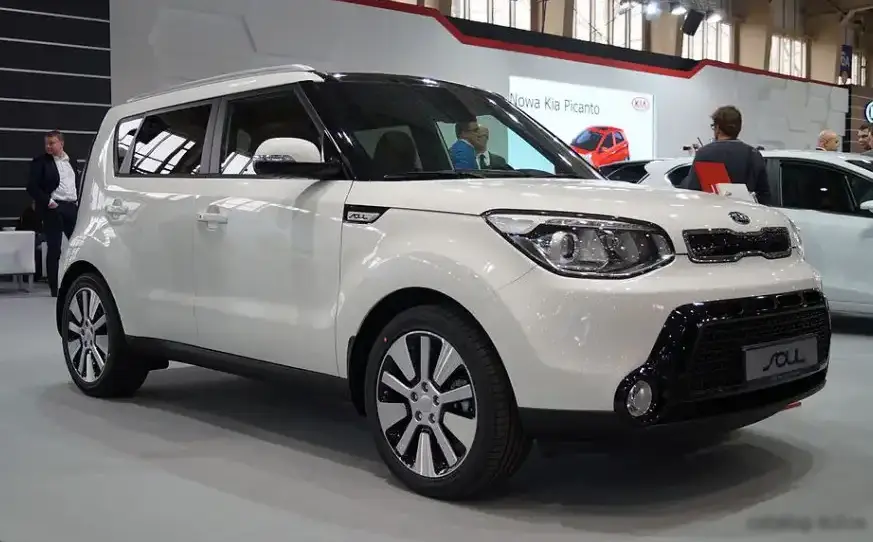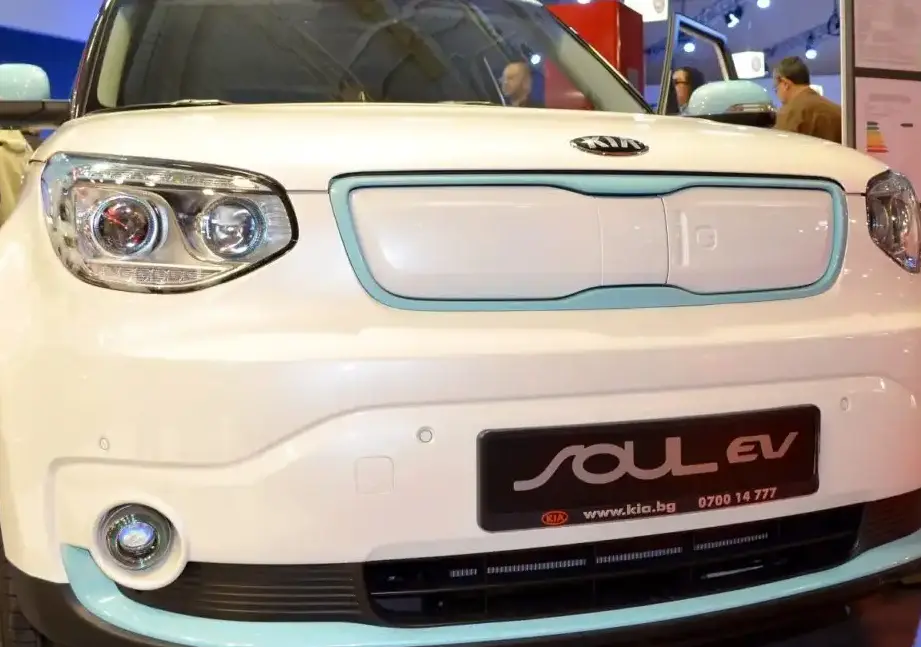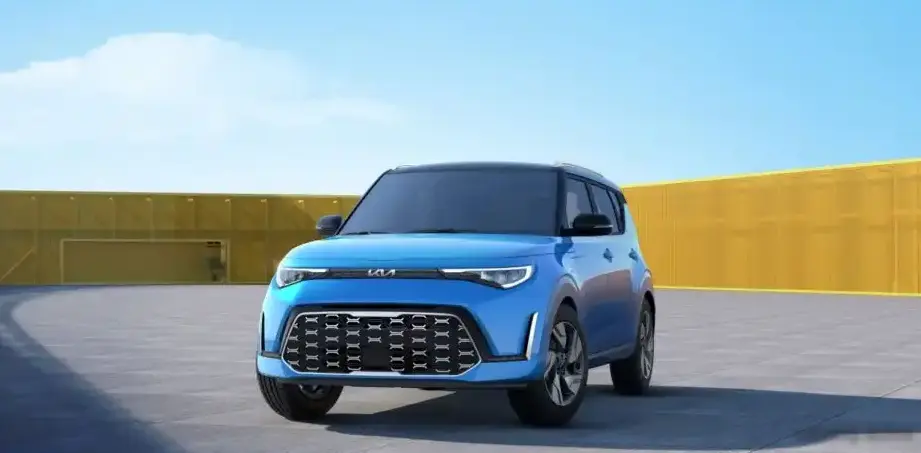
The Kia Soul III (facelift, introduced in May 2022) 2.0 MPI with the Intelligent Variable Transmission (i-VT) represents a mid-range offering within the third generation of Kia’s distinctive boxy crossover. Positioned between the base 1.6L engine and potential higher-performance trims (depending on market), this variant aimed to balance affordability with a more satisfying driving experience. The facelift brought updated styling cues, enhanced technology, and refinements to the existing powertrain options. This model is primarily targeted towards the North American and European markets, where the Soul has gained a loyal following for its unique design and practicality.
Technical Specifications
| Brand | Kia |
| Model | Soul |
| Generation | Soul III (facelift 2022) |
| Type (Engine) | 2.0 MPI (147 Hp) i-VT |
| Start of production | May, 2022 |
| Powertrain Architecture | Internal Combustion engine |
| Body type | Crossover |
| Seats | 5 |
| Doors | 5 |
| Fuel consumption (urban) | 8.1-8.4 l/100 km (29-28 US mpg) |
| Fuel consumption (extra urban) | 6.7-7.1 l/100 km (35.1-33.1 US mpg) |
| Fuel consumption (combined) | 7.6-7.8 l/100 km (30.9-30.2 US mpg) |
| Fuel Type | Petrol (Gasoline) |
| Emission standard | WCC+UCC |
| Weight-to-power ratio | 8.9 kg/Hp, 112.2 Hp/tonne |
| Weight-to-torque ratio | 7.3 kg/Nm, 136.6 Nm/tonne |
| Power | 147 Hp @ 6200 rpm |
| Power per litre | 73.5 Hp/l |
| Torque | 179 Nm @ 4500 rpm (132.02 lb.-ft. @ 4500 rpm) |
| Engine layout | Front, Transverse |
| Engine displacement | 1999 cm3 (121.99 cu. in.) |
| Number of cylinders | 4 |
| Engine configuration | Inline |
| Cylinder Bore | 81 mm (3.19 in.) |
| Piston Stroke | 97 mm (3.82 in.) |
| Compression ratio | 12.5:1 |
| Number of valves per cylinder | 4 |
| Fuel injection system | Multi-port manifold injection |
| Valvetrain | DOHC |
| Engine systems | Start & Stop System |
| Kerb Weight | 1310-1360 kg (2888.06 – 2998.29 lbs.) |
| Max. weight | 1825 kg (4023.44 lbs.) |
| Max load | 465-515 kg (1025.15 – 1135.38 lbs.) |
| Trunk (boot) space – minimum | 530 l (18.72 cu. ft.) |
| Trunk (boot) space – maximum | 1758 l (62.08 cu. ft.) |
| Fuel tank capacity | 54 l (14.27 US gal | 11.88 UK gal) |
| Length | 4196 mm (165.2 in.) |
| Width | 1801 mm (70.91 in.) |
| Height | 1600 mm (62.99 in.) |
| Wheelbase | 2601 mm (102.4 in.) |
| Front track | 1575 mm (62.01 in.) |
| Rear (Back) track | 1585 mm (62.4 in.) |
| Front overhang | 866 mm (34.09 in.) |
| Rear overhang | 729 mm (28.7 in.) |
| Ride height (ground clearance) | 170 mm (6.69 in.) |
| Minimum turning circle | 10.6 m (34.78 ft.) |
| Drivetrain Architecture | Front wheel drive |
| Drive wheel | Front wheel drive |
| Number of gears | 6 |
| Type of gearbox | automatic transmission i-VT |
| Front suspension | Independent, type McPherson with coil spring and anti-roll bar |
| Rear suspension | Torsion |
| Front brakes | Ventilated discs, 279.4 mm |
| Rear brakes | Disc, 261.62 mm |
| Assisting systems | ABS (Anti-lock braking system) |
| Steering type | Steering rack and pinion |
| Power steering | Electric Steering |
| Tires size | 205/60 R16; 215/55 R17; 235/45 R18 |
| Wheel rims size | 6.5J x 16; 6.5J x 17; 7.5J x 18 |
Powertrain & Engine Architecture
At the heart of this Soul variant lies the Kia-Hyundai Smartstream G2.0 MPI engine. This naturally aspirated 2.0-liter inline-four cylinder engine (internal codes may vary slightly by region) produces 147 horsepower at 6,200 rpm and 179 Nm (132 lb-ft) of torque at 4,500 rpm. The engine utilizes a multi-point fuel injection system and a double overhead camshaft (DOHC) valvetrain with four valves per cylinder. A key feature is the inclusion of a Start & Stop system, contributing to improved fuel efficiency in urban driving conditions. The engine is transversely mounted in the front of the vehicle.
The i-VT (Intelligent Variable Transmission) is a continuously variable transmission (CVT) designed by Kia. Unlike traditional stepped automatic transmissions, the i-VT uses a belt and pulley system to provide a seamless and theoretically infinite number of gear ratios. This allows the engine to operate at its most efficient rpm range for a given speed and load, enhancing fuel economy. The i-VT is programmed with simulated shift points to mimic the feel of a conventional automatic, addressing some driver preferences for a more familiar driving experience.
Driving Characteristics
The 2.0L MPI i-VT Soul offers a comfortable and predictable driving experience. While not particularly sporty, the powertrain provides adequate acceleration for everyday driving situations. The i-VT transmission prioritizes fuel efficiency, which can sometimes result in a slight delay in response during quick acceleration. Compared to the manual transmission versions of the same engine, the i-VT sacrifices some responsiveness for smoother operation. Against higher-output engine options (if available in the market), this variant feels noticeably less powerful, particularly when fully loaded or tackling steep inclines. The CVT’s programming aims to minimize the “rubber band” feel often associated with CVTs, but it’s still present to some degree.
Equipment & Trim Levels
The 2.0 MPI i-VT trim typically includes standard features such as air conditioning, power windows and locks, a touchscreen infotainment system with Apple CarPlay and Android Auto compatibility, and a rearview camera. Higher trim levels add features like automatic climate control, a larger touchscreen display, upgraded audio systems, and advanced driver-assistance systems (ADAS) such as lane departure warning and forward collision avoidance assist. Interior upholstery is generally cloth, with options for leatherette or full leather available on higher trims. Wheel sizes typically range from 16 to 18 inches, depending on the trim level.
Chassis & Braking
The Soul III utilizes a front-wheel-drive platform with an independent McPherson strut suspension in the front and a torsion beam suspension in the rear. The torsion beam setup is a cost-effective solution that provides a reasonable balance of ride comfort and handling. Front brakes are ventilated discs, while rear brakes are solid discs. All trims are equipped with an Anti-lock Braking System (ABS) as standard. Stabilizer bars are fitted to both the front and rear axles to reduce body roll during cornering.
Market Reception & Comparison
The 2.0 MPI i-VT Soul was generally well-received by critics as a practical and affordable crossover. Its fuel economy was considered competitive within its segment, and the i-VT transmission contributed to a smooth and comfortable ride. However, some reviewers noted the engine’s lack of outright power and the CVT’s occasionally sluggish response. Compared to the base 1.6L engine, the 2.0L offered a noticeable improvement in performance. Compared to potential turbocharged or higher-horsepower options, it represented a value-oriented choice for buyers prioritizing fuel efficiency and affordability over sporty performance.
Legacy
The Kia Soul III (2022 facelift) 2.0 MPI i-VT powertrain has proven to be relatively reliable in early reports. The Smartstream engine is known for its durability, and the i-VT transmission, while not without its critics, has generally held up well over time. On the used car market, this variant represents a good value proposition for buyers seeking a practical and fuel-efficient crossover with a unique design. Maintenance costs are generally reasonable, and parts availability is good. The Soul’s distinctive styling and spacious interior continue to make it a popular choice among budget-conscious buyers.