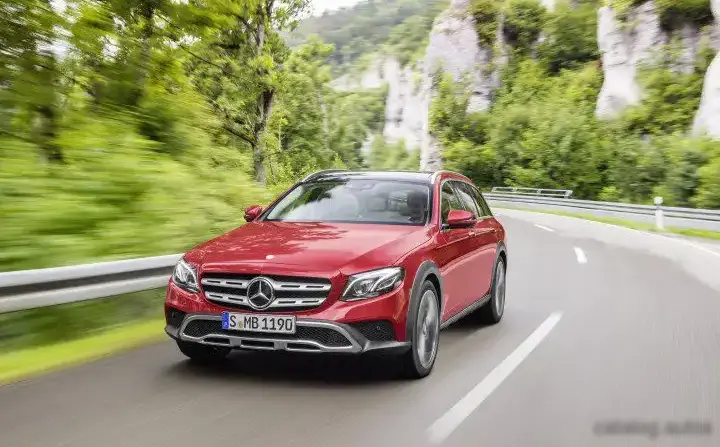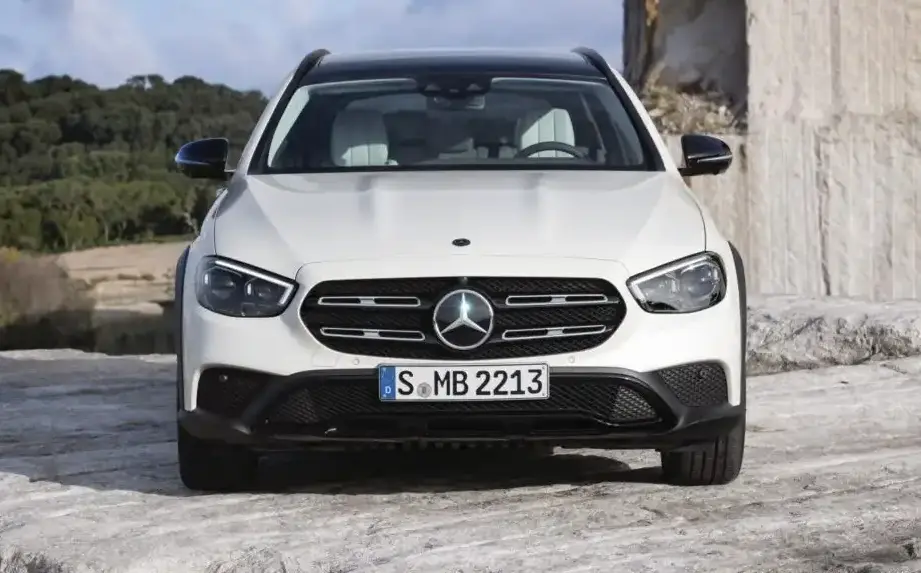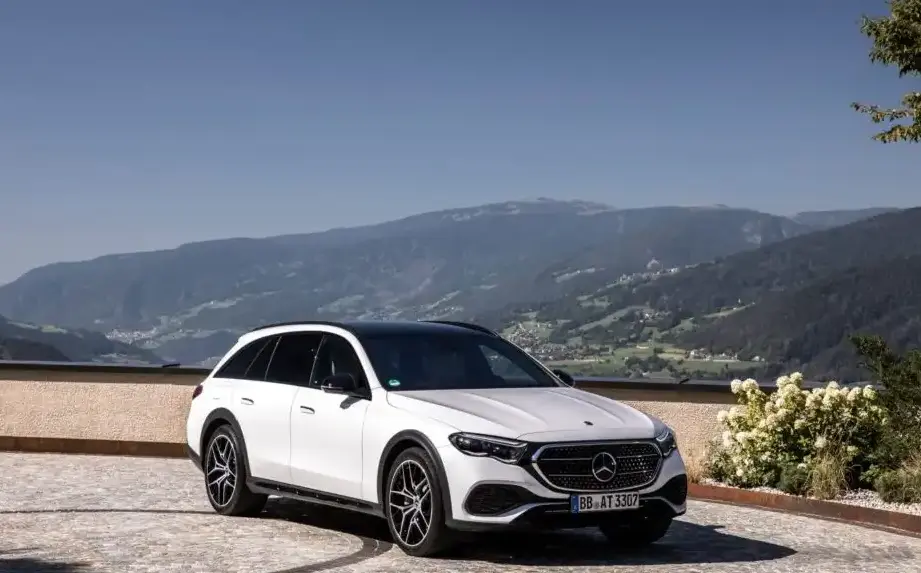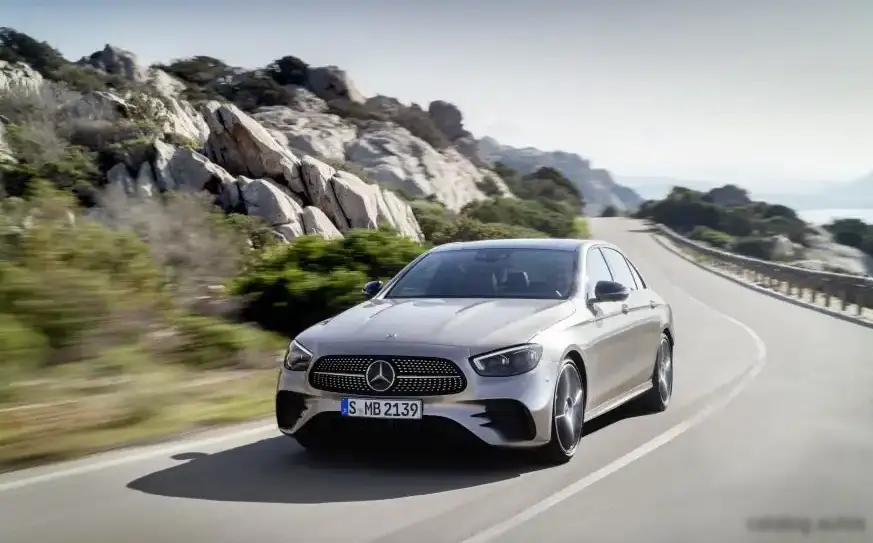
The Mercedes-Benz E 300e, introduced as part of the W213 facelift in July 2020 and continuing through 2023, represents a significant step in the brand’s push towards electrification. This plug-in hybrid variant of the popular E-Class sedan combines a 2.0-liter turbocharged gasoline engine with an electric motor, offering a balance of performance, efficiency, and reduced emissions. Positioned as a mid-range offering within the W213 lineup, the E 300e aimed to appeal to buyers seeking a premium experience with the added benefits of electric driving. It slots between the conventionally powered E 200/E 250 models and the more performance-oriented AMG variants.
Technical Specifications
| Brand | Mercedes-Benz |
| Model | E-class |
| Generation | E-class (W213, facelift 2020) |
| Type (Engine) | E 300e (320 Hp) Plug-in Hybrid 9G-TRONIC |
| Start of production | July, 2020 |
| End of production | 2023 |
| Powertrain Architecture | PHEV (Plug-in Hybrid Electric Vehicle) |
| Body type | Sedan |
| Seats | 5 |
| Doors | 4 |
| Combined fuel consumption (WLTP) | 1.5-1.9 l/100 km (156.8 – 123.8 US mpg, 188.3 – 148.7 UK mpg, 66.7 – 52.6 km/l) |
| CO2 emissions (WLTP) | 34-44 g/km |
| Fuel consumption (economy) – combined (NEDC) | 1.8 l/100 km (130.7 US mpg, 156.9 UK mpg, 55.6 km/l) |
| CO2 emissions (NEDC) | 41 g/km |
| Fuel Type | Petrol / electricity |
| Acceleration 0 – 100 km/h | 5.7 sec |
| Acceleration 0 – 62 mph | 5.7 sec |
| Acceleration 0 – 60 mph | 5.4 sec |
| Maximum speed | 250 km/h (155.34 mph), Electronically limited |
| Emission standard | EURO 6d-ISC-FCM |
| Weight-to-power ratio | 6 kg/Hp, 167.1 Hp/tonne |
| Weight-to-torque ratio | 2.7 kg/Nm, 365.5 Nm/tonne |
| Gross battery capacity | 13.5 kWh |
| Net (usable) battery capacity | 9.3 kWh |
| Battery technology | Lithium-ion (Li-Ion) |
| Battery location | Inside the trunk |
| All-electric range (WLTP) | 50-57 km (31.07 – 35.42 mi) |
| All-electric range (NEDC) | 59 km (36.66 mi) |
| Average Energy consumption (WLTP) | 15.6-16.9 kWh/100 km (25.11 – 27.2 kWh/100 mi, 134 – 124 MPGe, 6.4 – 5.9 km/kWh, 4 – 3.7 mi/kWh) |
| Average Energy consumption (NEDC) | 16.1-16.7 kWh/100 km (25.91 – 26.88 kWh/100 mi, 130 – 125 MPGe, 6.2 – 6 km/kWh, 3.9 – 3.7 mi/kWh) |
| Max speed (electric) | 130 km/h (80.78 mph) |
| Electric motor power | 122 Hp @ 2000 rpm |
| Electric motor Torque | 440 Nm (324.53 lb.-ft.) |
| Electric motor location | Between the combustion engine and the transmission |
| System power | 320 Hp @ 4500-5500 rpm |
| System torque | 700 Nm (516.29 lb.-ft.) |
| Power | 211 Hp @ 5500 rpm |
| Torque | 350 Nm @ 1600-4000 rpm (258.15 lb.-ft. @ 1600-4000 rpm) |
| Engine layout | Front, Longitudinal |
| Engine Model/Code | M 274.920 |
| Engine displacement | 1991 cm3 (121.5 cu. in.) |
| Number of cylinders | 4 |
| Engine configuration | Inline |
| Cylinder Bore | 83 mm (3.27 in.) |
| Piston Stroke | 92 mm (3.62 in.) |
| Compression ratio | 9.8:1 |
| Number of valves per cylinder | 4 |
| Fuel injection system | Direct injection |
| Engine aspiration | Turbocharger, Intercooler |
| Valvetrain | DOHC |
| Engine oil capacity | 6.8 l (7.19 US qt | 5.98 UK qt) |
| Coolant | 13 l (13.74 US qt | 11.44 UK qt) |
| Kerb Weight | 1915 kg (4221.85 lbs.) |
| Max. weight | 2650 kg (5842.25 lbs.) |
| Max load | 735 kg (1620.4 lbs.) |
| Trunk (boot) space – minimum | 370 l (13.07 cu. ft.) |
| Fuel tank capacity | 50 l (13.21 US gal | 11 UK gal) |
| Max. roof load | 100 kg (220.46 lbs.) |
| Permitted trailer load with brakes (12%) | 2100 kg (4629.71 lbs.) |
| Permitted trailer load without brakes | 750 kg (1653.47 lbs.) |
| Permitted towbar download | 84 kg (185.19 lbs.) |
| Length | 4935 mm (194.29 in.) |
| Width | 1852 mm (72.91 in.) |
| Width including mirrors | 2065 mm (81.3 in.) |
| Height | 1481 mm (58.31 in.) |
| Wheelbase | 2939 mm (115.71 in.) |
| Front track | 1594 mm (62.76 in.) |
| Rear (Back) track | 1577 mm (62.09 in.) |
| Front overhang | 853 mm (33.58 in.) |
| Rear overhang | 1143 mm (45 in.) |
| Drag coefficient (Cd) | 0.27 |
| Minimum turning circle (turning diameter) | 11.6 m (38.06 ft.) |
| Front suspension | Coil spring, Double wishbone, Transverse stabilizer |
| Rear suspension | Independent multi-link suspension, Transverse stabilizer, Coil spring |
| Front brakes | Ventilated discs |
| Rear brakes | Ventilated discs |
| Drive wheel | Rear wheel drive |
| Number of gears and type of gearbox | 9 gears, automatic transmission G-TRONIC |
| Tires size | Front wheel tires: 245/45 R18; 245/40 R19 Rear wheel tires: 275/40 R18; 275/35 R19 |
| Wheel rims size | Front wheel rims: 8J x 18; 8J x 19 Rear wheel rims: 9J x 18; 9J x 19 |
Powertrain & Engine Architecture
The E 300e’s powertrain centers around the M 274.920 2.0-liter inline-four cylinder gasoline engine, turbocharged for increased power output. This engine, a mainstay in the Mercedes-Benz lineup, produces 211 horsepower and 350 Nm (258 lb-ft) of torque. It utilizes direct fuel injection and a sophisticated turbocharging system to deliver responsive performance. Coupled with this is a 90 kW (122 hp) electric motor, integrated between the engine and the 9G-TRONIC nine-speed automatic transmission. The electric motor contributes an additional 440 Nm (325 lb-ft) of torque. The combined system output is a substantial 320 horsepower and 700 Nm (516 lb-ft) of torque. The 9G-TRONIC transmission is specifically calibrated for hybrid operation, providing smooth and efficient gear changes. The 13.5 kWh lithium-ion battery pack, located under the trunk floor, provides an all-electric range of between 50-57 kilometers (31-35 miles) under WLTP testing.
Driving Characteristics
The E 300e offers a surprisingly refined driving experience. In electric mode, it provides near-silent acceleration and ample torque for everyday driving situations. Switching to hybrid mode seamlessly blends the power of the gasoline engine and electric motor, resulting in brisk acceleration – 0 to 60 mph in approximately 5.4 seconds. The 9G-TRONIC transmission’s gear ratios are optimized for both fuel efficiency and performance. Compared to the standard E 300, the E 300e feels more responsive at lower speeds due to the instant torque provided by the electric motor. While the added weight of the battery pack (approximately 200 kg) does slightly impact handling, the well-tuned suspension minimizes body roll and provides a comfortable ride. The E 300e doesn’t offer the outright sporting character of the AMG-tuned E-Class models, but it delivers a compelling blend of performance and efficiency.
Equipment & Trim Levels
The E 300e typically came well-equipped, reflecting its position as a premium offering. Standard features included Mercedes-Benz’s MBUX infotainment system with a large touchscreen display, leather upholstery, automatic climate control, and a suite of advanced driver-assistance systems such as adaptive cruise control and lane-keeping assist. Optional extras included a premium Burmester sound system, a panoramic sunroof, and upgraded interior trim options. The interior design mirrored that of other W213 E-Class models, with a focus on luxury and technology. Trim levels varied slightly by market, but generally offered a choice of interior color schemes and exterior styling packages.
Chassis & Braking
The E 300e utilizes a similar chassis setup to other W213 E-Class models. It features a four-link front suspension and a multi-link rear suspension, providing a comfortable and controlled ride. Ventilated disc brakes are standard on all four wheels, providing ample stopping power. The regenerative braking system, which recovers energy during deceleration, helps to extend the electric range. The steering is precise and well-weighted, offering a good balance of feedback and ease of use. Due to the increased weight, the E 300e may have slightly stiffer spring rates compared to the standard E 300 to maintain handling composure.
Market Reception & Comparison
The E 300e was generally well-received by automotive critics, who praised its fuel efficiency, refined driving experience, and luxurious interior. Compared to the standard E 300, the E 300e offered significantly lower running costs, particularly for drivers who frequently commute in urban areas. Against competitors such as the BMW 330e and the Volvo XC60 Recharge, the E 300e stood out with its comfortable ride, spacious interior, and advanced technology. However, some critics noted that the battery pack reduced trunk space compared to the non-hybrid E-Class models.
Legacy
The Mercedes-Benz E 300e (W213) represents an important step in the brand’s transition to electric mobility. The powertrain, while not without its complexities, has proven to be relatively reliable in real-world use. On the used car market, the E 300e holds its value well, appealing to buyers seeking a premium plug-in hybrid sedan. The combination of luxury, performance, and efficiency continues to make it a desirable option for those looking to reduce their carbon footprint without sacrificing driving enjoyment. Regular maintenance, including battery health checks, is crucial for ensuring the long-term reliability of the hybrid system.