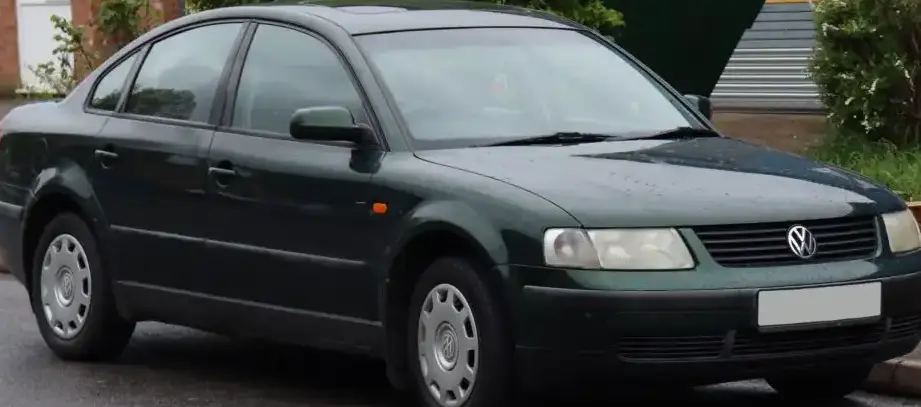
The Volkswagen Passat B5, produced from 1996 to 2005, represented a significant step forward for Volkswagen’s mid-size offering. Introduced as a replacement for the Passat B4, the B5 model was built on the Volkswagen Group’s PL45 (later 1HX0/A3) platform, shared with the Audi A4, A6, and Škoda Superb. The 1.9 TDI (115 hp) variant, available primarily in Europe from 2000 onwards, was a popular choice for drivers seeking fuel efficiency and respectable performance in a practical, family-oriented package. This model year saw refinements to the engine and emissions control systems to meet increasingly stringent European regulations.
Technical Specifications
| Brand | Volkswagen |
| Model | Passat |
| Generation | Passat (B5) |
| Type (Engine) | 1.9 TDI (115 Hp) |
| Start of production | 2000 |
| End of production | 2000 |
| Powertrain Architecture | Internal Combustion engine |
| Body type | Sedan |
| Seats | 5 |
| Doors | 4 |
| Fuel consumption (urban) | 6.5 l/100 km (36.2 US mpg, 43.5 UK mpg, 15.4 km/l) |
| Fuel consumption (extra urban) | 4.5 l/100 km (52.3 US mpg, 62.8 UK mpg, 22.2 km/l) |
| Fuel consumption (combined) | 5.6 l/100 km (42 US mpg, 50.4 UK mpg, 17.9 km/l) |
| Fuel Type | Diesel |
| Acceleration 0 – 100 km/h | 10.5 sec |
| Acceleration 0 – 62 mph | 10.5 sec |
| Acceleration 0 – 60 mph | 10 sec |
| Maximum speed | 200 km/h (124.27 mph) |
| Weight-to-power ratio | 11.5 kg/Hp, 87.1 Hp/tonne |
| Weight-to-torque ratio | 4.3 kg/Nm, 234.8 Nm/tonne |
| Power | 115 Hp @ 4000 rpm |
| Power per litre | 60.7 Hp/l |
| Torque | 310 Nm @ 1900 rpm (228.64 lb.-ft. @ 1900 rpm) |
| Engine layout | Front, Longitudinal |
| Engine Model/Code | ATJ, AJM |
| Engine displacement | 1896 cm3 (115.7 cu. in.) |
| Number of cylinders | 4 |
| Engine configuration | Inline |
| Cylinder Bore | 79.5 mm (3.13 in.) |
| Piston Stroke | 95.5 mm (3.76 in.) |
| Compression ratio | 18:1 |
| Number of valves per cylinder | 2 |
| Fuel injection system | Pump-nozzle (Unit Injector) |
| Engine aspiration | Turbocharger, Intercooler |
| Valvetrain | OHC |
| Engine oil capacity | 3.6 l (3.8 US qt | 3.17 UK qt) |
| Coolant | 7 l (7.4 US qt | 6.16 UK qt) |
| Kerb Weight | 1320 kg (2910.1 lbs.) |
| Max. weight | 1880 kg (4144.69 lbs.) |
| Max load | 560 kg (1234.59 lbs.) |
| Trunk (boot) space – minimum | 475 l (16.77 cu. ft.) |
| Trunk (boot) space – maximum | 745 l (26.31 cu. ft.) |
| Fuel tank capacity | 62 l (16.38 US gal | 13.64 UK gal) |
| Length | 4670 mm (183.86 in.) |
| Width | 1740 mm (68.5 in.) |
| Height | 1460 mm (57.48 in.) |
| Wheelbase | 2700 mm (106.3 in.) |
| Front track | 1498 mm (58.98 in.) |
| Rear (Back) track | 1500 mm (59.06 in.) |
| Drivetrain Architecture | The Internal combustion engine (ICE) drives the front wheels of the vehicle. |
| Drive wheel | Front wheel drive |
| Number of gears and type of gearbox | 5 gears, manual transmission |
| Front suspension | Coil spring |
| Rear suspension | Coil spring |
| Front brakes | Ventilated discs |
| Rear brakes | Disc |
| Assisting systems | ABS (Anti-lock braking system) |
| Steering type | Steering rack and pinion |
| Power steering | Hydraulic Steering |
| Tires size | 195/65 R16 |
| Wheel rims size | 6J x 16 |
Powertrain & Engine Architecture
The heart of the Passat 1.9 TDI was the 1.9-liter, four-cylinder diesel engine, typically identified by engine codes ATJ or AJM. This engine was a member of Volkswagen’s well-regarded TDI family, known for its durability and fuel efficiency. It featured a cast iron block and an aluminum cylinder head, employing a single overhead camshaft (OHC) design with two valves per cylinder. A key feature was the use of Volkswagen’s pump-nozzle (unit injector) fuel injection system, which delivered highly pressurized fuel directly into the combustion chamber. This system, a precursor to common rail technology, contributed to the engine’s strong torque output and relatively low emissions for its time. The turbocharger, coupled with an intercooler, further enhanced performance by increasing air density entering the engine. The 5-speed manual transmission was the standard offering, providing a balance between fuel economy and drivability.
Driving Characteristics
The 115 hp 1.9 TDI with a manual transmission offered a practical and economical driving experience. While not a performance-oriented variant, the engine’s 310 Nm (228.64 lb-ft) of torque, available from a low 1900 rpm, provided ample pulling power for everyday driving and overtaking maneuvers. The gear ratios were well-chosen to maximize fuel efficiency and provide reasonable acceleration. Compared to the more powerful 1.8T gasoline engine or the higher-output TDI variants, the 1.9 TDI felt less refined and had a more noticeable diesel engine sound. However, its superior fuel economy and lower maintenance costs made it an attractive option for drivers prioritizing practicality. The front-wheel-drive configuration offered predictable handling, although it wasn’t as engaging as the available all-wheel-drive (4Motion) system on other Passat models.
Equipment & Trim Levels
The 1.9 TDI typically occupied a mid-range position in the Passat B5 lineup. Standard equipment generally included power windows, central locking, power steering, and an anti-lock braking system (ABS). Interior upholstery was typically cloth, with options for upgraded materials. Dashboard configuration was relatively straightforward, focusing on functionality rather than luxury. Common optional extras included alloy wheels, a sunroof, climate control, and a radio/cassette player (later upgraded to CD players). Higher trim levels, such as the Comfort or Sport, added features like leather upholstery, upgraded audio systems, and sport suspension.
Chassis & Braking
The Passat B5 featured a MacPherson strut front suspension and a multi-link rear suspension, providing a comfortable ride and good handling characteristics. The 1.9 TDI models typically used ventilated disc brakes at the front and solid disc brakes at the rear. The hydraulic power steering offered a good balance between assistance and road feel. Stabilizer bars were fitted to both the front and rear axles to reduce body roll during cornering. The suspension setup was tuned to prioritize comfort and stability, making it well-suited for long-distance driving.
Market Reception & Comparison
The Passat 1.9 TDI was well-received in Europe as a practical and economical family car. Critics praised its fuel efficiency, comfortable ride, and spacious interior. However, some noted the engine’s relatively noisy operation and lack of outright performance compared to gasoline-powered alternatives. Compared to the 1.8T gasoline engine, the 1.9 TDI offered significantly better fuel economy but less horsepower. The higher-output TDI variants (e.g., 130 hp) provided more performance but at a higher price point. The 1.9 TDI’s reliability was generally good, although the pump-nozzle fuel injection system could be prone to issues if not properly maintained.
Legacy
The Volkswagen Passat B5 1.9 TDI remains a popular choice in the used car market, particularly for those seeking a reliable and fuel-efficient vehicle. The engine, while aging, is known for its durability when properly maintained. However, potential buyers should be aware of the potential for issues with the pump-nozzle fuel injection system and the turbocharger. Parts availability is generally good, and the Passat B5’s relatively simple construction makes it a relatively easy car to maintain and repair. The 1.9 TDI variant represents a sweet spot in the B5 lineup, offering a good balance of performance, economy, and reliability.