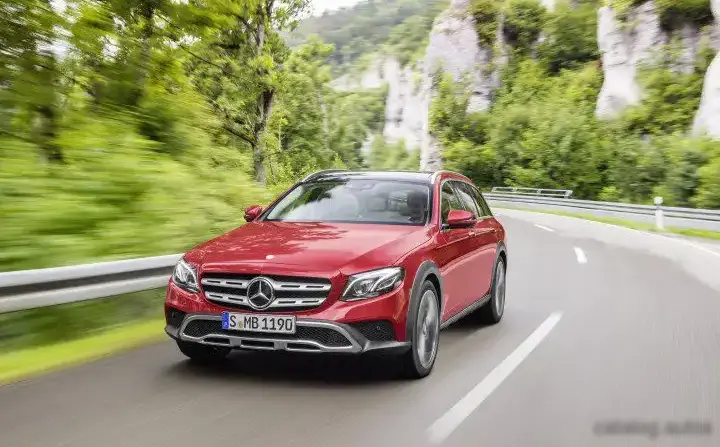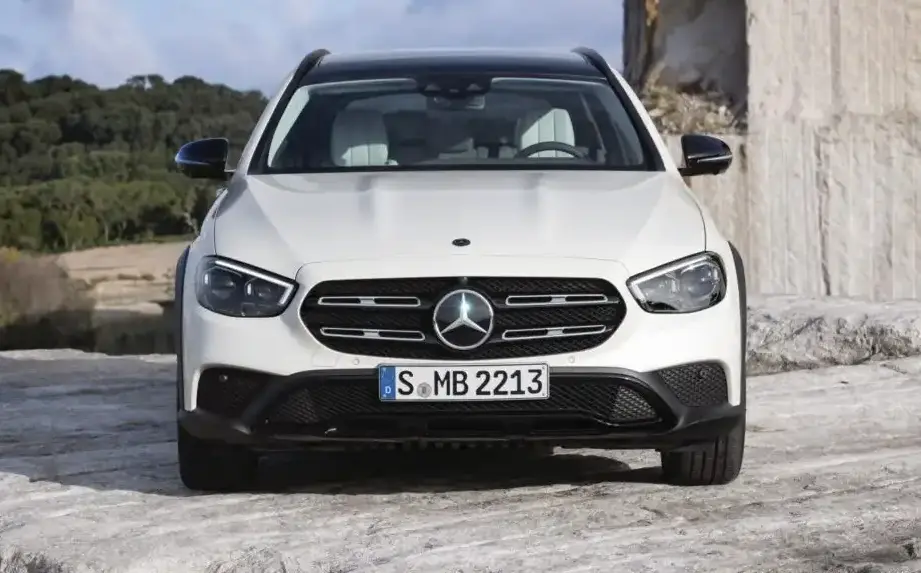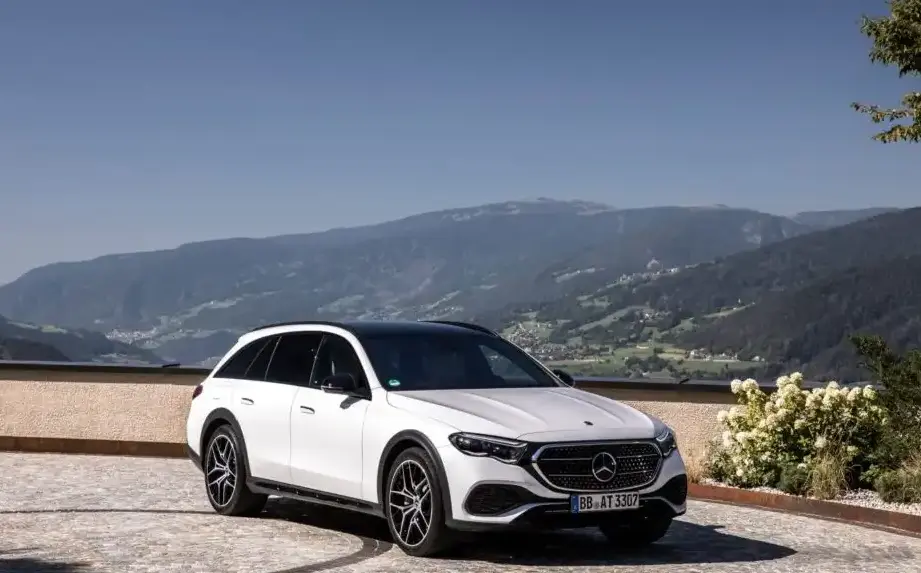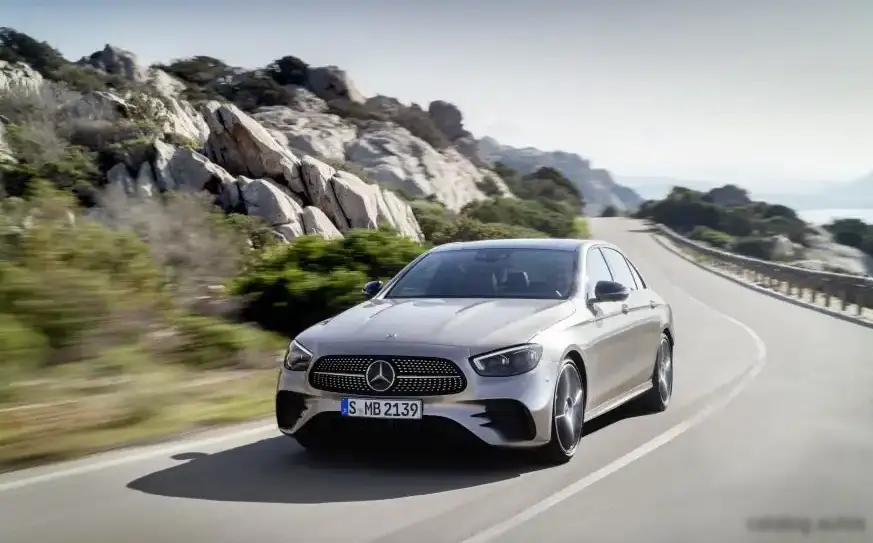
The Mercedes-Benz E-Class W213 facelift, specifically the E 350 model introduced in 2020 and continuing through 2023, represents a significant evolution of the popular executive sedan. Positioned as a mid-range offering within the W213 lineup, it bridged the gap between the entry-level E 300 and the performance-oriented AMG variants. This iteration of the E 350 marked a shift towards a smaller displacement, turbocharged engine paired with a sophisticated 9-speed automatic transmission, prioritizing both efficiency and a refined driving experience. The facelift brought updated styling, enhanced technology, and improved driver-assistance systems, solidifying the E-Class’s reputation as a benchmark in its segment.
Technical Specifications
| Brand | Mercedes-Benz |
| Model | E-class |
| Generation | E-class (W213, facelift 2020) |
| Type (Engine) | E 350 (255 Hp) 9G-TRONIC |
| Start of production | 2020 year |
| End of production | 2023 year |
| Powertrain Architecture | Internal Combustion engine |
| Body type | Sedan |
| Seats | 5 |
| Doors | 4 |
| Fuel consumption (economy) – urban (EPA) | 10.2-10.7 l/100 km (23.1 – 22 US mpg, 27.7 – 26.4 UK mpg, 9.8 – 9.3 km/l) |
| Fuel consumption (economy) – extra urban (EPA) | 7.6 l/100 km (30.9 US mpg, 37.2 UK mpg, 13.2 km/l) |
| Fuel consumption (economy) – combined (EPA) | 9.4 l/100 km (25 US mpg, 30.1 UK mpg, 10.6 km/l) |
| Fuel Type | Petrol (Gasoline) |
| Acceleration 0 – 60 mph | 6.1 sec |
| Maximum speed | 210 km/h, Electronically limited (130.49 mph) |
| Emission standard | ULEV50 |
| Weight-to-power ratio | 6.7 kg/Hp, 148.7 Hp/tonne |
| Weight-to-torque ratio | 4.6 kg/Nm, 215.7 Nm/tonne |
| Power | 255 Hp @ 5800-6100 rpm |
| Power per litre | 128.1 Hp/l |
| Torque | 370 Nm @ 1800-4000 rpm (272.9 lb.-ft. @ 1800-4000 rpm) |
| Maximum engine speed | 6500 rpm |
| Engine layout | Front, Longitudinal |
| Engine Model/Code | M 264.920 |
| Engine displacement | 1991 cm3 (121.5 cu. in.) |
| Number of cylinders | 4 |
| Engine configuration | Inline |
| Cylinder Bore | 83 mm (3.27 in.) |
| Piston Stroke | 92 mm (3.62 in.) |
| Compression ratio | 10.5:1 |
| Number of valves per cylinder | 4 |
| Fuel injection system | Direct injection |
| Engine aspiration | Twin-scroll turbo, Intercooler |
| Valvetrain | DOHC, CAMTRONIC |
| Engine oil capacity | 6.6 l (6.97 US qt | 5.81 UK qt) |
| Coolant | 11 l (11.62 US qt | 9.68 UK qt) |
| Kerb Weight | 1715 kg (3780.93 lbs.) |
| Trunk (boot) space – minimum | 540 l (19.07 cu. ft.) |
| Fuel tank capacity | 66 l (17.44 US gal | 14.52 UK gal) |
| Length | 4935 mm (194.29 in.) |
| Width | 1872 mm (73.7 in.) |
| Width including mirrors | 2065 mm (81.3 in.) |
| Height | 1468 mm (57.8 in.) |
| Wheelbase | 2939 mm (115.71 in.) |
| Front track | 1604 mm (63.15 in.) |
| Rear (Back) track | 1608 mm (63.31 in.) |
| Front overhang | 853 mm (33.58 in.) |
| Rear overhang | 1143 mm (45 in.) |
| Minimum turning circle (turning diameter) | 11.6 m (38.06 ft.) |
| Drivetrain Architecture | The Internal combustion engine (ICE) drives the rear wheels of the vehicle. |
| Drive wheel | Rear wheel drive |
| Number of gears and type of gearbox | 9 gears, automatic transmission G-TRONIC |
| Front suspension | Coil spring, Independent multi-link suspension, Transverse stabilizer, Air Suspension – Optional |
| Rear suspension | Independent multi-link spring suspension with stabilizer, Air Suspension – Optional |
| Front brakes | Ventilated discs |
| Rear brakes | Ventilated discs |
| Assisting systems | ABS (Anti-lock braking system) |
| Steering type | Steering rack and pinion |
| Power steering | Electric Steering |
| Tires size | 245/45 R18 |
| Wheel rims size | 8J x 18 |
Powertrain & Engine Architecture
The E 350 facelift utilizes the M264 2.0-liter inline-four cylinder engine. This engine is a key component of Mercedes-Benz’s modular engine family, designed for efficiency and scalability. It features direct injection, a twin-scroll turbocharger, and CAMTRONIC variable valve timing. CAMTRONIC allows for continuously variable adjustment of the intake valve lift, optimizing engine performance and fuel economy across a wider range of operating conditions. The engine produces 255 horsepower at 5800-6100 rpm and 273 lb-ft of torque between 1800-4000 rpm. This power is delivered through a 9G-TRONIC nine-speed automatic transmission. This transmission is known for its smooth shifts and wide gear ratio spread, contributing to both fuel efficiency and responsive acceleration. The engine is longitudinally mounted, driving the rear wheels.
Driving Characteristics
The E 350 9G-TRONIC offers a comfortable and refined driving experience. While not as overtly sporty as some of its competitors or the higher-trim E-Class models, it provides ample power for everyday driving and confident highway passing. The nine-speed transmission keeps the engine in its optimal power band, resulting in smooth acceleration. Compared to the E 300, the E 350 offers a noticeable increase in performance, particularly in mid-range acceleration. The gear ratios are tuned for efficiency, but also allow for quick downshifts when needed. The steering is precise and well-weighted, providing a connected feel to the road. The optional air suspension further enhances ride comfort, absorbing bumps and providing a more controlled driving experience.
Equipment & Trim Levels
The E 350 typically came well-equipped as standard. Common features included MB-Tex upholstery, wood trim, dual 12.3-inch displays for the instrument cluster and infotainment system, Apple CarPlay and Android Auto integration, and a suite of driver-assistance features such as automatic emergency braking, lane-keeping assist, and adaptive cruise control. Optional extras included leather upholstery, premium sound systems (Burmester), a panoramic sunroof, ventilated and massaging front seats, and advanced driver-assistance packages. Trim levels often varied by region, but generally offered packages that bundled popular options together.
Chassis & Braking
The W213 E-Class utilizes a multi-link suspension system at both the front and rear axles. This design provides a good balance of ride comfort and handling precision. The E 350 typically featured ventilated disc brakes at all four corners, providing ample stopping power. ABS (Anti-lock Braking System) and electronic stability control were standard features. Optional air suspension was available, offering adjustable ride height and damping settings for enhanced comfort and control. The steering system is a rack-and-pinion setup with electric power assistance.
Market Reception & Comparison
The E 350 facelift was generally well-received by automotive critics. It was praised for its refined driving experience, comfortable interior, and advanced technology. Compared to the E 300, the E 350 offered a noticeable performance upgrade without sacrificing fuel efficiency. It also provided a more compelling alternative to some of its competitors, such as the BMW 530i and Audi A6. Fuel economy figures were competitive for its class, averaging around 25 mpg combined. Reliability reports have been generally positive, with the M264 engine proving to be a robust and dependable unit.
Legacy
The Mercedes-Benz E 350 (W213 facelift) represents a successful blend of performance, luxury, and technology. The M264 engine has become a mainstay in the Mercedes-Benz lineup, known for its efficiency and reliability. In the used car market, these models hold their value well, particularly those with low mileage and a comprehensive service history. The 9G-TRONIC transmission has also proven to be a durable and smooth-shifting unit. The W213 E-Class, and the E 350 variant specifically, continues to be a popular choice for buyers seeking a refined and well-equipped executive sedan.